Reading & Writing · Unit 2 · Weeks 7–12
Unit 2 test: Learning from nonfiction
30–35 min, in two sittings
For the grown-up
This test shows what your child has learned in Weeks 7–12: reading a new nonfiction text, finding the main topic and key details, using headings, telling what a picture teaches, reading blend and final e words, spelling, and writing facts. Give it in two sittings. Sitting 1 is Parts 1 and 2 (about 15–20 minutes). Sitting 2 is Parts 3 and 4 (about 15 minutes). Nothing is timed; take a break whenever your child needs one. Read every direction and question aloud, but let your child read "The Frog" and the word rows without help. In Part 1, your child may answer out loud while you write their words, and may look back at the text as often as they like; looking back is a reading skill, not a hint. Do not sound out words during the test. If your child is stuck, say "Do your best, then we can move on." Add the points and find the level at the end. If your child scores below 80 percent on any part, use that part's reteach note in Week 13.
Standards: RI.1.1, RI.1.2, RI.1.5, RI.1.6, RF.1.3.b, RF.1.3.c, L.1.2.b, W.1.2
Part 1: Reading a Nonfiction Text
Your child reads "The Frog" aloud to you. Then read each question aloud. Your child circles the answer or tells it, and you write their words.
The Frog
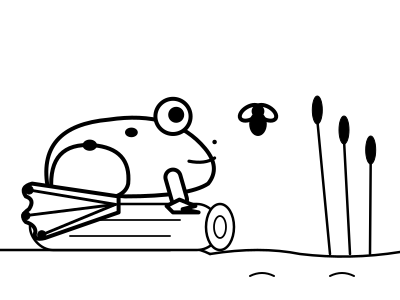
A Home in a Pond
A frog can live in a pond. It can swim and hop. It has wet skin. It can sit on a rock in the sun.
A Fast Snap
A frog can sit on a log. Then, snap! It can get a bug. It can snap up a fly. A frog is fast!
A Time to Rest
When the pond is not hot, a frog can hide. It can sink down to the mud and rest. It can rest on the mud a long time. Then, when the sun is hot, the frog can hop up and swim.
- 1.
- a frog
- a duck
- a fish
- 2.
- 3.
- A Home in a Pond
- A Fast Snap
- A Time to Rest
- 4.
- on the mud
- on a rock
- in a nest
- 5.
- 6.
Part 2: Reading Words
Your child reads each word aloud, left to right. Do not say the words. Put a check over each word your child reads correctly, and write what your child said over any word that was misread.
- 7.smug clam trot glum crib
- 8.fume hike crane flake lane
- 9.fin fine cub cube rode
Part 3: Spelling
Say each word, then the sentence, then the word again. Your child writes the word on the line. For the sentences, say the whole sentence twice, then once more slowly. Your child writes it.
- 10.
- 11.
- 12.
- 13.
- 14.
- 15.
- 16.
Part 4: Writing Facts
Read the prompt aloud. Your child may draw a picture first. Spelling by sounds is fine. Do not spell words for your child.
- 17.
Score and next steps
Total: 28 points.
- Exceeding: 26–28 points
- Proficient: 20–25 points
- Approaching: 14–19 points
- Developing: 0–13 points
Write the score in the Assessment & Records pages. The directions above say when to move on and when to reteach first.