Math · Unit 6 · Weeks 31–36
Unit 6 test: Shapes, equal shares and the year in review
25–30 min
For the grown-up
Give this test on Week 36 Day 5, after the Grade 1 Bingo game. Read every item aloud. Reading is not what this test checks. There is no clock. Your child may use the paper shape kit from Week 32 (squares, triangles, rectangles, half-circles and quarter-circles), 20 counters, the tens and ones kit or drawings. Split it into two sittings of about 12 minutes: the shapes parts (Parts 1 to 3) one day and the year review (Part 4) the next. Do not help with the math. If your child is stuck, say only: "Which tool do you want to use?" or, for shapes, "Count the sides and corners first." Score with the answers and scoring notes, add the points and find the level. Level E, or Level P with 19 or 20 points (at least 4 of every 5 right, about 80 percent: the pass mark in the test-day lesson): your child is ready for Grade 2. Level P with 17 or 18 points, Level A or Level D: plan 2 or 3 short summer sessions with the Guided Practice for each part with misses (see Reteach). Beans, cubes, buttons and pattern blocks are small parts: keep them away from children under 3.
Standards: 1.G.A.1, 1.G.A.2, 1.G.A.3, 1.OA.A.1, 1.OA.C.6, 1.NBT.B.3, 1.NBT.C.4
Part 1: Shape Attributes
Look at each shape. Circle, draw or tell.
- 1.
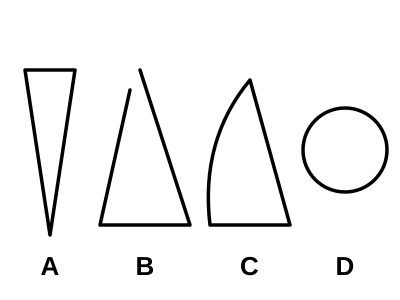 Circle the triangle.
- A
- B
- C
- D
- 2.
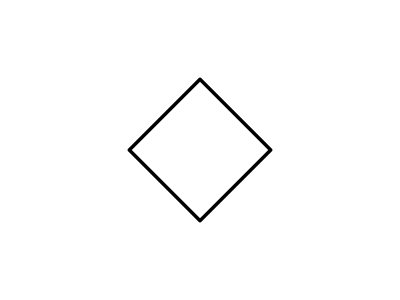 Is this a square? Tell how you know.
- 3.Draw a shape that has 4 square corners but is NOT a square.
- 4.
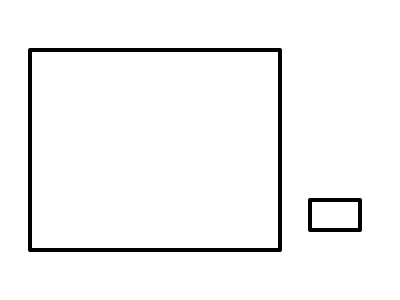 Are both of these shapes rectangles? Circle yes or no.
- yes
- no
Part 2: Put Shapes Together
Use the shape kit. Build it, then answer.
- 5.Put 2 kit triangles together along their long sides. What shape do they make?
- 6.Put 4 kit quarter-circles together with their square corners in the middle. What shape do they make?
- 7.Make a new shape from 1 square and 2 triangles. Draw it. Then count and tell how many sides it has.
Part 3: Halves and Fourths
Circle, draw or tell. Equal shares are all the same size.
- 8.
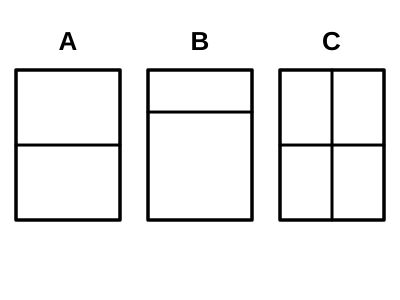 Circle the rectangle that shows halves.
- A
- B
- C
- 9.
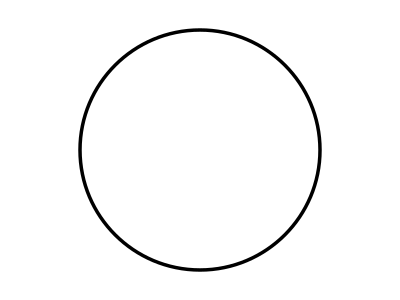 Draw one line to split the circle into halves.
- 10.
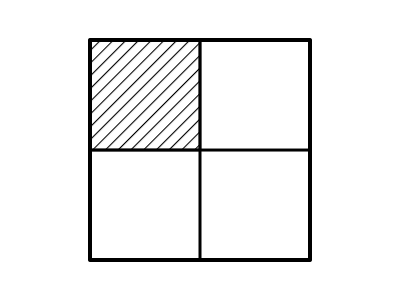 What is the shaded share called?
- 11.You may have half of a granola bar or a fourth of the same granola bar. Which piece is bigger? Tell how you know.
Part 4: Year Review
Listen to each story or problem. Solve it. Write the answer.
- 12.There are 15 children at the pool. 7 children get out. How many children are still in the pool? Write an equation.
- 13.Kai found 7 shells. Rosa found 5 more shells than Kai. How many shells did Rosa find? Write an equation.
- 14.8 + 7 = ___
- 15.13 - 8 = ___
- 16.19 ___ 91 Write >, < or =.
- 17.56 + 30 = ___
- 18.27 + 6 = ___
Score and next steps
Total: 23 points.
- Exceeding: 21–23 points
- Proficient: 17–20 points
- Approaching: 12–16 points
- Developing: 0–11 points
Write the score in the Assessment & Records pages. The directions above say when to move on and when to reteach first.