Social Studies · Unit 5 · Weeks 25–30
Unit 5 test: Needs, wants, saving and choices
20–25 min (fine to split into two sittings)
For the grown-up
This test checks what your child learned in Weeks 25–30 about needs and wants, choices and costs, prices, saving, banks and trade. Read every question, every choice and every picture note aloud; this test checks social studies thinking, not reading. Your child answers by circling, pointing, drawing or telling, and you write their words exactly. Nothing is timed. If your child tires, stop after Section 2 and do Sections 3 and 4 later. Your child may use 10 counters or pretend coins for the money items, as in the lessons. Counting coin values is not part of this test. Items that say "Answers vary" can have more than one good answer; use the "Look for" notes. If your child is stuck, read the item again once, or offer to let them point or draw instead of telling. Do not teach or hint during the test. Add the points and find the level at the end. If your child earns less than half of the points in a section, use that section's reteach note in the Week 31 warm-ups.
Standards: D2.Eco.2.K-2, D2.Eco.1.K-2, D3.2.K-2, D2.Eco.5.K-2, D2.Eco.10.K-2, D2.Eco.9.K-2, D2.Eco.14.K-2, D2.Eco.15.K-2, D2.Geo.11.K-2, D2.Civ.8.K-2, D4.1.K-2, D4.3.K-2, D4.4.K-2
Section 1: Needs, Wants and Choices
Read each question aloud. Your child circles or tells.
- 1.Circle the needs. Put an X on the wants.
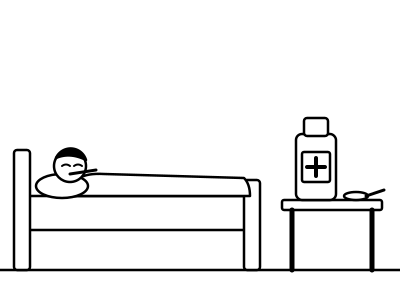
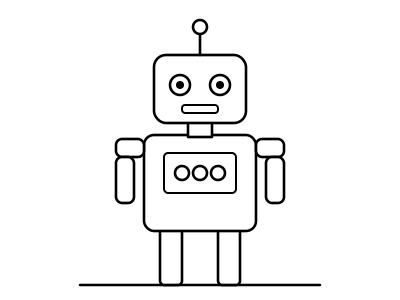
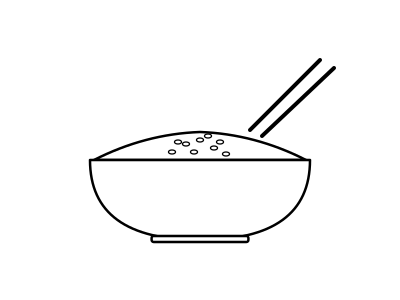

- 2.There are 3 swings and 5 children. Can every child swing at the same time? What could they do?
- 3.For breakfast you can have pancakes or eggs, but not both. You choose pancakes. What do you give up?
- 4.Fact or opinion? "This apple is red." "Apples are the best snack."
Section 2: Prices, Saving and Banks
Read each question and each price aloud. Your child circles or tells.
- 5.
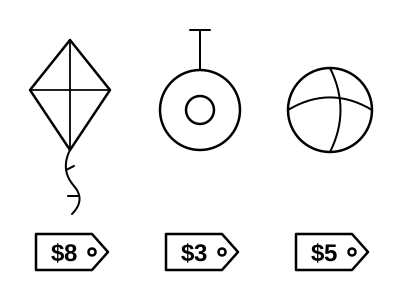 Which toy costs the most? Which toy costs the least?
- 6.
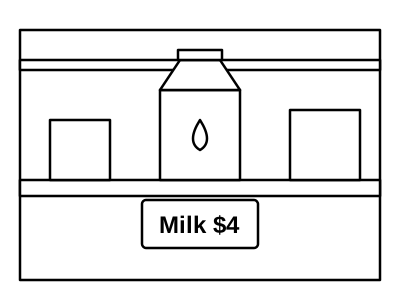 Where can you find the price at a store? What is the price of the milk?
- 7.Lena wants a book that costs 15 dollars. She has 6 dollars. What can she do? Tell how you know that will work.
- 8.Why might a family keep money in a bank instead of in a pocket?
Section 3: Trade
Read each question aloud. Your child circles or tells.
- 9.A farmer in Iowa grows corn. A company in Japan buys the corn. For the United States, is the corn an import or an export?
- import
- export
- 10.Why does the United States buy most of its bananas from warm countries like Guatemala? Tell how you know.
- 11.Leo gives Kim 2 marbles, and Kim gives Leo 2 stickers. Both of them said yes. Is it a fair trade? Tell why.
- 12.Your family buys coffee grown in Colombia. Name two people far away who helped get that coffee to you.
Section 4: My Money Plan
Read each question aloud. Your child may use 10 counters. Your child tells, and you write the words.
- 13.
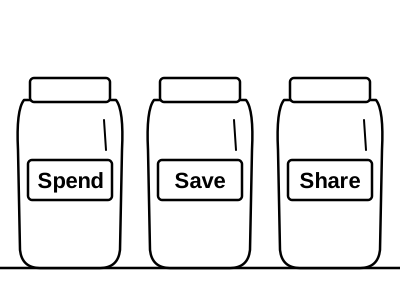 You have 10 coins. Draw how many coins you would put in each jar. Then tell a reason for your Save jar.
- 14.Your cousin says, "I will put most of my money in Share because the animal shelter needs food." Ask your cousin one question about the reason.
Score and next steps
Total: 21 points.
- Exceeding: 19–21 points
- Proficient: 15–18 points
- Approaching: 11–14 points
- Developing: 0–10 points
Write the score in the Assessment & Records pages. The directions above say when to move on and when to reteach first.