1First Grade

    Review: 10 more, 10 less, subtracting tens

    Fluency practice

    Practice pages

    0 of 180 days complete · Saved on this device

    View all 180 days

    Math

    Review: 10 more, 10 less, subtracting tens

    I can find 10 more, 10 less and subtract tens.

    Standards: 1.NBT.C.5, 1.NBT.C.6

    Number practice (no timer)
    Mixed: 10 more, 10 less, tens facts
    Builds on
    Week 19 (10 more and 10 less) and Week 23 (subtracting tens). One-minute check: "10 less than 52?" (42) "80 - 30?" (50)

    New words

    • clue: a hint that helps you find an answer

    You need

    • Hundred chart to 120: printed, or drawn as 12 rows of 10 boxes (1 to 10 in the top row, 111 to 120 in the bottom row)
    • 8 beans or buttons to cover numbers
    • 2 small toys or buttons
    • Notebook and pencil
    • Beans and unit cubes are small parts: keep them away from children under 3.
    1. Warm-Up · 5 min

      Fluency: mixed. "10 more than 39?" (49) "6 tens - 4 tens?" (20) Spaced review from Week 13, counting down by 1s: "Count back from 112 to 105." (111, 110, 109, 108, 107, 106, 105)

    2. Mini-Lesson · 10 min

      Say: "Today we use the chart both ways." Put a toy on 67. Ask: "10 more?" (77, one row down) "10 less?" (57, one row up) Then write 70 - 40. Put the toy on 70. Hop up 4 rows while your child counts back: "60, 50, 40, 30." Write 70 - 40 = 30. Ask: "What adding fact checks it?" (30 + 40 = 70) Say: "Down the chart is more, up the chart is less."

    3. Guided Practice · 10 min

      Part 1: your child says 10 more and 10 less, then checks on the chart. 1) 29 (39 and 19) 2) 84 (94 and 74) 3) 50 (60 and 40) 4) 12 (22 and 2) Part 2: subtract tens and say the related adding fact. 5) 80 - 30 (50; 30 + 50 = 80) 6) 60 - 40 (20; 40 + 20 = 60) 7) 90 - 10 (80; 10 + 80 = 90) 8) 40 - 30 (10; 30 + 10 = 40) If stuck, say: "Put your toy on the first number. Which way do you hop, and how many rows?"

    4. Play · 10 min

      Chart Detective. Read a clue. Your child finds the number and covers it with a bean. Clues and answers: 1) "I am 10 less than 75." (65) 2) "I am 10 more than 49." (59) 3) "I am 50 less than 90." (40) 4) "I am 20 less than 80." (60) 5) "I am 10 more than 27." (37) 6) "I am 30 less than 70." (40, already covered; your child says so) 7) "I am 10 less than 18." (8) 8) "I am 10 more than 90." (100) Then your child makes up 4 clues for you.

    5. Exit Ticket · 3-5 min

      Put the objects to one side but leave them on the table. Read each question aloud. Your child answers out loud, with objects or with a quick drawing. Check each answer together right away.

    Exit ticket

    1. What is 10 less than 33?
    2. What is 10 more than 88?
    3. 70 - 20 = ?
    Answers
    1. 23
    2. 98
    3. 50
    Watch for, and help or stretch
    Watch for
    Hopping the wrong way (down for less).
    Try
    Say: "The numbers get bigger as you go down. Less means up."
    Extra help
    Keep the chart in view for every item and say each hop out loud.
    Stretch
    Ask: "I am 30 more than 46. Who am I?" (76)

    At home (optional): Your child gives a family member 3 chart clues to solve, like "I am 10 more than 25."
    Reading & Writing

    Fluency practice

    I can read a passage smoothly, with expression and few mistakes.

    Standards: RF.1.4, RF.1.4.b, RF.1.4.c

    Phonics
    Unit 4 review: r-controlled vowels and ou/ow, oi/oy; phrasing for fluency
    Sight words
    sound, only, little, work, place
    Reading
    Child's choice of poems from Unit 4 (anthology); original decodable "The Loud Crowd"
    Writing
    Narrative and poetry: publish the poetry anthology and one narrative · Handwriting: cover and title page
    Builds on
    Reading in phrases (Day 1). One-minute check: your child reads The crowd / was so loud. in two scoops.

    New words

    • fluent: reading smoothly, with expression and few mistakes
    • phrase: a small group of words that go together

    You need

    • Printed "The Loud Crowd" (from Day 1)
    • A pencil to draw scoops and stars
    • Sight word cards: sound, only, little, work, place
    • The chosen small moment story (from Day 1)
    • Lined handwriting paper
    1. Phonics & Word Work · 15 min

      Word families with teams. I do: read shout, out, scout: same ending, new start. We do: read down, town, gown and boil, soil, foil. You do: your child reads turn, burn, churn, park, dark, shark, cow, how, now. Read with phrasing: "Fern and her dad / sat down / on the ground." Dictation: town, soil, dark, burn. If stuck, cover the first letter and read the family part first: -own, then add t: town.

    2. Sight Words · 5 min

      Review: sound, only, little, work, place. Swat It with a clean spatula: say a word; your child swats it, reads it and spells it.

    3. Read-Aloud & Shared Reading · 15 min

      Say: "Fluent readers read like they are talking. Each time you read, it gets smoother." Your child reads "The Loud Crowd" three times. Read 1: your child reads it, and you note any tricky words and help afterward. Draw a star. Read 2: draw scoops under three lines to show the phrases; your child reads it again, scooping. Draw a star. Read 3: your child reads with feeling, loud for the crowd and quiet when the crowd got still. Draw a star. Ask: "What got better?" (Answers vary. Look for: fewer stops, smoother phrases, more expression.) Ask: "Why did Fern say Troy's not stopping was the best part?" (He kept going after he fell, even when it was hard.) Ask: "What would you say to Troy?" (Answers vary.) If stuck on a word, reread the sentence from the start and check that the word makes sense.

    4. Writing & Handwriting · 15 min

      Write the final copy of the chosen narrative. Your child copies the fixed story neatly onto clean story paper, one sentence at a time. Handwriting focus: letters the same size, tall letters touching the top line, and finger spaces between words.

    5. Exit Ticket · 5 min

      Oral answers.

    Exit ticket

    1. Read this in phrases: The kids ran down to the park.
    2. What does a fluent reader sound like?
    3. What did Troy do after he fell?
    Answers
    1. The kids ran / down to the park. (Phrasing may vary; look for smooth groups, not word by word.)
    2. Smooth, like talking, with expression and few mistakes.
    3. He got up and ran to the end.
    Watch for, and help or stretch
    Watch for
    Reading faster but skipping or mixing up words.
    Try
    Say: "Smooth is not the same as fast. Read it like you are telling it to a friend."
    Extra help
    Read "The Loud Crowd" together for Read 1 (choral), then your child reads Reads 2 and 3.
    Stretch
    Your child counts the mistakes on each read and sees the number go down.

    At home (optional): Your child reads "The Loud Crowd" one more time to a family member, who gives it a star.

    Science

    Parents and young museum

    I can teach someone what I learned about parents and young.

    Standards: 1-LS1-2, 1-LS3-1

    Builds on
    All of Unit 4: parents help babies, and young are like but not exactly like their parents. One-minute check: ask "Name one way animal parents help their babies." (feed, protect, keep warm or teach)

    New words

    • exhibit: a display in a museum that teaches people about something
    • museum guide: a person who shows visitors around and explains things

    You need

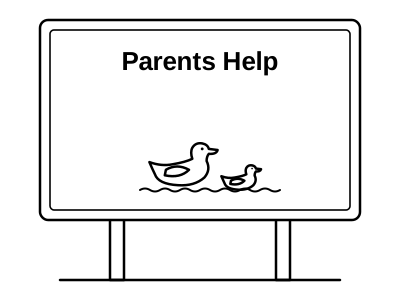
    • Exhibit 1, Parents Help: the Parents Help chart, the fact cards from Weeks 19 and 20, and the Help Sort cards
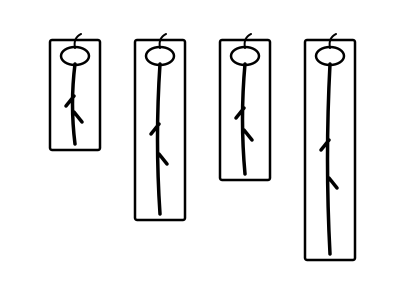
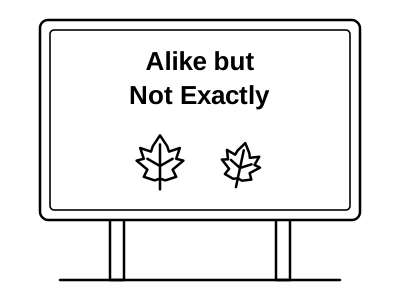
    • Exhibit 2, Alike but Not Exactly: the bean plants, the Bean Bag Garden, the leaf rubbings, the Same and Different chart and the match cards
    • 2 sheets of paper and a marker for exhibit signs
    • 2 small tables, a couch arm or 2 spots on the floor
    • A stuffed animal or two to be visitors
    • Science Notebook
    1. Warm-Up / Wonder · 5 min

      Spaced review: ask: "What does a sea turtle hatchling do on its own?" (digs out, crawls to the ocean and swims) Wonder question: "What would you put in a museum about parents and babies?"

    2. Explore · 10–15 min

      Build the Parents and Young Museum. Your child makes a sign for each exhibit: "Parents Help" and "Alike but Not Exactly." Set out the materials at each spot. Your child picks one thing at each exhibit to talk about and practices a short line. (Sample for Exhibit 1: "Emperor penguin fathers keep the egg warm on their feet." Sample for Exhibit 2: "Our beans grew into bean plants, but each one is a little different.") Then your child gives a tour to a family member or to the stuffed animals. The visitor asks one question at each exhibit, such as "How does that help the baby?" or "How do you know they are not exactly alike?" Your child answers. Ask: "Which exhibit shows how parents help babies survive?" (Parents Help) "Which shows that young are like their parents, but not exactly?" (Alike but Not Exactly) If stuck during the tour, point to one picture and ask: "What is happening here?"

    3. Talk & Record · 5–10 min

      Your child draws a map of the museum with the 2 exhibits. Sentence frame: "In my museum, visitors learn that ___."

    4. Exit Ticket · 3–5 min

      Ask the three questions aloud. Your child answers by talking or drawing.

    Exit ticket

    1. Which exhibit would show a mother bird bringing food to her chicks?
    2. What would you put in the Alike but Not Exactly exhibit to show a plant and its parent?
    3. What is one thing a museum guide does?
    Answers
    1. Parents Help.
    2. Answers vary. Look for: a bean seedling and a picture of a grown bean plant, or leaves from one plant.
    3. Shows visitors around and explains the exhibits.
    Watch for, and help or stretch
    Watch for
    Listing objects without telling what they show.
    Try
    After each object, ask: "So what does that teach the visitor?"
    Extra help
    Set up 1 exhibit today and the other tomorrow.
    Stretch
    Your child adds a third exhibit, such as "Babies Ask for Help," with a sign and one drawing.

    At home (optional): Your child gives the museum tour to another family member or a friend on a video call.

    Practice

    Read each direction aloud. Your child works on the page; answers are in the grown-up view.

    Warm-up

    Remember?

    Math

    1. 46 + 7 = ?
    2. 11 - 3 = ? Get to 10 first.

    Reading & Writing

    Math · Week 24 Day 2

    I can find 10 more, 10 less and subtract tens.

    Look: 46 on the chart, and 60 - 20

    1. 10 more than 46 is 56 (one row down). 10 less is 36 (one row up).
    2. For 60 - 20, hop up 2 rows from 60: 50, 40.
    3. 60 - 20 = 40. Check: 40 + 20 = 60.

    Write 10 less on the left and 10 more on the right.

    1. 1.
      ____, 71, ____
    2. 2.
      ____, 35, ____
    3. 3.
      ____, 18, ____

    Subtract the tens.

    1. 4.
      90 - 40 = ____. Check: ____ + 40 = 90
    2. 5.
      50 - 30 = ____
    3. 6.
      80 - 70 = ____
    4. 7.
      10 less than 100 is ____.
      • 99
      • 90
      • 110

    Challenge (optional)

    I am 10 less than the answer to 60 - 10. What number am I?

    You need: Hundred chart to 120, Pencil

    Reading & Writing · Week 24 Day 2

    I can read a passage smoothly, with expression and few mistakes.

    Look: reading smoothly

    1. Read a line in scoops, not word by word: Kurt and his mom / sat in the car.
    2. Read it again. Each time it gets smoother.
    3. If a word does not make sense, go back and fix it.

    The Storm

    Kurt and his mom sat in the car. The storm was loud. Rain hit the car, tap, tap, tap. Then the storm let up. Kurt and Mom ran to the house, and they were dry!

    Read the line. Put a slash / where you take a breath. Then read it in scoops.

    1. 1.
      Fern sat down on the ground.
    2. 2.
      The boy got a coin from his dad.
    3. 3.
      A brown owl sat in the dark barn.

    Read the line. Does it make sense? Circle yes or no.

    1. 4.
      Kurt and Mom ran to the house.
      • yes
      • no
    2. 5.
      The car sat in the storm and did a jump.
      • yes
      • no
    3. 6.
      Rain hit the car, tap, tap, tap.
      • yes
      • no
    4. 7.
      The storm was loud, so Kurt fell up.
      • yes
      • no

    Challenge (optional)

    Read it 3 times. Make a star for each read.

    Science · Week 24 Day 2

    I can teach someone what I learned about parents and young.

    Look: Plan a museum tour

    1. Exhibit 1, Parents Help: parents feed, protect, keep warm and teach.
    2. Exhibit 2, Alike but Not Exactly: young are like their parents, but not exactly.
    3. At each exhibit, point to one thing and say one sentence about it.

    Which exhibit does it go in? Circle the sign.

    1. 1.
      A photo of a mother koala carrying her baby on her back
      • The "Parents Help" exhibit sign.
      • The "Alike but Not Exactly" exhibit sign.
    2. 2.
      Two kittens from one litter, one gray and one striped
      • The "Parents Help" exhibit sign.
      • The "Alike but Not Exactly" exhibit sign.
    3. 3.
      A mother hen leading her chicks to food
      • The "Parents Help" exhibit sign.
      • The "Alike but Not Exactly" exhibit sign.
    4. 4.
      Leaf rubbings from one bush
      • The "Parents Help" exhibit sign.
      • The "Alike but Not Exactly" exhibit sign.
    5. 5.
      A baby bird opening its mouth wide to ask for food
      • The "Parents Help" exhibit sign.
      • The "Alike but Not Exactly" exhibit sign.

    Get ready for visitors.

    1. 6.
      A visitor asks how you know the bean sprouts are not exactly alike. Circle your evidence.
      • Paper strips showing roots of different lengths.
      • A closed bag of dry beans.
    2. 7.
      Practice one line for a visitor. Your grown-up writes it.
    3. 8.
      Draw the sign for one exhibit.

    Challenge (optional)

    Could a photo of a mother cat feeding kittens of different colors fit in both exhibits? Tell why.

    You need: crayons