This week's lessons
Math and reading every day; science and social studies take turns
- Day 1 · Monday
- MathReview: adding within 100I can add tens and ones to a two-digit number.
- Reading & WritingPoetry reviewI can find feeling and sense words in poems I know.
- Social StudiesWhy did it change?I can think of reasons why something changed long ago and pick the best reason.
- Day 2 · Tuesday
- MathReview: 10 more, 10 less, subtracting tensI can find 10 more, 10 less and subtract tens.
- Reading & WritingFluency practiceI can read a passage smoothly, with expression and few mistakes.
- ScienceParents and young museumI can teach someone what I learned about parents and young.
- Day 3 · Wednesday
- MathUnit 4 story problemsI can solve adding and subtracting stories within 100.
- Reading & WritingShades of meaning reviewI can choose the best word to show just how something looks or feels.
- Social StudiesMaking our community betterI can tell how people made their community better over time.
- Day 4 · Thursday
- MathClimb to 100 game dayI can use tens and ones in a game.
- Reading & WritingAnthology showcaseI can share my poems with drawings to help listeners understand them.
- Science · Unit testUnit 4 test: parents and youngI can explain how parents help babies and how babies are like their parents.
- Day 5 · Friday
- Math · Unit testUnit 4 test: add and subtract within 100I can add within 100, find 10 more or less, and subtract tens.
- Reading & Writing · Unit testUnit 4 testI can show what I know about poems, word meanings and reading smoothly.
- Social Studies · Unit testUnit 4 test: then and nowI can show what I know about timelines, sources and change over time.
This week's checks
Short checks on the last day each subject meets this week
Math · Unit 4 test
Open the unit testReading & Writing · Unit 4 test
Open the unit testScience · Unit 4 test
Open the unit testSocial Studies · Unit 4 test
Open the unit test
Reading About Our World: Seeds Grow Up
Read it aloud. Your child reads the sentences marked with a star. Builds science knowledge.
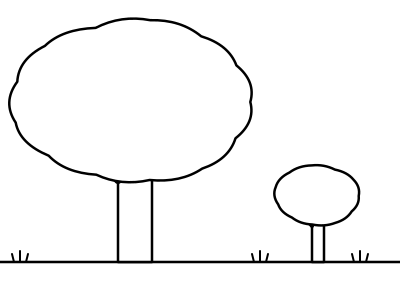
A Seed Knows
Every seed grows into the same kind of plant it came from. An oak seed will grow into an oak tree. An oak seed is called an acorn.
Alike but Not the Same
Plant a few seeds from one sunflower. They all grow into sunflowers. But one may grow taller. One may have a bigger flower. Young plants are like their parents, but not exactly the same.
Parents and Young
Animals and plants are the same in this way. Young ones grow up to be the same kind as their parents.
Words to know
- acorn: the seed of an oak tree
- parent: a plant or animal that makes young
- young: a baby plant or animal
Talk about it
- What is an oak seed called?
- What do sunflower seeds grow into?
- You plant a seed from a pumpkin. Will it grow into a pumpkin plant or a bean plant? How do you know?
Home Connection
Five-minute ideas for the whole family, with things you already have
Math
We add and subtract within 100 using tens and ones.
Do: Make up a story with things at home: "There are 30 crayons in a box and 20 in a cup. How many crayons in all?" Your child solves it with cups of ten or a drawing.
Talk: What is 10 more than 67? What is 10 less?
Reading & Writing
Smooth reading with expression helps us understand and enjoy a text.
Do: Your child reads a favorite poem from their poetry book to a family member two times, making the second reading smoother.
Talk: How did it sound better the second time?
Science
Parents help babies survive, and babies look like their parents.
Do: Your child teaches you about one animal family: how the parents help the babies and how the babies look like the parents.
Talk: What was the most surprising animal family you learned about?
Social Studies
Communities change over time, and people work to make them better.
Do: Walk around your neighborhood and find something that looks new and something that looks old.
Talk: What change made our community better?
This week's words: sound, only, little, work, place
Celebrate the end of Unit 4: adding within 100, a poem read smoothly and an animal family explained.
Math catch-up: Tens or Ones?
10 minutes, if this week's math check was not secure · 1.NBT.C.4
At the end of Unit 4, the biggest slip is treating a ones number as tens (46 + 3 = 76). Asking 'tens or ones?' before every problem catches it.
You need: 90 straws or craft sticks, 9 rubber bands, 2 index cards labeled Tens and Ones
- Write 34 + 40 and 34 + 4 one above the other. Ask: "Is 40 tens or ones?" (Tens.) "Is 4 tens or ones?" (Ones.)
- Build 34. Add 4 bundles for the first problem: 74. Build 34 again and add 4 loose straws: 38.
- Ask: "Why are the answers different?" (Look for: 4 tens is 40, but 4 ones is just 4.)
- Write 80 - 30. Your child points to the Tens card, then solves with bundles: 50.
Try again
- 43 + 30 = ___
- 43 + 3 = ___
- A bakery made 90 muffins on trays of 10. It sold 50. How many muffins are left?
Specials This Week
Weeks 19–24 unit • ~90 min/week per subject
Manipulative Skills (Kicking and Dribbling)
Developing kicking skills (stationary and moving ball), dribbling with hands (bouncing) and feet (soccer style).
Value and Self-Expression
Light and dark (value), creating form and shadow, using art to express feelings, drawing self-portraits.
Form and Timbre
Identifying repeating sections (ABA, AABB format), recognizing different instrument sounds (timbre), classifying instruments (strings, woodwinds, brass).
For guiding principles and full standards reference, visit How to use this curriculum
As an Amazon Associate, we earn from qualifying purchases. Book and supply links on this page are affiliate links — using them supports this curriculum at no extra cost to you.