1First Grade

    Review: adding within 100

    Poetry review

    Practice pages

    0 of 180 days complete · Saved on this device

    View all 180 days

    Math

    Review: adding within 100

    I can add tens and ones to a two-digit number.

    Standards: 1.NBT.C.4

    Number practice (no timer)
    Mixed: 10 more, 10 less, tens facts
    Builds on
    Weeks 20 to 22: adding tens, adding ones, and making a new ten. One-minute check: "Is 46 + 3 adding tens or adding ones?" (Ones. 49.)

    New words

    • decide: choose what to do before you start

    You need

    • Tens and ones kit: 9 tens and 20 ones. Use straw bundles of 10 (a rubber band around each) and loose straws, base-ten rods and unit cubes, or paper ten-strips (strips of 10 squares, cut by an adult) with beans as ones
    • A tic-tac-toe grid: a 3 by 3 grid drawn on paper, with one problem in each square: 34 + 50, 34 + 5, 34 + 8, 61 + 30, 61 + 9, 61 + 6, 18 + 70, 18 + 2, 18 + 7
    • Crayons in 2 colors
    • Notebook and pencil
    • Beans and unit cubes are small parts: keep them away from children under 3.
    1. Warm-Up · 5 min

      Fluency: mixed. "10 more than 63?" (73) "10 less than 63?" (53) "4 tens + 5 tens?" (90) Spaced review from Week 12: "9 + ? = 15" (6)

    2. Mini-Lesson · 10 min

      Say: "Before you add, decide: am I adding tens or ones? If ones, will I make a new ten?" Write three problems in a column: 46 + 30, 46 + 3, 46 + 7. Ask about 46 + 30: "Tens or ones?" (Tens.) "So only the tens change." (76) Ask about 46 + 3: "Tens or ones?" (Ones.) "6 + 3?" (9, no new ten) (49) Ask about 46 + 7: "Tens or ones?" (Ones.) "6 + 7?" (13, a new ten) (53) Build the last one with the kit and bundle the new ten. Say: "Three problems that start the same, and three different jobs."

    3. Guided Practice · 10 min

      For each problem, your child first says the job (add tens, add ones, or add ones and make a new ten), then solves it with the kit or a quick picture. 1) 25 + 60 (tens; 85) 2) 25 + 6 (new ten; 31) 3) 72 + 4 (ones; 76) 4) 38 + 20 (tens; 58) 5) 57 + 9 (new ten; 66) 6) 13 + 80 (tens; 93) 7) 81 + 7 (ones; 88) 8) 64 + 6 (new ten; 70) If stuck, say: "Is the number you are adding a tens number or a ones number? Point to where it goes in the kit."

    4. Play · 10 min

      Tic-Tac-Toe Adding. Each player has a crayon color. On your turn, pick a square, say the job and solve the problem. If the other player agrees (check with the kit when you are not sure), color the square. Three in a row wins. Answers: 34 + 50 = 84, 34 + 5 = 39, 34 + 8 = 42, 61 + 30 = 91, 61 + 9 = 70, 61 + 6 = 67, 18 + 70 = 88, 18 + 2 = 20, 18 + 7 = 25. Draw a new grid and play again if there is time.

    5. Exit Ticket · 3-5 min

      Put the objects to one side but leave them on the table. Read each question aloud. Your child answers out loud, with objects or with a quick drawing. Check each answer together right away.

    Exit ticket

    1. 52 + 40 = ?
    2. 52 + 9 = ?
    3. Which of those two made a new ten?
    Answers
    1. 92
    2. 61
    3. 52 + 9 (2 + 9 = 11)
    Watch for, and help or stretch
    Watch for
    Treating a ones number as tens, such as 46 + 3 = 76.
    Try
    Ask: "Is 3 a tens number?" (No.) "Put 3 loose ones with the ones."
    Extra help
    Do only adding tens and adding ones without a new ten, with the kit.
    Stretch
    Ask: "Make 75 three ways: by adding tens, by adding ones, and by making a new ten." (Answers vary, such as 45 + 30, 71 + 4, 68 + 7.)

    At home (optional): Your child picks one of each kind of problem from today and solves them for a family member.
    Reading & Writing

    Poetry review

    I can find feeling and sense words in poems I know.

    Standards: RL.1.4, L.1.5, RF.1.3.b

    Phonics
    Unit 4 review: r-controlled vowels and ou/ow, oi/oy; phrasing for fluency
    Sight words
    sound, only, little, work, place
    Reading
    Child's choice of poems from Unit 4 (anthology); original decodable "The Loud Crowd"
    Writing
    Narrative and poetry: publish the poetry anthology and one narrative · Handwriting: cover and title page
    Builds on
    All Unit 4 poems (Weeks 19 to 23). One-minute check: your child names a favorite poem and says one line from it.

    New words

    • review: look back at what we learned to remember it
    • feeling word: a word that shows how someone feels, such as glad or scared

    You need

    • The poetry folder with this unit's poems
    • A highlighter or yellow crayon
    • 12 review cards (index cards): car, fork, her, bird, fur, cloud, cow, coin, toy, shout, point, turn
    • Sight word cards: sound, only, little, work, place (5 index cards)
    • Printed "The Loud Crowd" (in the lesson)
    • Your child's small moment stories from Weeks 19 and 22
    • Lined handwriting paper
    1. Phonics & Word Work · 15 min

      Unit 4 review. I do: read car, fork, her: r-teams. Then cloud, cow: /ow/. Then coin, toy: /oi/. We do: read bird, fur, shout. You do: your child reads point, turn, torn, crown, spoil, firm, south, joy, sharp, stern. Read in phrases, scooping each phrase with a finger: "The crowd / was so loud." "Troy ran / on the turf." Dictation: shirt, crowd, joy, horn. If stuck, ask: "Is it an r-team or a vowel team? What sound does the team make?"

    2. Sight Words · 5 min

      Introduce this week's words with see-say-spell-write. For each card: Say: "This word is ___. Say it with me." Your child reads it, spells it aloud while tapping each letter, writes it once while saying each letter, and reads it again. Draw a small heart over any part we must learn by heart: sound (ou says /ow/, so it is regular now); only (o says its name, and y at the end says /ē/: hearts over o and y); little (two parts; tt makes one /t/, and le says /ul/: heart over le); work (or says /er/ after w: heart over or); place (a_e, and c says /s/ before e: heart over c). Finish by reading all five cards in mixed order twice. If stuck, cover the tricky part, read the rest together, then uncover it and say the whole word.

    3. Read-Aloud & Shared Reading · 15 min

      Say: "Let's look back at our poems and find the words that make them special." Your child picks three poems from the folder. In each one, your child highlights one feeling word or sense word and tells why they chose it. Ask: "Which word did you pick from your first poem? What does it help you see, hear or feel?" (Answers vary. Look for: a real sense or feeling word, such as trembling, raining or flying.) Ask: "Which poem has the strongest feeling? What is the feeling?" (Answers vary. Look for: a poem and a feeling, such as "The Swing" is happy.) Ask: "How are 'Rain' and 'Who Has Seen the Wind?' alike?" (Both are about weather, and both tell where we see it: the rain falls on fields, trees, umbrellas and ships; the wind moves the leaves and trees.) Then echo-read this week's decodable story: you read a line, your child reads it back. The Loud Crowd It was Sports Day in town. A big crowd came to the park. Fern and her dad sat down on the ground. The crowd was so loud! Kids did shout and clap. Troy was first in line. Honk! went the horn. Troy ran and ran on the turf. "Go, Troy, go!" said the crowd. Then Troy fell down. The crowd got still. Troy got up. He had dirt on his shirt and a little cut on his hand. Troy did not quit. It was hard work, but he ran to the end. Troy did not get first place. He was only fifth. But the crowd let out a loud shout of joy. What a noise! Fern gave Troy a high five. "You did not stop," said Fern. "That is the best part." Troy had a big grin. "That loud crowd was the best sound!"

    4. Writing & Handwriting · 15 min

      Choose a narrative to publish. Your child picks one small moment story (Week 19 or Week 22) and rereads it. Together, check: a capital at the start of each sentence, an end mark at the end, and at least one sense word. Your child fixes one thing with a colored pencil. Handwriting (4 min): titles. Each important word in a title starts with a capital. Your child copies The Loud Crowd and the title of their story.

    5. Exit Ticket · 5 min

      Oral answers. Your child reads the words from a card you write.

    Exit ticket

    1. Read these words: snort, brown, foil.
    2. Tell me one sense word or feeling word from a poem you like.
    3. In "The Loud Crowd", how did the crowd feel when Troy fell?
    Answers
    1. snort, brown, foil
    2. Answers vary. Look for: a real sense or feeling word from a Unit 4 poem.
    3. Worried or surprised: the crowd got still.
    Watch for, and help or stretch
    Watch for
    Choosing a word that names a thing (tree) instead of a word that shows a sense or feeling.
    Try
    Ask: "Does this word help you see, hear or feel something? Or does it just name it?"
    Extra help
    Highlight in one poem only, and read it together first.
    Stretch
    Your child finds every r-team word in "The Loud Crowd". (Sports, park, Fern, her, first, horn, turf, dirt, shirt, hard, part. Bonus: the sight word work has or, but it says /er/.)

    At home (optional): Your child reads "The Loud Crowd" to a family member.

    Social Studies

    Why did it change?

    I can think of reasons why something changed long ago and pick the best reason.

    Standards: D2.His.16.K-2, D2.His.14.K-2

    Builds on
    Then and now (Week 20) and people who changed things (Week 23). One-minute check: ask "What is one thing that changed because of Ruby Bridges?" (children of every skin color go to school together)

    New words

    • reason: why something happens
    • likely: probably true

    You need

    • 4 photos or drawings: a horse and wagon, an early car (such as a Ford Model T), a candle, an electric light bulb. Search the Library of Congress (loc.gov) or Smithsonian (si.edu) websites for "Model T" and "horse and wagon"
    • Reasons page: a sheet of paper with 2 boxes labeled Horses to cars and Candles to light bulbs
    • A red crayon for circling
    • Pencil
    1. Warm-Up / Wonder · 5 min

      Spaced review: ask: "What is a source?" (anything that helps us learn about the past) Wonder question: "Long ago many people traveled by horse. Why did people stop?"

    2. Explore · 10–15 min

      Horses to cars. Show the horse and wagon and the early car. Say: "Long ago, many people traveled by horse and wagon. In 1908, a company named Ford started selling a car called the Model T. At first, few people could buy one. Then the factory learned to build cars faster, and the price dropped from 850 dollars to 260 dollars." Ask: "Why do you think people stopped using horses to travel?" Your child gives as many reasons as they can, and you write each one in the first box. (Answers vary. Look for: cars go faster, cars do not need to be fed, cars got cheaper, cars can go farther, cars can carry more.) Then ask: "Which reason do you think is most likely? Why?" Your child circles one in red and tells why. (Answers vary. Look for: a reason with a clue, such as "cars got cheaper, so more families could buy one.") Candles to light bulbs. Show the candle and the bulb. Say: "People made light bulbs before, but they burned out very quickly. In 1879, Thomas Edison and his workers made a light bulb that could glow for hours. It still took many years before most homes had electric lights." Ask: "Why did people change from candles to light bulbs?" (Answers vary: brighter, safer, last longer, no fire to blow out.) Write reasons and circle the most likely one. If stuck, ask: "What is one problem with a horse? Does a car have that problem?"

    3. Talk & Record · 5–10 min

      Your child draws the change with an arrow (horse to car, or candle to bulb). Sentence frame: "I think people changed from ___ to ___ because ___."

    4. Exit Ticket · 3–5 min

      Ask the three questions aloud. Your child answers by talking or drawing.

    Exit ticket

    1. Long ago, people washed clothes by hand. Now many use washing machines. Give one reason this changed.
    2. Pick the reason you think is most likely and tell why.
    3. Long ago, many families listened to stories on the radio at night. Now many watch shows on a screen. Which reason is more likely: screens show pictures, or radios stopped working? Why?
    Answers
    1. Answers vary. Look for: it is faster, it is easier, or it saves work.
    2. Answers vary. Look for: one reason with a because, such as "It saves time because the machine does the scrubbing."
    3. Screens show pictures. Look for: a reason with because, such as "because people like to see what is happening."
    Watch for, and help or stretch
    Watch for
    Giving only one reason and stopping.
    Try
    Say: "Historians list many reasons first, then choose." Ask: "What is another reason?"
    Extra help
    Do horses to cars only, and give your child 3 reason cards to choose from.
    Stretch
    Your child thinks of one more change (such as letters to email) and gives 2 reasons and picks the most likely one.

    At home (optional): Your child asks a grown-up about one thing that changed in their lifetime (such as phones) and why they think it changed.

    Practice

    Read each direction aloud. Your child works on the page; answers are in the grown-up view.

    Warm-up

    Remember?

    Math

    1. 80 - 30 = ? Think: 8 tens take away 3 tens.
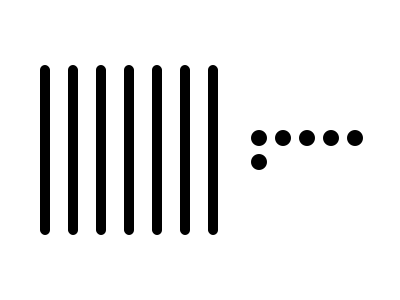
    2. A quick picture of 7 ten sticks and 6 ones dots. What number is this?

    Reading & Writing

    1. snail, sheep, toad, light

    Math · Week 24 Day 1

    I can add tens and ones to a two-digit number.

    Look: 63 + 20, 63 + 4 and 63 + 8

    1. 63 + 20: adding tens. 6 tens + 2 tens = 8 tens. 83.
    2. 63 + 4: adding ones. 3 + 4 = 7, no new ten. 67.
    3. 63 + 8: adding ones. 3 + 8 = 11, a new ten. 60 + 11 = 71.

    Solve.

    1. 1.
      17 + 70 = ____
    2. 2.
      52 + 7 = ____
    3. 3.
      39 + 5 = ____
    4. 4.
      47 + 40 = ____

    Circle the answer.

    1. 5.
      Circle the problem that makes a new ten.
      • 24 + 3
      • 24 + 9
      • 24 + 30
    2. 6.
      Circle the problem where only the tens change.
      • 56 + 30
      • 56 + 3
      • 56 + 8
    3. 7.
      85 + 5 = ____

    Challenge (optional)

    Which is greater, 45 + 9 or 45 + 10? How much greater?

    You need: Tens and ones kit (optional): straw bundles of 10 and loose straws, or base-ten rods and cubes, Pencil, Cubes and beans are small parts: keep them away from children under 3.

    Reading & Writing · Week 24 Day 1

    I can find feeling and sense words in poems I know.

    Look: feeling and sense words

    1. Read: The grass is soft.
    2. Ask: Does soft help me see, hear or feel? Feel. It is a sense word.
    3. Read: I am so glad! Glad tells how I feel. It is a feeling word.

    At the Park

    The sun is hot. The grass is soft. A dog can howl. A bird can chirp. I am so glad!

    Read the line. Circle the sense word or feeling word.

    1. 1.
      The grass is soft.
      • grass
      • soft
    2. 2.
      A dog can howl.
      • dog
      • howl
    3. 3.
      I am so glad!
      • I
      • glad
    4. 4.
      The storm was loud.
      • storm
      • loud

    Look at the picture. Write a sense word for it.

    1. 5.
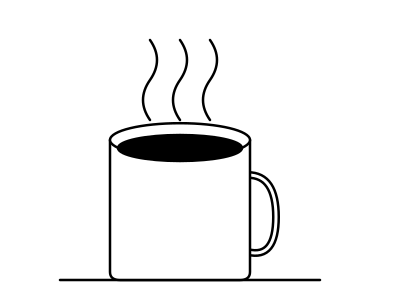
      A mug of cocoa with steam rising.
    2. 6.
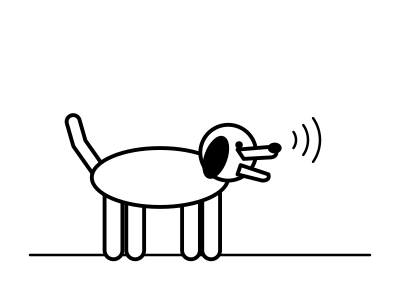
      A dog barking.
    3. 7.
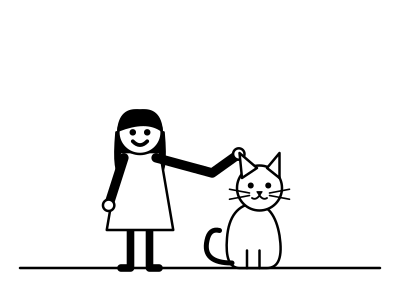
      A child petting a kitten.

    Challenge (optional)

    At the park, I feel ____.

    Social Studies · Week 24 Day 1

    I can think of reasons why something changed long ago and pick the best reason.

    Look: the most likely reason

    1. Name the change: long ago people did it one way; now we do it another way.
    2. Think of as many reasons as you can for the change.
    3. Pick the most likely reason, and tell why with a clue.

    Listen to the change and the two reasons. Point to A and to B as you read each reason, then your child circles the letter for the reason that is more likely.

    1. 1.
      Long ago, people kept food cold with big blocks of ice. Now we use refrigerators. Reason A: a refrigerator stays cold all the time. Reason B: people did not like the color of ice.
      • A
      • B
    2. 2.
      Long ago, people sent messages with riders on horses. Now we send texts. Reason A: horses forgot the way. Reason B: a text gets there in seconds.
      • A
      • B
    3. 3.
      Long ago, many people carried water from a well. Now many homes have water from a tap. Reason A: tap water is easy to get in the kitchen. Reason B: wells were too quiet.
      • A
      • B

    Talk and draw. Write what your child says.

    1. 4.
      Long ago, people swept rugs with brooms. Now many people use vacuum cleaners. Give 2 reasons why.
    2. 5.
      Which of your reasons is most likely? Tell why.
    3. 6.
      Draw the broom and the vacuum with an arrow from then to now.

    Challenge (optional)

    Think of something in our home that might change by the time you are a grown-up. Why might it change?

    You need: crayons