Science · Unit 4 · Weeks 19–24
Unit 4 test: Parents, young and family resemblance
15–20 min
For the grown-up
Give this test on Week 24 Day 4, after the Parent or Baby Charades game. Read every part aloud, as many times as your child likes; this test checks science thinking, not reading. Your child answers by talking, pointing, showing, circling or drawing, and you write their words exactly. It is untimed. Do not explain science words or hint at answers. Have ready the test page and crayons. Do not show the test page ahead of time. Part 1 is a new short text about an animal: you read it aloud (twice is fine), and your child tells what the parent does and how it helps. Part 2 is a picture page about kinds of parent help. Part 3 is a new parent and baby picture pair. Part 4 is about plants and babies in one family. Split it into two sittings of about 8 to 10 minutes: Parts 1 and 2 first, then Parts 3 and 4 later today or tomorrow. If your child is stuck in Part 1, reread the one sentence that tells what the parent does. If stuck in Part 3, point to one body part on the parent and ask your child to find it on the baby. Score with the answers and scoring notes, add the points and find the level. Note any idea to revisit in the Week 25 warm-ups (see Reteach).
Standards: 1-LS1-2, 1-LS3-1
Part 1: A Parent Helps: The Killdeer
Your grown-up reads the text aloud. Then listen to each question and tell your answer.
The Killdeer
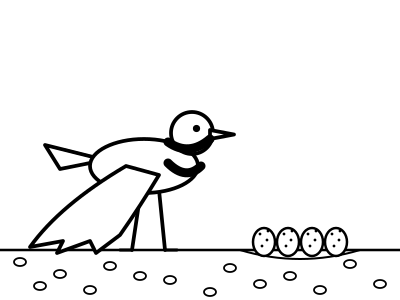 A killdeer is a bird. It makes its nest on bare ground. The nest is just a small dip in the dirt or gravel. The mother lays about 4 eggs. The eggs have speckles, so they look like little stones. A parent sits on the eggs to keep them warm. If a hungry animal comes near the nest, a parent killdeer calls loudly. It drags one wing on the ground as if the wing were hurt. The hungry animal follows the parent away from the nest. Then the parent flies back to its eggs.
- 1.What does a parent killdeer do when a hungry animal comes near the nest?
- 2.How does that help the eggs survive?
- 3.Tell one more thing a parent killdeer does for its eggs. Which kind of help is it?
Part 2: Kinds of Parent Help
Listen to each sentence. Circle the kind of help: feed, protect, keep warm or teach.
- 4.A mother dog lies down so her newborn puppies can drink her milk. Which kind of help is the mother giving?
- 5.A mother rabbit lines her nest with soft fur from her own body and dry grass. Which kind of help is that?
- 6.A mother grizzly bear digs up plant roots and bulbs to eat. Her cubs stay with her and learn where and when to find this food. Which kind of help is that?
Part 3: Alike, But Not Exactly: A Giraffe and Her Calf
Look at the picture. Listen to each question and tell your answer.
A Mother and Her Calf
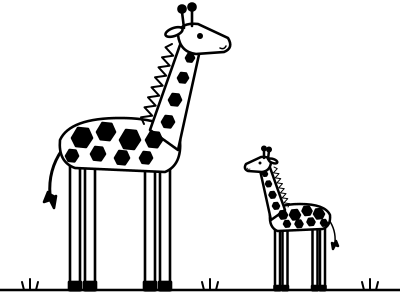
- 7.Tell one way the calf is like its mother.
- 8.Tell one way the calf is different from its mother.
- 9.Will the calf grow up to be a giraffe? Tell how you know.
Part 4: Plants and Babies in One Family
Listen to each question. Circle the picture, or tell your answer while your grown-up writes it.
- 10.
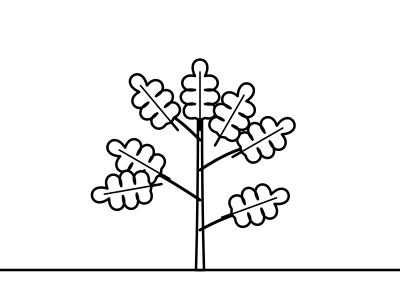
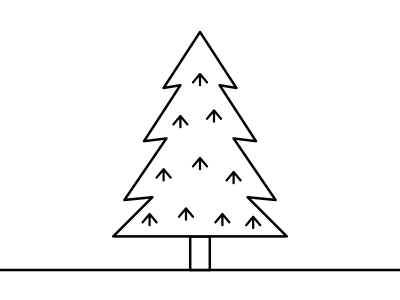
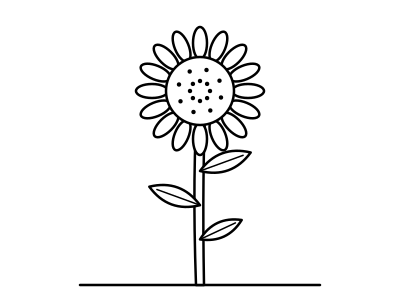
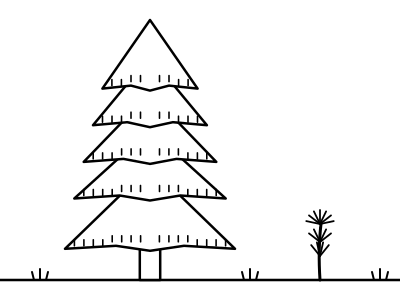 Tell one way they are alike and one way they are different.
- 11.
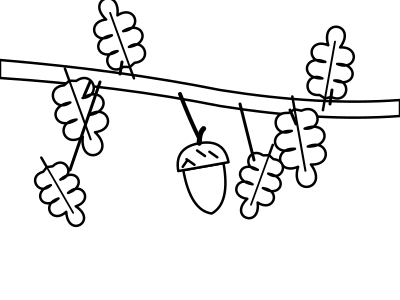 An acorn is a seed. This acorn falls to the ground and grows. Circle the plant it will grow into.
- 12.
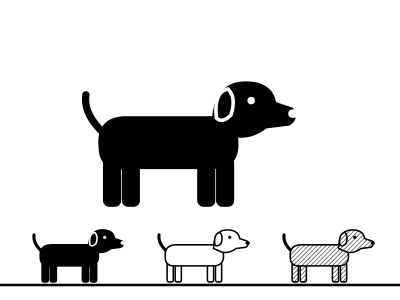 Are all 3 puppies dogs? Tell one way they are different from each other.
Score and next steps
Total: 17 points.
- Exceeding: 16–17 points
- Proficient: 12–15 points
- Approaching: 9–11 points
- Developing: 0–8 points
Write the score in the Assessment & Records pages. The directions above say when to move on and when to reteach first.