Science · Unit 5 · Weeks 25–30
Unit 5 test: Sky patterns: sun, moon, stars and daylight
15–20 min
For the grown-up
Give this test on Week 30 Day 4, after the What Comes Next? game. Read every part aloud, as many times as your child likes; this test checks science thinking, not reading. Your child answers by talking, pointing, showing, circling or drawing, and you write their words exactly. It is untimed. Do not explain science words or hint at answers. Have ready the test page, a pencil and crayons. Do not show the test page ahead of time. The test is a picture test with 4 parts: the sun's daily pattern, the moon's shape pattern, stars, and daylight through the year. Split it into two sittings of about 8 to 10 minutes: Parts 1 and 2 first, then Parts 3 and 4 later today or tomorrow. If your child is stuck on a part, point to the matching box on the Sky Patterns poster and ask your child to tell what it shows, then try the part again. Score with the answers and scoring notes, add the points and find the level. Note any idea to revisit in the Week 31 warm-ups (see Reteach).
Standards: 1-ESS1-1, 1-ESS1-2
Part 1: The Sun's Daily Pattern
Look at each picture. Write numbers, circle or tell.
- 1.
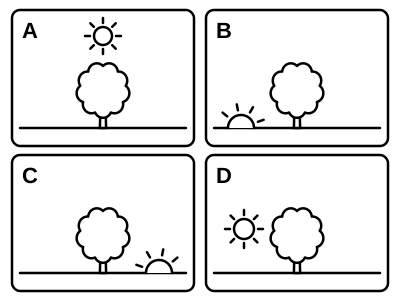 Write 1, 2, 3 and 4 to put the sun's day in order.
- 2.
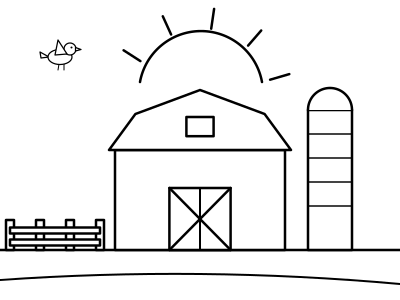 Tomorrow morning, will the sun come up behind the barn again? Tell how you know.
- 3.
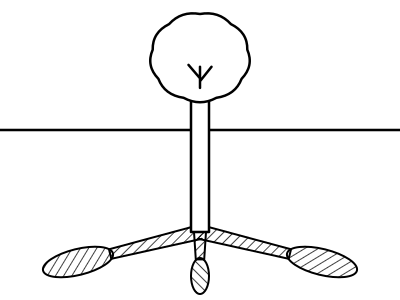 Circle the shadow from midday. Tell how you know.
Part 2: The Moon's Shape Pattern
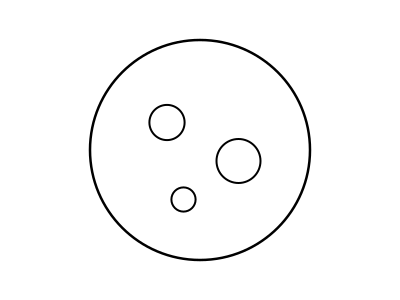
Look at the moon pictures. Circle or tell.
- 4.
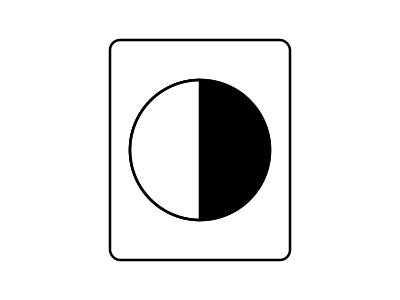
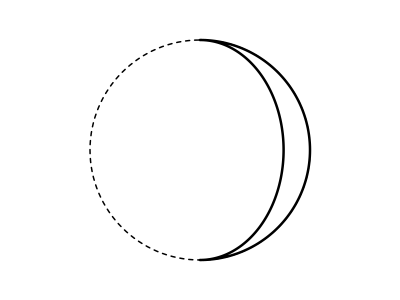
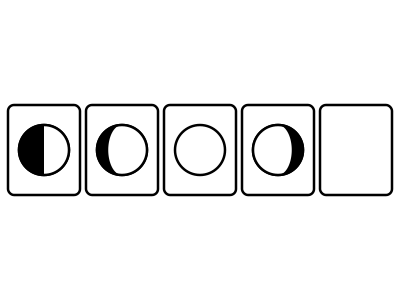 What comes next? Circle the moon that fills the empty box.
- 5.The moon is round tonight. About how long will it be until it looks round again? Your grown-up reads the choices: about 1 day, about 1 month or about 1 year. Circle one.
- 6.Tonight the moon looks like a thin curve. Will it look exactly the same tomorrow night, or a little different?
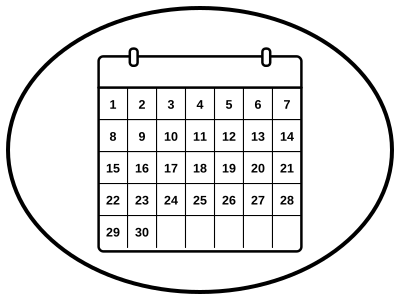
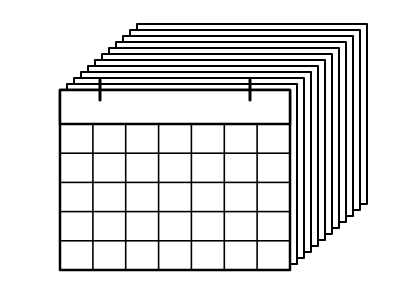
Part 3: Stars
Listen to each question. Circle or tell.
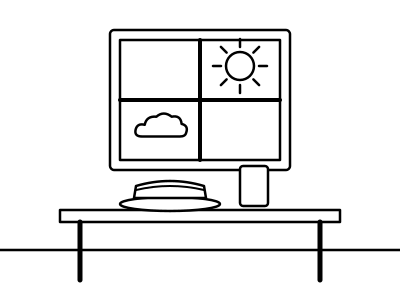
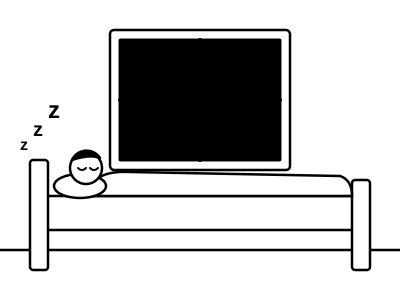
- 7.The sky is clear all day and all night. When could you look out the window and see many stars? Circle one.
- 8.Your grown-up shines a flashlight at the wall in a sunny room, and you can hardly see the spot. How is that like the stars in the daytime?
- 9.
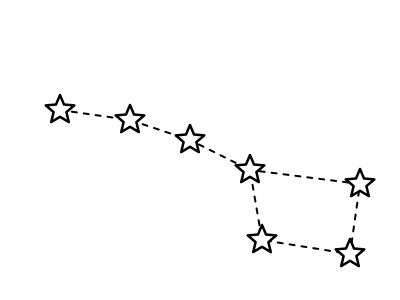 Your grown-up saw this spoon shape on a clear night when they were a child. If you look on a clear spring night, will you see the same spoon shape? Circle one.
- yes
- no
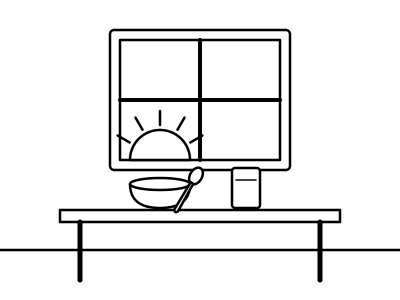
Part 4: Daylight Through the Year
Look at the graph or listen to the question. Circle or tell.
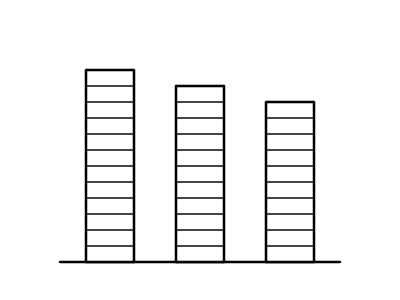
- 10.
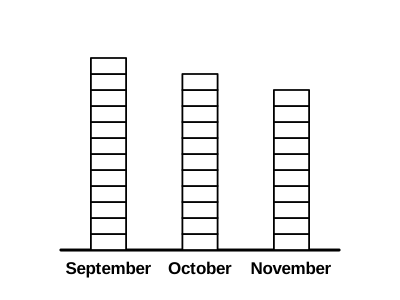 What happens to the daylight from September to November? Your grown-up reads the choices: it gets longer, it gets shorter, or it stays the same. Circle one.
- 11.Look at the same graph. Predict: will December have more daylight or less daylight than September? Tell how you know.
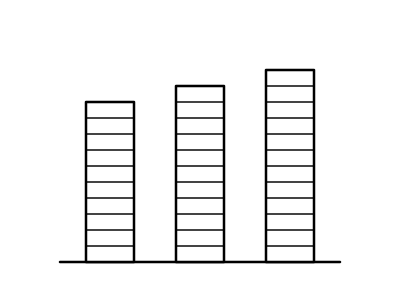
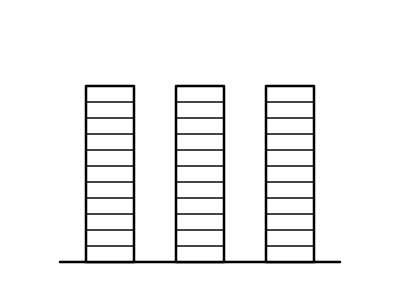
- 12.Your friend says, "Every day of the year has the same amount of daylight." Is your friend right? Tell how you know.
Score and next steps
Total: 17 points.
- Exceeding: 16–17 points
- Proficient: 12–15 points
- Approaching: 9–11 points
- Developing: 0–8 points
Write the score in the Assessment & Records pages. The directions above say when to move on and when to reteach first.