1First Grade

    Review: comparing numbers

    Grammar check-up

    Practice pages

    0 of 180 days complete · Saved on this device

    View all 180 days

    Math

    Review: comparing numbers

    I can compare two-digit numbers with >, < and =.

    Standards: 1.NBT.B.3

    Number practice (no timer)
    Mixed facts within 20, any strategy
    Builds on
    Week 17 comparing with >, < and =. One-minute check: "Put a symbol between 64 and 46." (64 > 46)

    New words

    • greater than: more than; the symbol is >
    • less than: fewer than; the symbol is <

    You need

    • Deck of cards ace to 9 (remove the 10s and face cards; ace = 1)
    • 3 symbol cards: >, < and =
    • 8 tricky comparison cards made from paper squares (written below)
    • Two paper labels: TRUE and FALSE
    • 9 straw bundles of 10 and 10 loose straws (or base-ten blocks) (for checking)
    • Notebook and pencil
    1. Warm-Up · 5 min

      Fluency: mixed facts within 20, any strategy. "8 + 4?" (12) "14 - 8?" (6) "9 + 9?" (18) Spaced review from Week 14: "How many tens in 80?" (8)

    2. Mini-Lesson · 10 min

      Say: "Today we review comparing." Ask your child to teach you the two steps. (Look at the tens first. If the tens are the same, look at the ones.) Write 52 _ 25 and 52 _ 57. Your child places the symbols and reads: "52 > 25" and "52 < 57." Ask: "Which pair needed the ones?" (52 and 57, because both have 5 tens.)

    3. Guided Practice · 10 min

      Tricky Sort. Your child reads each comparison card and sorts it under TRUE or FALSE, then fixes the false ones. 1) 41 > 39 (true) 2) 28 > 82 (false; 28 < 82) 3) 66 = 66 (true) 4) 70 < 69 (false; 70 > 69) 5) 13 < 31 (true) 6) 95 > 59 (true) 7) 47 < 44 (false; 47 > 44) 8) 80 > 8 tens (false; 80 = 8 tens) If stuck, say: "Read the card as a sentence. Then build both numbers and check."

    4. Play · 10 min

      Place Value War. Each player flips 2 cards and makes the greatest number they can. Place the symbol between the two numbers and read it. The winner explains: "I compared the tens first ..." Play 8 rounds. For the last 2 rounds, the smaller number wins.

    5. Exit Ticket · 3-5 min

      Put the objects to one side but leave them on the table. Read each question aloud. Your child answers out loud, with objects or with a quick drawing. Check each answer together right away.

    Exit ticket

    1. Put >, < or = between 70 and 69.
    2. Is 28 > 82 true or false?
    3. Put >, < or = between 47 and 44.
    Answers
    1. 70 > 69
    2. False. 28 is less than 82.
    3. 47 > 44
    Watch for, and help or stretch
    Watch for
    Thinking 80 and 8 tens are different because they look different.
    Try
    Build 8 tens with bundles and count them by tens: 10, 20, ... 80.
    Extra help
    Build both numbers for every card and say the sentence in words before choosing a symbol.
    Stretch
    Put 4 numbers in order from least to greatest: 69, 96, 60, 90. (60, 69, 90, 96)

    At home (optional): Play Place Value War with a family member.
    Reading & Writing

    Grammar check-up

    I can use capitals, end marks, nouns and joining words correctly.

    Standards: L.1.1, L.1.2, L.1.1.g

    Phonics
    r-controlled or (corn, fork, short, storm) and Unit 3 vowel team review
    Sight words
    each, about, out, into, use
    Reading
    The Lion and the Mouse and The Tortoise and the Hare (Aesop, public domain)
    Writing
    Opinion: revising an opinion piece; grammar check · Handwriting: final copy
    Builds on
    Writing opinions, joining words and end marks (Unit 3). One-minute check: your child tells you the end mark for an asking sentence. (a question mark)

    New words

    • edit: check and fix capitals, end marks and spelling
    • checklist: a list of things to check, one at a time

    You need

    • Book review from Week 17 (revised on Day 1)
    • Editing checklist on paper: capital at the start of each sentence; capitals for names, titles and I; an end mark on each sentence; a joining word (because, and or but)
    • Colored pencil for editing
    • Vowel team word cards
    • Sight word cards
    1. Phonics & Word Work · 15 min

      Unit 3 vowel team review. I do: read one word for each team: rain, play, feet, seat, boat, snow, light, sky, car, corn. We do: sort the same words by sound into long a, long e, long o, long i, /ar/ and /or/. (long a: rain, play. long e: feet, seat. long o: boat, snow. long i: light, sky. /ar/: car. /or/: corn.) You do: your child reads "The goat can play in the rain." "My car is in the dark barn." Dictation: rain, feet, boat, light, corn. If stuck, point to the team and ask: "What do these letters say together?"

    2. Sight Words · 5 min

      Review: each, about, out, into, use. Flip and Read: lay the five cards face down with last week's words. Your child flips a card, reads it and uses it in a short spoken sentence. Missed words go back in the pile.

    3. Read-Aloud & Shared Reading · 15 min

      Model editing on a sentence you write with mistakes: "the hen was fair because the cat did not help" Ask: "What needs fixing?" (a capital T at the start and a period at the end) Then write "i think stone soup is fun" Ask: "What needs fixing?" (capital I, capitals for Stone Soup, and a period) Show the checklist and go over each line. Reread "Big Dog and Short Pup" together and find one joining word. (Answers vary. Look for: and in "The net broke, and Big Dog got his leg out.")

    4. Writing & Handwriting · 15 min

      Your child edits the book review with the checklist, one line at a time, using a colored pencil: capitals, end marks, and at least one joining word (because, and or but). Then your child adds one sentence with but if there is none. Handwriting (4 min): final copy of the first line of the review.

    5. Exit Ticket · 5 min

      Your child shows the edits.

    Exit ticket

    1. Fix this sentence: i like the fox
    2. Show me one thing you fixed in your review.
    3. Read this sentence: "The goat can play in the rain."
    Answers
    1. I like the fox. (capital I, period at the end)
    2. Answers vary. Look for: a real correction, such as a capital or an end mark.
    3. The goat can play in the rain.
    Watch for, and help or stretch
    Watch for
    Checking the whole page at once and missing errors.
    Try
    Use a finger to point under each word and read it aloud slowly.
    Extra help
    Check for one thing at a time: first capitals only, then end marks only.
    Stretch
    Your child edits a sentence you write with three mistakes.

    At home (optional): Your child checks one sentence a family member writes for a capital and an end mark.

    Social Studies

    Places change over time + Quarter 2 review

    I can tell how a place in the world has changed and review what I learned this quarter.

    Standards: D2.Geo.10.K-2, D2.Geo.2.K-2

    Builds on
    People change places (Week 17). One-minute check: ask "Name one way people change a place." (building a park, a road or new homes)

    New words

    • then: a time in the past
    • now: the time today

    You need

    • An old and a new photo of the same place: your own town from your library's local history collection or the Library of Congress website (loc.gov), or a family photo of a place and a new photo of it
    • Before and after pictures of Mount St. Helens, Washington, from 1980 and from today (search the U.S. Geological Survey or U.S. Forest Service websites)
    • Q2 review cards (draw or write): mayor, library, goods, services, map, symbol, key, north, compass rose, island
    • A small bag or a plastic bowl to draw cards from
    • Crayons
    1. Warm-Up / Wonder · 5 min

      Spaced review: ask: "What is in our family safety kit?" (Answers vary: water, a flashlight, snacks.) Wonder question: "What did our town look like a long time ago?"

    2. Explore · 10–15 min

      Places change over time (about 8 minutes). Look at the old and new photos of the same place side by side. Ask: "What is the same? What is different?" (Sample: the same river, but now there are tall buildings and paved roads; horses then, cars now.) Say: "People change places by building, and nature changes places too." Nature example (note for grown-ups: this comes two days after the storms lesson, so keep it calm and short. Show only the then-and-now landscape pictures and regrowth photos, not eruption videos. If asked, say the eruption was long ago and scientists watch volcanoes closely today. If your child seems worried, skip ahead to the review game.) Say: "Mount St. Helens is a volcano in Washington State. On May 18, 1980, it erupted. The top of the mountain was lost and the mountain became about 1,300 feet shorter, and many trees around it were knocked down. Over the years since then, plants and animals have come back, and scientists still study how life returns." Look at the then and now pictures. Ask: "What changed? What came back?" (The mountain lost its top; plants are growing again.) Quarter 2 review game (about 7 minutes): play "Pick and Tell." Your child draws a review card and tells one thing about it. Mayor (leads a town). Library (a service the government gives everyone). Goods (things you can touch and buy). Services (work done for you). Map (a flat drawing from above). Symbol (a shape that stands for a thing). Key (tells what symbols mean). North (at the top of most maps). Compass rose (shows directions). Island (land with water all around). If stuck, give a choice of 2 answers.

    3. Talk & Record · 5–10 min

      Your child folds a paper in half and draws a place "then" on one side and "now" on the other. Sentence frame: "Then, ___. Now, ___."

    4. Exit Ticket · 3–5 min

      Ask the three questions aloud.

    Exit ticket

    1. Name one way a place can change over time.
    2. What came back to Mount St. Helens after it erupted?
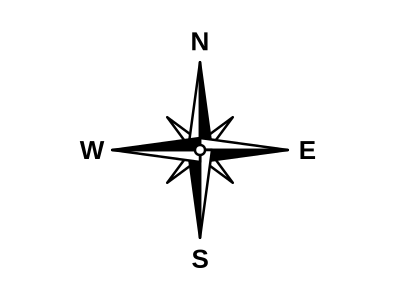
    3. What does a compass rose show?
    Answers
    1. Answers vary. Look for: new buildings or roads, more people, or a change from nature, such as a forest growing back.
    2. Plants and animals.
    3. Directions: north, south, east and west.
    Watch for, and help or stretch
    Watch for
    Thinking places in old photos look the same today.
    Try
    Point to one thing in the old photo and ask: "Can you find it in the new photo? What is there now?"
    Extra help
    Use only the photo pair of your own town and 5 review cards.
    Stretch
    Your child asks a grandparent or older neighbor how a place near home has changed, and adds it to the then-and-now page.

    At home (optional): Your child shows the then-and-now drawing to a family member and tells what changed.

    Practice

    Read each direction aloud. Your child works on the page; answers are in the grown-up view.

    Warm-up

    Remember?

    Math

    1. Which is greater, 67 or 76?
    2. True or false? 5 + 5 = 6 + 3

    Reading & Writing

    1. your, our, their
    2. The mole dug a hole.

    Math · Week 18 Day 3

    I can compare two-digit numbers with >, < and =.

    Look: 61 and 68

    1. Step 1: compare the tens. Both have 6 tens.
    2. Step 2: compare the ones. 1 is less than 8.
    3. Write 61 < 68. Read it: 61 is less than 68.

    Write >, < or =.

    1. 1.
      37 ___ 73
    2. 2.
      85 ___ 58
    3. 3.
      42 ___ 46
    4. 4.
      94 ___ 91
    5. 5.
      20 ___ 20

    Is it true? Circle yes or no.

    1. 6.
      33 > 38
      • yes
      • no
    2. 7.
      60 > 59
      • yes
      • no
    3. 8.
      4 tens = 40
      • yes
      • no

    Challenge (optional)

    Write two numbers where the greater number has fewer ones.

    You need: symbol cards >, < and = (optional)

    Reading & Writing · Week 18 Day 3

    I can use capitals, end marks, nouns and joining words correctly.

    Look: capitals, end marks, nouns and joining words

    1. Write: i like the hog. Ask: "What needs fixing?" (a capital I and a period)
    2. Say: "A noun names a person, an animal, a place or a thing: hog, corn, farm."
    3. Say: "Joining words like and, but and because make longer sentences."

    Big Dog and the Corn

    Big Dog and Short Pup went to the farm. Big Dog had corn, but Short Pup had a pork chop. They sat by the barn and had a snack.

    Fix each sentence. Use capitals and an end mark.

    1. 1.
      i fed the hog
    2. 2.
      max got corn for the hog
    3. 3.
      can we go to the farm

    Circle the nouns. Then circle the joining word that fits.

    1. 4.
      The hog ate the corn.
    2. 5.
      Pup sat by the barn.
    3. 6.
      I like corn, ___ I do not like ham.
      • and
      • but
    4. 7.
      Big Dog ran ___ Short Pup ran.
      • and
      • but

    Challenge (optional)

    Big Dog had corn, but Short Pup had a ___.

    Social Studies · Week 18 Day 3

    I can tell how a place in the world has changed and review what I learned this quarter.

    Look: then and now

    1. Put an old picture and a new picture of the same place side by side.
    2. Ask: "What is the same? What is different?"
    3. People change places by building, and nature changes places too.

    Listen. Circle yes or no.

    1. 1.
      Can people change a place by building new roads?
      • yes
      • no
    2. 2.
      Can nature change a place, like waves slowly changing the shape of a beach?
      • yes
      • no
    3. 3.
      Does a place always look the same forever?
      • yes
      • no

    Quarter review. Write what your child says.

    1. 4.
      What is the leader of a town called?
    2. 5.
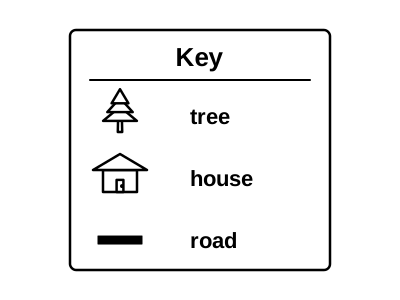
      A map key. What is this part of a map for?
    3. 6.
      Name one good: a thing you can touch and buy.
    4. 7.
      What do we call land with water all around it?
    5. 8.
      A compass rose. Point to the N. What direction is it?

    Challenge (optional)

    Ask an older family member how our town looked when they were young. Tell one thing that changed.