    1First Grade

    Quarter review: numbers and facts

    Quarter 2 review

    Practice pages

    0 of 180 days complete · Saved on this device

    View all 180 days

    Math

    Quarter review: numbers and facts

    I can show what I learned this quarter.

    Standards: 1.NBT.B.2, 1.OA.C.6, 1.OA.D.8, 1.OA.D.7

    Number practice (no timer)
    Mixed facts within 20, any strategy
    Builds on
    Weeks 10 to 17: subtraction strategies, the equal sign, missing numbers, and tens and ones. One-minute check: "13 - 4: get to 10 first." (13 - 3 = 10, 10 - 1 = 9) "How many tens in 73?" (7)

    New words

    • quarter: one of the four parts of the school year

    You need

    • Game board: a path of 20 squares drawn on paper, with Start and Finish
    • 2 game pieces (a coin and a button)
    • 1 die
    • 12 review cards made from paper squares (written below)
    • 9 straw bundles of 10 and 10 loose straws (or base-ten blocks)
    • Double ten frame on paper and 20 counters
    • Notebook and pencil
    1. Warm-Up · 5 min

      Fluency: mixed facts within 20, any strategy. "7 + 8?" (15) "16 - 8?" (8) "9 + 4?" (13) Spaced review from Week 1: "Break 10 into two parts three ways." (Answers vary, such as 6 and 4, 7 and 3, 5 and 5.)

    2. Mini-Lesson · 10 min

      Say: "We have reached the end of the second quarter of the year. Today we play a review game with what we learned since Week 10." Show the board and the cards. Say: "Roll the die and move. Then pick a card and solve it. If you get it right, move 1 more space. Use any tool you want." Model one card, thinking out loud: "Card: 12 - 8, think addition. 8 and what make 12? 8 + 4 = 12, so the answer is 4."

    3. Guided Practice · 10 min

      Review Game Board. Take turns. Read each card aloud. The player solves it and tells how; the other player checks. Cards with answers: 1) "13 - 4: get to 10 first." (9) 2) "12 - 8: think addition." (4) 3) "9 + 7" (16) 4) "7 + 8: use a near double." (15) 5) "Is 6 + 4 = 5 + 5 true or false?" (True; both are 10.) 6) "Is 12 - 3 = 8 true or false?" (False; 12 - 3 is 9.) 7) "8 + ? = 14" (6) 8) "? - 6 = 9" (15) 9) "11 = 5 + ?" (6) 10) "How many tens and ones in 73?" (7 tens and 3 ones) 11) "What number is 1 ten and 6 ones?" (16) 12) "Draw a quick picture of 40." (4 sticks and no dots) If stuck, say: "What kind of card is this: a fact, an equation or tens and ones? Which tool helps with that kind?"

    4. Quarter Wrap-Up · 10 min

      Quarter Wrap-Up. After the game, your child chooses a favorite card and teaches it back to you as if you were the student, using counters, bundles or drawings. Then ask: "Which card was hardest? What helped you?" Write your child's answer in the notebook. This tells you what to keep in the next quarter's warm-ups.

    5. Exit Ticket · 3-5 min

      Put the objects to one side but leave them on the table. Read each question aloud. Your child answers out loud, with objects or with a quick drawing. Check each answer together right away.

    Exit ticket

    1. Solve 14 - 6. How did you do it?
    2. 9 + ? = 16
    3. How many tens are in 58?
    Answers
    1. 8. Answers vary. Look for: 14 - 4 = 10 and 10 - 2 = 8, or 6 + 8 = 14.
    2. 7
    3. 5
    Watch for, and help or stretch
    Watch for
    Adding the two numbers in a missing-number card, such as 8 + ? = 14 becoming 22.
    Try
    Read it with "is the same as": "8 plus what is the same as 14?" Build 8 on the ten frames and count on to 14.
    Extra help
    Let your child pick which cards to solve, and use counters or bundles for every card.
    Stretch
    Your child writes 2 new hard cards for the game and you both solve them.

    At home (optional): Play the game board again with a family member using the same cards.
    Reading & Writing

    Quarter 2 review

    I can read vowel team words and sight words from this quarter.

    Standards: RF.1.3.c, RF.1.3.g, L.1.1.j

    Phonics
    r-controlled or (corn, fork, short, storm) and Unit 3 vowel team review
    Sight words
    each, about, out, into, use
    Reading
    The Lion and the Mouse and The Tortoise and the Hare (Aesop, public domain)
    Writing
    Opinion: revising an opinion piece; grammar check · Handwriting: final copy
    Builds on
    Quarter 2 phonics (Weeks 10 to 18). One-minute check: warm up with kite, home, rain, feet, boat, light, car and corn.

    New words

    • quarter: one of the four parts of the school year
    • statement: a telling sentence

    You need

    • Quarter 2 review word list (written in step 4)
    • All Quarter 2 sight word cards (Weeks 10 to 18, 45 words)
    • Sentence prompt cards: telling, asking, exclaiming, command
    • Printed decodable stories from Weeks 13 to 18
    • Book review (final copy)
    1. Phonics & Word Work · 15 min

      Quarter 2 Word Path. I do: read one word from each pattern: frog, kite, home, cute, rain, play, feet, seat, boat, snow, light, sky, car, corn. We do: lay the review word cards in a path; read the first 5 together. You do: your child walks the path and reads the rest of the list (blends, final e, ai/ay, ee/ea, oa/ow, igh/y, ar, or). Put a dot on any word that was slow. Dictation: cute, tail, sheep, night, farm. If stuck, ask: "Is there a silent e or a vowel team? What does it say?"

    2. Sight Words · 5 min

      Read through all 45 Quarter 2 sight words once, sorting them into Know It and Still Learning piles: his, her, him, has, had, how, now, down, know, just, let, may, old, open, over, round, stop, take, thank, think, them, then, when, walk, an, as, with, this, that, because, for, or, but, not, all, your, our, their, these, which, each, about, out, into, use. Take a stretch break after 20 words. The Still Learning pile becomes warm-up practice in Week 19.

    3. Read-Aloud & Shared Reading · 15 min

      Your child picks a favorite decodable story from this quarter, such as "Hen and the Grain", "Toad on the Road" or "Big Dog and Short Pup", and reads it to you with expression. Ask: "Who are the characters?" (Answers vary. Look for: the right characters.) Ask: "What is the problem, and how is it solved?" (Answers vary. Look for: a problem and solution from the story.) Ask: "Is there a lesson?" (Answers vary. Look for: a lesson that fits, such as small friends can help.)

    4. Writing & Handwriting · 15 min

      Sentence types (L.1.1.j): your child draws a prompt card and says one sentence of that type about a Unit 3 tale, then writes two of them: one telling sentence and one asking sentence. (Telling: The fox ate him. Asking: Who will help me? Exclaiming: The troll fell in the river! Command: Go away, Troll!) Handwriting (4 min): your child makes a final copy of the book review title and opinion sentence for the share on Day 5.

    5. Exit Ticket · 5 min

      Reflect on the quarter together.

    Exit ticket

    1. What is one thing you can read now that you could not read at the start of Quarter 2?
    2. Tell me an asking sentence about a fable.
    3. Read these words: sheep, boat, night.
    Answers
    1. Answers vary. Look for: a real skill, such as vowel teams, silent e words or ar and or words.
    2. Answers vary. Look for: a question with a voice that goes up, such as "Who won the race?"
    3. sheep, boat, night
    Watch for, and help or stretch
    Watch for
    Getting tired and guessing at the end of the long sight word list.
    Try
    Take a break after 20 words. Let your child stand, stretch and then finish.
    Extra help
    Split the word path into two halves with a break between, and do the sight words on a different part of the day.
    Stretch
    Your child reads "Toad on the Road" with expression and then retells it.

    At home (optional): Celebrate the quarter: your child reads a favorite story from Weeks 10 to 18 to the family.

    ScienceUnit test

    Unit 3 test: parts at work

    I can match parts to jobs and explain a design that copies nature.

    Standards: 1-LS1-1, K-2-ETS1-2

    Builds on
    All of Unit 3: animal and plant parts, beak tools, copying nature and the design project. One-minute check: your child names 2 inventions that copy nature.

    You need

    • Unit 3 test page
    • Prototype from Week 17
    • Sketch with changes
    • Part and job cards from Week 13 (for the review)
    • Crayons
    1. Warm-Up / Wonder · 5 min

      Spaced review: say each word from the unit and your child tells what it means or acts it out: outside part, survive, protect, beak, root, stem, leaf, spine, burr, invention, prototype, test. Wonder question: "What was your favorite part of being an engineer?"

    2. Review Game · 10 min

      Play "Part Charades." Take turns acting out a part's job while the other guesses the part: paddle with flat hands (webbed feet), curl up and cover your head (a shell), make your fingers into a beak and peck (a beak), stand still with arms up like a plant reaching for light (leaves). After each guess, the guesser tells the job. Keep it light; this is practice, not the test. If stuck guessing, the actor gives a hint: "It helps me swim."

    3. Check · 10–15 min

      Give the Unit 3 test. The test items are on the Unit 3 test page and are given separately; do not show them ahead of time. Part 1 is a short picture page: your child matches plant and animal parts to their jobs. Part 2 is an oral task: your child explains how a new invention shown on the test page copies a living thing, then shows their own prototype and tells which part it copies and how its shape helps. Read every part aloud. Your child may answer by talking, pointing, showing or drawing; write their words exactly. It is not timed. Take a break between parts if needed. Score it with the answer key and note any idea to revisit.

    4. Exit Ticket · 3–5 min

      Ask the two reflection questions aloud. These are about how the unit felt, not more test items.

    Exit ticket

    1. Which part of the test felt easy?
    2. What do you still wonder about plant and animal parts?
    Answers
    1. Answers vary. Look for: an honest answer that names a part.
    2. Answers vary. Look for: a real question, such as "Why do some birds have long beaks?"
    Watch for, and help or stretch
    Watch for
    Telling what a part looks like but not what job it does.
    Try
    Ask: "How does that part help the animal stay alive?"
    Extra help
    Give Part 1 on one day and Part 2 the next day. Your child may answer every part out loud.
    Stretch
    Your child sketches a new invention for a different problem that copies a different living thing.

    At home (optional): Your child finishes the last Parts at Work page: "My favorite animal part is ___ because it helps ___."

    Practice

    Read each direction aloud. Your child works on the page; answers are in the grown-up view.

    Warm-up

    Remember?

    Math

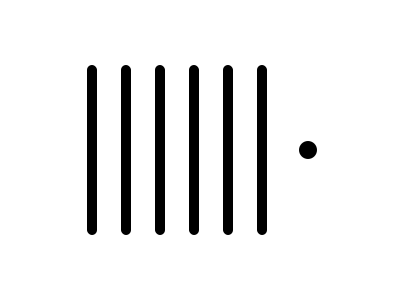
    1. A quick picture of 6 ten sticks and 1 ones dot. What number is this?
    2. Write the number one hundred twelve.

    Reading & Writing

    1. moan, goal, flow

    Math · Week 18 Day 4

    I can show what I learned this quarter.

    Look: 12 - 9

    1. The 9 is big, so think addition: 9 + ? = 12.
    2. 9 + 3 = 12.
    3. So 12 - 9 = 3.

    Solve.

    1. 1.
      15 - 7 = ___
    2. 2.
      8 + 5 = ___
    3. 3.
      9 + 6 = ___
    4. 4.
      17 - 8 = ___
    5. 5.
      ? + 4 = 11

    Answer each question.

    1. 6.
      Is 7 + 3 = 4 + 6 true?
      • yes
      • no
    2. 7.
      How many tens and ones are in 86?
    3. 8.
      Draw a quick picture of 52.

    Challenge (optional)

    Write a missing-number equation where the missing number is 6.

    You need: counters, ten frames and straw bundles (optional)

    Reading & Writing · Week 18 Day 4

    I can read vowel team words and sight words from this quarter.

    Look: vowel teams and kinds of sentences

    1. Read one word for each team: rain, play, feet, seat, boat, snow, light, sky, car, corn.
    2. Read "A Storm at the Farm" with expression. Ask: "Which sentence asks? Which shows a big feeling?"
    3. Say: "A telling sentence ends with a period. An asking sentence ends with a question mark."

    A Storm at the Farm

    A storm hit the farm. The goat ran to the barn. "Eek!" said the hen. "Is it night?" said the pup. Then the sun came out, and all of them had a snack.

    Read the words. Color the box by each word you can read.

    1. 1.
      wait stay meet bean toad
    2. 2.
      slow right try shark fort
    3. 3.
      each about out into use

    Circle the end mark. Then write an asking sentence about a tale.

    1. 4.
      Is it night ___
      • .
      • ?
    2. 5.
      The goat ran to the barn ___
      • .
      • ?
    3. 6.
      Eek, a storm ___
      • .
      • !
    4. 7.
      An asking sentence:

    Challenge (optional)

    Where did the goat run?

    You need: crayons

    Science · Unit test

    Today is the unit test. Open it to read the directions, print the child's pages and score it.

    Open the Science unit test