1First Grade

    Subtracting tens on the chart

    Reading for meaning

    Practice pages

    0 of 180 days complete · Saved on this device

    View all 180 days

    Math

    Subtracting tens on the chart

    I can hop up the hundred chart to subtract tens.

    Standards: 1.NBT.C.6

    Number practice (no timer)
    Subtracting tens: 7 tens - 3 tens
    Builds on
    Week 20 Day 3 (adding tens by hopping down the chart) and Week 19 (10 less is one row up). One-minute check: "On the chart, what is one row up from 60?" (50)

    New words

    • hop up: move a token one row up the chart, which is 10 less

    You need

    • Hundred chart to 120: printed, or drawn as 12 rows of 10 boxes (1 to 10 in the top row, 111 to 120 in the bottom row)
    • 2 small toys or buttons
    • 6 take-away cards made from paper squares: -10, -10, -20, -20, -30, -30
    • Notebook and pencil
    1. Warm-Up · 5 min

      Fluency: subtracting tens. "6 tens - 2 tens?" (40) "90 - 30?" (60) Spaced review from Week 21: "34 + 5?" (39)

    2. Mini-Lesson · 10 min

      Say: "One row up is 10 less. So we can subtract tens by hopping up." Put a toy on 90. Write 90 - 40. Say: "40 is 4 tens, so we hop up 4 rows." Hop while your child counts back: "80, 70, 60, 50." Ask: "Where did we land?" (50) Write 90 - 40 = 50. Ask: "What small fact matches?" (9 - 4 = 5) Say: "The tens numbers all sit in the last column of the chart. Each hop up is 10 less."

    3. Guided Practice · 10 min

      Your child hops up the chart, counts back by tens and writes the equation and the small fact. 1) 70 - 20 (60, 50; 50; 7 - 2 = 5) 2) 80 - 60 (20; 8 - 6 = 2) 3) 60 - 30 (30; 6 - 3 = 3) 4) 50 - 10 (40; 5 - 1 = 4) 5) 90 - 80 (10; 9 - 8 = 1) Then ask: "What is 40 - 40? Where would you land?" (0. You hop up past 10, off the top of the chart. The chart has no 0, so 0 is just off the top.) If stuck, say: "Put your finger on the start. Say 10 less out loud each time you hop up one row."

    4. Play · 10 min

      Climb Up the Chart. Both toys start on 90. Mix the take-away cards face down. On your turn, flip a card, say the equation (such as 90 - 20 = 70), then hop up to check. Put the card back and mix after every turn. You must stay at 10 or more. If a card would take you below 10, stay where you are. The first player to land exactly on 10 wins. Play 2 games.

    5. Exit Ticket · 3-5 min

      Put the objects to one side but leave them on the table. Read each question aloud. Your child answers out loud, with objects or with a quick drawing. Check each answer together right away.

    Exit ticket

    1. Start at 80 on the chart. Hop up 5 rows. Where do you land? Say the subtraction.
    2. 70 - 50 = ?
    Answers
    1. 30. 80 - 50 = 30.
    2. 20
    Watch for, and help or stretch
    Watch for
    Hopping across to the left instead of up, which takes away ones.
    Try
    Say: "Tens go up and down. Ones go across." Trace straight up the 0 column.
    Extra help
    Take away only 10 or 20 at a time, saying "10 less" on each hop.
    Stretch
    Cover the chart and solve 90 - 60 in your head. (30) Then check on the chart.

    At home (optional): Your child shows a family member how to subtract 30 from 90 on the hundred chart and explains the hops.
    Reading & Writing

    Reading for meaning

    I can read a poem and tell what it is about.

    Standards: RF.1.4.a, RL.1.10, RF.1.4.c

    Phonics
    Vowel team and vowel sound review (ai/ay, ee/ea, oa/ow, igh, ou/ow, oi/oy); reading with expression
    Sight words
    did, get, made, part, new
    Reading
    "The Swing" and "Bed in Summer" by Robert Louis Stevenson; reader's theater "The Three Little Pigs" (traditional)
    Writing
    Narrative and poetry: a poem anthology page with drawings · Handwriting: anthology copy
    Builds on
    Reading with expression (Days 1 and 2). One-minute check: your child reads Stay in the house! with feeling.

    New words

    • candle-light: the light from a candle
    • upset: unhappy or bothered about something
    • make sense: sound right and mean something

    You need

    • Printed "Bed in Summer" (in the lesson)
    • Printed "It Is Not Dark!" (in the lesson)
    • Sight word cards: did, get, made, part, new
    • A sticky note
    • Lined handwriting paper
    1. Phonics & Word Work · 15 min

      Two vowel teams can say the same sound. I do: write rain and play: ai and ay both say /ā/. We do: feet and seat (/ē/); boat and snow (/ō/). You do: your child reads street, tree, day, sky, light, right, bed from today's poem page. Read: "The kids play in the street." "A bird is in the tree." Dictation: street, tree, play, night. If stuck, show the key word for the team (rain, feet, boat, night) and read it first.

    2. Sight Words · 5 min

      Review: did, get, made, part, new. Flashlight Find: tape the cards to a wall, dim the lights, and say a word; your child finds it with a flashlight and reads it.

    3. Read-Aloud & Shared Reading · 15 min

      Say: "Readers read to understand. Let's find out why the child in this poem is upset." Read "Bed in Summer" once. Then echo-read it: you read two lines, your child reads them back. Bed in Summer (Robert Louis Stevenson, A Child's Garden of Verses, 1885; public domain) In winter I get up at night And dress by yellow candle-light. In summer, quite the other way, I have to go to bed by day. I have to go to bed and see The birds still hopping on the tree, Or hear the grown-up people's feet Still going past me in the street. And does it not seem hard to you, When all the sky is clear and blue, And I should like so much to play, To have to go to bed by day? Ask: "Why is the child upset?" (In summer the child has to go to bed while it is still light out, and others are still awake and playing.) Ask: "What can the child see and hear from bed?" (Birds hopping on the tree, and the feet of grown-ups walking past in the street.) Ask: "Is it fair? What do you think?" (Answers vary. Look for: an opinion and a reason.) Then your child reads this poem about the same idea, written with words they can sound out: It Is Not Dark! It is not dark. The sun is up. But Mom said it is time for bed. I can see a bird in the tree. I can see kids play in the street. I wish I could play with them! It is not right. Why must I go to bed by day? Cover one word with a sticky note (cover street). Your child reads the line, uses the rest of the sentence to guess the word, then lifts the note and checks. Ask: "Did your word make sense? Did it match the letters?" (street) If stuck, reread the sentence from the start and ask: "Where do kids play?"

    4. Writing & Handwriting · 15 min

      Your child writes one sentence telling what the poem is about: "The kid must go to bed in the day." or their own sentence, spelling by sounds. Handwriting (4 min): capitals N to Z. Your child writes each capital once, then circles the best three.

    5. Exit Ticket · 5 min

      Oral answers.

    Exit ticket

    1. What is "Bed in Summer" about?
    2. Read this: The sun is up at night. Does it make sense?
    3. What should you do when a word does not make sense?
    Answers
    1. A child who must go to bed in summer while it is still light and others are awake.
    2. The sun is up at night. No: it does not make sense. The sun is not up at night.
    3. Go back, reread and check the word.
    Watch for, and help or stretch
    Watch for
    Saying the poem is about going to bed without saying why the child is upset.
    Try
    Ask: "Is it dark or light at bedtime in the poem? How does the child feel about that?"
    Extra help
    Echo-read one verse only, then read "It Is Not Dark!" together.
    Stretch
    Your child tells how winter bedtime is different from summer bedtime in the poem. (In winter it is dark when the child gets up; in summer it is light at bedtime.)

    At home (optional): At bedtime, your child looks out the window and tells you if it is dark or light.

    Science

    Seeds grow into their parents' kind

    I can predict what a seed will grow into.

    Standards: 1-LS3-1

    Builds on
    Bean sprouts and seedlings (Weeks 21 and 22). One-minute check: ask "What did we plant in the cups?" (beans)

    New words

    • predict: to tell what you think will happen, using what you know
    • grown plant: a plant that is all grown up and can make its own seeds

    You need

    • 5 kinds of seeds or their pictures from seed packets: bean, sunflower (in its shell, from a garden seed packet), pumpkin, corn and apple (from an apple core)
    • 5 pictures of the grown plants: a bean plant, a sunflower, a pumpkin vine, a corn plant and an apple tree (from seed packets, a library book or drawings)
    • Bean cups and the Bean Bag Garden
    • Optional: 1 more plastic cup with soil and 2 sunflower seeds from a garden seed packet
    • Science Notebook and crayons
    1. Warm-Up / Wonder · 5 min

      Spaced review: ask: "Name one trait a puppy can share with its parent." (ear shape, fur color) Wonder question: "If you plant a sunflower seed, what will grow?" Safety: dry beans and seeds are small enough to choke on. Keep them away from children under 3, and remind your child that science seeds are never for eating, or for putting in noses or ears.

    2. Explore · 10–15 min

      Lay out the 5 seeds in a row and the 5 grown plant pictures in another row. Your child predicts which seed grows into which plant and matches them. Ask for each one: "Why do you think so?" (Answers vary. Look for: the seed came from that plant, such as apple seeds from the inside of an apple, or the packet picture shows it.) Check together: sunflower seeds grow into sunflowers, pumpkin seeds into pumpkin vines, corn kernels into corn plants, apple seeds into apple trees and beans into bean plants. Ask: "Could a corn seed grow into a sunflower?" (No. A seed grows into the same kind of plant it came from.) Now check the bean cups. Ask: "What grew?" (bean seedlings) "Is it the same kind of plant as the grown bean plant in the picture?" (yes) "How can you tell?" (It grew from a bean, and it is green with a stem and leaves like the grown plant.) "Is it exactly like the grown plant?" (No. It is smaller, has fewer leaves, and its first 2 leaves are single leaves, while the grown plant's leaves come in groups of 3.) Optional: plant 2 sunflower seeds from a garden seed packet in the extra cup. Say: "Snack sunflower seeds are roasted, so they usually will not grow." If stuck on a match, open the seed packet or book to the picture of the grown plant and ask: "Where did this seed come from?"

    3. Talk & Record · 5–10 min

      Your child draws a seed, an arrow and the grown plant it will become. Sentence frame: "A ___ seed will grow into a ___ because ___."

    4. Exit Ticket · 3–5 min

      Ask the three questions aloud. Your child answers by talking or drawing.

    Exit ticket

    1. A pea seed is planted. What will grow?
    2. Can a pumpkin seed grow into an apple tree? Why or why not?
    3. Name one way your bean seedling looks like a grown bean plant.
    Answers
    1. A pea plant.
    2. No. A seed grows into the same kind of plant it came from, so a pumpkin seed grows into a pumpkin plant.
    3. Answers vary. Look for: it is green with a stem and leaves like the grown plant, or (if it has grown them) new leaves in groups of 3 like the grown plant.
    Watch for, and help or stretch
    Watch for
    Matching by the size of the seed (thinking a big seed always makes a big plant).
    Try
    Show the small apple seed next to the big apple tree. Ask: "Is the seed big?" (No.) Say: "Tiny seeds can grow into big plants. What matters is what kind of plant the seed came from."
    Extra help
    Match 3 seeds only: bean, sunflower and apple.
    Stretch
    Your child draws what their bean seedling will look like when it is grown, with flowers and bean pods.

    At home (optional): At a store or in the kitchen, your child finds one fruit or vegetable with seeds inside and tells what plant those seeds would grow into.

    Practice

    Read each direction aloud. Your child works on the page; answers are in the grown-up view.

    Warm-up

    Remember?

    Math

    1. 28 + 5 = ?
    2. Start at 6. How many do you count on to get to 9?

    Reading & Writing

    1. been, call, find
    2. blob, cliff, plump

    Math · Week 23 Day 3

    I can hop up the hundred chart to subtract tens.

    Look: 80 - 30 on the chart

    1. Put your finger on 80.
    2. 30 is 3 tens, so hop up 3 rows: 70, 60, 50.
    3. You land on 50. 80 - 30 = 50.

    Use the hundred chart to find where you land.

    1. 1.
      Start at 90. Hop up 6 rows. ____
    2. 2.
      Start at 60. Hop up 1 row. ____
    3. 3.
      Start at 70. Hop up 4 rows. ____
    4. 4.
      Start at 50. Hop up 3 rows. ____

    Solve, using the chart if you want to.

    1. 5.
      Start at 40. Hop up 2 rows. 40 - ____ = ____
    2. 6.
      To subtract 70, how many rows do you hop up?
      • 7
      • 70
      • 1
    3. 7.
      90 - 50 = ____

    Challenge (optional)

    You hop up 5 rows and land on 10. Where did you start?

    You need: Hundred chart to 120, A button or small toy to hop, Pencil

    Reading & Writing · Week 23 Day 3

    I can read a poem and tell what it is about.

    Look: what is it about?

    1. Read the poem to the end.
    2. Ask: Who is it about? What is the big idea?
    3. If a word does not make sense, go back and read the line again.

    Rain Day

    Rain, rain, all day! I can not go out to play. I sit and look at the gray sky. I wish the sun was up high.

    Read the poem. Circle the best answer.

    1. 1.
      It is about ____.
      • a kid who can not go out in the rain
      • a kid at the beach
    2. 2.
      What is the sky like?
      • gray
      • bright
    3. 3.
      Is the sun up?
      • yes
      • no

    Read the line. Use the other words to pick the word that makes sense. Write it.

    1. 4.
      I sit in the boat on the ____. (sea or sky)
    2. 5.
      The goat ate the ____. (hay or day)
    3. 6.
      At night I turn on the ____. (light or right)
    4. 7.
      Dad got a ____ to paint the shed. (brush or boat)

    Challenge (optional)

    It is about ____.

    Science · Week 23 Day 3

    I can predict what a seed will grow into.

    Look: What will the seed grow into?

    1. A watermelon seed comes from a watermelon.
    2. Plant it, and it grows into a watermelon vine.
    3. A seed grows into the same kind of plant it came from.

    Circle what each seed will grow into.

    1. 1.
      A peach pit.
      • A peach tree.
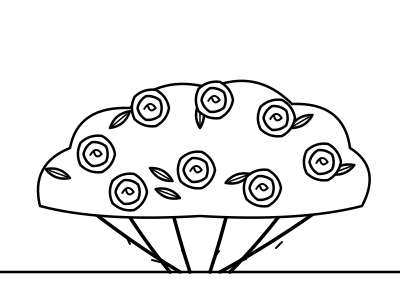
      • A rose bush.
    2. 2.
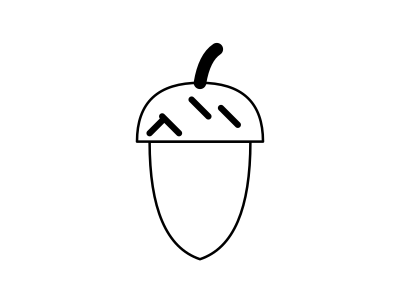
      An acorn.
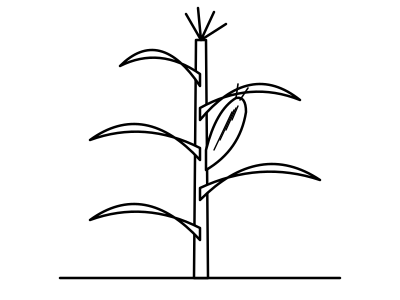
      • A corn plant.
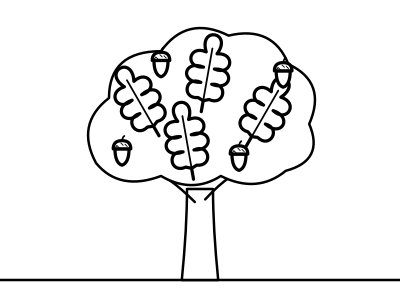
      • An oak tree.
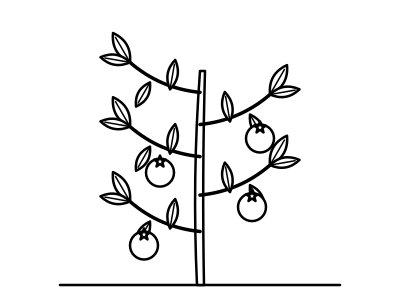
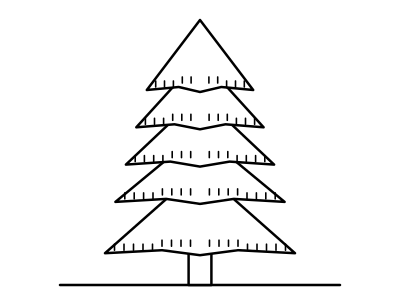
    3. 3.
      Tomato seeds.
      • A tomato plant.
      • A pine tree.
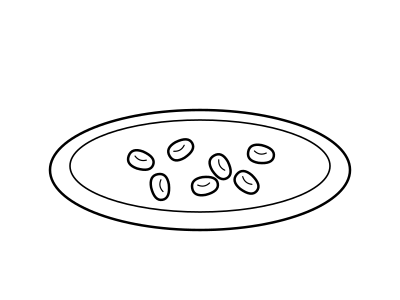
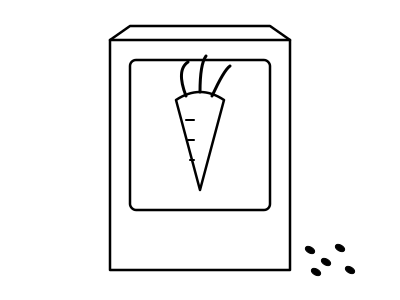
    4. 4.
      A packet of carrot seeds.
      • An apple tree.
      • A carrot plant.

    Circle yes or no, or draw.

    1. 5.
      Will a lemon seed grow into a lemon tree?
      • yes
      • no
    2. 6.
      Does a seedling look exactly like its grown plant?
      • yes
      • no
    3. 7.
      Think of a fruit you have eaten that has seeds. Draw the fruit and the plant its seeds would grow into.

    Challenge (optional)

    Your bean seedling has 2 single leaves. The grown bean plant has leaves in groups of 3. Is the seedling still a bean plant?

    You need: crayons