1First Grade

    Lesson + weekly check: subtracting tens

    Share and check: vowel review

    Practice pages

    0 of 180 days complete · Saved on this device

    View all 180 days

    MathWeekly check

    Lesson + weekly check: subtracting tens

    I can subtract tens and explain how.

    Standards: 1.NBT.C.6

    Number practice (no timer)
    Subtracting tens: 7 tens - 3 tens
    Builds on
    Days 1 to 4: subtracting tens with the kit, adding facts, the chart and stories. One-minute check: "60 - 40?" (20)

    New words

    • model: objects or a drawing that show the math

    You need

    • 9 tens: straw bundles of 10, base-ten rods, or paper ten-strips
    • 8 flip cards made from paper squares: 70 - 10, 90 - 30, 40 - 20, 80 - 70, 60 - 40, 50 - 10, 30 - 10, 90 - 90
    • The stored Week 23 check and its answer key
    • Notebook and pencil
    1. Warm-Up · 5 min

      Fluency: subtracting tens. "9 tens - 4 tens?" (50) "70 - 70?" (0) Spaced review from Week 22: "47 + 6?" (53)

    2. Short Lesson: Review Game · 10 min

      Tens Flip. Mix the flip cards face down. Take turns flipping a card. The player solves it with the tens, says the answer and the related adding fact, and keeps the card if both are right. Answers: 70 - 10 = 60 (60 + 10 = 70), 90 - 30 = 60 (60 + 30 = 90), 40 - 20 = 20 (20 + 20 = 40), 80 - 70 = 10 (10 + 70 = 80), 60 - 40 = 20 (20 + 40 = 60), 50 - 10 = 40 (40 + 10 = 50), 30 - 10 = 20 (20 + 10 = 30), 90 - 90 = 0 (0 + 90 = 90). If stuck, say: "How many tens do you start with? How many go away?"

    3. Weekly Check · 15 min

      Give the stored Week 23 check. The printed check has 7 items. It covers these goals: (1) I can subtract tens from tens; (2) I can explain how I subtract tens. Read each item aloud. There is no time limit. If your child is stuck, say only: "How many tens? What small fact helps?" Do not give the answer. Score it with the answer key. Secure: 6 or 7 of the 7 items right. If the check is secure, start Week 24. If it is not, first do the reteach step on the check page for each group of items missed, then start Week 24.

    4. Exit Ticket · 3-5 min

      After the check, ask these two questions. Then go over any missed check items together.

    Exit ticket

    1. 70 - 60 = ?
    2. Kai has 50 stamps and gives 30 to a friend. How many stamps does Kai have left?
    Answers
    1. 10
    2. 20 (50 - 30 = 20)
    Watch for, and help or stretch
    Watch for
    Writing the small fact answer without the 0, such as 80 - 50 = 3.
    Try
    Ask: "3 what? 3 ones or 3 tens?" (3 tens) "How do we write 3 tens?" (30)
    Extra help
    Let your child build each check problem with the tens, and note it on the check.
    Stretch
    After the check, ask: "Which two tens numbers have a difference of 40? Find 3 pairs." (Answers vary, such as 50 and 10, 60 and 20, 90 and 50.)

    At home (optional): Your child explains one check problem to a family member with the tens or a drawing.
    Reading & WritingWeekly check

    Share and check: vowel review

    I can read vowel team words and perform a poem with expression.

    Standards: RF.1.3.c, RF.1.4.b, RF.1.3.g

    Phonics
    Vowel team and vowel sound review (ai/ay, ee/ea, oa/ow, igh, ou/ow, oi/oy); reading with expression
    Sight words
    did, get, made, part, new
    Reading
    "The Swing" and "Bed in Summer" by Robert Louis Stevenson; reader's theater "The Three Little Pigs" (traditional)
    Writing
    Narrative and poetry: a poem anthology page with drawings · Handwriting: anthology copy
    Builds on
    This week's vowel team review and reading with expression. One-minute check: warm up with play, seat, snow.

    New words

    • perform: to read or act something for an audience

    You need

    • Word cards: 12 mixed vowel team words (written in step 4)
    • 12 game cards (index cards): rain, play, feet, seat, boat, snow, night, tray, cloud, cow, coin, toy
    • Sight word cards: did, get, made, part, new, been, call, find, long, day
    • Recording sheet
    • The anthology page (from Day 4)
    • Lined handwriting paper
    1. Review Game · 10 min

      Vowel Team Walk: lay 12 cards in a path: rain, play, feet, seat, boat, snow, night, tray, cloud, cow, coin, toy. Your child steps on each card and reads it. On a long vowel team card, your child stretches tall; on an ou, ow, oi or oy card, your child crouches. If stuck on a word during the game (not during the check), cover all but the first sound, say it together, then uncover the rest and blend.

    2. Sight Words · 5 min

      Review: did, get, made, part, new, been, call, find, long, day. Mystery Word: "It has 3 letters and starts with n." (new) "It has 4 letters and ends with t." (part) "It has 4 letters and starts with m." (made) Then your child gives you a clue.

    3. Weekly Check · 15 min

      The printed check has 10 items. It covers these goals: (1) I can read vowel team words and perform a poem with expression; (2) I can read my part and tell what a poem is about; (3) I can use capital letters and copy a poem neatly. Score item 4 (your child performs the poem with expression) with a simple scale: flat, some expression, or expression that matches the words. Give no hints. Record each answer. Secure: 10 of 12 words in items 1-2, 4 of 5 sight words, some expression in item 4, and 4 of 6 on items 5-10. For any part that is not yet secure, use the matching reteach step on the check page next week.

    4. Share & Listen · 10 min

      Your child performs the poem again for a family member. The listener tells which line had the best expression.

    5. Handwriting · 5 min

      Your child copies the title of the anthology poem neatly at the top of a new page for next week. Circle the best word.

    6. Exit Ticket · 5 min

      Talk about the week.

    Exit ticket

    1. Read two words with a vowel team that says a long vowel.
    2. How did you use your voice when you performed?
    Answers
    1. Answers vary. Look for: correct reads such as rain and boat.
    2. Answers vary. Look for: loud, soft, fast, slow or a feeling.
    Watch for, and help or stretch
    Watch for
    Reading ea as short e, or ow as /ow/ in a long o word.
    Try
    Before the check (not during it): "If one sound does not make a word, try the other sound for that team."
    Extra help
    Let your child choose the poem for item 4 (Up I Go! or Snow Day) and practice it once before the check.
    Stretch
    Your child performs a second poem with a different feeling. Do not score it.

    At home (optional): Your child performs a poem for the family at dinner.

    ScienceWeekly check

    My evidence account

    I can use my observations to explain that babies are like their parents but not exactly.

    Standards: 1-LS3-1

    Builds on
    Seeds grow into their parents' kind (Day 3). One-minute check: ask "What will a corn seed grow into?" (a corn plant)

    New words

    • evidence: what you saw or found that shows something is true
    • explain: to tell why or how

    You need

    • Science Notebook
    • Bean cups and the Bean Bag Garden
    • Leaf rubbings from Week 22
    • Same and Different chart
    • Parent and baby match cards from Week 21
    • Week 23 science check page (given separately)
    • Crayons and pencil
    1. Warm-Up / Wonder · 5 min

      Spaced review: ask: "Was each bean seedling exactly like the others?" (No.) Wonder question: "How do scientists show that what they say is true?" (They use what they saw: evidence.)

    2. Review Game · 10 min

      Play "Evidence Hunt." Say: "Evidence is what we saw with our own eyes." Set out the bean cups, the leaf rubbings, the chart and the match cards around the room. Your child walks to each one and tells what it shows. At the bean cups, ask: "What does this show?" (Beans grew into bean plants, but the seedlings are not exactly alike.) At the leaf rubbings, ask: "What does this show?" (Leaves from one plant have the same shape but different sizes or marks.) At the match cards, ask: "What does this show?" (Baby animals are the same kind as their parents.) At the chart, ask: "What does this show?" (Kittens or puppies look like their parents but not exactly.) Your child picks the 2 pieces of evidence they like best for the check. If stuck, ask: "What did you see happen?" and point to the drawing they made that day.

    3. Check · 10 min

      Give the Week 23 science check. The check items are on the Week 23 check page; do not show them ahead of time. Read each part aloud. Your child answers by talking, pointing, showing with the real materials or drawing. You write down their words exactly. It is not timed; stop and finish later if your child is tired. Make a check mark next to each part your child shows on their own. The printed check has 7 items. It covers these goals: (1) I can tell how puppies look like their parents; (2) I can predict what a seed will grow into; (3) I can use my observations to explain that babies are like their parents but not exactly. This week the check is a draw-and-tell task using the frame "Young plants and animals are like their parents because ___. They are not exactly alike because ___." Your child may dictate the words. Look for: two real pieces of evidence from their own observations, one showing how young are like their parents (same kind of plant or animal, green stem and leaves, same ear shape) and one showing how they are not exactly alike (size, color, spots, lengths). If stuck on a part, walk back to the bean cups or the chart and ask: "What did you see here?" Secure: 5 of 7 correct, including items 1 and 2 (two real pieces of evidence, one for "like" and one for "not exactly"). If the check is not yet secure, use the reteach step on the check page that matches the items missed.

    4. Exit Ticket · 3–5 min

      Ask the three questions aloud. Your child answers by talking or drawing.

    Exit ticket

    1. What is evidence?
    2. Tell me one piece of evidence that young plants are like their parents.
    3. Tell me one piece of evidence that young animals are not exactly like their parents.
    Answers
    1. Something you saw or found that shows an idea is true.
    2. Answers vary. Look for: our beans grew into bean plants, or the seedlings were green with a stem and leaves like the grown bean plant.
    3. Answers vary. Look for: kittens in one litter had different colors, or puppies were smaller and had different spots.
    Watch for, and help or stretch
    Watch for
    Telling what they think ("Babies are cute") instead of what they saw.
    Try
    Ask: "What did your eyes see? Show me the drawing or the plant."
    Extra help
    Your child gives one piece of evidence for each sentence by pointing to a drawing, and you write their words.
    Stretch
    Your child adds a third piece of evidence and a drawing.

    At home (optional): Your child reads or tells their evidence page to a family member.

    Practice

    Read each direction aloud. Your child works on the page; answers are in the grown-up view.

    Warm-up

    Remember?

    Math

    1. 54 + 3 = ?
    2. Which is greater, 64 or 46?

    Reading & Writing

    Math · Week 23 check

    Weekly check

    How to give it: Read every item aloud. It is untimed. Your child may use tens, a drawing or the hundred chart. If your child is stuck, say only: "How many tens? What small fact helps?" Do not give the answer. There are 7 parts. 6 or 7 right: start Week 24. 5 right: redo Day 3 Guided Practice before Week 24. 4 or fewer right: redo Day 1 and Day 2 with the tens before Week 24.

    Secure when: 6 or 7 of the 7 items right.

    • I can subtract tens from tens.
    • I can explain how I subtract tens.
    1. 1.
      90 - 10 = ____
    2. 2.
      40 - 30 = ____
    3. 3.
      20 - 20 = ____
    4. 4.
      ____ - 30 = 50
    5. 5.
      9 sticks with 5 of them crossed out. Write the subtraction the picture shows.
    6. 6.
      A farm has 60 cows. 40 cows go into the barn. How many cows are still in the field?
    7. 7.
      Tell how you solved the cow story.

    Reading & Writing · Week 23 check

    Weekly check

    How to give it: Give it in one sitting, untimed. Read each direction aloud. For items 1-3, your child reads each word aloud and you tick the ones read right; give no hints. For item 4, your child performs Up I Go! or another poem from the poem page; score flat, some expression, or expression that matches the words. Your child reads The Boat aloud before items 5-8. For item 7, say: Which voice fits this line? For item 8, say: Which word makes sense? For item 9, say: Write it again with capital letters. For item 10, say the word float twice.

    Secure when: 10 of 12 words in items 1-2, 4 of 5 sight words, some expression in item 4, and 4 of 6 on items 5-10.

    • I can read vowel team words and perform a poem with expression.
    • I can read my part and tell what a poem is about.
    • I can use capital letters and copy a poem neatly.

    The Boat

    Gail and Dad sail in a boat. The boat can rock and sway. "Sit down!" said Dad. Gail sat down. Then they see a seal on a rock. "What a day!" said Gail.

    1. 1.
      paint clay sweep leap coast grow
    2. 2.
      night shout frown join toy teeth
    3. 3.
      did get made part new
    4. 4.
      Up I Go! (Parent: or Snow Day from the Day 4 page.)
    5. 5.
      Who is in the boat?
      • Gail and Dad
      • Gail and Mom
    6. 6.
      What do they see on a rock?
      • a seal
      • a goat
      • a toad
    7. 7.
      "What a day!" said Gail.
      • glad
      • sad
    8. 8.
      The boat can float on the ____.
      • sea
      • seat
    9. 9.
      gail and dad sail.
    10. 10.
      Spell it: ____

    Science · Week 23 check

    Weekly check

    How to give it: Read every direction, question and choice aloud. It is not timed; stop and finish later if your child is tired. Your child answers by talking, pointing, showing with the real materials or drawing, and you write their words exactly. Set out the bean cups, the leaf rubbings, the Same and Different chart and the match cards. Your child may dictate every sentence. If stuck, walk back to the bean cups or the chart and ask "What did you see here?"

    Secure when: 5 of 7 correct, including items 1 and 2 (two real pieces of evidence, one for "like" and one for "not exactly").

    • I can tell how puppies look like their parents.
    • I can predict what a seed will grow into.
    • I can use my observations to explain that babies are like their parents but not exactly.
    1. 1.
      Finish and tell. Your grown-up writes it: "Young plants and animals are like their parents because ___."
    2. 2.
      Finish and tell. Your grown-up writes it: "They are not exactly alike because ___."
    3. 3.
      Draw one piece of your evidence.
    4. 4.
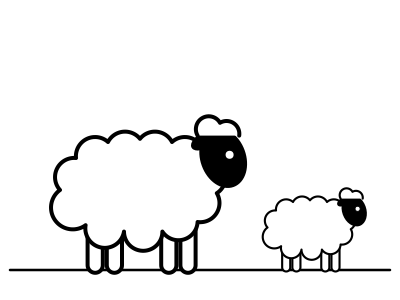
      A mother sheep and her lamb. Make a mark on one trait the lamb shares with its mother.
    5. 5.
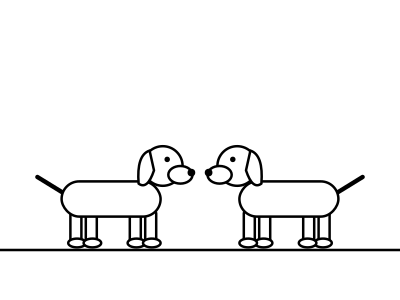
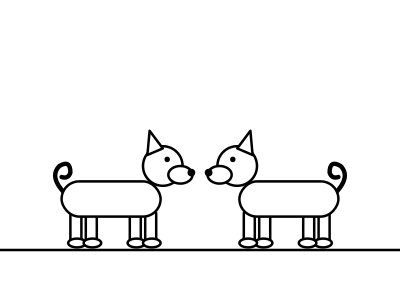
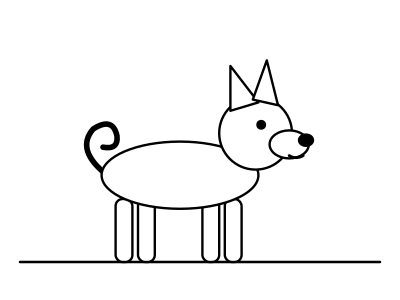
      A puppy with pointed ears and a curly tail. Circle its parents.
      • Dogs with floppy ears and straight tails.
      • Dogs with pointed ears and curly tails.
    6. 6.
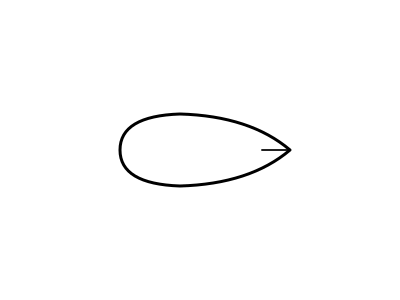
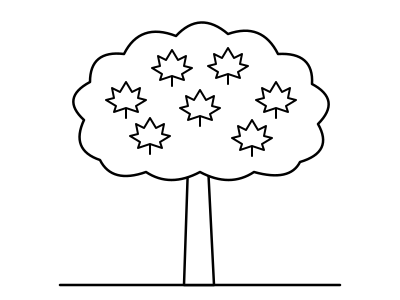
      This is a cucumber seed. A cucumber seed. Circle what it will grow into.
      • A maple tree.
      • A cucumber vine.
    7. 7.
      Could an apple seed grow into an apple tree?
      • yes
      • no