1First Grade

    Taking away tens

    Expression in reading

    Practice pages

    0 of 180 days complete · Saved on this device

    View all 180 days

    Math

    Taking away tens

    I can take tens away from tens.

    Standards: 1.NBT.C.6

    Number practice (no timer)
    Subtracting tens: 7 tens - 3 tens
    Builds on
    Week 20 (adding tens) and Week 2 (take-away stories). One-minute check: "How many tens are in 70?" (7)

    New words

    • subtract: take away
    • difference: the answer when you subtract

    You need

    • 18 tens, 9 for each player: straw bundles of 10, base-ten rods, or paper ten-strips (strips of 10 squares, cut by an adult). Paper ten-strips are easiest to make in this amount.
    • 1 die
    • Notebook and pencil
    1. Warm-Up · 5 min

      Fluency: subtracting tens. "7 - 3?" (4) "So 7 tens - 3 tens?" (4 tens, 40) "9 - 5?" (4) Spaced review from Week 20: "20 + 70?" (90)

    2. Mini-Lesson · 10 min

      Say: "We added tens. Today we take tens away." Build 70 with 7 tens. Write 70 - 30. Ask: "How many tens is 30?" (3) Take away 3 tens, one at a time, while your child counts back by tens: "60, 50, 40." Ask: "How many tens are left?" (4) "What number?" (40) Write 70 - 30 = 40. Under it write 7 - 3 = 4. Say: "7 tens take away 3 tens is 4 tens. The small fact helps." Then 60 - 60: build 6 tens and take all 6 away. Ask: "What is left?" (Nothing. 0.) Write 60 - 60 = 0.

    3. Guided Practice · 10 min

      Your child builds each one, takes the tens away, writes the equation and the small fact. 1) 90 - 50 (40; 9 - 5 = 4) 2) 80 - 20 (60; 8 - 2 = 6) 3) 50 - 40 (10; 5 - 4 = 1) 4) 40 - 10 (30; 4 - 1 = 3) 5) 30 - 30 (0; 3 - 3 = 0) If stuck, say: "Count the tens you start with. Take away the tens one at a time and count back by tens."

    4. Play · 10 min

      Tens Take-Away. Each player starts with 9 tens (90). On your turn, roll the die. 1, 2 or 3: take away 1 ten. 4 or 5: take away 2 tens. 6: take away 3 tens. Say the equation, such as 90 - 20 = 70, and write it. You must land exactly on 0. If the roll would take away more tens than you have, skip that turn. The first player to reach 0 wins. Play 2 games.

    5. Exit Ticket · 3-5 min

      Put the objects to one side but leave them on the table. Read each question aloud. Your child answers out loud, with objects or with a quick drawing. Check each answer together right away.

    Exit ticket

    1. 80 - 50 = ?
    2. You have 6 tens. You take away 2 tens. What number is left?
    3. What small fact helps with 90 - 70? What is 90 - 70?
    Answers
    1. 30
    2. 40
    3. 9 - 7 = 2. 20.
    Watch for, and help or stretch
    Watch for
    Writing 70 - 30 = 4, forgetting the 4 means 4 tens.
    Try
    Count the tens left by tens: "10, 20, 30, 40." Write 40.
    Extra help
    Use only numbers up to 50 and take away 1 or 2 tens.
    Stretch
    Ask: "What tens number can you take from 80 to leave 50?" (30)

    At home (optional): Use dimes or pretend dimes: start with 8 dimes (80 cents) and spend 3 dimes. How many cents are left? (50) Try 2 more.

    Reading & Writing

    Expression in reading

    I can read with expression that matches the words.

    Standards: RF.1.4.b, RL.1.4, RF.1.3.c

    Phonics
    Vowel team and vowel sound review (ai/ay, ee/ea, oa/ow, igh, ou/ow, oi/oy); reading with expression
    Sight words
    did, get, made, part, new
    Reading
    "The Swing" and "Bed in Summer" by Robert Louis Stevenson; reader's theater "The Three Little Pigs" (traditional)
    Writing
    Narrative and poetry: a poem anthology page with drawings · Handwriting: anthology copy
    Builds on
    Reading smoothly (Weeks 19 to 22) and vowel teams (Weeks 13 to 16). One-minute check: your child reads rain, feet, boat, night.

    New words

    • expression: using your voice to show feeling
    • pleasant: nice and enjoyable
    • countryside: land with fields, farms and trees, away from a town

    You need

    • Printed "The Swing" (in the lesson)
    • 12 vowel team cards (index cards): rain, play, feet, seat, boat, snow, night, tray, cloud, cow, coin, toy
    • Two header cards you write: long vowel teams, and other vowel teams
    • Sight word cards: did, get, made, part, new (5 index cards)
    • Printed "Up I Go!" (in the lesson)
    • A poetry folder (a paper folder or a stapled booklet) for this week's anthology page
    • Lined handwriting paper
    1. Phonics & Word Work · 15 min

      Vowel team review. I do: say "Some vowel teams make a long vowel sound: ai and ay say /ā/, ee and ea say /ē/, oa and ow say /ō/, igh says /ī/. Others make a new sound: ou and ow say /ow/, oi and oy say /oi/." Read rain and cloud and place them under the headers. We do: read and sort play, feet, cow, coin. You do: your child reads and sorts the rest: seat, boat, snow, night, tray, toy. (Long vowel teams: rain, play, feet, seat, boat, snow, night, tray. Other vowel teams: cloud, cow, coin, toy.) Read: "The boat is on the sea at night." "Play with the toy in the rain." Dictation: tray, seat, light, boil. If stuck, ask: "Which two letters are the team? What sound do they make together?"

    2. Sight Words · 5 min

      Introduce this week's words with see-say-spell-write. For each card: Say: "This word is ___. Say it with me." Your child reads it, spells it aloud while tapping each letter, writes it once while saying each letter, and reads it again. Draw a small heart over any part we must learn by heart: did (regular); get (regular: the g is hard, as in go); made (a_e, regular); part (ar, regular); new (ew says /oo/, a team you have not learned yet: heart over ew). Finish by reading all five cards in mixed order twice. If stuck, cover the tricky part, read the rest together, then uncover it and say the whole word.

    3. Read-Aloud & Shared Reading · 15 min

      Say: "Expression means your voice matches the feeling of the words." Read "The Swing" in a flat, sad voice. Then read it again in a happy, excited voice. The Swing (Robert Louis Stevenson, A Child's Garden of Verses, 1885; public domain) How do you like to go up in a swing, Up in the air so blue? Oh, I do think it the pleasantest thing Ever a child can do! Up in the air and over the wall, Till I can see so wide, Rivers and trees and cattle and all Over the countryside— Till I look down on the garden green, Down on the roof so brown— Up in the air I go flying again, Up in the air and down! Ask: "Which voice fits the poem? Why?" (The happy voice: the child thinks swinging is the pleasantest thing a child can do.) Ask: "What can the child see from up high?" (Rivers, trees, cattle, the countryside, the garden and the roof.) Ask: "Which words help you feel like you are swinging?" (Answers vary. Look for: up in the air, over the wall, flying again, up in the air and down.) Then read this week's decodable poem. You read it once with expression; your child reads it back with the same expression. Read the ! lines with excitement and the slow line slowly. Up I Go! Up I go, up so high! I can see the trees and sky. Down I go, down I sway. What a day! What a day! Up I go, up and out! I am so glad, I will shout! Down I go, slow, slow, slow. Then I stop, and off I go!

    4. Writing & Handwriting · 15 min

      Start an anthology page. Say: "An anthology is a collection of poems. Each week you get to add a page." Your child chooses a favorite poem from Weeks 19 to 23 for Day 4, and draws a small sketch of how the poem makes them feel. Handwriting (4 min): question marks and exclamation points. Your child copies Up I go, up so high! and What a day! and checks the end marks.

    5. Exit Ticket · 5 min

      Oral answers. Your child reads the words from a card you write.

    Exit ticket

    1. Read these words: paint, sweep, coast.
    2. Read this line two ways, happy and then sad: I can see the sky. Which way fits a sunny day?
    3. Which voice would fit a poem about a lost dog: happy or sad? Why?
    Answers
    1. paint, sweep, coast
    2. Happy fits a sunny day.
    3. Sad: a lost dog would make you feel sad or worried.
    Watch for, and help or stretch
    Watch for
    Reading every line in the same voice.
    Try
    Ask: "How does this line feel: excited, slow or sad? Show me with your face first, then read it."
    Extra help
    Sort only the long vowel teams today (8 cards).
    Stretch
    Your child reads "Up I Go!" with one gesture for each line, then teaches it to someone at home.

    At home (optional): Your child reads "Up I Go!" to a family member, swinging their arms up and down.

    Science

    Dog families

    I can tell how puppies look like their parents.

    Standards: 1-LS3-1

    Builds on
    Leaves from one plant are alike but not exactly (Week 22). One-minute check: ask "How could you tell a leaf came from a different plant?" (Its shape is different.)

    New words

    • trait: a way a living thing looks, such as fur color or ear shape
    • puppy: a young dog

    You need

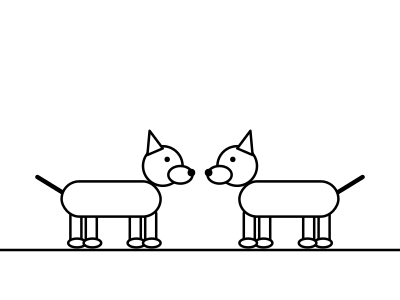
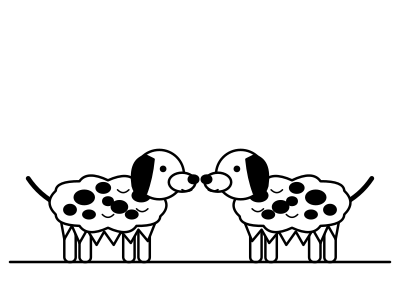
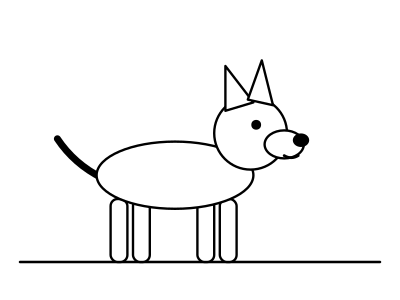
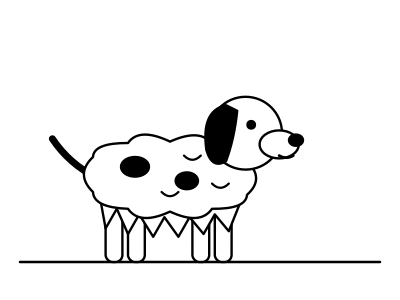
    • Photos of 2 dog families, each with the parents and their puppies (from a library book, a shelter or rescue website, or friends with dogs). If you cannot find any, draw 2 simple dog families: one with floppy ears and spots, one with pointed ears and plain fur
    • Same and Different chart from Week 21
    • Science Notebook and crayons
    • Bean cups
    1. Warm-Up / Wonder · 5 min

      Spaced review: ask: "Are all the kittens in one litter the same color?" (Not always.) Check the bean cups. Wonder question: "If you mixed up the puppies from 2 dog families, could you find their parents?"

    2. Explore · 10–15 min

      Mix the puppy pictures from the 2 families. Keep the parent pictures apart. Play "Find the Family": your child matches each puppy to its parents and tells the clue they used. Ask about traits one at a time. Ask: "Do the ears flop down or stand up?" "Is the fur long or short? Curly or straight?" "What color is the fur? Are there spots?" "Is the tail curled or straight?" (Answers vary. Look for: the puppy shares ear shape, fur type and colors with its parents.) Then look at one family. Ask: "Do all the puppies look exactly like each other?" (no) "How are they different?" (Answers vary: one has more spots, one is darker, one is smaller.) Say: "Puppies are dogs like their parents, and they often have the same kind of ears and fur. But each puppy looks a bit different." Add new rows to the Same and Different chart. If stuck matching, ask your child to look at just the ears first, then the fur.

    3. Talk & Record · 5–10 min

      Your child draws one parent dog and one puppy and labels 2 traits they share. Sentence frame: "The puppy has ___ like its parent, but ___ is different."

    4. Exit Ticket · 3–5 min

      Ask the three questions aloud. Your child answers by talking or drawing.

    Exit ticket

    1. A black and white cow has a calf. Name one trait the calf might share with its mother.
    2. Two kittens have the same parents. Do they have to look exactly the same?
    3. Name one trait you can compare on a dog.
    Answers
    1. Answers vary. Look for: black and white color, the same kind of ears, a tail, hooves or the same body shape.
    2. No. They are both cats, but they can look different.
    3. Answers vary. Look for: ear shape, fur length, fur color, spots or tail shape.
    Watch for, and help or stretch
    Watch for
    Matching a puppy only by size.
    Try
    Say: "All puppies are small. Look at the ears and fur instead."
    Extra help
    Use 1 dog family only and find 2 shared traits.
    Stretch
    Your child picks a third animal family from a book and tells 2 shared traits and 1 difference.

    At home (optional): Your child looks at a dog on a walk or in a book and names 2 traits, such as ear shape and fur color.

    Practice

    Read each direction aloud. Your child works on the page; answers are in the grown-up view.

    Warm-up

    Remember?

    Math

    1. 37 + 6 = ?
    2. Which is greater, 27 or 72?

    Reading & Writing

    1. foil, moist, joy

    Math · Week 23 Day 1

    I can take tens away from tens.

    Look: 60 - 40

    1. 60 is 6 tens. 40 is 4 tens.
    2. Take away 4 tens, counting back: 50, 40, 30, 20.
    3. 2 tens are left. 60 - 40 = 20. The small fact is 6 - 4 = 2.

    Take away the tens.

    1. 1.
      90 - 30 = ____
    2. 2.
      70 - 10 = ____
    3. 3.
      50 - 50 = ____
    4. 4.
      80 - 40 = ____

    Circle, cross out or write.

    1. 5.
      Which small fact helps with 50 - 30?
      • 5 - 3
      • 5 + 3
      • 50 - 3
    2. 6.
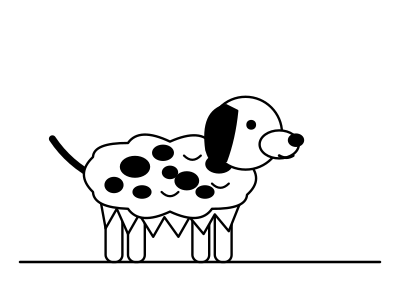
      8 sticks. Cross out 6 sticks. How many tens are left? What number is that?
    3. 7.
      5 tens take away 3 tens = ____ tens = ____

    Challenge (optional)

    90 - 40 - 20 = ____

    You need: Tens and ones kit (optional): straw bundles of 10 and loose straws, or base-ten rods and cubes, Pencil, Cubes and beans are small parts: keep them away from children under 3.

    Reading & Writing · Week 23 Day 1

    I can read with expression that matches the words.

    Look: reading with expression

    1. Read: My kite is up so high! Use a glad, big voice.
    2. Read: My pup is lost. Use a sad, slow voice.
    3. Your voice should match the feeling of the words.

    My Kite

    My kite is up so high! It can float in the sky. Will it dip? No, no, no! I will not let it go.

    Read the line. Circle the feeling your voice should show.

    1. 1.
      Yay! I got a new toy!
      • glad
      • sad
      • mad
    2. 2.
      My pup is lost.
      • glad
      • sad
      • mad
    3. 3.
      Stop it! That is my hat!
      • glad
      • sad
      • mad
    4. 4.
      I can not find my coat.
      • glad
      • sad
      • mad

    Read the word. Write the vowel team.

    1. 5.
      paint
    2. 6.
      toast
    3. 7.
      night
    4. 8.
      crowd

    Challenge (optional)

    Up, up, up! My kite is ____!

    Science · Week 23 Day 1

    I can tell how puppies look like their parents.

    Look: Match a puppy to its family

    1. Look at the parents: floppy ears and curly fur.
    2. Find the puppy with floppy ears and curly fur.
    3. That puppy shares traits with these parents, so it belongs to them.

    Circle the family each puppy belongs to.

    1. 1.
      A puppy with floppy ears and long, spotted fur.
      • Dog family A (pointed ears, short plain fur).
      • Dog family B (floppy ears, long spotted fur).
    2. 2.
      A puppy with pointed ears and short, plain fur.
      • Dog family A (pointed ears, short plain fur).
      • Dog family B (floppy ears, long spotted fur).
    3. 3.
      A puppy with floppy ears, long fur and just a few spots.
      • Dog family A (pointed ears, short plain fur).
      • Dog family B (floppy ears, long spotted fur).

    Mark, circle or draw.

    1. 4.
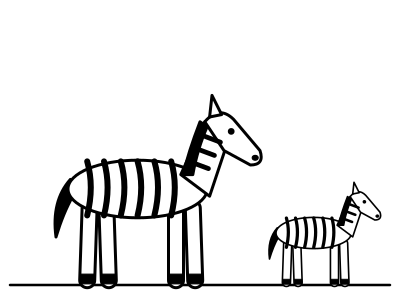
      A mother zebra and her foal. Make a mark on one trait the foal shares with its mother.
    2. 5.
      Is ear shape a trait?
      • yes
      • no
    3. 6.
      Is a dog's name a trait?
      • yes
      • no
    4. 7.
      Draw a parent cat and a kitten that share 2 traits.

    Challenge (optional)

    A puppy has its mother's floppy ears but its father's spots. Is that possible?

    You need: crayons