1First Grade

    Year review: equal sign and missing numbers

    Speak in sentences

    Practice pages

    0 of 180 days complete · Saved on this device

    View all 180 days

    Math

    Year review: equal sign and missing numbers

    I can check equations and find missing numbers.

    Standards: 1.OA.D.7, 1.OA.D.8, 1.OA.B.4

    Number practice (no timer)
    Choose a strategy within 20 (untimed)
    Builds on
    Unit 2 (Weeks 11 and 12: the equal sign and missing numbers). One-minute check: "What does the equal sign mean?" (Is the same as)

    New words

    • equal sign: the sign = ; it means is the same as
    • true: both sides of the equal sign are the same amount
    • false: the two sides are not the same amount

    You need

    • 8 equation cards made from paper squares (written in the lesson)
    • 2 paper labels for each player: TRUE and FALSE
    • 30 linking cubes in two colors (or two kinds of beans); building both sides of card 2 (14 = 7 + 7) takes 28
    • Deck of cards ace to 10 (face cards removed; ace = 1)
    • A sticky note or small paper square to cover a card
    • Notebook and pencil
    • Beans and cubes are small parts: keep them away from children under 3.
    1. Warm-Up · 5 min

      Fluency: choose a strategy within 20. "8 + 7?" (15) "11 - 2?" (9) Spaced review from Week 30: "A graph has 4 votes for red and 6 for blue. How many votes in all?" (10)

    2. Mini-Lesson · 10 min

      Say: "The equal sign means is the same as. Both sides must be the same amount." Write 7 + 2 = 4 + 5. Build each side as a cube train. Ask: "Same length?" (Yes. Both are 9.) "True or false?" (True) Write 10 - 4 = 5 + 2. Ask: "What is each side?" (6 and 7) "True or false?" (False) Write 13 = 6 + ? Read it as "13 is the same as 6 plus what?" Ask: "Is 13 the whole or a part?" (The whole) "6 + what = 13?" (7)

    3. Guided Practice · 10 min

      True/False Showdown. Each player holds a TRUE label and a FALSE label. Show a card. Both players think, then on the count of 3 hold up one label. Then prove it with cube trains or a known fact. Cards with answers: 1) 9 + 3 = 12 (true) 2) 14 = 7 + 7 (true) 3) 5 + 6 = 6 + 5 (true) 4) 8 + 2 = 9 + 3 (false; 10 and 12) 5) 16 - 6 = 10 (true) 6) 4 + 4 = 10 - 2 (true; both are 8) 7) 13 - 3 = 3 (false; 13 - 3 is 10) 8) 11 = 15 - 5 (false; 15 - 5 is 10) If stuck, say: "Find the amount on the left. Find the amount on the right. Are they the same?"

    4. Play · 10 min

      Missing Number War. Each player flips 2 cards, adds them and writes the equation, such as 7 + 5 = 12. The biggest card is 10, so a sum is never more than 20. Then cover one of your two cards with the sticky note. The other player finds the hidden card from the equation: 7 + ? = 12. (5) Sometimes write the total on the left, such as 12 = ? + 5. Each player who finds the hidden card gets 1 point. After each round, put the cards on the bottom of the deck. Play 6 rounds each.

    5. Exit Ticket · 3-5 min

      Put the objects to one side but leave them on the table. Read each question aloud. Your child answers out loud, with objects or with a quick drawing. Check each answer together right away.

    Exit ticket

    1. Is 8 + 4 = 6 + 5 true or false?
    2. ? - 7 = 8. What is the missing number?
    3. 12 = 5 + ? What is the missing number?
    Answers
    1. False. 8 + 4 is 12 and 6 + 5 is 11.
    2. 15
    3. 7
    Watch for, and help or stretch
    Watch for
    Reading 4 + 4 = 10 - 2 as "4 + 4 = 10" and calling it false.
    Try
    Cover the right side with a hand. Find the left side's amount. Then cover the left side and find the right side's amount. Compare.
    Extra help
    Build both sides with cube trains for every card in the Showdown.
    Stretch
    Your child writes 2 true equations with a number on each side, such as 9 + 1 = 6 + 4, and 1 false one for you to catch.

    At home (optional): Your child writes one true equation and one false equation and asks a family member to say which is which.
    Reading & Writing

    Speak in sentences

    I can speak in complete sentences when I present.

    Standards: SL.1.6, SL.1.4, L.1.1.j, RF.1.3.b

    Phonics
    Word families -all, -old and -ind (ball, cold, find), with cumulative review: two-syllable words and endings -s, -ed, -ing
    Sight words
    picture, change, off, play, away
    Reading
    Child's choice of favorite books from the year; original decodable "Kim Picks the Best Tale"
    Writing
    Showcase: plan the presentation and visual display · Handwriting: poster lettering
    Builds on
    Asking, telling and exclaiming sentences (Week 14). One-minute check: your child says one asking sentence.

    New words

    • complete sentence: a group of words that tells who or what and what happens
    • command: a sentence that tells someone to do something
    • expand: to make a sentence longer with more details

    You need

    • A note card for the presentation (an index card)
    • The showcase piece and the poster
    • Four sign cards you write: . (telling) ? (asking) ! (strong feeling) and Do it! (command)
    • Sentence cards (index cards): The dog. The dog ran. Look at my picture. Did you like it? It is the best!
    • Word cards (index cards): kind, find, mind, blind, grind, bind, rind
    • Sight word cards: picture, change, off, play, away (two sets: 10 cards for Memory Match)
    • Printed "Kim Picks the Best Tale"
    1. Phonics & Word Work · 15 min

      Complete sentences and the four kinds. I do: read the card The dog. Say: "This is not complete. What did the dog do?" Read The dog ran. "Now it is complete." Then expand it: "The dog ran to the pond, and it jumped in." We do: read Look at my picture. (a command), Did you like it? (an asking sentence) and It is the best! (strong feeling). Your child holds up the matching sign. You do: your child makes one of each kind about the showcase piece and says it aloud: telling, asking, command and strong feeling. (Answers vary. Look for: a correct example of each, such as My tale is about a frog. Do you like frogs? Look at the frog. It is so funny!) Then your child expands a short sentence with and or because: "I like my picture." becomes "I like my picture because it has a sunset." Remember: no comma before because. If stuck, ask: "Who or what? What happened?" New: the ind family (4 min). I do: write kind and find. Say: "You know these as sight words. i-n-d is a chunk that says /ind/: the i says its name." Write mind and read it. We do: read blind and grind together. You do: your child reads bind, rind, hind and blinds and underlines the ind chunk. Say: "wind is tricky: it can say /wind/ (the wind blows) or /wynd/ (wind up the string), so read the whole sentence to know." Read: "Do you mind if I find a seat?" Dictation: mind, grind. If stuck on an ind word, cover the first letter, read ind, then add the first sound.

    2. Sight Words · 5 min

      Review: picture, change, off, play, away. Memory Match with 10 cards: turn two over and read both. A match is kept.

    3. Read-Aloud & Shared Reading · 15 min

      Your child reads "Kim Picks the Best Tale" and hunts for the four kinds of sentences. Ask: "Find an asking sentence." ("Which one is the best?") "Find a sentence with strong feeling." ("I pick the goblin tale!" or "It is the best of all!") "Find a telling sentence." (Answers vary. Look for: any sentence that ends with a period, such as She painted the goblin at the top.) Ask: "Is there a command?" (No. Then your child makes up a command Kim could say. Answers vary. Look for: a command, such as Look at my picture.) If stuck, point to the end mark first.

    4. Writing & Handwriting · 15 min

      Practice for the showcase. Your child says 3 complete sentences about the showcase piece: what it is about, the best part, and why they chose it. You write a key word for each on the note card. Your child practices saying all 3 sentences while looking at the card only for help. (Answers vary. Look for: three complete sentences, spoken clearly.) Handwriting (4 min): your child copies one of the 3 sentences onto the back of the note card with a capital and an end mark.

    5. Exit Ticket · 5 min

      Oral answers.

    Exit ticket

    1. Is this complete: "The big red kite."? How can you fix it?
    2. Read this and make it longer with and: I can find my hat.
    3. Say one asking sentence about your poster.
    Answers
    1. No. Add what it did, such as The big red kite went up.
    2. Answers vary. Look for: a correct read and a longer complete sentence, such as I can find my hat, and I can put it on.
    3. Answers vary. Look for: a question that ends with a rising voice, such as Do you like my picture?
    Watch for, and help or stretch
    Watch for
    Starting many sentences with "And then...".
    Try
    Say: "Stop at the end of each idea. Start the next one fresh." Practice one sentence at a time.
    Extra help
    Work on telling sentences only. Your child completes sentence starts you say: "My piece is about ___."
    Stretch
    Your child says a sentence that uses two ideas joined with but or so.

    At home (optional): Your child says the 3 presentation sentences to a family member, who listens for complete sentences.

    Social Studies

    Vote on our plan

    I can listen, agree and vote to choose our plan.

    Standards: D4.8.K-2, D2.Civ.11.K-2

    Builds on
    Ideas to help (Day 1). One-minute check: ask "Name the 3 starred ideas." (Answers vary.)

    New words

    • vote: to make a choice that is counted with other people's choices
    • ballot: a paper where you mark your vote
    • majority: more than half of the votes

    You need

    • The 3 starred idea notes from Day 1
    • 5 paper ballots: small slips with the 3 ideas drawn or written on each and a box to check next to each
    • A ballot box: a cardboard or plastic box with a slot cut in the lid by a grown-up
    • A tally chart: 3 rows for the 3 ideas
    • A Plan and Jobs page: lines for What, When, Who does which job, What we need
    • Pencils and at least 2 voters (family members, a friend, or stuffed animals voting with a grown-up's help)
    1. Warm-Up / Wonder · 5 min

      Spaced review: ask: "What is a brainstorm?" (thinking of many ideas without saying any are bad) Wonder question: "How can a group choose one plan when people like different ideas?"

    2. Explore · 10–15 min

      Say: "Groups make choices in two ways. First, we listen and try to agree. If we cannot all agree, we vote." Listen: your child tells one good thing about each of the 3 ideas. Each family member says which they like and why; your child listens and repeats one reason they heard. Try to agree: ask "Is there one idea we all like?" If everyone agrees, that is the plan. If not, vote. Vote: each voter checks one box on a ballot in private and puts it in the box. Your child opens the box and makes a tally mark for each vote. Count the tallies. If two ideas tie, talk about those two ideas again and vote once more between just those two. Sample with 5 voters: posters 3, litter pick-up 2, letter 0. Ask: "Which idea has the most votes?" (posters, 3 votes) Say: "3 out of 5 is more than half. That is a majority, so the posters win." Ask: "If your idea did not win, what should you do?" (Answers vary. Look for: accept the result and help with the plan anyway.) Make the plan: fill the Plan and Jobs page together: what we will do, when, who does each job, and what we need. If stuck counting, cross out each tally as you count it.

    3. Talk & Record · 5–10 min

      Your child draws their job on the Plan and Jobs page. Sentence frame: "We voted for ___. My job is ___."

    4. Exit Ticket · 3–5 min

      Ask the three questions aloud. Your child answers by talking or drawing.

    Exit ticket

    1. Seven people vote. Park clean-up gets 5 votes and a book drive gets 2. Which idea wins?
    2. What should we try before we vote?
    3. Why do we use ballots in a box?
    Answers
    1. Park clean-up (5 is more than 2).
    2. Listen to each other and try to agree.
    3. Answers vary. Look for: so each person can choose in private and every vote is counted fairly.
    Watch for, and help or stretch
    Watch for
    Getting upset when their idea does not win.
    Try
    Say: "In a fair vote, everyone's vote counts the same. We all help with the plan the group chose." Give your child an important job in the plan.
    Extra help
    Vote between 2 ideas with 3 voters.
    Stretch
    Your child compares the vote result with what each person said before voting and tells if anyone changed their mind.

    At home (optional): Your child tells a family member how we voted and what their job is.

    Practice

    Read each direction aloud. Your child works on the page; answers are in the grown-up view.

    Warm-up

    Remember?

    Math

    1. A shape has 4 straight sides and 4 square corners. Two sides are long and two sides are short. What shape is it?
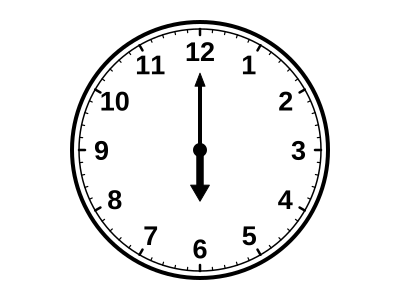
    2. A clock with the short hand on 6 and the long hand on 12. What time is it?

    Reading & Writing

    1. home, us, try

    Math · Week 34 Day 3

    I can check equations and find missing numbers.

    Look: is 6 + 3 = 4 + 5 true?

    1. The equal sign means is the same as.
    2. Left side: 6 + 3 = 9. Right side: 4 + 5 = 9.
    3. Both sides are 9, so it is true.

    Is it true? Circle yes or no.

    1. 1.
      8 + 5 = 13
      • yes
      • no
    2. 2.
      6 + 6 = 7 + 4
      • yes
      • no
    3. 3.
      10 - 3 = 2 + 5
      • yes
      • no
    4. 4.
      9 = 14 - 4
      • yes
      • no
    5. 5.
      3 + 8 = 8 + 3
      • yes
      • no

    Write the missing number.

    1. 6.
      ____ + 6 = 15
    2. 7.
      11 = 4 + ____
    3. 8.
      ____ - 5 = 9
    4. 9.
      17 - ____ = 10

    Challenge (optional)

    Fill in the blank so it is true: 5 + 7 = ____ + 8

    You need: Cubes (optional), Pencil

    Reading & Writing · Week 34 Day 3

    I can speak in complete sentences when I present.

    Look: complete sentences, four kinds

    1. Not complete: The big dog. Complete: The big dog ran.
    2. Four kinds: telling (The kite is red.), asking (Can you jump?), do it (Sit on the rug.), big feeling (Wow, I got it!).
    3. Make it longer with and or because: I like my kite because it is red.

    Show and Tell

    Look at my picture! It is a frog in a pond. Do you like it? I made it with paint. The frog is green, and the pond is big.

    Read the line. Circle what kind it is.

    1. 1.
      Sit on the rug.
      • telling
      • asking
      • do it
      • big feeling
    2. 2.
      Can you swim?
      • telling
      • asking
      • do it
      • big feeling
    3. 3.
      The cup is red.
      • telling
      • asking
      • do it
      • big feeling
    4. 4.
      Wow, I did it!
      • telling
      • asking
      • do it
      • big feeling

    Make it complete, or make it longer with and or because.

    1. 5.
      The big dog.
    2. 6.
      I like my hat.
    3. 7.
      Max hid.

    Read the word. Circle its family.

    1. 8.
      mold
      • all
      • old
      • ind
    2. 9.
      stall
      • all
      • old
      • ind
    3. 10.
      hind
      • all
      • old
      • ind

    Challenge (optional)

    Can ____?

    Social Studies · Week 34 Day 3

    I can listen, agree and vote to choose our plan.

    Look: counting the votes

    1. First we listen and try to agree. If we cannot all agree, we vote.
    2. Each voter marks a ballot in private. We make one tally mark for each vote.
    3. The idea with the most votes wins. More than half of the votes is a majority.

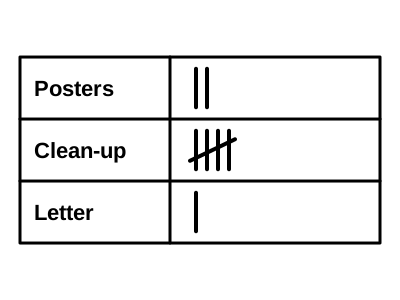
    Use the tally chart. Your child writes the number.

    1. 1.
      A tally chart with 3 rows. Posters: 2 tally marks. Clean-up: one bundle of 5 tally marks. Letter: 1 tally mark. How many votes for posters?
    2. 2.
      How many votes for clean-up?
    3. 3.
      How many votes for the letter?
    4. 4.
      How many votes in all?

    Talk and draw. Write what your child says.

    1. 5.
      Which idea won? Did it get more than half of the votes?
    2. 6.
      Tell one job you will do for our plan.
    3. 7.
      Draw a ballot with our 3 ideas and a box next to each one.

    Challenge (optional)

    If two ideas tie, what can the group do?

    You need: crayons