1First Grade

    Year review: place value and comparing

    Listen and ask

    Practice pages

    0 of 180 days complete · Saved on this device

    View all 180 days

    Math

    Year review: place value and comparing

    I can explain tens and ones and compare numbers.

    Standards: 1.NBT.B.2, 1.NBT.B.3, 1.NBT.A.1

    Number practice (no timer)
    Choose a strategy within 20 (untimed)
    Builds on
    Unit 3 (Weeks 13 to 18: counting to 120, tens and ones, and comparing). One-minute check: "How many tens and ones in 57?" (5 tens and 7 ones)

    New words

    • digit: one of the symbols 0 to 9 that we use to write numbers
    • greater than: more than; the sign > points to the smaller number
    • less than: fewer than; the sign < points to the smaller number

    You need

    • Tens and ones kit: 18 tens and 18 ones, enough to build both players' numbers side by side. Use straw bundles of 10 (a rubber band around each) and loose straws, base-ten rods and unit cubes, or paper ten-strips with beans as ones. If you have only 9 tens and 9 ones, build one number, write it, clear the kit, and build the other, or check with quick pictures.
    • Deck of cards ace to 9 (remove the 10s and face cards; ace = 1)
    • 3 symbol cards: >, < and =
    • Hundred chart to 120: printed, or drawn as 12 rows of 10 boxes (1 to 10 in the top row, 111 to 120 in the bottom row)
    • Notebook and pencil
    • Beans and cubes are small parts: keep them away from children under 3.
    1. Warm-Up · 5 min

      Fluency: choose a strategy within 20. "9 + 9?" (18) "15 - 6?" (9) Spaced review from Week 33: "Is a fourth of a sandwich bigger or smaller than a half of the same sandwich?" (Smaller)

    2. Mini-Lesson · 10 min

      Number of the Day: 68. Your child reads it, writes it, builds it (6 tens and 8 ones) and draws a quick picture (6 sticks and 8 dots). Ask: "68 is the same as 60 + what?" (8) Count up by 1s on the chart from 68 to 72 (68, 69, 70, 71, 72), then count back down by 1s from 72 to 64 (72, 71, 70, 69, 68, 67, 66, 65, 64). Then a second Number of the Day: 107. Your child reads it (one hundred seven), writes it, and counts on from 107 to 112 and back down by 1s to 98. Last, compare 68 and 86. Ask: "Which is greater? How do you know?" (86. 8 tens is more than 6 tens.) Your child places the symbol card: 68 < 86.

    3. Guided Practice · 10 min

      Number of the Day: 94. Your child does each step. 1) Read and write it. 2) Tens and ones. (9 tens and 4 ones) 3) Quick picture. (9 sticks and 4 dots) 4) 94 = 90 + ? (4) 5) Count on by 1s from 94 to 102. (94, 95, 96, 97, 98, 99, 100, 101, 102) 6) Count back by 1s from 94 to 88. (94, 93, 92, 91, 90, 89, 88) 7) Compare 94 and 49 with a symbol card. (94 > 49) 8) Trade: "1 ten and 14 ones. What number is that?" (24 because 10 ones make another ten) If stuck, say: "Build it with the kit. Count the tens first, then the ones."

    4. Play · 10 min

      Place Value War. Each player flips 2 cards and chooses which card is the tens. The greater number wins the round. Model one turn: you flip 3 and 7. Say: "I can make 37 or 73. To make the greatest number, I put the bigger digit in the tens place: 73." Each round, both players build or draw their numbers, place a symbol card between them and read the sentence, such as "73 is greater than 58. I compared the tens first." If the tens match, compare the ones; if the numbers are the same, use = and call it a tie. After each round, put the cards on the bottom of the deck. Play 4 rounds, then 4 more rounds where the smaller number wins. (Put the smaller digit in the tens place.)

    5. Exit Ticket · 3-5 min

      Put the objects to one side but leave them on the table. Read each question aloud. Your child answers out loud, with objects or with a quick drawing. Check each answer together right away.

    Exit ticket

    1. What number is 7 tens and 2 ones?
    2. Which is greater, 58 or 85? How do you know?
    3. Count back by 1s from 103 to 97.
    Answers
    1. 72
    2. 85. 8 tens is more than 5 tens.
    3. 103, 102, 101, 100, 99, 98, 97
    Watch for, and help or stretch
    Watch for
    Comparing the ones first, such as saying 49 is greater than 94 because 9 is more than 4.
    Try
    Build both numbers. Ask: "Who has more tens?" Compare the bundles first.
    Extra help
    Play Place Value War with the kit for every round, building both numbers before choosing the symbol.
    Stretch
    Play Place Value War with 3 cards: each player makes the greatest 2-digit number from any 2 of their 3 cards. Ask: "Which 2 cards did you choose? Why?" (The 2 biggest, with the biggest in the tens place)

    At home (optional): Your child plays Place Value War with a family member for 6 rounds.
    Reading & Writing

    Listen and ask

    I can ask a speaker a question to learn more.

    Standards: SL.1.3, SL.1.2, SL.1.1.a

    Phonics
    Word families -all, -old and -ind (ball, cold, find), with cumulative review: two-syllable words and endings -s, -ed, -ing
    Sight words
    picture, change, off, play, away
    Reading
    Child's choice of favorite books from the year; original decodable "Kim Picks the Best Tale"
    Writing
    Showcase: plan the presentation and visual display · Handwriting: poster lettering
    Builds on
    Asking questions to learn more (Week 17). One-minute check: your child tells one question word (who, what, where, when, why or how).

    New words

    • speaker: the person who is talking to an audience
    • listener: the person who pays attention to a speaker
    • gather: to collect, like collecting facts

    You need

    • The short talk "The Day I Learned to Swim" (in the lesson) or your own true story
    • A question word card you write: Who? What? Where? When? Why? How?
    • Word cards (index cards): kicked, lessons, helped, rested, sunset, napkins, tall, gold, mind, wall, fold, blind
    • Sight word cards: picture, change, off, play, away
    • Printed "Kim Picks the Best Tale"
    • Lined handwriting paper
    1. Phonics & Word Work · 15 min

      Endings review: -s, -ed, -ing. I do: read kicked and rested: "Two -ed words, two sounds: /t/ and /ed/." We do: read lessons and napkins together and find the root (lesson, napkin). You do: your child reads helped, rested, kicked, lessons and finds each root. Then your child reads sunset and tells why there is no ending to cover (it is two small words, sun and set). Then a family sort: your child reads tall, gold, mind, wall, fold and blind and sorts them into the all, old and ind families. (all: tall, wall; old: gold, fold; ind: mind, blind.) Then read: "Kim helped Dad. Dad is resting." "Kim told Dad to hold the ball." Dictation: helped, lessons, resting, told, mind. If stuck, cover the ending and read the root.

    2. Sight Words · 5 min

      Review: picture, change, off, play, away. Clap and Read: you say a sentence with one of the words; your child claps when they hear it, then finds and reads the card.

    3. Read-Aloud & Shared Reading · 15 min

      Listen and ask. Say: "Good listeners ask questions to learn more or to understand." Agree on talk rules: look at the speaker, wait until the speaker stops, then raise a hand. Give the short talk (or tell your own true story). The Day I Learned to Swim (a pretend talk: say first, "I am going to be a speaker named Sam." Or tell your own true story instead, which is even better) When I was little, I could not swim. I was scared of the deep water. One summer, I took lessons at a pool. My teacher was very patient. First, I learned to blow bubbles. Then I learned to kick while I held on to the wall. After many tries, I swam across the pool all by myself. I felt so proud! Now I love to swim. Ask your child to retell two key details. (Answers vary. Look for: two details, such as the speaker was scared of deep water, took lessons at a pool, learned to blow bubbles or swam across alone.) Then your child asks two questions using the question word card: one to learn more and one about something not clear. (Answers vary. Look for: real questions, such as Who was your teacher? How old were you? What does patient mean?) Answer each question. (If you gave Sam's talk, make up short answers in role, such as "I was six" or "My teacher was Ms. Ruiz.") If stuck, point to a question word: "Start with How..."

    4. Writing & Handwriting · 15 min

      Your child writes one of the questions they asked, with a capital and a question mark: "___?" (Answers vary. Look for: a question that starts with a question word and ends with a question mark, such as Who was your teacher?) Then your child writes the answer they heard in a few words. Handwriting (4 min): the question mark. A hook at the top, a short line down, then a dot. Your child writes 5 question marks, then one question.

    5. Exit Ticket · 5 min

      Oral answers.

    Exit ticket

    1. What is one thing you learned from the talk?
    2. What question helped you learn the most?
    3. Read these words: hall, bold, grind.
    Answers
    1. Answers vary. Look for: a key detail from the talk.
    2. Answers vary. Look for: one of your child's questions and what it taught them.
    3. hall, bold, grind
    Watch for, and help or stretch
    Watch for
    Telling their own story instead of asking a question ("I can swim too!").
    Try
    Say: "That's great. Can you turn it into a question for me? Start with How or When."
    Extra help
    Your child asks one question, chosen from two you offer: "Do you want to ask who or where?"
    Stretch
    Your child listens to a second short talk from another family member and asks a follow-up question that builds on an answer.

    At home (optional): Your child asks a family member to tell a short story about when they were little and asks two questions.

    ScienceWeekly check

    Improve the winner

    I can improve a design and test it again.

    Standards: K-2-ETS1-3

    Builds on
    Strengths and weaknesses (Day 2). One-minute check: ask "What is the biggest weakness of your better design?" (Answers vary.)

    New words

    • improve: to make something better
    • retest: to test again in the same way

    You need

    • The better design from Day 2
    • The same building materials: tubes, plastic cups, clay or play dough, tape, cardboard squares (a grown-up cuts any cardboard)
    • 20 crayons and the table used for the Week 33 test
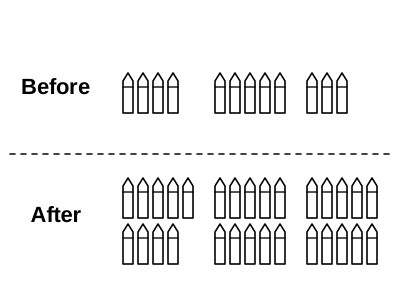
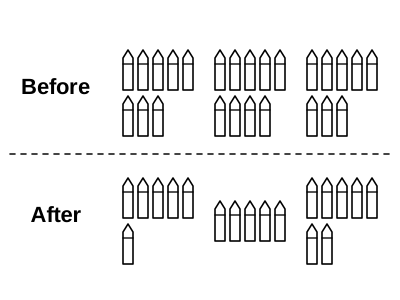
    • A new tally chart in the Engineering Journal: rows Before and After, columns Trial 1, Trial 2, Trial 3, Did it tip?
    • Week 34 science check page (given separately)
    • Pencil
    1. Warm-Up / Wonder · 5 min

      Spaced review: ask: "What is a strength?" (something a design does well) Wonder question: "If we change one thing, will the design do better?"

    2. Review Game · 10 min

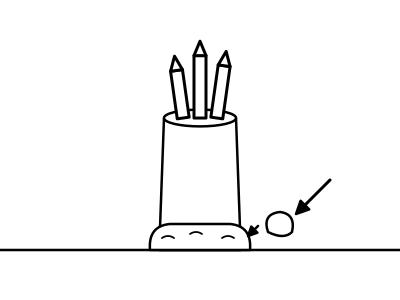
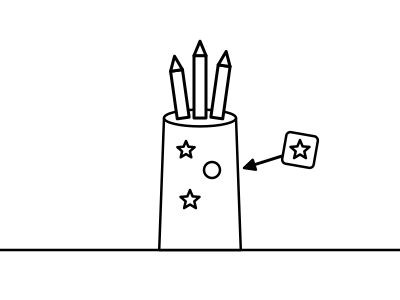
      Play "One Change." Say a weakness and your child names one change that could fix it. "It tips over." (Answers vary: add clay to the bottom, make the base wider.) "Crayons fall out." (Answers vary: make the sides taller.) "It is hard to grab a crayon." (Answers vary: make it shorter, wider at the top.) Say: "Engineers change one thing at a time. Then they know which change made the difference." Your child picks one change for the weakness starred on Day 2, draws it on the sketch, and makes it. Copy the old results into the Before row. Retest the improved design the same way: 10 crayons, 5 gentle bumps by the same grown-up, 3 trials. Fill the After row. If stuck choosing a change, look at the T-chart's red side and ask: "Which weakness bothers you most?"

    3. Check · 10 min

      Give the Week 34 science check. The check items are on the Week 34 check page; do not show them ahead of time. Read each part aloud. Your child answers by talking, pointing, showing with the real materials or drawing. You write down their words exactly. It is not timed; stop and finish later if your child is tired. Make a check mark next to each part your child shows on their own. The printed check has 8 items. It covers these goals: (1) I can use my data to tell what each design does well and not well; (2) I can improve a design and test it again. This week the check is an improve-and-retest task. Look for: your child makes one change to fix a weakness, retests in the same fair way, records the new data, and compares Before and After ("It kept more crayons in after" or "It did not get better, so I would try a different change"). Either result is fine if the comparison matches the data. If stuck on a part, point to the Before row and the After row for Trial 1 and ask: "Which number is bigger?" Secure: 6 of 8 correct, including items 1 and 2 (one change and a fair retest) and item 3 (a comparison that matches the data). If the check is not yet secure, use the reteach step on the check page that matches the items missed.

    4. Exit Ticket · 3–5 min

      Ask the three questions aloud. Your child answers by talking or drawing.

    Exit ticket

    1. Why do engineers change only one thing at a time?
    2. Before the change, a design kept 5 crayons in. After, it kept 9. Did the change help?
    3. What will you do if your change did not help?
    Answers
    1. So they know which change made the difference.
    2. Yes. It kept more crayons in after the change.
    3. Answers vary. Look for: try a different change and test again.
    Watch for, and help or stretch
    Watch for
    Changing several things at once.
    Try
    Ask: "Which one change do you think will help the most? Let's try just that one first."
    Extra help
    Make the change together and do 1 retest trial.
    Stretch
    Your child tries a second change, retests, and tells which change helped more.

    At home (optional): Your child shows the Before and After numbers to a family member and tells whether the change helped.

    Practice

    Read each direction aloud. Your child works on the page; answers are in the grown-up view.

    Warm-up

    Remember?

    Math

    1. How many corners does a hexagon have?
    2. 1 ten and 7 ones make what number?

    Reading & Writing

    1. little, apple, candle

    Math · Week 34 Day 4

    I can explain tens and ones and compare numbers.

    Look: 57

    1. 57 is 5 tens and 7 ones. 57 = 50 + 7.
    2. Compare 57 and 39: 5 tens is more than 3 tens.
    3. 57 > 39.

    Write the number.

    1. 1.
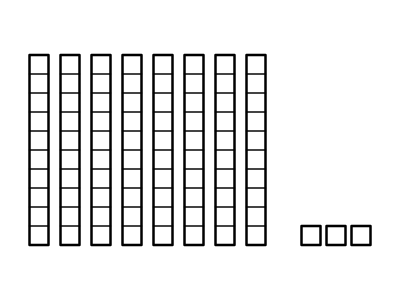
      8 ten-rods and 3 single cubes. ____
    2. 2.
      4 tens and 0 ones = ____
    3. 3.
      76 = 70 + ____
    4. 4.
      1 ten and 12 ones = ____
    5. 5.
      Count on by 1s: 98, 99, ____, ____, ____
    6. 6.
      Count back by 1s: 112, 111, ____, ____

    Circle >, < or =.

    1. 7.
      63 ____ 36
      • >
      • <
      • =
    2. 8.
      45 ____ 54
      • >
      • <
      • =
    3. 9.
      70 ____ 70
      • >
      • <
      • =

    Challenge (optional)

    Use the digits 4 and 8. Make the greatest number you can and the least number you can.

    You need: Pencil

    Reading & Writing · Week 34 Day 4

    I can ask a speaker a question to learn more.

    Look: listening and asking

    1. Look at the speaker and wait until the speaker stops.
    2. Ask to learn more: What name did the pup get?
    3. Ask when something is not clear: What do you mean?

    Sam and the Pup

    Sam: When I was six, I got a pup. It was little and brown. At first, it did not sleep well. Then I got it a soft bed. Now it sleeps all night!

    Read the talk. Circle the answer.

    1. 1.
      What did Sam get?
      • a pup
      • a cat
    2. 2.
      How old was Sam?
      • six
      • ten
    3. 3.
      What did Sam get for the pup?
      • a soft bed
      • a hat
    4. 4.
      Which one helps you find out more about the pup?
      • What name did the pup get?
      • Do you like cake?

    Write a question you can ask Sam.

    1. 5.
      What ____?
    2. 6.
      Why ____?
    3. 7.
      Where ____?

    Read the word. Write a word that rhymes.

    1. 8.
      mall ____
    2. 9.
      sold ____
    3. 10.
      bind ____

    Challenge (optional)

    I can ask: ____?

    Science · Week 34 check

    Weekly check

    How to give it: Read every direction, question and choice aloud. It is not timed; stop and finish later if your child is tired. Your child answers by talking, pointing, showing with the real materials or drawing, and you write their words exactly. Have the better design, the building materials (a grown-up cuts any cardboard), 20 crayons, the same table and the Before and After chart. Either result is fine if the comparison matches the data.

    Secure when: 6 of 8 correct, including items 1 and 2 (one change and a fair retest) and item 3 (a comparison that matches the data).

    • I can use my data to tell what each design does well and not well.
    • I can improve a design and test it again.
    1. 1.
      Make one change to fix the weakness you starred.
    2. 2.
      Retest the same fair way: 10 crayons, 5 gentle bumps, 3 trials. Fill in the After row.
    3. 3.
      Compare Before and After. Did the change help? Tell how you know. Your grown-up writes it.
    4. 4.
      Before row: 4, 5 and 3 crayons; After row: 9, 10 and 10 crayons. Did the change help?
      • yes
      • no
    5. 5.
      Before row: 8, 9 and 8 crayons; After row: 6, 5 and 7 crayons. Did the change help?
      • yes
      • no
    6. 6.
      The design tips over. Circle a change that could help.
      • Adding clay to the bottom.
      • Putting stickers on the side.
    7. 7.
      Strength or weakness? "Crayons fall out when the table is bumped."
      • Thumbs up (strength).
      • Thumbs down (weakness).
    8. 8.
      Strength or weakness? "It stayed standing in all 3 trials."
      • Thumbs up (strength).
      • Thumbs down (weakness).