1First Grade

    Year review: story problems

    Favorite book talk

    Practice pages

    0 of 180 days complete · Saved on this device

    View all 180 days

    Math

    Year review: story problems

    I can solve all kinds of story problems.

    Standards: 1.OA.A.1, 1.OA.A.2, 1.OA.D.8

    Number practice (no timer)
    Choose a strategy within 20 (untimed)
    Builds on
    Unit 1 (Weeks 1 to 6: adding, taking, putting together, comparing and three-number stories). One-minute check: "You have 6 grapes and get 3 more. How many now?" (9)

    New words

    • equation: a number sentence with an equal sign, like 7 + 5 = 12
    • unknown: the number we do not know yet; we show it with a box or a question mark

    You need

    • 20 counters (beans or buttons)
    • 2 paper cups
    • Notebook and pencil
    • Beans and buttons are small parts: keep them away from children under 3.
    1. Warm-Up · 5 min

      Fluency: choose a strategy within 20. "8 + 6? How did you do it?" (14. Answers vary. Look for: make a ten, 8 + 2 + 4.) "13 - 5?" (8) Spaced review from Week 33: "How many fourths make a whole?" (4)

    2. Mini-Lesson · 10 min

      Say: "This week we review the whole year, starting with story problems. Here are our steps: read it, show it, write an equation with a box for the number we do not know, solve it, and answer in a sentence." Model a story where the start is unknown: "Some birds were on a fence. 5 more birds came. Now there are 12 birds. How many birds were on the fence at first?" Think out loud: "I don't know the start, so I hide it under a cup." Put 5 counters next to the cup. Write: ? + 5 = 12. "What plus 5 makes 12? I know 7 + 5 = 12." Lift the cup and put 7 counters there. Count all 12 to check. Say: "There were 7 birds at first."

    3. Guided Practice · 10 min

      Read each story. Your child acts it out or draws it, writes an equation with a box for the unknown, and answers in a sentence. 1) "Ava had 9 shells. She found 6 more. How many shells does she have now?" (15; 9 + 6 = ?) 2) "There were 14 grapes in a bowl. Leo ate some. Now there are 8. How many did Leo eat?" (6; 14 - ? = 8) 3) "16 kids are at the park. 9 are on the swings and the rest are on the slide. How many are on the slide?" (7; 9 + ? = 16) 4) "Maya has 13 stickers. Ben has 8 stickers. How many more stickers does Maya have than Ben?" (5; 8 + ? = 13 or 13 - 8 = ?) 5) "Kai has 7 crayons. Rosa has 5 more crayons than Kai. How many crayons does Rosa have?" (12; 7 + 5 = ?) 6) "Some apples were in a basket. 4 were eaten. Now 9 are left. How many were there at first?" (13; ? - 4 = 9) 7) "Sam picked 4 red flowers, 6 yellow flowers and 3 white flowers. How many flowers in all?" (13; look for 4 + 6 = 10 first, then 10 + 3) If stuck, say: "Act it out with the counters. Which number do we not know: the start, the change or the total?"

    4. Play · 10 min

      Story Maker. Write 3 equations on paper: 8 + ? = 15, 17 - 9 = ?, 5 + 5 + 4 = ? Your child tells a story for each one, and you solve it with counters. Then your child solves it to check. Answers: 7, 8 and 14. Stories vary. Look for: a story whose question asks for the unknown number. Then you tell a story for your child to solve: "A bus had 11 people. Some got off. Now 6 are on the bus. How many got off?" (5)

    5. Exit Ticket · 3-5 min

      Put the objects to one side but leave them on the table. Read each question aloud. Your child answers out loud, with objects or with a quick drawing. Check each answer together right away.

    Exit ticket

    1. A plate had 11 crackers. Some were eaten. Now 4 are left. How many were eaten?
    2. Zoe has 6 marbles. Omar has 4 more marbles than Zoe. How many marbles does Omar have?
    3. A pet shop has 2 cats, 8 dogs and 5 birds. How many animals in all?
    Answers
    1. 7
    2. 10
    3. 15
    Watch for, and help or stretch
    Watch for
    Adding every pair of numbers in a story, such as 14 + 8 for story 2.
    Try
    Act it out: start with 14 counters, take some away until 8 are left, and count how many were taken.
    Extra help
    Do stories 1, 2, 3 and 5 only, acting each one out with counters before writing the equation.
    Stretch
    Your child writes a start-unknown story of their own, such as "Some ___. Then ___ more came. Now there are ___.", and you solve it.

    At home (optional): Your child tells a family member a story problem at dinner and checks their answer.
    Reading & Writing

    Favorite book talk

    I can describe a favorite book with details.

    Standards: SL.1.4, RL.1.10, RF.1.3.e, RF.1.3.b

    Phonics
    Word families -all, -old and -ind (ball, cold, find), with cumulative review: two-syllable words and endings -s, -ed, -ing
    Sight words
    picture, change, off, play, away
    Reading
    Child's choice of favorite books from the year; original decodable "Kim Picks the Best Tale"
    Writing
    Showcase: plan the presentation and visual display · Handwriting: poster lettering
    Builds on
    Book reviews (Week 17) and two-syllable words (Weeks 25 to 27). One-minute check: your child names a favorite book from this year.

    New words

    • favorite: the one you like best
    • setting: where and when a story happens
    • describe: to tell what something is like, with details

    You need

    • 2 or 3 favorite books or texts from this year (your child chooses)
    • Printed "Kim Picks the Best Tale" (in the lesson)
    • A book talk card you write: Who? Where? Best part? Why I like it.
    • Word cards (index cards): all, ball, tall, call, fall, wall, hall, mall, stall, small, goblin, trumpet, sunset, hilltop, until, basket, cactus, problem
    • Sight word cards: picture, change, off, play, away (5 index cards)
    • Lined handwriting paper
    1. Phonics & Word Work · 15 min

      New: the all family, then a two-syllable review. I do: write all. Say: "You know all as a sight word. It is also a chunk: a-l-l says /all/." Add b in front: ball. Add t in front: tall. Read each one. We do: read call, fall and wall together. You do: your child reads hall, mall, stall and small and underlines the all chunk in each. Two-syllable review (6 min): write goblin. Underline the two vowels, o and i. Say: "Split between the two consonants: gob | lin. Each part has a short vowel." Read gob, lin, goblin. We do: split and read trumpet and hilltop together. You do: your child reads sunset, until, basket, cactus and problem, first in parts and then whole. (sun | set, un | til, bas | ket, cac | tus, prob | lem.) Read: "The tall goblin sat on the hilltop at sunset." Dictation: ball, tall, until, basket. If stuck on an all word, cover the first letter, read all, then add the first sound. If stuck on a two-syllable word, find the two vowels, split between the two consonants in the middle, and read each part alone.

    2. Sight Words · 5 min

      Introduce this week's words with see-say-spell-write. For each card: Say: "This word is ___. Say it with me." Your child reads it, spells it aloud while tapping each letter, writes it once while saying each letter, and reads it again. Draw a small heart over any part we must learn by heart: picture (pic is regular; ture says /cher/: heart over ture); change (ch is regular; a says its name and ge says /j/: hearts over a and ge); off (regular: ff makes one /f/); play (pl and ay, regular); away (the first a says /uh/: heart over it; way is regular). Finish by reading all five cards in mixed order twice. If stuck, cover the tricky part, read the rest together, then uncover it and say the whole word.

    3. Read-Aloud & Shared Reading · 15 min

      Echo-read this week's decodable story, then your child reads it alone. Kim Picks the Best Tale Kim has lots of tales on a tall shelf. "Which one is the best?" she asked. She picked up a tale with a rabbit in it. Then she picked up a tale with a goblin in it. "I pick the goblin tale!" said Kim. "The goblin is kind, and he plays a trumpet in the hall." Kim got a big sheet and her pens. She painted the goblin at the top. She painted a sunset and a rabbit resting on a hilltop. Then she printed the name of the tale in big print. "I want to change one thing," said Kim. "I will paint stars in the sky." Kim held up her picture. "It is the best of all!" said Dad. "Thank you," said Kim. "Now I will call Gramps and tell him all about it." Then Kim put the picture by the wall until the big day. Ask: "Why did Kim pick the goblin tale?" (The goblin is kind, and he plays a trumpet in the hall.) Ask: "What did Kim change on her picture?" (She painted stars in the sky.) Then the book talk. Your child chooses one favorite book from the year and tells about it using the book talk card: who is in it, where it happens, the best part and why they like it. Model one first with a book you love. (Answers vary. Look for: the characters, the setting, one clear event and a reason, said in full sentences.) Ask one follow-up question: "Tell me more about the best part. What happened just before it?" If stuck, open the book to the best part and talk about the picture together first.

    4. Writing & Handwriting · 15 min

      Your child writes a short book talk card: "My best pick is ___." "The best part is ___." (Answers vary. Look for: a book name and a detail about the best part.) You may write the book title for your child to copy. Handwriting (4 min): book titles start with capitals. Your child copies the title of the favorite book, with a capital at the start of each big word.

    5. Exit Ticket · 5 min

      Oral answers. Your child reads the words from a card you write.

    Exit ticket

    1. Read these words: tennis, pumpkin, balls.
    2. Tell me who is in your favorite book and where it happens.
    3. Tell me one detail about the best part.
    Answers
    1. tennis, pumpkin, balls
    2. Answers vary. Look for: the main characters and the setting.
    3. Answers vary. Look for: a specific detail, not just "it was good".
    Watch for, and help or stretch
    Watch for
    Retelling the whole book from start to end.
    Try
    Hold up the card: "Just four things: who, where, best part and why." Count them on your fingers.
    Extra help
    Your child answers only Who? and Best part? today, pointing to pictures in the book.
    Stretch
    Your child compares two favorite books: "I like ___ more than ___ because ___."

    At home (optional): Your child gives the book talk to a family member and shows the best part in the book.

    Social Studies

    Ideas to help

    I can list ways we could help fix our problem.

    Standards: D4.7.K-2

    Builds on
    Learn about our problem (Week 33). One-minute check: ask "Tell one fact we learned about our problem." (Answers vary.)

    New words

    • brainstorm: to think of many ideas quickly without saying any are wrong
    • action: something you do
    • volunteer: a person who helps without being paid

    You need

    • 12 sticky notes (or paper squares and tape)
    • 1 large sheet of chart paper with 2 columns labeled We can do it with a grown-up / We need more help
    • The Question chart from Week 33
    • Markers or crayons
    1. Warm-Up / Wonder · 5 min

      Spaced review: ask: "What is a source?" (a place we get facts, like a book, a website or a person) Wonder question: "How many different ways could we help with our problem?"

    2. Explore · 10–15 min

      Say: "Today we brainstorm. We think of many ideas fast. Every idea goes on a note. We do not say any idea is bad." Read the facts from the Question chart to get ideas. Your child and you take turns saying ideas; each goes on its own sticky note. Sample ideas for litter: pick up litter with gloves and a grown-up, make posters asking people to use the trash cans, ask the town for another trash can, write a letter to the newspaper, join the town's clean-up day. For other problems: cards or drawings for a neighbor who lives alone, a book drive for the library, a poster about a safe crossing to give to the town. Aim for at least 6 ideas. Then sort the notes: "We can do it with a grown-up" or "We need more help." Ask: "Why does this one need more help?" (Answers vary. Look for: it needs the town, money or tools we do not have.) Say: "People help their communities in many ways: by doing the work themselves, by asking leaders for help, and by telling others." Ask: "Which ideas could a first grader really do?" (Answers vary.) Star your child's 3 favorites from the first column. If stuck thinking of ideas, ask: "What could we make? Who could we ask? What could we do with our hands?"

    3. Talk & Record · 5–10 min

      Your child draws the starred ideas in a row. Sentence frame: "One way we could help is ___."

    4. Exit Ticket · 3–5 min

      Ask the three questions aloud. Your child answers by talking or drawing.

    Exit ticket

    1. What is the rule for brainstorming?
    2. Name a way to help a community by asking a leader.
    3. Which idea is your favorite? Why?
    Answers
    1. Think of many ideas and don't say any idea is bad.
    2. Answers vary. Look for: write a letter or ask the town or mayor for help (for example, for a trash can or a sign).
    3. Answers vary. Look for: an idea with a reason.
    Watch for, and help or stretch
    Watch for
    Throwing out other people's ideas during the brainstorm.
    Try
    Say: "In a brainstorm every idea goes on the chart. We choose later."
    Extra help
    Brainstorm 4 ideas and skip the sorting.
    Stretch
    Your child asks a family member for 2 more ideas and adds them.

    At home (optional): Your child tells a family member the 3 starred ideas and asks which one they like.

    Practice

    Read each direction aloud. Your child works on the page; answers are in the grown-up view.

    Warm-up

    Remember?

    Math

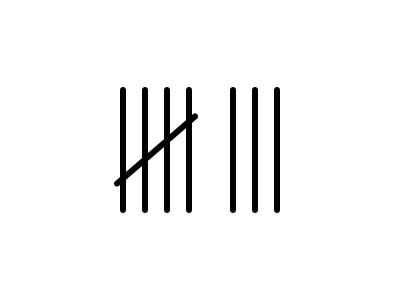
    1. Tally marks: one bundle of 5 and 3 more marks. How many does this tally show?
    2. When you measure with paper clips, can you leave gaps between them? (yes or no)

    Reading & Writing

    1. thirst, porch, cloud
    2. very, things

    Math · Week 34 Day 1

    I can solve all kinds of story problems.

    Look: a story with an unknown start

    1. Story: Some ducks were in a pond. 6 more came. Now there are 14 ducks. How many were there at first?
    2. We do not know the start, so write ? + 6 = 14.
    3. What plus 6 makes 14? 8 + 6 = 14. There were 8 ducks at first.

    Listen to each story, write an equation with ? for the unknown number, and solve.

    1. 1.
      Leo had 7 cars. He got 8 more. How many cars does Leo have now?
    2. 2.
      There were 15 birds on a wire. Some flew away. Now 6 are left. How many flew away?
    3. 3.
      Mia has 11 pencils. Sam has 4 pencils. How many more pencils does Mia have than Sam?
    4. 4.
      Some grapes were on a plate. Dad ate 5. Now 8 are left. How many grapes were on the plate at first?

    Solve.

    1. 5.
      Jo picked 3 red flowers, 7 yellow flowers and 5 pink flowers. How many flowers did she pick in all? ____
    2. 6.
      Ty has 9 blocks. Ana has 3 more blocks than Ty. Circle the equation that fits.
      • 9 + 3 = ?
      • 9 - 3 = ?
      • 3 + ? = 9
    3. 7.
      ? + 4 = 12. The ? is ____.

    Challenge (optional)

    Kim has 6 stickers. Raj has 2 more stickers than Kim. Lu has 3 more stickers than Raj. How many stickers does Lu have?

    You need: Counters (optional), Pencil

    Reading & Writing · Week 34 Day 1

    I can describe a favorite book with details.

    Look: telling about a favorite book

    1. Tell who is in it and where it happens.
    2. Tell the best part with a detail.
    3. Tell why you like it: I like it because it is fun.

    My Best Tale

    My best tale is about a kitten. The kitten gets lost on a big farm. A goat helps the kitten get home. The best part is when the kitten rides on the goat! I like it because it is fun.

    Read it. Circle the answer.

    1. 1.
      Who is in the tale?
      • a kitten and a goat
      • a frog and a fox
    2. 2.
      Where does it happen?
      • on a farm
      • at sea
    3. 3.
      What is the best part?
      • the kitten rides on the goat
      • the goat naps

    Read the word. Write the two parts.

    1. 4.
      rocket
    2. 5.
      magnets
    3. 6.
      hiccups
    4. 7.
      goblet

    Write the word I say. It is in the all family.

    1. 8.
      Do not ____ in the mud.
    2. 9.
      The pup is ____.
    3. 10.
      Kim hung it on the ____.

    Challenge (optional)

    My best pick is ____.

    Social Studies · Week 34 Day 1

    I can list ways we could help fix our problem.

    Look: sorting our ideas

    1. Brainstorm: think of many ideas, and do not say any idea is bad.
    2. Sort each idea: can we do it with a grown-up, or do we need more help, like the town?
    3. Star the ideas a first grader could really do.

    Listen. Circle the grown-up and child if we can do it with a grown-up. Circle the town hall if we need more help.

    1. 1.
      Make posters asking people to use the trash cans.
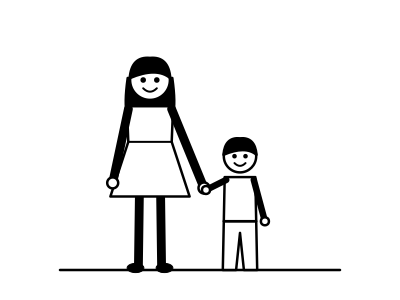
      • A grown-up and a child holding hands.
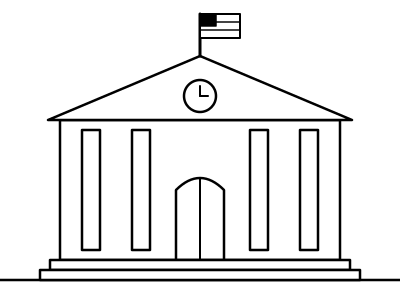
      • A town hall.
    2. 2.
      Build a new bridge over the river.
      • A grown-up and a child holding hands.
      • A town hall.
    3. 3.
      Make cards for a neighbor who lives alone.
      • A grown-up and a child holding hands.
      • A town hall.
    4. 4.
      Put in a new traffic light.
      • A grown-up and a child holding hands.
      • A town hall.
    5. 5.
      Collect books at home for a book drive.
      • A grown-up and a child holding hands.
      • A town hall.

    Talk and draw. Write what your child says.

    1. 6.
      Tell 3 ideas to help with our problem.
    2. 7.
      Which idea needs help from the town? Why?
    3. 8.
      Draw a poster idea about our problem.

    Challenge (optional)

    Think of one way to tell others about our problem.

    You need: crayons