1First Grade

    My math portfolio

    Look how I've grown

    Practice pages

    0 of 180 days complete · Saved on this device

    View all 180 days

    Math

    My math portfolio

    I can choose my best work and tell what I learned.

    Standards: 1.OA.A.1, 1.NBT.B.2, 1.G.A.1

    Number practice (no timer)
    Favorite fact games (untimed)
    Builds on
    The whole year. One-minute check: "Name one thing you can do in math now that you could not do at the start of first grade." (Answers vary.)

    New words

    • portfolio: a collection of your best work
    • reflect: think back about what you learned

    You need

    • The year's math work: notebook pages, checks and tests
    • A folder or a large envelope
    • Sticky notes or paper strips for labels
    • Crayons
    • 20 counters (beans or buttons)
    • Tens and ones kit: 9 tens and 9 ones (straw bundles and loose straws, or paper ten-strips with beans as ones)
    • Paper shapes from Week 31
    • Notebook and pencil
    • Beans and buttons are small parts: keep them away from children under 3.
    1. Warm-Up · 5 min

      Fluency: favorite fact games, untimed. "8 + 8?" (16) "12 - 6?" (6) Spaced review from Week 14: "How many tens are in 40?" (4)

    2. Mini-Lesson · 10 min

      Say: "A portfolio holds your best work. Today you choose one piece from each unit and tell what it shows." Write the 6 units on a page: Unit 1, story problems (Weeks 1 to 6); Unit 2, facts and the equal sign (Weeks 7 to 12); Unit 3, numbers to 120 and tens and ones (Weeks 13 to 18); Unit 4, adding and subtracting within 100 (Weeks 19 to 24); Unit 5, length, time and data (Weeks 25 to 30); Unit 6, shapes and equal shares (Weeks 31 to 36). Model one label: pick a Unit 1 page and write on a sticky note: "This shows I can solve story problems. 9 + 4 = 13. I made a ten."

    3. Guided Practice · 10 min

      Your child looks through the work and chooses 1 piece from each unit, and you help write a label for each: "This shows I can ___." Then your child shows 3 skills again with materials. 1) Unit 1: "8 frogs are on a log. 5 more hop on. How many frogs now?" (13; with counters) 2) Unit 3: "Show 46 with tens and ones." (4 tens and 6 ones) 3) Unit 6: "Pick up a triangle and tell what all triangles have." (Closed, 3 straight sides and 3 corners) If stuck, say: "Find the page in your notebook that shows this. What did you do then?"

    4. Play · 10 min

      Reflect and Decorate. Ask and write your child's answers on the first page of the portfolio: "What math are you strongest at?" "What was hard at first but got easier?" "What do you want to keep practicing?" (Answers vary.) Then your child decorates the folder cover with numbers, shapes, a clock and a graph.

    5. Exit Ticket · 3-5 min

      Put the objects to one side but leave them on the table. Read each question aloud. Your child answers out loud, with objects or with a quick drawing. Check each answer together right away.

    Exit ticket

    1. What number is 3 tens and 9 ones?
    2. Tell me a story for 12 - 5.
    3. Is a triangle still a triangle if you turn it upside down?
    Answers
    1. 39
    2. Answers vary. Look for: a take-away or compare story with the answer 7.
    3. Yes
    Watch for, and help or stretch
    Watch for
    Choosing only the newest or neatest work and skipping early units.
    Try
    Say: "We need one from each unit. Which Unit 1 page makes you proud?"
    Extra help
    Lay out 2 or 3 pieces from each unit and let your child choose 1 from each small pile.
    Stretch
    Your child writes one sentence for each unit: "In Unit ___, I learned ___."

    At home (optional): Your child shows the portfolio to a family member and explains 2 pieces.
    Reading & Writing

    Look how I've grown

    I can compare my first writing with my newest writing.

    Standards: W.1.5, SL.1.4, L.1.1

    Phonics
    Year-end phonics check: all Grade 1 patterns
    Sight words
    learn, world, answer, air, through
    Reading
    The child's own published writing and favorite texts; original decodable "Showcase Day"
    Writing
    Showcase: present and celebrate the year · Handwriting: letter to next year's self
    Builds on
    All the writing from this year. One-minute check: your child finds the All About My Name page from Week 1 in the writing folder.

    New words

    • growth: how much you have changed and learned
    • compare: to tell how things are alike and different
    • goal: something you want to learn or do next

    You need

    • The All About My Name page from Week 1 and the final copy of the showcase piece
    • "Pam and the Big Cat", the Week 1 decodable story (in the lesson)
    • Printed "Showcase Day" (from Day 1)
    • A two-column chart on paper: Week 1 and Now
    • Sight word cards: learn, world, answer, air, through
    • Lined handwriting paper
    1. Phonics & Word Work · 15 min

      Then and now. I do: say: "In Week 1, this was our story." Read the first line of "Pam and the Big Cat" and point out that, apart from a few sight words (see, the, is, No), it has only short a and short i words. We do: read the rest together. Pam and the Big Cat Pam can see a big cat. The cat is in a bag! Pam can pat it. The cat can sit. It can nap. Pam had a tan cap. The big cat bit the cap! "No, cat!" The cat ran and hid. Pam can see it! Pam and the cat sit and nap. You do: your child reads "Showcase Day" lines 3 to 6 alone. Ask: "What patterns are in Showcase Day that were not in Pam and the Big Cat?" (Answers vary. Look for: blends such as stands and stuck, digraphs such as that and with, the endings -s, -ed and -ing, vowel teams and two-syllable words such as kitten.) Dictation: your child writes a word from Week 1 and a word from this month: cat, kitten, sat, stuck. If stuck, ask: "How many sounds? Is there a team?"

    2. Sight Words · 5 min

      Review: learn, world, answer, air, through. Memory Match: use two sets (10 cards). Turn two over and read both. A match is kept.

    3. Read-Aloud & Shared Reading · 15 min

      Look how I've grown. Put the Week 1 name page and the showcase piece side by side. Fill the chart together. Ask: "What do you notice about your letters?" (Answers vary. Look for: neater, the right size, on the line, spaces between words.) Ask: "What do you notice about your words and sentences?" (Answers vary. Look for: more words, longer sentences, capitals and periods, more correct spellings.) Ask: "What can you do now that you could not do in Week 1?" (Answers vary. Look for: two real ways, such as I can read long words, I can write a whole story, I can use quotation marks.) Your child tells two ways in complete sentences. If stuck, point to one thing on each page and ask: "Week 1 or now? What changed?"

    4. Writing & Handwriting · 15 min

      Your child writes two sentences about their growth: "In Week 1, I ___. Now I ___." (Answers vary. Look for: a real change, such as In Week 1, I made big letters. Now I make neat letters.) Then one goal: "Next year I want to learn ___." Grammar check together (L.1.1): does each sentence have who and what happened, and do the verbs match the time (In Week 1, I wrote... Now I write...)? Handwriting (4 min): your child writes the same sentence they wrote in Week 1 (or their name) again, neatly, and you put the two side by side.

    5. Exit Ticket · 5 min

      Oral answers.

    Exit ticket

    1. Tell me two ways you have grown as a writer.
    2. Tell me one way you have grown as a reader.
    3. What do you want to learn next year?
    Answers
    1. Answers vary. Look for: two specific changes, such as neater letters and longer stories.
    2. Answers vary. Look for: a specific change, such as reading long words or reading with expression.
    3. Answers vary. Look for: a real goal.
    Watch for, and help or stretch
    Watch for
    Saying "Week 1 was bad."
    Try
    Say: "Week 1 was a great start. Every writer begins somewhere. Let's see how far you came."
    Extra help
    Compare only handwriting today. Your child points and tells; you write the two sentences for your child to copy.
    Stretch
    Your child picks a piece from the middle of the year too and puts all three in order, telling what changed each time.

    At home (optional): Your child shows the two pages to a family member and tells two ways they have grown.

    Science

    Year in science review

    I can tell my favorite things I learned in science this year.

    Standards: 1-PS4-1, 1-PS4-2, 1-PS4-3, 1-PS4-4, 1-LS1-1, 1-LS1-2, 1-LS3-1, 1-ESS1-1, 1-ESS1-2

    Builds on
    The whole year. One-minute check: ask "Which unit was your favorite?" (Answers vary.)

    New words

    • review: to look back at what you learned

    You need

    • 9 station cards on index cards, numbered 1 to 9 (the station questions are in the Explore step)
    • Station 1: a metal pot lid and a wooden spoon, or a plastic box with a rubber band stretched around it
    • Station 2: a shoebox with a lid and a small toy inside, with 2 holes poked by a grown-up (one in an end to peek through and one in the lid for the flashlight), and a flashlight
    • Station 3: a flashlight, clear plastic wrap, wax paper and a piece of cardboard
    • Station 4: a flashlight (for a light code) or the cup phone from Unit 2
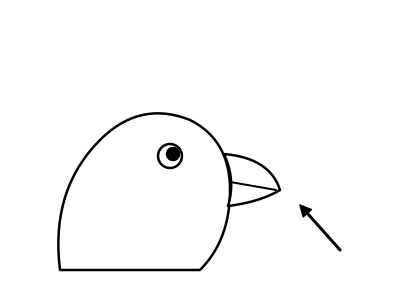
    • Station 5: kitchen tongs (metal or plastic) and 5 dry beans on a plastic plate
    • Station 6: the Parents Help chart (Unit 4)
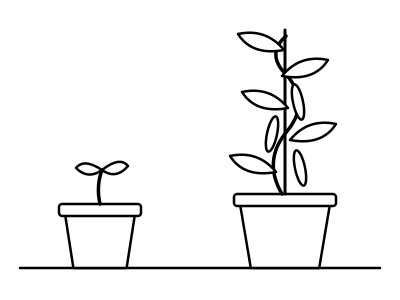
    • Station 7: a bean plant from Unit 4 if you still have one, or a picture of a bean seedling and a grown bean plant
    • Station 8: sun sequence cards and moon picture cards (Unit 5)
    • Station 9: the Daylight graph (Unit 5)
    • Science Notebook, Sky Journal and Engineering Journal
    • Pencil
    1. Warm-Up / Wonder · 5 min

      Spaced review: ask: "What are the 6 engineering steps?" (ask, imagine, plan, create, test, improve) Wonder question: "What do you know now that you did not know at the start of first grade?" This is the year-end review and the Quarter 4 review.

    2. Explore · 10–15 min

      Set the 9 stations around the room. At each one, your child does the quick action and answers the station question. About 1 to 2 minutes each. 1, Sound: tap the pot lid (or pluck the rubber band) and lightly touch it. Ask: "What is the lid doing when it makes sound?" (vibrating, shaking fast) 2, Seeing in the dark: peek through the hole with the lid on, then shine the flashlight into the hole in the lid. Ask: "Why can you see the toy now?" (Light shines on it.) 3, Light and materials: shine the flashlight through the plastic wrap, the wax paper and the cardboard onto a wall. Ask: "Which lets all, some or no light through?" (plastic wrap: almost all; wax paper: some; cardboard: none) 4, Messages: send a 2-flash light code or a cup-phone hello. Ask: "How did we send a message far away?" (with light or sound) 5, Animal parts: pick up the beans with the tongs (dry beans are a choking hazard for children under 3, so keep them away from little ones). Ask: "Which animal part do tongs work like?" (a bird's beak) 6, Parents: ask "Name two ways animal parents help their babies survive." (Answers vary: feed, protect, keep warm, teach.) 7, Like but not exactly: compare the bean seedling and the grown plant. Ask: "How are they alike? How are they different?" (Alike: green, a stem, the same kind of plant. Different: the seedling is small and its first leaves are single leaves; the grown plant is bigger and its later leaves grow in groups of 3.) 8, Sky: put the sun cards and the moon cards in order. Ask: "Which pattern happens every day? Which takes about a month?" (the sun's; the moon's) Also ask: "When can we see stars?" (at night, when the sky is dark) 9, Daylight: ask "Which season has the most daylight?" (summer) Quarter 4 look-back: ask "What problem did your engineering design solve, and what did your data show?" (Answers vary.) If time is short, do 5 stations today and 4 tomorrow. If stuck at a station, open the matching notebook page and let your child find the answer there.

    3. Talk & Record · 5–10 min

      Your child picks a favorite station and draws it on a "My Year in Science" page. Sentence frame: "My favorite thing I learned was ___ because ___."

    4. Exit Ticket · 3–5 min

      Ask the three questions aloud. Your child answers by talking or drawing.

    Exit ticket

    1. A drum is making a sound. What is the drum skin doing?
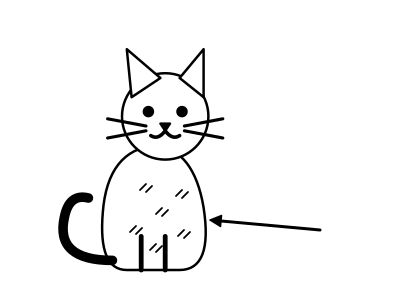
    2. A cat has 4 kittens. Do the kittens look exactly like their mother?
    3. What was one thing you learned in the engineering unit?
    Answers
    1. Vibrating (shaking fast).
    2. No. They look like her but not exactly like her.
    3. Answers vary. Look for: a true idea, such as testing two designs fairly, or shape helps a design work.
    Watch for, and help or stretch
    Watch for
    Mixing up the ideas from different units (for example, saying the moon makes its own light).
    Try
    Go back to the matching station or notebook page. Ask: "What did we find out when we tested it?"
    Extra help
    Do 4 stations today (one from each of the first four units) and the rest on another day.
    Stretch
    Your child makes up one new station question for a family member and checks the answer.

    At home (optional): Your child gives a family member a 3-station tour and teaches one idea at each.

    Practice

    Read each direction aloud. Your child works on the page; answers are in the grown-up view.

    Warm-up

    Remember?

    Math

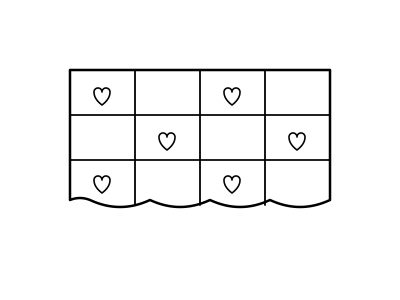
    1. Draw a square and cut it into fourths.
    2. 49 + 3 = ?

    Reading & Writing

    Math · Week 36 Day 2

    I can choose my best work and tell what I learned.

    Look: a page for my portfolio

    1. Pick your best page from each unit.
    2. Write a label: "This shows I can ____."
    3. Then show the skill one more time.

    Show one skill from each unit.

    1. 1.
      Unit 1: 9 dogs are at the park. 6 more come. How many dogs are at the park now?
    2. 2.
      Unit 2: 8 + 3 = 4 + ____
    3. 3.
      Unit 3: 6 tens and 5 ones = ____
    4. 4.
      Unit 4: 54 + 8 = ____
    5. 5.
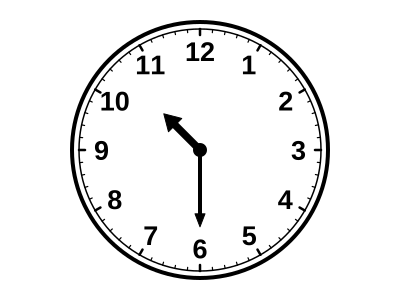
      Unit 5: A clock with the short hand halfway between 10 and 11 and the long hand on 6. Write the time. ____
    6. 6.
      Unit 6: Draw a closed shape with 3 straight sides. Then draw a line to split a square into halves.

    Write about your favorite page, with a grown-up's help.

    1. 7.
      This shows I can ____.
    2. 8.
      Tell what you did on that page.
    3. 9.
      Which unit did you like best? Tell why.

    Challenge (optional)

    Which unit was the hardest for you? Show one thing you can do now from that unit.

    You need: Pencil, Your math notebook and pages from this year

    Reading & Writing · Week 36 Day 2

    I can compare my first writing with my newest writing.

    Look: then and now

    1. Put your Week 1 page next to your newest page.
    2. Ask: What do you see in your letters? In your lines?
    3. Tell it: In Week 1, I printed my name. Now I print a whole story.

    Then and Now

    In Week 1, I could print my name. My name was big and not on the line. Now I can print a long tale. My lines are neat. I can spell a lot too!

    Read the line. Is it from then or now? Circle one.

    1. 1.
      I could print my name.
      • then
      • now
    2. 2.
      I can print a long tale.
      • then
      • now
    3. 3.
      My lines are neat.
      • then
      • now
    4. 4.
      My name was big and not on the line.
      • then
      • now

    Write how you have grown.

    1. 5.
      In Week 1, I ____.
    2. 6.
      Now I ____.
    3. 7.
      In a year, I hope to ____.

    Challenge (optional)

    Fix it: In Week 1, I print my name.

    Science · Week 36 Day 2

    I can tell my favorite things I learned in science this year.

    Look: Look back at the year

    1. Go to one station and do the action.
    2. Answer the station question.
    3. Tell one thing you learned there.

    Year review. Circle the answer.

    1. 1.
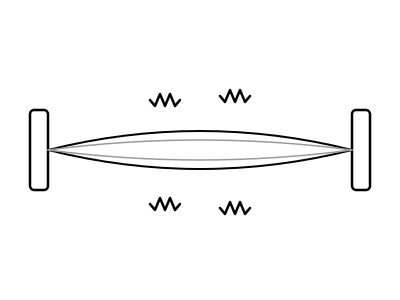
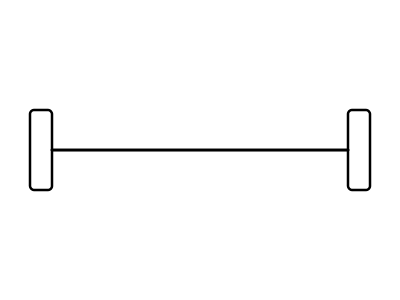
      A guitar string makes a sound. Circle the string that is making it.
      • A blurry string with zigzag lines.
      • A still string.
    2. 2.
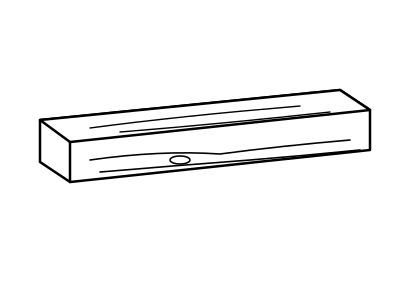
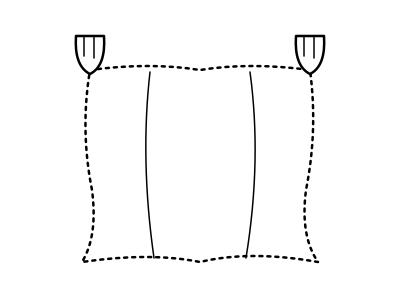
      Circle the thing that lets some light through.
      • A wooden board.
      • A sheet of tissue paper.
    3. 3.
      Circle the animal part that works like a pair of tongs.
      • A bird's beak.
      • A cat's fur.
    4. 4.
      Circle what we can see only when the sky is dark.
      • The sun.
      • Many stars.
    5. 5.
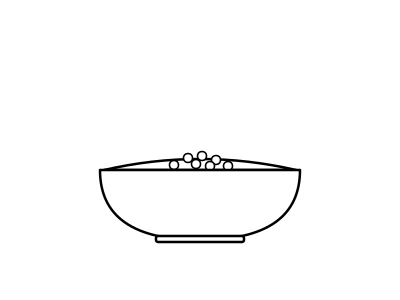
      A bean seedling and a grown bean plant. Are they the same kind of plant?
      • yes
      • no

    Circle, draw or tell.

    1. 6.
      A father wolf brings food to his pups. Which kind of help is that?
      • A bowl of food (feed).
      • A shield (protect).
      • A blanket (keep warm).
      • A grown-up showing a child how (teach).
    2. 7.
      Draw the science tool you liked using best this year. Tell what it helped you learn.
    3. 8.
      Tell one thing you want to learn about in science next year. Your grown-up writes it.

    Challenge (optional)

    Sound and light can both send messages. Name one of each.

    You need: crayons