Math
Math game fair
I can teach a math game to my family.
Standards: 1.OA.C.6, 1.NBT.B.3, 1.MD.B.3
- Number practice (no timer)
- Favorite fact games (untimed)
- Builds on
- The whole year's games. One-minute check: "In Place Value War, you flip a 4 and a 6. What is the greatest number you can make?" (64)
New words
- rules: the steps everyone follows in a game
- teach: show someone else how to do something
You need
- Deck of cards ace to 10 (face cards removed; ace = 1)
- 3 symbol cards: >, < and =
- 2 dice
- The paper plate clock from Week 27
- The 12 clock cards from Week 28 (Clock Match)
- Tens and ones kit: 18 tens and 18 ones for Place Value War (or check with quick pictures)
- Notebook and pencil
- Dice and the paper fastener on the clock are small parts: keep them away from children under 3.
Warm-Up · 5 min
Fluency: favorite fact games, untimed. Your child picks: doubles, make a ten, or think addition, and asks you 3 facts. Spaced review from Week 25: "The rope is longer than the hose. The hose is longer than the cord. Which is longest?" (The rope)
Mini-Lesson · 10 min
Say: "Today is Game Fair. You are the teacher." Write the 5 steps for teaching a game: 1) Say the goal. 2) Show the materials. 3) Play a practice round. 4) Say how to get points. 5) Check the answers. Your child chooses 3 games: one facts game (Flip and Tell), one numbers game (Place Value War) and one clock game (Clock Match). Practice step 3 together for Place Value War: flip 2 and 8. Ask: "What is the best move?" (82: the bigger digit goes in the tens place.)
Guided Practice · 10 min
Game 1: Flip and Tell. Your child teaches a family member, using the 5 steps: flip 2 cards, add, and tell the strategy. The biggest card is 10, so a sum is never more than 20. Put the cards on the bottom of the deck after each turn. You prompt only if needed. Play 5 turns each. Look for: correct sums and a strategy named each time. If stuck, say: "What is step 1? Tell them the goal."
Play · 10 min
Games 2 and 3. Your child teaches Place Value War (take the 10s out of the deck first; the greater number wins; build or draw both numbers and place a symbol card) and Clock Match (12 clock cards face down in 3 rows of 4; turn over 2 and keep a pair when an analog card and a digital card show the same time). Play 4 rounds of Place Value War and one full game of Clock Match. At the end, each family member tells your child one thing they did well as a teacher.
Exit Ticket · 3-5 min
Put the objects to one side but leave them on the table. Read each question aloud. Your child answers out loud, with objects or with a quick drawing. Check each answer together right away.
Exit ticket
- In Place Value War, you flip a 5 and a 9. What is the greatest number you can make?
- 9 + 7 = ? Which strategy did you use?
- Show half past 6 on the paper clock.
Answers
- 95
- 16. Answers vary for the strategy. Look for: make a ten (9 + 1 + 6) or a near double.
- Look for: the short hand halfway between 6 and 7 and the long hand on 6.
Watch for, and help or stretch
- Watch for
- Skipping the practice round, so the family member does not know what to do.
- Try
- Point to step 3 on the list. Say: "Show one round first, slowly."
- Extra help
- Teach only 2 games, and you read the 5 steps aloud while your child does each one.
- Stretch
- Your child makes up a new rule for one game (such as "the smaller number wins") and teaches the new version.
At home (optional): Your child teaches one game to a relative or friend this week.
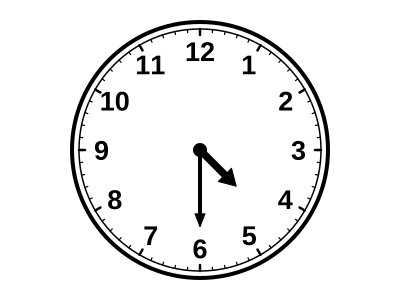 Write the time. ____
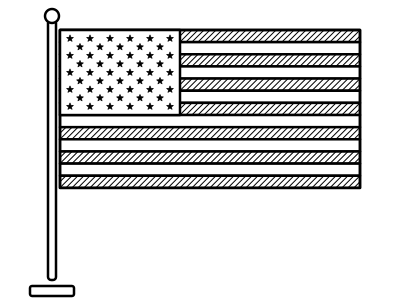 What do the 13 stripes stand for?