1First Grade

    Quarter review: shapes, measurement and the year

    Quarter 4 review

    Practice pages

    0 of 180 days complete · Saved on this device

    View all 180 days

    Math

    Quarter review: shapes, measurement and the year

    I can show what I learned this quarter.

    Standards: 1.G.A.2, 1.G.A.3, 1.MD.C.4, 1.MD.B.3, 1.G.A.1

    Number practice (no timer)
    Favorite fact games (untimed)
    Builds on
    Weeks 28 to 35: time to the half hour, data, shape attributes, composing shapes, equal shares and the year review. One-minute check: "Where is the long hand at half past 4?" (On 6) "What do we call one of 4 equal shares?" (A fourth, or a quarter)

    New words

    • quarter: one of the four parts of the school year; it is also another name for a fourth of a shape

    You need

    • Game board: a path of 20 squares drawn on paper, with Start and Finish
    • 2 game pieces (a coin and a button)
    • 1 die
    • 12 review cards made from paper squares (written below)
    • The paper plate clock from Week 27
    • Paper shape kit (from Week 32): 8 squares, each 2 inches on a side; 12 triangles, made by cutting 6 more 2-inch squares in half from corner to corner; 4 rectangles, 2 inches by 4 inches; 4 half-circles, made by tracing a cup about 4 inches across twice, cutting out the circles and cutting each one in half; and 4 quarter-circles, made by cutting one more circle into 4 equal parts (fold it in half, then in half again, and cut on the folds)
    • A bar graph an adult draws: Winter Clothes. Hats 3, Mittens 6, Scarves 4.
    • 2 paper rectangles for folding
    • Crayons
    • Notebook and pencil
    • Buttons, coins, dice and the paper fastener on the clock are small parts: keep them away from children under 3.
    1. Warm-Up · 5 min

      Fluency: favorite fact games, untimed. "7 + 8?" (15) "13 - 4?" (9) Spaced review from Week 34: "Which is greater, 71 or 17?" (71)

    2. Mini-Lesson · 10 min

      Say: "We have reached the end of the fourth quarter, the last part of first grade. Today we play a review game with what we learned since Week 28." Show the board and the cards. Say: "Roll the die and move. Then pick a card and solve it. If you get it right, move 1 more space. Use any tool you want." Model one card, thinking out loud: "Card: set the clock to half past 9. Half past means the long hand goes on 6. The short hand goes halfway between 9 and 10 because it has passed 9 but has not reached 10."

    3. Guided Practice · 10 min

      Review Game Board. Take turns. Read each card aloud. The player solves it and tells how; the other player checks. Cards with answers: 1) "Set the clock to half past 4." (Short hand halfway between 4 and 5; long hand on 6) 2) "Read 11:30 and set it." (Half past 11) 3) "The short hand is on 2 and the long hand is on 12. What time is it?" (2:00) 4) "Show 8 with tally marks." (A bundle of 5 and 3 more) 5) "Winter Clothes graph: how many in all?" (13) 6) "How many more mittens than hats?" (3) 7) "I am closed with 4 straight sides and 4 square corners. My sides are not all the same length." (A rectangle) 8) "Is a square turned on its corner still a square? Why?" (Yes. It still has 4 same-length sides and 4 square corners.) 9) "Make a rectangle from 2 squares." 10) "Make a half-circle from 2 quarter-circles." 11) "Fold a paper rectangle into fourths and color a quarter of it." 12) "Which is smaller: half of a pizza or a fourth of the same pizza?" (A fourth) If stuck, say: "What kind of card is this: a clock, a graph, a shape or a share? Which tool helps with that kind?"

    4. Quarter Wrap-Up · 10 min

      Quarter Wrap-Up. After the game, your child chooses a favorite card and teaches it back to you as if you were the student, using the clock, the kit, the graph or a drawing. Then ask: "Which card was hardest? What helped you?" and "What is one thing you want to practice this summer?" Write your child's answers in the notebook. Use them to plan short summer practice.

    5. Exit Ticket · 3-5 min

      Put the objects to one side but leave them on the table. Read each question aloud. Your child answers out loud, with objects or with a quick drawing. Check each answer together right away.

    Exit ticket

    1. What does a digital clock show at half past 7?
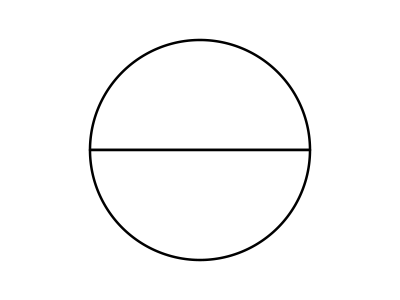
    2. Draw a circle split into halves.
    3. A graph shows 7 votes for cats and 2 votes for birds. How many fewer votes for birds than for cats?
    Answers
    1. 7:30
    2. Look for: one line through the middle making 2 equal shares.
    3. 5
    Watch for, and help or stretch
    Watch for
    Mixing up halves and fourths, such as calling 4 equal shares halves.
    Try
    Count the equal shares out loud. Say: "2 shares are halves. 4 shares are fourths."
    Extra help
    Let your child pick which cards to solve, and use the clock, the kit or a fold for every card.
    Stretch
    Your child writes 2 new hard cards for the game, one about time and one about shapes, and you both solve them.

    At home (optional): Play the review board again with a family member using the same cards.
    Reading & Writing

    Quarter 4 review

    I can read and use the skills I learned this quarter.

    Standards: RF.1.3, RF.1.4, RL.1.10, RI.1.10

    Phonics
    Year-end phonics check: all Grade 1 patterns
    Sight words
    learn, world, answer, air, through
    Reading
    The child's own published writing and favorite texts; original decodable "Showcase Day"
    Writing
    Showcase: present and celebrate the year · Handwriting: letter to next year's self
    Builds on
    All of Quarter 4: endings, cumulative review, comparing texts and the showcase. One-minute check: warm up with boxes, rested, playing, kitten.

    New words

    • quarter: one of the four parts of the school year
    • review: look back at what we learned to remember it

    You need

    • Quarter 4 review sheet with a short story and a short fact text (written in step 4)
    • 16 word cards (index cards): wishes, foxes, jumped, landed, played, resting, singing, trash, chimp, smile, rain, boat, farm, shout, coin, napkin
    • All Quarter 4 sight word cards (Weeks 28 to 36, 45 words): too, mean, same, tell, boy, follow, came, want, show, also, around, three, small, end, another, well, large, must, big, even, such, why, went, read, need, home, us, try, kind, hand, picture, change, off, play, away, animal, house, mother, found, still, learn, world, answer, air, through
    • Printed "Mother Hen and the Lost Chick" (Week 35) and "Plants Help Us" (Week 30)
    • Lined handwriting paper
    1. Phonics & Word Work · 15 min

      Quarter 4 Word Path. I do: read one word from each pattern: wishes (-es), jumped (-ed), resting (-ing), trash (blends and digraphs), smile (final e), rain (vowel team), farm (r-team), shout (ou), napkin (two syllables). We do: lay all 16 cards in a path; read the first 5 together. You do: your child walks the path and reads the rest: foxes, landed, played, singing, chimp, boat, coin and the others. Put a dot on any slow word. Dictation: foxes, landed, singing, coin. If stuck, ask: "Is there an ending? Cover it and read the root first."

    2. Sight Words · 5 min

      Read through all 45 Quarter 4 sight words once, sorting them into Know It and Still Learning piles: too, mean, same, tell, boy, follow, came, want, show, also, around, three, small, end, another, well, large, must, big, even, such, why, went, read, need, home, us, try, kind, hand, picture, change, off, play, away, animal, house, mother, found, still, learn, world, answer, air, through. Take a stretch break after 20 words.

    3. Read-Aloud & Shared Reading · 15 min

      A story and a fact text. Your child reads "Mother Hen and the Lost Chick" (a story) and "Plants Help Us" (a fact text). Ask: "Which one is a story? How do you know?" (Mother Hen: it has characters, a problem and an ending.) Ask: "What is the author's point in Plants Help Us?" (Plants help us in lots of ways.) Ask: "What was the problem in Mother Hen, and how was it solved?" (Chip was lost; Mother Hen asked the animals and found him in the corn.) Then give the review sheet: your child reads the new short story and fact text on it and answers the questions. (This is a lot for 15 minutes: if your child tires, do the review sheet after a break or move it to the start of Day 5, before the test.) Read the directions aloud, but do not help with answers. If stuck on a direction, read it again once.

    4. Writing & Handwriting · 15 min

      Your child writes two complete sentences: one telling the lesson or best part of a story from this quarter, and one fact from a fact text this quarter. (Answers vary. Look for: one sentence about a story and one true fact, each with a capital and an end mark.) Handwriting (4 min): your child copies the last sentence of "Plants Help Us" in their neatest writing.

    5. Exit Ticket · 5 min

      Reflect on the quarter together.

    Exit ticket

    1. What is one thing you can read now that you could not read at the start of Quarter 4?
    2. Read these words: dishes, rocked, peeking.
    Answers
    1. Answers vary. Look for: a real skill, such as words with -es, -ed or -ing.
    2. dishes, rocked, peeking
    Watch for, and help or stretch
    Watch for
    Getting tired and guessing at the end of the long sight word list.
    Try
    Take a break after 20 words. Let your child stand, stretch and then finish.
    Extra help
    Spread the review over two sittings. Read the two texts aloud together before the review sheet.
    Stretch
    Your child tells how the two texts on the review sheet are alike and different.

    At home (optional): Celebrate the quarter: your child reads a favorite text from Weeks 28 to 36 to the family.

    ScienceUnit test

    Capstone presentation

    I can present my design: problem, sketches, tests and improvements.

    Standards: K-2-ETS1-1, K-2-ETS1-2, K-2-ETS1-3

    Builds on
    My engineering journal (Week 35). One-minute check: your child names the 6 steps and points to one journal page for each.

    You need

    • Unit 6 test page with the presentation rubric (given separately)
    • The crayon holder design (improved version), and Designs A and B if you still have them
    • Engineering Journal with step tabs
    • A display board: a folded cardboard or poster paper with 4 boxes: Problem, Sketches, Test Data, Improvement
    • Tape and a glue stick
    • An audience: 1 to 3 family members
    1. Warm-Up / Wonder · 5 min

      Spaced review: say each word from the unit, and your child tells what it means: engineer, problem, solution, tool, interview, define, goal, sketch, base, model, fair test, data, trial, strength, weakness, improve, float. Wonder question: "What do you want your audience to remember?"

    2. Review Game · 10 min

      Play "Practice Pitch." Your child fills the display board by taping journal pages or redrawing them in the 4 boxes. Then practice one box at a time with a stuffed animal as the audience. For each box, your child says one sentence. Problem: "The problem was ___." Sketches: "This shape helps because ___." Test Data: "Design ___ kept more crayons in." Improvement: "I changed ___, and the retest showed ___." Keep it light; this is practice, not the test. If stuck, point to the box and ask: "What does this picture show?"

    3. Check · 10–15 min

      Give the Unit 6 test. The test items are on the Unit 6 test page and are given separately; do not show them ahead of time. The test is the presentation. Your child presents the design to the family audience using the display board and the real design, then answers one question from each listener. You score it with the rubric on the test page (problem, shape, data, improvement). Read a rubric part aloud as a prompt only if your child needs it. Write down your child's key words for each part. It is not timed. Take a break between parts if needed. If stuck on a part, point to the matching box on the display board and ask: "Tell us about this part." Note any idea to revisit.

    4. Exit Ticket · 3–5 min

      Ask the two reflection questions aloud. These are about how the unit felt, not more test items.

    Exit ticket

    1. Which part of your presentation felt easy?
    2. What would you like to design next?
    Answers
    1. Answers vary. Look for: an honest answer that names a part.
    2. Answers vary. Look for: a real problem they could solve, such as a holder for markers or a better bird feeder.
    Watch for, and help or stretch
    Watch for
    Reading the board word for word instead of explaining.
    Try
    Ask a friendly question: "How did you know Design B was better?" That invites your child to explain with data.
    Extra help
    Your child presents 2 boxes, takes a break, then presents the other 2. Your child may point and tell while you read the labels.
    Stretch
    Your child adds a fifth box, "Next time," with one new idea, and presents it.

    At home (optional): Your child shows the design and journal to another relative or a friend, in person or on a video call, and tells the whole story.

    Practice

    Read each direction aloud. Your child works on the page; answers are in the grown-up view.

    Warm-up

    Remember?

    Math

    1. My picture uses 2 squares, 3 triangles and 1 rectangle. How many shapes in all?
    2. On the hundred chart, what number comes right after 100?

    Reading & Writing

    1. spoil, chart, frown
    2. can't, it's, I'm

    Math · Week 36 Day 4

    I can show what I learned this quarter.

    Look: half past 9

    1. Half past means the long hand points to 6.
    2. The short hand has passed 9 but has not reached 10, so it is halfway between 9 and 10.
    3. Half past 9 is written 9:30.

    Time and data.

    1. 1.
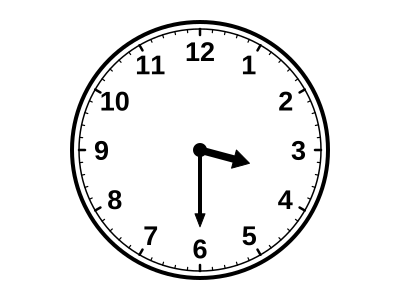
      A clock with the short hand halfway between 3 and 4 and the long hand on 6. Write the time. ____
    2. 2.
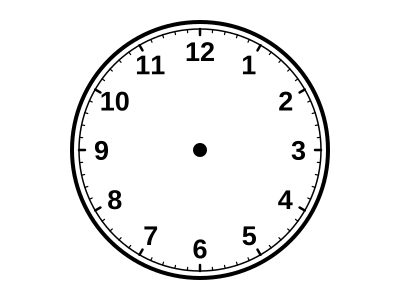
      A blank clock face with the numbers 1 to 12. Draw the hands for 6:00.
    3. 3.
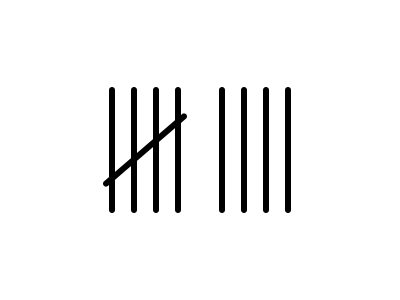
      Tally marks: 1 bundle of 5 (4 marks with a line across) and 4 more marks. How many? ____
    4. 4.
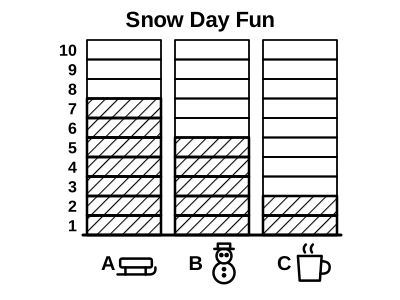
      A bar graph titled Snow Day Fun with numbers 1 to 10 up the side. Bar A, a sled: 7. Bar B, a snowman: 5. Bar C, cocoa: 2. How many in all? ____
    5. 5.
      How many more chose the sled than the snowman? ____

    Shapes and shares.

    1. 6.
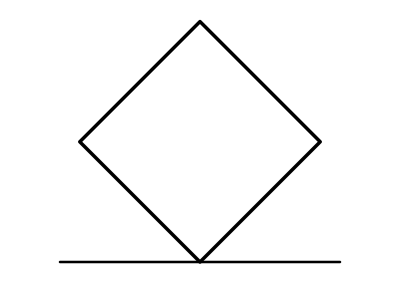
      A square standing on a corner. Is it still a square?
      • yes
      • no
    2. 7.
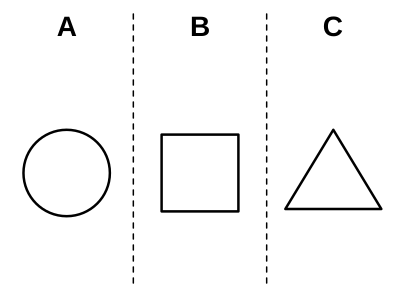
      2 half-circles with their straight sides touching. What shape do they make? Picture A: a circle; picture B: a square; picture C: a triangle.
      • A
      • B
      • C
    3. 8.
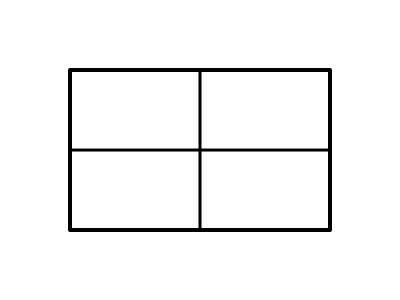
      A rectangle split into 4 equal shares. Color a quarter of it.

    Challenge (optional)

    A pizza is cut into halves. Then each half is cut into halves again. How many equal shares are there now? What is each share called?

    You need: Pencil, Crayons

    Reading & Writing · Week 36 Day 4

    I can read and use the skills I learned this quarter.

    Look: Quarter 4 review

    1. Is there an ending? Cover it and read the root first: rest-ed.
    2. A tale has characters, a problem and an end.
    3. A fact text tells true things about a topic.

    Max and His Pup

    Max lost his pup at the park. He looked and looked. At last, he found the pup by the pond!

    A pup needs water and a soft bed. It can sleep a lot.

    Read the word. Write the root word.

    1. 1.
      fixes
    2. 2.
      rested
    3. 3.
      sleeping
    4. 4.
      cups

    Read both parts. Circle the answer.

    1. 5.
      Which part is a tale?
      • the part on Max
      • the part on what a pup needs
    2. 6.
      What was the problem?
      • Max lost his pup.
      • The pup was wet.
    3. 7.
      What does a pup need?
      • water and a soft bed
      • a hat

    Challenge (optional)

    I know that ____.

    Science · Unit test

    Today is the unit test. Open it to read the directions, print the child's pages and score it.

    Open the Science unit test