1First Grade

    Year review: shapes and equal shares

    Showcase day

    Practice pages

    0 of 180 days complete · Saved on this device

    View all 180 days

    Math

    Year review: shapes and equal shares

    I can describe shapes, build new shapes and make equal shares.

    Standards: 1.G.A.1, 1.G.A.2, 1.G.A.3

    Number practice (no timer)
    Favorite fact games (untimed)
    Builds on
    Unit 6 (Weeks 31 to 33: shape attributes, composing shapes and equal shares). One-minute check: "What must every triangle have?" (Closed, 3 straight sides, 3 corners)

    New words

    • attribute: something about a shape, like its number of sides or corners

    You need

    • Paper shape kit (from Week 32): 8 squares, each 2 inches on a side; 12 triangles, made by cutting 6 more 2-inch squares in half from corner to corner; 4 rectangles, 2 inches by 4 inches; 4 half-circles, made by tracing a cup about 4 inches across twice, cutting out the circles and cutting each one in half; and 4 quarter-circles, made by cutting one more circle into 4 equal parts (fold it in half, then in half again, and cut on the folds)
    • Pattern blocks, if you have them (optional)
    • 2 paper circles and 2 paper rectangles for folding
    • 1 die
    • 9 game cards made from paper squares, in 3 piles (written in the lesson)
    • Crayons
    • Notebook and pencil
    • The corner checker card from Week 31 (an index card)
    • Dice and pattern blocks are small parts: keep them away from children under 3.
    1. Warm-Up · 5 min

      Fluency: favorite fact games, untimed. Your child picks a fact type and asks you 3 facts; then you ask 3. Example: "6 + 4?" (10) "9 + 8?" (17) "14 - 7?" (7) Spaced review from Week 28: "Write half past 1 the digital way." (1:30)

    2. Mini-Lesson · 10 min

      Shape Riddles. 1) "I have 4 straight sides and 4 square corners, but my sides are not all the same length." (A rectangle) 2) "I am closed with 6 straight sides." (A hexagon) 3) "I am round with no corners." (A circle) Then ask: "Is a tiny green triangle standing on its point still a triangle?" (Yes. Size, color and turning do not change it.) Then show 2 kit triangles. Ask: "What can these make together?" (A square or a bigger triangle) Fold a paper circle into 2 equal shares. Ask: "What is each share called?" (A half)

    3. Guided Practice · 10 min

      Build, Fold, Tell. 1) Your child builds a picture of a boat or a cat from at least 6 kit pieces, and points to one place where 2 pieces make a new shape, saying: "These 2 ___ make a ___." (Answers vary.) 2) Your child folds a rectangle into halves and colors half of it. 3) Your child folds a circle into fourths and colors a quarter of it. Ask: "How many quarters make the whole circle?" (4) "Which is bigger, a half or a quarter of the same circle?" (A half) If stuck, say: "For shapes, count the sides. For shares, fold and match the edges."

    4. Play · 10 min

      Shape Game. Roll the die. 1 or 2: a riddle card. 3 or 4: a build card. 5 or 6: a share card. Solve it, then put the card on the bottom of its pile. Riddle cards: "I have 3 straight sides and 3 corners." (Triangle) "I am a rectangle with 4 sides the same length." (Square) "I am round like a plate, with no straight sides and no corners." (Circle) Build cards: "Make a rectangle from 2 squares." "Make a circle from 4 quarter-circles." "Make a big triangle from 2 triangles." Share cards: "Draw a square and show fourths." "Draw a circle and color half of it." "Which is bigger: a fourth of a pancake or half of the same pancake?" (Half) Play 8 rolls, taking turns.

    5. Exit Ticket · 3-5 min

      Put the objects to one side but leave them on the table. Read each question aloud. Your child answers out loud, with objects or with a quick drawing. Check each answer together right away.

    Exit ticket

    1. A shape is closed and has 4 straight sides and 4 square corners. It is blue and very small. What could it be?
    2. Draw a rectangle split into 4 equal shares. What is each share called?
    3. Which 2 kit pieces make a trapezoid?
    Answers
    1. A rectangle or a square. Color and size do not matter.
    2. A fourth, or a quarter. Look for: 4 equal shares.
    3. A square and a triangle (a rectangle and a triangle also make a trapezoid)
    Watch for, and help or stretch
    Watch for
    Naming a shape by how it looks ("a diamond") instead of by its sides and corners.
    Try
    Count the sides and check the corners with the corner checker card. Then name it.
    Extra help
    Play only the riddle and share cards first. Add the build cards when your child is ready.
    Stretch
    Your child writes a new riddle card, a new build card and a new share card for the game.

    At home (optional): Your child plays the Shape Game with a family member.
    Reading & Writing

    Showcase day

    I can present my best work to an audience.

    Standards: SL.1.4, SL.1.5, SL.1.6

    Phonics
    Year-end phonics check: all Grade 1 patterns
    Sight words
    learn, world, answer, air, through
    Reading
    The child's own published writing and favorite texts; original decodable "Showcase Day"
    Writing
    Showcase: present and celebrate the year · Handwriting: letter to next year's self
    Builds on
    Rehearsal and feedback (Week 35). One-minute check: your child says the 5 steps of the showcase plan.

    New words

    • audience: the people who watch and listen
    • present: to share your work out loud with an audience
    • celebrate: to do something special because you are proud and happy

    You need

    • The showcase piece, the poster, the note card and the name tag
    • An audience: family members (and stuffed animals if you like)
    • Printed "Showcase Day" (in the lesson)
    • Word cards (index cards): shelf, stamp, cake, smile, rain, green, boat, night, star, fork, bird, cloud, coin, sunset, jumped, playing
    • Sight word cards: learn, world, answer, air, through (5 index cards)
    • A small treat or sticker for the celebration (optional)
    1. Phonics & Word Work · 15 min

      All-year pattern warm-up. I do: read shelf and stamp: "Short vowels and blends: that was our first work this year." Read cake and rain: "Then long vowels." We do: read green, boat and night together and name each vowel team (ee, oa, igh). You do: your child reads smile, star, fork, bird, cloud, coin, sunset, jumped, playing and names the pattern in each (i_e, ar, or, ir, ou, oi, two syllables, -ed, -ing). Read: "The bird sang at sunset in the green tree." Dictation: star, coin, jumped. If stuck, find the vowel first and ask: "Is it alone, with a silent e, in a team or with an r?"

    2. Sight Words · 5 min

      Introduce this week's words with see-say-spell-write. For each card: Say: "This word is ___. Say it with me." Your child reads it, spells it aloud while tapping each letter, writes it once while saying each letter, and reads it again. Draw a small heart over any part we must learn by heart: learn (ear says /er/: heart over ea; n is regular); world (or says /er/ after w: heart over or; ld is regular); answer (the w is silent: heart over w; an and er are regular); air (air says /air/ as in hair: heart over air); through (thr is regular; ough says /oo/: heart over ough). Finish by reading all five cards in mixed order twice. If stuck, cover the tricky part, read the rest together, then uncover it and say the whole word.

    3. Read-Aloud & Shared Reading · 15 min

      Echo-read this week's decodable story, then your child reads it alone. Showcase Day Today is the big day! Nell has her picture and her best tale. Mom, Dad, Gramps and Jess sit on the couch. Nell stands up. She lifts her picture up in the air. "My tale is about a kitten that got stuck in a tree," said Nell. Nell reads the tale all the way through. She reads it with feeling. She stops at each dot and looks up. At the end, Jess claps and claps. "Do you want to ask me something?" said Nell. Dad puts up his hand. "What part was hard?" Nell can answer that. "The end was hard," she said. "I had to think of a way to get the kitten down." Mom said, "That is the best tale in the world!" Nell grins. "I learned so much this year," she said. "Next year, I will learn even more!" Ask: "What did Nell do so the audience could understand her?" (Answers vary. Look for: she held her picture up, read the whole tale with feeling, stopped and looked up, and asked if they wanted to ask something.) Ask: "What question did Dad ask?" (What part was hard?) Ask: "How do you think Nell felt at the end? Why?" (Answers vary. Look for: proud or happy: her family liked her tale, and she learned so much.) If stuck, reread the last two lines.

    4. Writing & Handwriting · 15 min

      Showcase! Hold it whenever the family can gather (after dinner works well); the rest of today's lesson can be done earlier. Your child wears the name tag, stands on the speaking spot and presents to the family, following the plan: holds up the poster, tells the name of the work, says the 3 sentences, reads the piece and asks for questions. Each audience member asks one question; your child answers in a complete sentence (SL.1.6). Then celebrate: clap, share a small treat if you like, and hang the poster where everyone can see it. Handwriting (built in): your child signs the bottom of the poster with their name and the date.

    5. Exit Ticket · 5 min

      Oral answers.

    Exit ticket

    1. What question did someone in the audience ask you?
    2. What part of the showcase are you most proud of?
    3. Read this: The kids sang a song in the park.
    Answers
    1. Answers vary. Look for: a real question from today.
    2. Answers vary. Look for: a specific part and a reason.
    3. The kids sang a song in the park.
    Watch for, and help or stretch
    Watch for
    Going quiet in front of the audience.
    Try
    Kneel at your child's eye level, point to the plan card and say the first words of the step quietly. Then step back.
    Extra help
    Keep the audience small (one or two people), and you stand next to your child and point to each step on the plan card.
    Stretch
    Your child presents a second time on a video call to a relative and answers their questions.

    At home (optional): Your child tells a relative about the showcase on the phone or a video call.

    Social Studies

    Year review: then and now, and choices

    I can remember what I learned about the past and about money choices.

    Standards: D2.His.2.K-2, D2.Eco.2.K-2

    Builds on
    Units 4 and 5. One-minute check: ask "What is a timeline?" (a line that shows events in the order they happened)

    New words

    • change: to become different
    • choice: picking one thing instead of another

    You need

    • Life timeline from Unit 4
    • Spend, Save and Share jars and the Money Plan page from Unit 5
    • 8 review cards on index cards: then and now, timeline, source, past, need, want, benefit, cost
    • A Then and Now page: 2 boxes labeled Long ago and Today
    • Crayons and a pencil
    1. Warm-Up / Wonder · 5 min

      Spaced review: ask: "What does a map key tell?" (what the symbols mean) Wonder question: "What has changed the most since you were a baby?"

    2. Explore · 10–15 min

      Then and now: look at the life timeline together. Ask: "What could you do as a baby? What can you do now?" (Answers vary.) Then compare life long ago and today. Ask: "How did people long ago talk to someone far away? How do they do it today?" (letters then; phones and video calls today) "How did children get to school long ago? Today?" (Answers vary: walking or horse and wagon then; buses, cars, bikes and walking today) Your child draws one Long ago and Today pair on the Then and Now page. Choices: look at the Spend, Save and Share jars. Say: "Every choice has a benefit, something good we get, and a cost, what we give up." Ask: "If you spend your coins on a snack today, what is the benefit?" (a snack now) "What is the cost?" (less money saved for a bigger goal) Ask your child to tell one smart choice they made this year and its benefit and cost. (Answers vary.) Play "Pick and Tell" with the 8 review cards: your child draws a card and tells one thing. Then and now (how life long ago was different from life today). Timeline (a line that shows events in the order they happened). Source (a photo, an object, a letter or a story that tells about the past). Past (the time that has already happened). Need (something people must have to live). Want (something nice we can live without). Benefit (something good you get from a choice). Cost (what you give up when you choose). If stuck on a card, give a choice of 2 answers.

    3. Talk & Record · 5–10 min

      Your child finishes the Then and Now page. Sentence frame: "Long ago, ___. Today, ___. One choice I made was ___; I got ___ and gave up ___."

    4. Exit Ticket · 3–5 min

      Ask the three questions aloud. Your child answers by talking or drawing.

    Exit ticket

    1. Long ago many families washed clothes by hand. How do many families wash clothes today?
    2. You choose a library visit instead of the park. What is the cost?
    3. Name one kind of source that tells about the past.
    Answers
    1. Answers vary. Look for: with a washing machine.
    2. Not going to the park (giving up the park).
    3. Answers vary. Look for: a photo, an object, a letter or a story someone tells.
    Watch for, and help or stretch
    Watch for
    Thinking everything long ago was worse and everything today is better.
    Try
    Ask: "Is there anything from long ago that people still enjoy today?" (Answers vary: games, stories, family meals.)
    Extra help
    Do the then and now part one day and the choices part the next.
    Stretch
    Your child interviews a grown-up about one change since they were young and adds it to the page.

    At home (optional): Your child asks an older relative one then-and-now question and shares the answer at dinner.

    Practice

    Read each direction aloud. Your child works on the page; answers are in the grown-up view.

    Warm-up

    Remember?

    Math

    1. A pizza is cut into 4 equal parts. What are 2 names for each part?
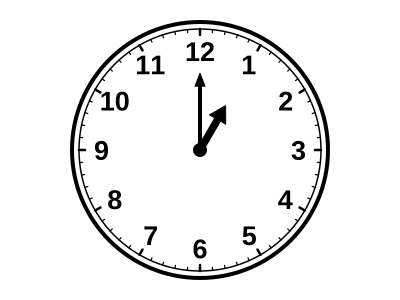
    2. A clock with the short hand on 1 and the long hand on 12. What time is it?

    Reading & Writing

    1. animal, house, mother
    2. mailbox, teapot, oatmeal

    Math · Week 36 Day 1

    I can describe shapes, build new shapes and make equal shares.

    Look: a shape riddle and halves

    1. Riddle: I am closed. I have 3 straight sides and 3 corners. I am a triangle.
    2. 2 triangles can go together to make a square.
    3. Fold a square so the edges match: 2 equal shares, 2 halves.

    Answer the shape questions.

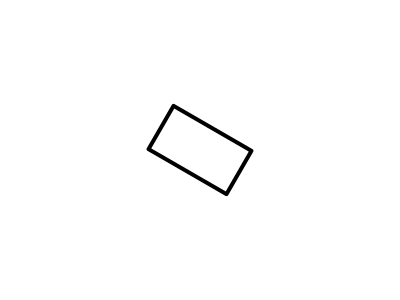
    1. 1.
      A small rectangle lying on a slant. Is it a rectangle?
      • yes
      • no
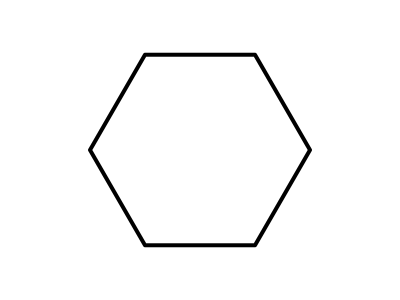
    2. 2.
      A hexagon. How many corners does it have? ____
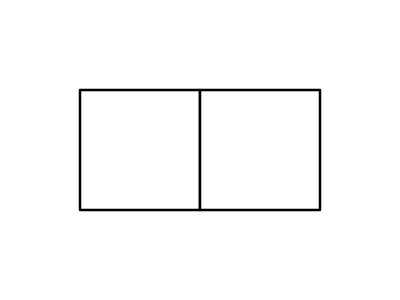
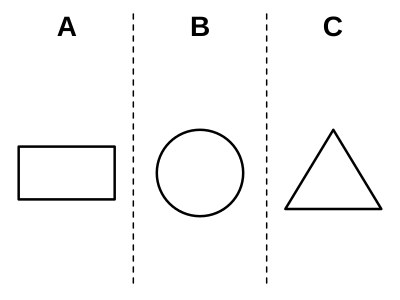
    3. 3.
      2 squares side by side. What shape do they make? Picture A: a rectangle; picture B: a circle; picture C: a triangle.
      • A
      • B
      • C
    4. 4.
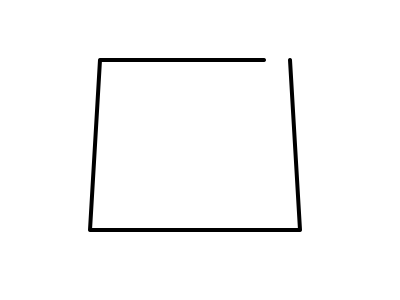
      A shape with 4 straight sides and a gap at one corner. Is it a closed shape?
      • yes
      • no

    Split, color and circle.

    1. 5.
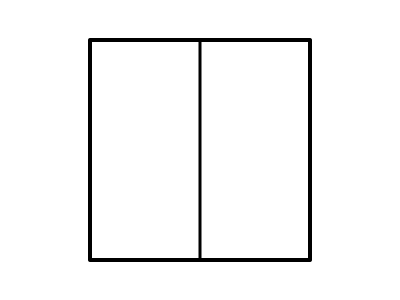
      A square split into 2 equal shares. Color half of the square.
    2. 6.
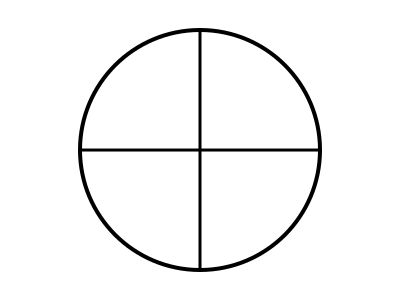
      A circle split into 4 equal shares. Color a fourth of the circle.
    3. 7.
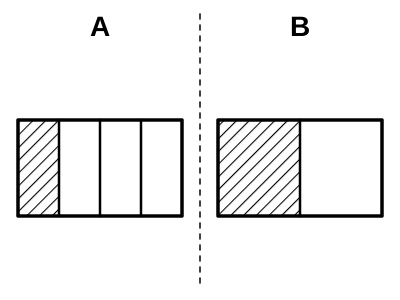
      Picture A: a rectangle split into fourths with 1 fourth shaded; picture B: the same size rectangle split into halves with 1 half shaded. Circle the bigger share.
      • A
      • B

    Challenge (optional)

    I am closed, with 4 straight sides all the same length and 4 square corners. I am very small and red. What shape am I?

    You need: Pencil, Crayons

    Reading & Writing · Week 36 Day 1

    I can present my best work to an audience.

    Look: presenting my best work

    1. Lift up your picture so all can see it.
    2. Tell the name of your work, then read it with feeling. Look up at the end of a line.
    3. Ask: Do you want to ask me something? Answer in a full sentence.

    Show Time

    Ted stands up and lifts his picture. "My tale is about a frog," he said. He reads it with feeling and looks up. At the end, Gram asks, "Why did the frog jump?" Ted can answer that!

    Read it. Circle the answer.

    1. 1.
      What did Ted lift up?
      • his picture
      • his hat
    2. 2.
      How did Ted read it?
      • with feeling
      • too soft
    3. 3.
      What did Gram ask?
      • Why did the frog jump?
      • Can I have cake?
    4. 4.
      Which one helps the people at the show?
      • Ted looks up.
      • Ted hides his picture.

    Plan your show. Finish the lines.

    1. 5.
      My tale is about ____.
    2. 6.
      The best part is ____.
    3. 7.
      I picked it because ____.

    Challenge (optional)

    Gram can ask me: ____?

    Social Studies · Week 36 Day 1

    I can remember what I learned about the past and about money choices.

    Look: looking back

    1. Then and now: compare how people did things long ago with how they do them today.
    2. Every choice has a benefit, something good we get, and a cost, what we give up.
    3. Use what you learned this year to answer.

    Listen. Your child circles then, now or then and now.

    1. 1.
      talking to Grandma on a video call
      • then
      • now
      • then and now
    2. 2.
      riding in a horse and wagon to town
      • then
      • now
      • then and now
    3. 3.
      reading books
      • then
      • now
      • then and now
    4. 4.
      sending a letter in the mail
      • then
      • now
      • then and now

    Talk and draw. Write what your child says.

    1. 5.
      You choose to save your coins instead of buying a snack. What is the benefit? What is the cost?
    2. 6.
      Is a winter coat in a cold place a need or a want?
    3. 7.
      An old diary: what kind of source is it?
    4. 8.
      Draw how people got light at night long ago and how they get it today.

    Challenge (optional)

    Tell one smart choice you made this year. What did you get, and what did you give up?

    You need: crayons