1First Grade

    Choose a strategy to add

    Draft my pages

    Practice pages

    0 of 180 days complete · Saved on this device

    View all 180 days

    Math

    Choose a strategy to add

    I can pick counting on, a double or making 10 to add.

    Standards: 1.OA.C.6, 1.OA.B.3

    Number practice (no timer)
    Make 10, then add the rest
    Builds on
    Weeks 7 to 9: counting on, doubles and making a ten. One-minute check: "9 + 2 = ?" (11) "6 + 6 = ?" (12) "9 + 5 = ?" (14)

    New words

    • strategy: a smart way to solve a problem

    You need

    • 12 fact cards: index cards with one addition fact each (see below)
    • Three paper labels: Count On, Double, Make 10
    • Two ten frames and 20 counters
    • Notebook and pencil
    1. Warm-Up · 5 min

      Fluency: make 10, then add the rest. "8 + 5: make a ten." (8 + 2 = 10, 10 + 3 = 13) Spaced review from Week 8: "8 + 9: which double helps?" (8 + 8 = 16; 17)

    2. Mini-Lesson · 10 min

      Say: "Now we know three strategies: count on, use a double and make a ten. Today you choose." Show 9 + 2. Ask: "What would you do?" (Count on 2 from 9: 10, 11.) Show 7 + 7. (A double: 14.) Show 8 + 6. (Make a ten: 10 + 4 = 14.) Then show 7 + 8. Say: "This one can be a near double (7 + 7 + 1) or make a ten (8 + 2 + 5). Both give 15. More than one strategy can be right." Say: "Counting on is good when you add 1, 2 or 3. Doubles are good when the numbers are the same or neighbors. Making a ten is good when one number is 8 or 9."

    3. Guided Practice · 10 min

      Strategy Sort. Your child sorts the 12 fact cards into the three piles and solves each, explaining the choice. Cards with answers: 9 + 2 (11), 3 + 8 (11), 12 + 3 (15), 6 + 6 (12), 7 + 8 (15), 5 + 4 (9), 9 + 6 (15), 8 + 5 (13), 9 + 9 (18), 4 + 9 (13), 8 + 7 (15), 2 + 10 (12). Accept any pile if the explanation makes sense. For example, 7 + 8 fits Double or Make 10. If stuck, say: "Is one number small? Are the numbers the same or neighbors? Is one number 8 or 9?"

    4. Play · 10 min

      Strategy Spinner. Draw a circle, split it into 3 parts labeled Count On, Double and Make 10, and spin a paper clip on a pencil point in the center. Whatever it lands on, the other player must give a fact that fits that strategy and solve it. For "Make 10," your child might say "9 + 5, 9 + 1 = 10, 10 + 4 = 14." Play 6 spins each. The listener checks with the ten frames.

    5. Exit Ticket · 3-5 min

      Put the objects to one side but leave them on the table. Read each question aloud. Your child answers out loud, with objects or with a quick drawing. Check each answer together right away.

    Exit ticket

    1. Solve 9 + 6. Which strategy did you use?
    2. Solve 4 + 4. Which strategy did you use?
    3. Solve 7 + 8 two different ways.
    Answers
    1. 15; make a ten is a strong choice (any correct strategy is fine).
    2. 8; a double
    3. 15. Answers vary. Look for two of these: 7 + 7 = 14 and 1 more; 8 + 2 = 10 and 10 + 5; count on from 8.
    Watch for, and help or stretch
    Watch for
    Picking a strategy that does not fit and then counting from 1.
    Try
    Read the three questions on the pile labels together: "Small number? Same or neighbors? 8 or 9?"
    Extra help
    Use only two piles today, Count On and Double, and keep sums to 12.
    Stretch
    Ask your child to make up a fact for each strategy that is not on the cards, and solve it two ways.

    At home (optional): Teach a family member the three strategies with one fact each.
    Reading & Writing

    Draft my pages

    I can write facts on each page of my All About book.

    Standards: W.1.2, L.1.2.d, L.1.1.a

    Phonics
    Long a with final e (a_e: cake, made, game); short a vs. long a
    Sight words
    after, ask, by, fly, going
    Reading
    Original mini-book "Helpers in Our Town" (headings, table of contents, glossary); Clothesline Clues to Jobs People Do (Kathryn Heling and Deborah Hembrook)
    Writing
    Informational: drafting All About book pages with facts · Handwriting: capitals C, O, Q, G, S
    Builds on
    All About book plan (Week 8). One-minute check: your child reads the topic sentence from the plan.

    New words

    • draft: a first try at writing that we can fix later
    • fact sentence: a sentence that tells one true thing

    You need

    • Booklet (folded or stapled pages)
    • Planning sheet
    • Handwriting sheet (C, O, Q, G, S)
    • Sight word cards
    1. Phonics & Word Work · 15 min

      a_e with digraphs and blends. I do: read shake, chase, whale. We do: read flame, skate, brave. You do: your child reads snake, plate, shape, grape, crate, blame, trade, spade. Read: "The snake can shake." "Dave is brave." Dictation: shake, flame, skate, brave. If stuck, read the beginning blend or digraph first, then the a with its silent e.

    2. Sight Words · 5 min

      Review: after, ask, by, fly, going. Flip and Read: lay the five cards face down with last week's words. Your child flips a card, reads it and uses it in a short spoken sentence. Missed words go back in the pile.

    3. Read-Aloud & Shared Reading · 15 min

      Reread a fact page in "Helpers in Our Town". Ask: "How many facts are on the Mail Carriers page?" (2: they bring letters and packages; they follow the same route each day.) Ask: "Does each sentence tell one true thing?" (yes) Say: "Your pages will work the same way." Then your child reads "Jane and the Cake" to you smoothly.

    4. Writing & Handwriting · 15 min

      Your child writes one fact sentence on each of two pages of the All About book, using the plan. Spell sight words correctly (check the cards) and stretch other words, using patterns you know, like a_e. (L.1.2.d) Your child draws a picture on each page that teaches, with one label. Handwriting (4 min): capitals start at the top line and touch the bottom line. S starts at 2 o'clock, curves back to the middle, then curves the other way to the bottom. Your child writes each capital 3 times, then writes one word that starts with it (Sam, Sal). Circle the best letter in each row.

    5. Exit Ticket · 5 min

      Your child reads a page.

    Exit ticket

    1. Read me one fact page.
    2. Show me a sight word you spelled correctly.
    3. Read this word: skate.
    Answers
    1. Answers vary. Look for: a true fact in a sentence.
    2. Answers vary. Look for: a correct sight word.
    3. skate
    Watch for, and help or stretch
    Watch for
    Writing opinions (frogs are cute) on fact pages.
    Try
    Ask: "Is that true for every one? Could a scientist check it?"
    Extra help
    Your child says the fact aloud and you write the hard words on a sticky note to copy.
    Stretch
    Your child writes two facts on each page.

    At home (optional): Tell a family member the facts from your two pages without looking.

    Science

    Plan my own light test

    I can plan and do a test with 6 things from home.

    Standards: 1-PS4-3

    Builds on
    Sorting materials as clear, cloudy and blocking. One-minute check: hold up wax paper and ask "Clear, cloudy or blocking?" (cloudy)

    New words

    • plan: to decide the steps before you start

    You need

    • Flashlight
    • 6 household materials chosen by your child, for example: a paper towel, a zip-top sandwich bag, construction paper, a sock, a clear plastic cup and a coffee filter
    • White wall or paper screen
    • Ruler
    • Light Journal with a 3-column chart: Clear / Cloudy / Blocking
    1. Warm-Up / Wonder · 5 min

      Spaced review: ask: "In a fair test, how many things do we change?" (one) Wonder question: "Which things in our home would block light? Which would let it through?"

    2. Explore · 10–15 min

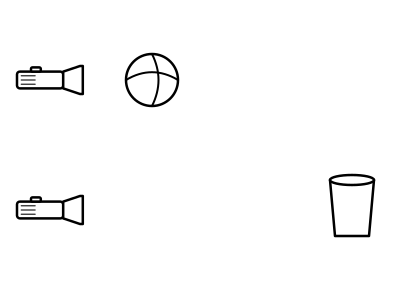
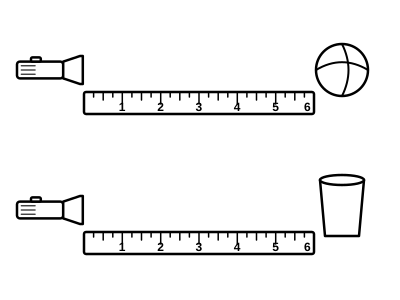
      1) Your child collects 6 safe household items. 2) Plan the fair test together. Ask: "What should stay the same every time?" (The same flashlight and the same distance.) Use the ruler: the flashlight is 6 inches from the item, and the item is 6 inches from the wall. 3) Before each test, your child predicts clear, cloudy or blocking and makes a small mark. 4) Test each item and look at the wall. 5) Your child writes or draws each item in the chart. Common results: clear plastic cup (clear), sandwich bag (clear or cloudy), paper towel (cloudy), coffee filter (cloudy), construction paper (blocking), sock (blocking or cloudy, depending on how thin it is). Say: "Your results might be a little different. Thick and thin things act differently. Write what you see." If stuck deciding, compare the item to the wax paper and cardboard from Monday.

    3. Talk & Record · 5–10 min

      Count the items in each column. Ask: "How many predictions were right?" Your child finishes: "I was surprised that ___." (Answers vary.)

    4. Exit Ticket · 3–5 min

      Ask the three questions aloud.

    Exit ticket

    1. What did you keep the same in your test?
    2. Name one item that blocked the light.
    3. Was your prediction right for every item?
    Answers
    1. The same flashlight and the same distance.
    2. Answers vary. Look for: an item that left a dark shadow, such as construction paper.
    3. Answers vary. Look for: an honest answer that matches the chart.
    Watch for, and help or stretch
    Watch for
    Moving the flashlight closer for some items, which makes them look clearer.
    Try
    Tape the ruler to the table so the flashlight and item always sit at the same marks.
    Extra help
    Test 3 items instead of 6, and you hold the ruler and flashlight.
    Stretch
    Your child plans a 7th test: one item folded in half. Does it change columns?

    At home (optional): Your child tells a family member which of the 6 items would make the best window curtain for sleeping and why. (A blocking one keeps light out.)

    Practice

    Read each direction aloud. Your child works on the page; answers are in the grown-up view.

    Warm-up

    Remember?

    Math

    1. 6 + 6 = ? It is a doubles fact.
    2. 6 ducks are in the pond. Some more swim in. Now there are 10. How many more came?

    Reading & Writing

    1. again, once, says

    Math · Week 9 Day 3

    I can pick counting on, a double or making 10 to add.

    Look: three strategies

    1. 9 + 3: one number is small, so count on: 10, 11, 12.
    2. 6 + 6: the numbers are the same, so use a double: 12.
    3. 8 + 4: one number is 8, so make a ten: 8 + 2 = 10, 10 + 2 = 12.

    Solve. Then tell your grown-up which strategy you used.

    1. 1.
      2 + 11 = ___
    2. 2.
      5 + 5 = ___
    3. 3.
      6 + 9 = ___
    4. 4.
      5 + 6 = ___

    Solve. Use any strategy.

    1. 5.
      3 + 9 = ___
    2. 6.
      8 + 8 = ___
    3. 7.
      5 + 8 = ___
    4. 8.
      4 + 3 = ___

    Challenge (optional)

    Solve 9 + 8 two different ways.

    You need: two ten frames and counters (optional)

    Reading & Writing · Week 9 Day 3

    I can write facts on each page of my All About book.

    Look: one fact on each page

    1. Read "A Whale" together. Say: "Each sentence tells one true fact."
    2. Say: "On each page of your book, write one fact and draw a picture that teaches."
    3. Spell a word with a_e together: gate. "I hear /ā/, so I write a, then t, then the silent e."

    A Whale

    A whale is big. A whale is not a fish. A whale can swim fast. A whale can come up to the top.

    Is it a fact from the page? Circle yes or no.

    1. 1.
      A whale is big.
      • yes
      • no
    2. 2.
      A whale is a fish.
      • yes
      • no
    3. 3.
      A whale can swim fast.
      • yes
      • no

    Write the words your grown-up says. Then write a fact for your book.

    1. 4.
    2. 5.
    3. 6.
    4. 7.
      A fact for your book:

    Challenge (optional)

    A whale can come up to the ___.

    Science · Week 9 Day 3

    I can plan and do a test with 6 things from home.

    Look: Test my own things fairly

    1. Keep the same flashlight and the same distance for every thing.
    2. Predict first: clear, cloudy or blocking?
    3. Test it, look at the wall and record what you see.

    Plan a fair test. Circle the fair way.

    1. 1.
      Which test is fair?
      • The flashlight 6 inches from each thing, with a ruler.
      • The flashlight close to one thing and far from the next.
    2. 2.
      Should you use a new flashlight for each thing?
      • yes
      • no
    3. 3.
      Should you predict before you test each thing?
      • yes
      • no

    Test each thing. Circle what the wall looks like.

    1. 4.
      One paper napkin
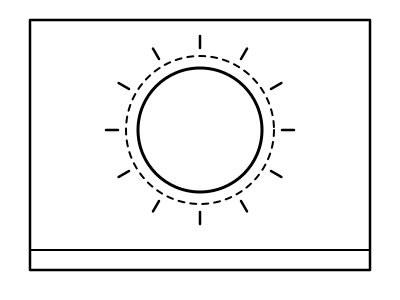
      • A wall with a bright circle of light.
      • A wall with a dim circle of light.
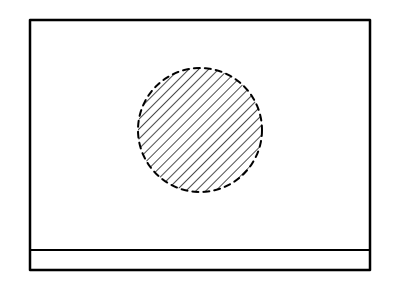
      • A wall with a dark shadow.
    2. 5.
      A winter glove or mitten
      • A wall with a bright circle of light.
      • A wall with a dim circle of light.
      • A wall with a dark shadow.
    3. 6.
      A clear plastic food box
      • A wall with a bright circle of light.
      • A wall with a dim circle of light.
      • A wall with a dark shadow.
    4. 7.
      A thing you pick. Draw it, then circle bright, dim or dark under it.

    Challenge (optional)

    A thin sock was cloudy, but a thick sock was blocking. Why?

    You need: flashlight, ruler, one paper napkin, a winter glove or mitten, a clear plastic food box, a white wall or a sheet of white paper taped up, crayons