1First Grade

    Quarter review: adding and subtracting

    Commas in a list

    Practice pages

    0 of 180 days complete · Saved on this device

    View all 180 days

    Math

    Quarter review: adding and subtracting

    I can show what I learned this quarter about adding and subtracting.

    Standards: 1.OA.A.1, 1.OA.B.3, 1.OA.C.6, 1.OA.D.8

    Number practice (no timer)
    Make 10, then add the rest
    Builds on
    Weeks 1 to 8: all story types and fact strategies. One-minute check: "Some apples. 3 more. Now 9. How many at first?" (6) "8 + 4 = ?" (12)

    New words

    • review: practice what we learned before so we remember it

    You need

    • Game board: a path of 20 squares drawn on paper, with Start and Finish
    • 2 game pieces (a coin and a button)
    • 1 die
    • 12 review cards (written below)
    • 20 counters, cup, ten frames and number line
    • Notebook and pencil
    1. Warm-Up · 5 min

      Fluency: make 10, then add the rest. "9 + 3?" (12) "7 + 4?" (11) Spaced review from Week 2: "Fact family for 4, 5, 9." (4 + 5 = 9, 5 + 4 = 9, 9 - 5 = 4, 9 - 4 = 5)

    2. Mini-Lesson · 10 min

      Say: "We have reached the end of the first quarter of the year. Today we play a review game with everything we learned." Show the board and the cards. Say: "Roll the die and move. Then pick a card and solve it. If you get it right, move 1 more space. Use any tool you want." Model one card yourself, thinking out loud: "Card: Mia has 9 stickers. Leo has 5. How many more does Mia have? This is comparing. I line up 9 and 5... 4 more."

    3. Guided Practice · 10 min

      Review Game Board. Play with your child, taking turns. Read each card aloud. The player solves it, tells the strategy or story type, and the other player checks. Cards with answers: 1) "6 kids, 4 more come." (10) 2) "11 grapes, eat 3." (8) 3) "4 red and 5 blue cars." (9) 4) "8 birds, 3 have red wings. How many do not?" (5) 5) "Jo has 7 shells. Max has 3. How many more does Jo have?" (4) 6) "5 + ? = 12" (7) 7) "Some bees. 4 more came. Now 10." (6) 8) "3 + 7 + 5" (15) 9) "Turn around 2 + 9." (9 + 2 = 11) 10) "8 + 8" (16) 11) "6 + 7" (13) 12) "9 + 5" (14) If stuck, say: "What kind of story is this? Which tool will help?"

    4. Quarter Wrap-Up · 10 min

      Quarter Wrap-Up. After the game, your child chooses their favorite card and teaches it back to you as if you were the student, using objects or drawings. Then ask: "Which card was hardest? What helped you?" Write your child's answer in the notebook. This tells you what to review in the next quarter's warm-ups.

    5. Exit Ticket · 3-5 min

      Put the objects to one side but leave them on the table. Read each question aloud. Your child answers out loud, with objects or with a quick drawing. Check each answer together right away.

    Exit ticket

    1. Solve 9 + 5. How did you do it?
    2. There are 8 kids. 3 go home. How many are left?
    3. 5 + ? = 12
    Answers
    1. 14. Answers vary. Look for: make a ten (9 + 1 = 10, 10 + 4) or count on from 9.
    2. 5 kids
    3. 7
    Watch for, and help or stretch
    Watch for
    Choosing to add when a story asks "how many more" or "how many are left."
    Try
    Before solving, your child says the story type out loud: adding to, taking from, putting together, taking apart or comparing.
    Extra help
    Let your child pick which cards to solve, and use counters for every card.
    Stretch
    Your child writes 2 new hard cards for the game and you both solve them.

    At home (optional): Play the game board again with a family member using the same cards.
    Reading & Writing

    Commas in a list

    I can use commas to separate words in a list.

    Standards: L.1.2.c, W.1.2, RF.1.3.c

    Phonics
    Long a with final e (a_e: cake, made, game); short a vs. long a
    Sight words
    after, ask, by, fly, going
    Reading
    Original mini-book "Helpers in Our Town" (headings, table of contents, glossary); Clothesline Clues to Jobs People Do (Kathryn Heling and Deborah Hembrook)
    Writing
    Informational: drafting All About book pages with facts · Handwriting: capitals C, O, Q, G, S
    Builds on
    Writing fact sentences (Day 3). One-minute check: your child reads one fact page aloud.

    New words

    • comma: a mark that tells the reader to pause; we use it between words in a list and in dates
    • list: a group of things named one after another

    You need

    • Sentence strips
    • Comma stickers or a pen
    • All About book draft
    • Sight word cards
    1. Phonics & Word Work · 15 min

      a_e in list sentences. I do: read "Jane ate a grape, a date and a cake." Point to the commas. We do: read "Kate can skate, bake and make a cape." You do: your child reads gate, plate, date, lane, wave, cave, base, maze. Dictation: grape, date, gate, plate. If stuck, read each part of the list as its own little phrase, pausing at each comma.

    2. Sight Words · 5 min

      Review: after, ask, by, fly, going. Rainbow Write: your child writes two of this week's words three times each in different crayons, saying each letter, then reads them. Use after and going.

    3. Read-Aloud & Shared Reading · 15 min

      Look at the Glossary page of "Helpers in Our Town". Say: "Commas help us read lists." Read: "Community: a group of people who live, work and play in the same place." Ask: "What three things do people in a community do?" (live, work and play) Ask: "How many commas are in live, work and play?" (1, after live) Say: "In a list of three, we put a comma after the first thing, then and before the last one." (Note: some writers add a second comma before and. Both are correct; this program uses one.)

    4. Writing & Handwriting · 15 min

      Model on a strip: "Frogs eat flies, bugs and worms." Your child writes one list sentence for the All About book and puts in the commas, such as "Cats can run, jump and climb." Then your child writes today's date with a comma between the day and the year (for example, October 28, 2026; use your real date). (L.1.2.c) Handwriting (3 min): your child copies the date neatly, minding the capital at the start of the month.

    5. Exit Ticket · 5 min

      Your child points and answers.

    Exit ticket

    1. Where do the commas go? I like red tan and pink.
    2. Write today's date. Where is the comma?
    3. Read this word: plate.
    Answers
    1. I like red, tan and pink. (one comma after red)
    2. Between the day number and the year.
    3. plate
    Watch for, and help or stretch
    Watch for
    Putting a comma between every word, or after and.
    Try
    Say the list aloud and pause only where one item ends and the next begins.
    Extra help
    Your child lays three toys in a row and says the list, clapping at each comma.
    Stretch
    Your child writes a list sentence with four items: "I like cats, dogs, fish and frogs."

    At home (optional): Write a list sentence about what you ate for dinner, using commas.

    Social StudiesWeekly check

    What does it cost to make?

    I can name things a maker must pay for to make a good.

    Standards: D2.Eco.7.K-2

    Builds on
    Goods, services and earning money. One-minute check: ask "What is a good?" (a thing you can touch and buy) "What is a service?" (work someone does for you)

    New words

    • cost: the money you pay for something
    • maker: a person who makes goods

    You need

    • A drawing or picture of a lemonade stand
    • Play money: at least 10 one-dollar bills (paper slips)
    • 3 price cards: lemons $4, sugar $2, cups $3
    • Quarter review cards: rules, fair, people in charge, community helpers
    1. Warm-Up / Wonder · 5 min

      Spaced review: ask: "What tool does a baker use?" (an oven) Wonder question: "Before you can sell lemonade, what do you need to buy?"

    2. Review Game · 10 min

      Plan a pretend lemonade stand. Your child lists what is needed. (Lemons, sugar, water, cups, a sign.) Say: "These are costs. A maker must pay for these before they can sell anything." Lay out the price cards. Your child pays with play money: $4 for lemons, $2 for sugar, $3 for cups. Ask: "How much did you spend in all?" (9 dollars) Count the bills together to check. Then play the Quarter 1 review game "Pick and Tell": your child picks a review card and tells one thing about it. Rules (they keep us safe and help us be fair). Fair (everyone gets a turn, or gets what they need). People in charge (a lifeguard keeps swimmers safe). Community helpers (a mail carrier brings letters). If stuck adding the costs, lay out the bills in a row and count them one by one.

    3. Check · 10 min

      Give the Week 9 social studies check. The check items are on the Week 9 check page; do not show them ahead of time. This week the check is also the Quarter 1 social studies review. Read each part aloud. Your child answers by talking, pointing, acting it out or drawing, and you write their words exactly. It is not timed; stop and finish later if your child is tired. Make a check mark next to each part your child shows on their own. The printed check has 9 items. It covers these goals: (1) I can name tools workers use and the training they need; (2) I can name things a maker must pay for to make a good; (3) Quarter 1 review: I can tell about rules, fairness and community helpers. In items 3 to 5, your child tells what a maker must pay for; item 3 asks for two things a cookie maker must pay for before selling. Items 6 to 9 are short review questions about rules, fairness and community helpers from Weeks 1 to 8. Look for real costs (such as flour and sugar) and one correct idea from each review topic. Secure: 7 of 9 correct, with at least one right on each goal. If the check is not yet secure, use the reteach step on the check page that matches the items missed.

    4. Exit Ticket · 3–5 min

      Ask the three questions aloud.

    Exit ticket

    1. Name two things you must buy before you can sell lemonade.
    2. Lemons cost $4, sugar costs $2 and cups cost $3. How much is that in all?
    3. Tell one reason we have rules.
    Answers
    1. Answers vary. Look for: two of lemons, sugar, cups or water.
    2. $9
    3. To keep us safe or to help us be fair.
    Watch for, and help or stretch
    Watch for
    Forgetting that the maker pays for things before making any money.
    Try
    Ask: "Can you make lemonade with no lemons?" Say: "You buy first, then you make and sell."
    Extra help
    Use 2 costs only (lemons $4 and cups $3; $7 in all) and count bills together.
    Stretch
    Ask: "If each cup of lemonade sells for $1, how many cups must you sell to get back the $9?" (9 cups) Your child counts out 9 bills to check.

    At home (optional): Your child picks one food made at home and lists 3 things the family had to buy to make it.

    Practice

    Read each direction aloud. Your child works on the page; answers are in the grown-up view.

    Warm-up

    Remember?

    Math

    1. Start at 12. How many do you count on to get to 15?
    2. To find 7 - 4, think 4 + ? = 7. What is the missing number?

    Reading & Writing

    1. song, wink, hung
    2. do, does

    Math · Week 9 Day 4

    I can show what I learned this quarter about adding and subtracting.

    Look: what kind of story?

    1. Listen: 10 kids are at the park. 4 go home.
    2. Is something joining or going away? Going away, so take away 4.
    3. 10 - 4 = 6. There are 6 kids left.

    Listen to the story. Solve it.

    1. 1.
      5 frogs are on a log. 6 more hop on. How many frogs?
    2. 2.
      12 grapes are in a bowl. You eat 4. How many are left?
    3. 3.
      Ana has 9 shells. Ben has 6 shells. How many more shells does Ana have?
    4. 4.
      Some bees were on a flower. 3 more came. Now there are 10. How many were there at first?

    Solve.

    1. 5.
      6 + ? = 13
    2. 6.
      2 + 8 + 4 = ___
    3. 7.
      Write the turn-around fact for 3 + 9 = 12.
    4. 8.
      9 + 9 = ___

    Challenge (optional)

    Make up a story for 9 + 6. Solve it.

    You need: counters, cubes and a cup (optional)

    Reading & Writing · Week 9 Day 4

    I can use commas to separate words in a list.

    Look: commas in a list

    1. Write: Dave got a cake, a plate and a cup.
    2. Say: "This list has three things. A comma goes after the first thing. Then we write and before the last thing."
    3. Read the sentence and pause at the comma.

    Dave and Jane

    Dave made a cake. Jane got a plate, a cup and a pan. Dave and Jane ate the cake, a grape and a plum.

    Read the sentence. Circle the comma. Write how many things are in the list.

    1. 1.
      Gabe got a cape, a bag and a cap.
    2. 2.
      Kate can bake, skate and swim.
    3. 3.
      Jane got a plate, a cup and a pan.

    Put a comma in each list.

    1. 4.
      Nate had a rake a bat and a net.
    2. 5.
      Jade can bake shake and hop.
    3. 6.
      We ate ham jam and cake.

    Challenge (optional)

    I like ___, ___ and ___.

    Social Studies · Week 9 check

    Weekly check

    How to give it: Read every question and choice aloud, and point to each picture as you name it. This week the check is also the Quarter 1 social studies review: items 1 to 5 are Part 1, and items 6 to 9 are Part 2. Your child answers by talking, pointing, circling, acting it out or drawing; write their words exactly on the line. It is not timed; stop and finish later if your child is tired. Do not show the page ahead of time. Your child may use play money for item 4. Make a check mark next to each part your child shows on their own.

    Secure when: 7 of 9 correct, with at least one right on each goal

    • I can name tools workers use and the training they need.
    • I can name things a maker must pay for to make a good.
    • Quarter 1 review: I can tell about rules, fairness and community helpers.
    1. 1.
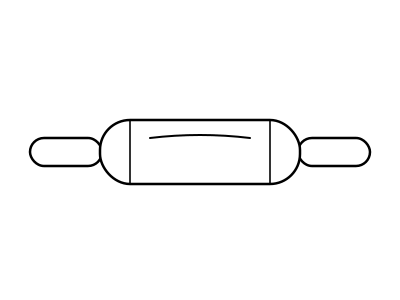
      A rolling pin. Which worker uses this tool?
    2. 2.
      How does a new nurse learn the job?
    3. 3.
      A cookie maker wants to sell cookies. Name two things the maker must pay for first.
    4. 4.
      Flour costs $3 and sugar costs $2. How much is that in all?
    5. 5.
      A maker buys wood and paint to make a birdhouse. Are those costs?
      • yes
      • no
    6. 6.
      Tell one reason a park has rules.
    7. 7.
      Everyone gets an equal share of the pizza. Is that fair?
      • yes
      • no
    8. 8.
      Who helps when there is a fire?
    9. 9.
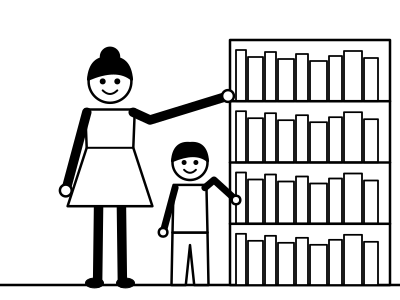
      A librarian helping a child at a shelf. Who is this helper, and how do they help?