1First Grade

    Lesson + weekly check: making ten

    Share and check: a_e + Quarter 1 review

    Practice pages

    0 of 180 days complete · Saved on this device

    View all 180 days

    MathWeekly check

    Lesson + weekly check: making ten

    I can make a ten to add.

    Standards: 1.OA.C.6

    Number practice (no timer)
    Make 10, then add the rest
    Builds on
    Days 1 to 4 making a ten, and Weeks 7 and 8 strategies. One-minute check: "8 + 5: make a ten." (8 + 2 = 10, 10 + 3 = 13)

    New words

    • make a ten: break a number apart so that one part fills a 10

    You need

    • Deck of cards ace to 9
    • Two ten frames and 20 counters
    • The stored Week 9 check and its answer key
    • Notebook and pencil
    1. Warm-Up · 5 min

      Fluency: make 10, then add the rest. You say a card from 6 to 9; your child says the partner to 10 (6 and 4, 7 and 3, 8 and 2, 9 and 1). Spaced review from Week 8: "9 + 10 = ?" (19)

    2. Short Lesson: Review Game · 10 min

      Addition War. Each player flips two cards and adds them using any strategy, saying it out loud: "9 + 6. 9 + 1 = 10, 10 + 5 = 15." The bigger sum keeps all four cards. Each player takes their full time; there is no racing. Play 6 rounds. After each round, ask: "Which strategy did you use?" If stuck, say: "Put the bigger number on a ten frame. How many empty boxes? Move that many from the other number."

    3. Weekly Check · 15 min

      Give the stored Week 9 check. The printed check has 8 items. It covers these goals: (1) I can break a number apart to make 10 first; (2) I can find the partner that makes 10; (3) I can pick counting on, a double or making 10 to add. For items 1 to 4, your child shows the sum on the two ten frames and writes both make-a-ten steps, such as 8 + 2 = 10, then 10 + 3 = 13. Read each item aloud. There is no time limit. Score it with the answer key. Secure: 7 of 8 correct, and items 1–4 each show the right sum and both make-a-ten steps. If the check is secure, start Week 10. If it is not, first do the reteach step on the check page for each group of items missed, then start Week 10.

    4. Exit Ticket · 3-5 min

      After the check, ask these two questions. Then go over any missed check items together.

    Exit ticket

    1. Solve 9 + 7 by making a ten.
    2. Solve 8 + 4 by making a ten.
    Answers
    1. 16 (9 + 1 = 10, 10 + 6 = 16)
    2. 12 (8 + 2 = 10, 10 + 2 = 12)
    Watch for, and help or stretch
    Watch for
    Writing 8 + 4 = 10 + 4, forgetting that 2 of the 4 went to make the ten.
    Try
    Build it. After moving 2 counters, ask: "How many are left in the second frame?" (2)
    Extra help
    Let your child move real counters on the ten frames for every check item.
    Stretch
    After the check, ask your child to make a ten for 7 + 9 two ways (fill the 7 or fill the 9; both give 16).

    At home (optional): Play Addition War with a family member, saying the strategy each time.
    Reading & WritingWeekly check

    Share and check: a_e + Quarter 1 review

    I can read a_e words and show what I learned this quarter.

    Standards: RF.1.3.c, RF.1.3.a, RF.1.3.b, RF.1.3.g, RI.1.5

    Phonics
    Long a with final e (a_e: cake, made, game); short a vs. long a
    Sight words
    after, ask, by, fly, going
    Reading
    Original mini-book "Helpers in Our Town" (headings, table of contents, glossary); Clothesline Clues to Jobs People Do (Kathryn Heling and Deborah Hembrook)
    Writing
    Informational: drafting All About book pages with facts · Handwriting: capitals C, O, Q, G, S
    Builds on
    Quarter 1 phonics and text features. One-minute check: warm up with cat, ship, jump, frog and cake.

    New words

    • quarter: one of the four parts of the school year
    • review: look back at what we learned to remember it

    You need

    • Q1 review sheet (written in step 4)
    • Word cards: short vowels, digraphs, blends and a_e
    • All Q1 sight word cards (Weeks 2 to 9, 40 words)
    • "Helpers in Our Town"
    • Recording sheet
    1. Review Game · 10 min

      Quarter 1 Word Path: lay word cards in a path across the floor, mixing short vowels, digraphs, blends and a_e words. Your child walks the path, reading each word. On an a_e card, your child jumps; on a digraph card, your child claps. Then play Magic e: hold a card such as cap and add a sticky note e to make cape. If stuck on a word during the game (not during the check), cover all but the first sound, say it together, then uncover the rest and blend.

    2. Sight Words · 5 min

      Read through all Quarter 1 sight word cards (40 words) once, sorting them into Know It and Still Learning piles.

    3. Weekly Check & Quarter Review · 25 min

      Give this in parts with a stretch break. The printed check has 10 items. It covers these goals: (1) I can read a_e words and hear long a and short a; (2) I can read words with short vowels, digraphs and blends from Weeks 1 to 8; (3) I can read the Quarter 1 sight words; (4) I can use a table of contents and headings to find information; (5) I can use commas in a list. Give no hints. Record each part. For item 6, record how many of the 40 sight words your child reads. Secure: 80 percent or more in each part: 10 of the 12 answers in items 1 to 3, 8 of the 10 words in items 4 and 5, 32 of the 40 sight words, 2 of the 3 contents items, and item 10. Any part below 80 percent becomes extra practice in Week 10's warm-ups. For any part that is not yet secure, use the matching reteach step on the check page next week.

    4. Share & Listen · 10 min

      Your child reads one page of the All About book draft to a family member, who asks one question about the topic.

    5. Handwriting · 5 min

      Capitals start at the top line and touch the bottom line. Review all five curved capitals. Your child writes each capital 3 times, then writes one word that starts with it (Cam, Oscar, Quinn, Gran, Sam). Circle the best letter in each row.

    6. Exit Ticket · 5 min

      Reflect on the quarter together.

    Exit ticket

    1. What is one thing you can read now that you could not read at the start of first grade?
    2. Read your favorite sight word from this quarter.
    Answers
    1. Answers vary. Look for: a real skill, such as sh words, blends or magic e words.
    2. Answers vary. Look for: a correct read.
    Watch for, and help or stretch
    Watch for
    Getting tired and guessing at the end of the long sight word list.
    Try
    Take a break after 20 words. Let your child stand, stretch and then finish.
    Extra help
    Spread the quarter review over two days if needed. Item 6 (the 40 sight words) can be split in half.
    Stretch
    Your child reads "Jane and the Cake" with expression and then retells it.

    At home (optional): Celebrate the quarter: your child reads a favorite story from Weeks 1 to 9 to the family.

    ScienceWeekly check

    Shadows

    I can show that a blocking material makes a shadow.

    Standards: 1-PS4-3

    Builds on
    Testing materials with light. One-minute check: your child names one clear, one cloudy and one blocking item from their test.

    New words

    • shadow: a dark shape made when something blocks light

    You need

    • Flashlight
    • A wall or a sheet
    • 2 small toys
    • Wax paper
    • Plastic wrap
    • Sound Journal and Light Journal for the quarter review
    • Rubber band box, an unbreakable plastic mirror or a sheet of foil, and a lamp (for the review)
    1. Warm-Up / Wonder · 5 min

      Spaced review: ask: "What do we call something that lets no light through?" (blocking) Wonder question: "What happens on the wall when a toy blocks the light?"

    2. Review Game · 10 min

      Shadows: dim the room and shine the flashlight on the wall. Your child holds a toy in the beam. Ask: "What do you see?" (A dark shape.) Say: "That is a shadow. A shadow is made when something blocks light." Then hold wax paper in the beam (a pale, light shadow) and plastic wrap (almost no shadow). Ask: "Which made the darkest shadow?" (the toy) Move the toy closer to the flashlight. Ask: "What happened to the shadow?" (It got bigger.) Then play the quarter review game "Sound or Light?": you name an idea and your child says sound or light, then shows it. Vibrating band (sound; your child plucks it). Light source (light; your child points to a lamp). Bouncing light (light; your child uses the mirror or foil). Sound makes things shake (sound; your child tells about the dancing rice). If stuck, ask: "Is that about something we hear or something we see?"

    3. Check · 10 min

      Give the Week 9 science check. The check items are on the Week 9 check page; do not show them ahead of time. This week the check is also the Quarter 1 science review. Read each part aloud. Your child answers by talking, pointing, showing with the real materials or drawing. You write down their words exactly. It is not timed; stop and finish later if your child is tired. Make a check mark next to each part your child shows on their own. The printed check has 8 items. It covers these goals: (1) I can test what happens when I shine light at different materials; (2) I can plan and do a test with 6 things from home; (3) I can show that a blocking material makes a shadow. In items 1 and 2, your child makes a shadow with a blocking thing, a cloudy thing and a clear thing and tells which makes the darkest shadow and why. Items 7 and 8 are the quarter review: your child tells what makes a plucked rubber band's sound and circles the light source. Look for: "Blocking things make dark shadows," "Things vibrate to make sound" and "We see when light shines on things." Secure: 6 of 8 correct, including items 1 and 2 (the darkest shadow and why). If the check is not yet secure, use the reteach step on the check page that matches the items missed.

    4. Exit Ticket · 3–5 min

      Ask the two questions aloud.

    Exit ticket

    1. What makes a shadow?
    2. Which makes the darkest shadow: a toy, wax paper or plastic wrap?
    Answers
    1. Something blocks the light.
    2. The toy.
    Watch for, and help or stretch
    Watch for
    Thinking the shadow is a reflection or a part of the toy.
    Try
    Turn off the flashlight. Ask: "Where did the shadow go?" A shadow needs light to be blocked.
    Extra help
    Use the toy and the plastic wrap only, so the difference is big.
    Stretch
    Your child makes a shadow puppet with a hand and makes it grow and shrink by moving toward and away from the flashlight.

    At home (optional): On a sunny day, your child finds their own shadow outside and tells what is blocking the sunlight. (their body)

    Practice

    Read each direction aloud. Your child works on the page; answers are in the grown-up view.

    Warm-up

    Remember?

    Math

    1. 1 + 12 = ? Start at the bigger number and count on.
    2. Some books were in a bag. 5 more were put in. Now there are 10. How many were there at first?

    Reading & Writing

    1. moth, whim, rock

    Math · Week 9 check

    Weekly check

    How to give it: Read each item aloud. Untimed. For items 1–4, your child shows the sum on the two ten frames and writes both steps. Your child may use counters for every item. Do not help with the math; you may help with reading.

    Secure when: 7 of 8 correct, and items 1–4 each show the right sum and both make-a-ten steps

    • I can break a number apart to make 10 first.
    • I can find the partner that makes 10.
    • I can pick counting on, a double or making 10 to add.
    1. 1.
      8 + 9 = ___. Show it on two ten frames. Write the two steps.
    2. 2.
      6 + 8 = ___. Show it on two ten frames. Write the two steps.
    3. 3.
      5 + 7 = ___. Show it on two ten frames. Write the two steps.
    4. 4.
      4 + 7 = ___. Show it on two ten frames. Write the two steps.
    5. 5.
      4 and ___ make 10.
    6. 6.
      2 and ___ make 10.
    7. 7.
      4 + 8 = ___. Tell which strategy you used.
    8. 8.
      2 + 9 = ___. Tell which strategy you used.

    Reading & Writing · Week 9 check

    Weekly check

    How to give it: Give the check after the review game, in a quiet spot, one part at a time. It is untimed; take a stretch break between parts if needed. Read every direction aloud, but do not read the words or story for your child. Do not help except to say "Try your best" or "Skip it." Mark each item right or wrong. Give it in four parts with a stretch break. Part 1 (items 1 to 3): your child reads the a_e words; for item 3 say game and your child tells you long a or short a. Part 2 (items 4 and 5): your child reads the review words. Part 3 (item 6): your child reads all 40 sight words they can; record the number. Part 4 (items 7 to 10): your child reads the contents list on the page, finds each page number and the fact under the heading, then writes item 10. This page stands in for "Helpers in Our Town" in Part 4. Any part below 80 percent becomes extra practice in the Week 10 warm-ups.

    Secure when: 80 percent or more in each part: 10 of the 12 answers in items 1 to 3, 8 of the 10 words in items 4 and 5, 32 of the 40 sight words, 2 of the 3 contents items, and item 10.

    • I can read a_e words and hear long a and short a.
    • I can read words with short vowels, digraphs and blends from Weeks 1 to 8.
    • I can read the Quarter 1 sight words.
    • I can use a table of contents and headings to find information.
    • I can use commas in a list.

    Pet Fun

    Contents:

    The Cat . . . 2

    The Duck . . . 3

    The Snake . . . 4

    Page 4: The Snake

    A snake can sit in the sun. It can swim in a lake.

    1. 1.
      rake tame bale mane wake
    2. 2.
      fad fade pan pane van vane
    3. 3.
    4. 4.
      sun shed thick lamp ring
    5. 5.
      clap frog snip chest whip
    6. 6.
      the of to said was you are they have what one two do who does from were there where here come some give live put could would should any many again once says every other after ask by fly going
    7. 7.
      The Duck ___
    8. 8.
      The Snake ___
    9. 9.
      A snake can swim in a ___.
      • lake
      • cave
    10. 10.
      Jade had a cap a cape and a bag.

    Science · Week 9 check

    Weekly check

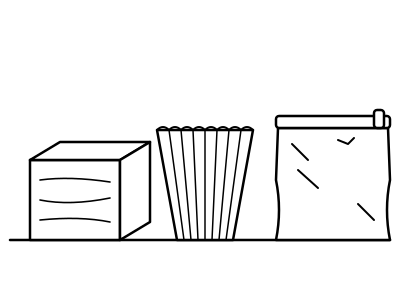
    How to give it: Read every direction, question and choice aloud. It is not timed; stop and finish later if your child is tired. Your child answers by talking, pointing, showing with the real materials or drawing, and you write their words exactly. Dim the room. Have a flashlight, a wooden block, a coffee filter, a clear plastic bag and a rubber band box ready. This check is also the Quarter 1 review.

    Secure when: 6 of 8 correct, including items 1 and 2 (the darkest shadow and why).

    • I can test what happens when I shine light at different materials.
    • I can plan and do a test with 6 things from home.
    • I can show that a blocking material makes a shadow.
    1. 1.
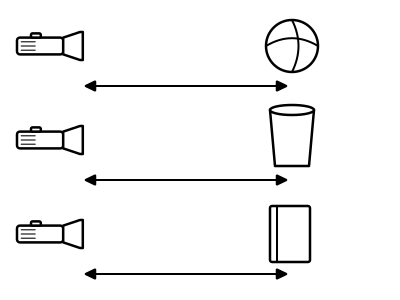
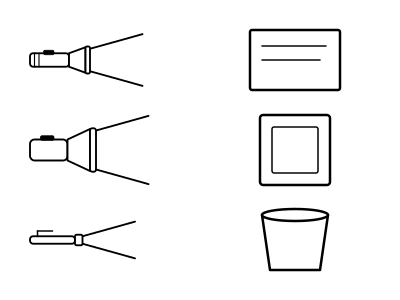
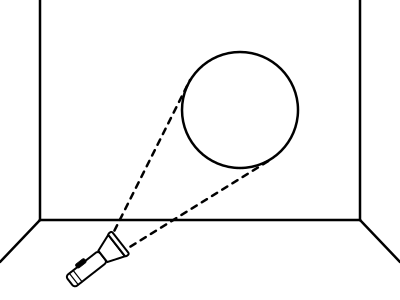
      A wooden block, a coffee filter and a clear plastic bag in a row. Make a shadow on the wall with each one. Make a mark on the one that made the darkest shadow.
    2. 2.
      Tell why the block makes the darkest shadow. Your grown-up writes it.
    3. 3.
      Circle the picture that shows a shadow.
      • A flashlight shining on an empty wall.
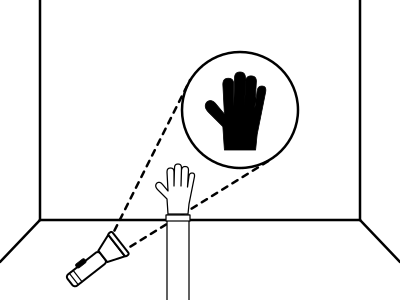
      • A hand in a flashlight beam and a dark hand shape on the wall.
    4. 4.
      A paper lampshade is held in the beam. Circle what the wall looks like.
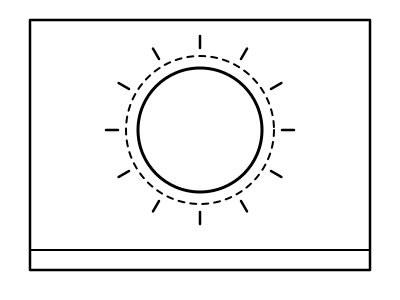
      • A wall with a bright circle of light.
      • A wall with a dim circle of light.
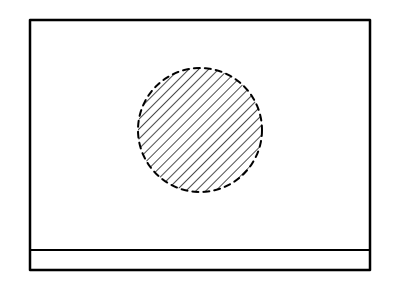
      • A wall with a dark shadow.
    5. 5.
      A metal lid is held in the beam. Circle what the wall looks like.
      • A wall with a bright circle of light.
      • A wall with a dim circle of light.
      • A wall with a dark shadow.
    6. 6.
      In a fair light test, circle what you keep the same.
      • The same flashlight at the same distance each time.
      • A different flashlight for each thing.
    7. 7.
      Sound review: pluck a rubber band. Tell what makes the sound. Your grown-up writes it.
    8. 8.
      Light review: circle the light source.
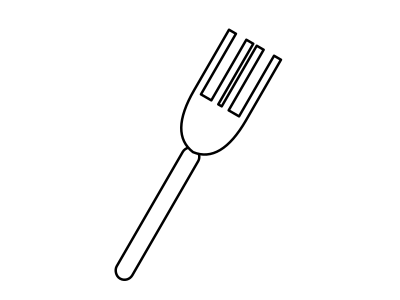
      • A fork.
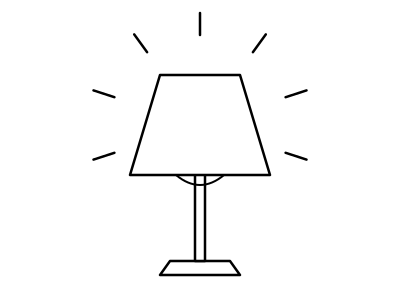
      • A lamp that is on.