1First Grade

    Make a ten to add

    Text features help me find facts

    Practice pages

    0 of 180 days complete · Saved on this device

    View all 180 days

    Math

    Make a ten to add

    I can break a number apart to make 10 first.

    Standards: 1.OA.C.6, 1.OA.B.3

    Number practice (no timer)
    Make 10, then add the rest
    Builds on
    Week 1 partners of 10, and Week 5 looking for a ten. One-minute check: "8 and what make 10?" (2) "9 and what make 10?" (1)

    New words

    • make a ten: break a number apart so that one part fills a 10
    • break apart: split a number into two smaller parts

    You need

    • Two ten frames drawn side by side
    • 20 counters in two colors
    • Recording sheet: paper with lines for make-a-ten problems
    • Notebook and pencil
    1. Warm-Up · 5 min

      Fluency: make 10, then add the rest. Show 7 counters in a ten frame. Ask: "How many more make 10?" (3) "10 and 2 more?" (12) Spaced review from Week 8: "7 + 7 = ?" (14) "7 + 8 = ?" (15)

    2. Mini-Lesson · 10 min

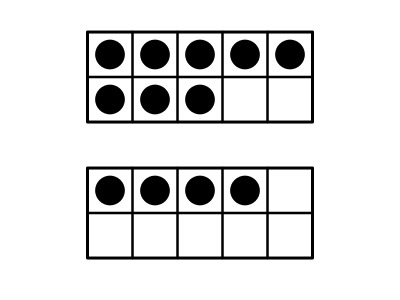
      Say: "Today we learn a strong strategy: make a ten." Write 8 + 6. Put 8 red counters in the first ten frame and 6 yellow counters in the second. Ask: "How many empty boxes in the first frame?" (2) Say: "Let's move 2 yellow counters to fill it." Move them. Ask: "How many in the first frame now?" (10) "How many left in the second?" (4) Say: "10 + 4 = 14. So 8 + 6 = 14." Write it as steps on the recording sheet: 8 + 6, 8 + 2 = 10, 10 + 4 = 14. Say: "We broke 6 into 2 and 4. The 2 made a ten. Adding to 10 is easy."

    3. Guided Practice · 10 min

      Your child builds each problem on the two ten frames, moves counters to fill the first frame and records the steps. 1) 9 + 5 (9 + 1 = 10, 10 + 4 = 14) 2) 7 + 5 (7 + 3 = 10, 10 + 2 = 12) 3) 8 + 7 (8 + 2 = 10, 10 + 5 = 15) 4) 9 + 8 (9 + 1 = 10, 10 + 7 = 17) If stuck, say: "How many empty boxes? Move that many. How many are left over in the other frame?"

    4. Play · 10 min

      Fill It Up. Your child flips two cards (7, 8 or 9 for the first card, and any card 2 to 9 for the second). Your child builds both numbers on the two frames, moves counters to make a ten and says the equation: "9 + 6. Move 1. 10 + 5 = 15." You check on the frames. Then switch. Do 5 rounds each and record them on the recording sheet.

    5. Exit Ticket · 3-5 min

      Put the objects to one side but leave them on the table. Read each question aloud. Your child answers out loud, with objects or with a quick drawing. Check each answer together right away.

    Exit ticket

    1. 8 + 6 = ? Show how you made a ten.
    2. Solve 9 + 4.
    3. Solve 7 + 6.
    Answers
    1. 14; 8 + 2 = 10, 10 + 4 = 14
    2. 13 (9 + 1 = 10, 10 + 3 = 13)
    3. 13 (7 + 3 = 10, 10 + 3 = 13)
    Watch for, and help or stretch
    Watch for
    Moving counters but forgetting how many were left in the second frame.
    Try
    Point to the second frame after moving. Ask: "How many are still here?" Count them before saying the sum.
    Extra help
    Start with 9 + something only, since 9 needs just 1 more to make 10.
    Stretch
    Make a ten from the other number: for 8 + 6, move 4 from the 8 to make 6 into 10 (10 + 4 = 14). Ask if both ways work.

    At home (optional): Fill an egg carton or muffin pan with 10 objects and add a few more. Say the "10 and" number.
    Reading & Writing

    Text features help me find facts

    I can use headings, a table of contents and a glossary to find information.

    Standards: RI.1.5, RF.1.3.c, RF.1.2.a

    Phonics
    Long a with final e (a_e: cake, made, game); short a vs. long a
    Sight words
    after, ask, by, fly, going
    Reading
    Original mini-book "Helpers in Our Town" (headings, table of contents, glossary); Clothesline Clues to Jobs People Do (Kathryn Heling and Deborah Hembrook)
    Writing
    Informational: drafting All About book pages with facts · Handwriting: capitals C, O, Q, G, S
    Builds on
    Telling information books from story books (Week 7). One-minute check: ask "Is Shadows All Around a story or an information book? How do you know?" (information; it gives true facts)

    New words

    • table of contents: a list at the front of a book that tells what is on each page
    • heading: a title at the top of a page or section that tells what it is about
    • glossary: a list at the back of a book that tells what special words mean

    You need

    • "Helpers in Our Town" printed and folded into a 5-page booklet (in the lesson)
    • a_e word cards
    • Sight word cards: after, ask, by, fly, going
    • Lined handwriting paper
    • Clothesline Clues to Jobs People Do (Kathryn Heling and Deborah Hembrook), optional read-aloud; any picture book about community jobs works
    1. Phonics & Word Work · 15 min

      I do: write cap. Read it: /k/ /a/ /p/. Add an e: cape. Say: "The e at the end is silent, but it makes the a say its name, /ā/." Do the same with mad, made. We do: read pairs tap, tape; can, cane; hat, hate; plan, plane. You do: your child reads cake, made, game, name, gate, lake, shape, grape. Read: "Jake made a cake." "Can Dave name the game?" Dictation: cake, made, game, cape. If stuck, have your child check the end of the word first: "Is there an e? Then the a says its name."

    2. Sight Words · 5 min

      Introduce this week's words with see-say-spell-write. For each card: Say: "This word is ___. Say it with me." Your child reads it, spells it aloud while tapping each letter, then writes it once while saying each letter, and reads it again. Draw a small heart over the tricky part, the part we must learn by heart: after (af is regular; er says /er/, which we learn later); ask (sounds just as it looks, /a/ /s/ /k/; the sk ending is new); by (y says long i /ī/); fly (fl is a blend you know; y says long i /ī/); going (go + ing; you already know go). Finish by reading all five cards in mixed order twice. If stuck, cover the tricky part, read the regular part together, then uncover it and say the whole word.

    3. Read-Aloud & Shared Reading · 15 min

      Tour the mini-book: Helpers in Our Town (an original mini-book; you read it aloud) Table of Contents: Firefighters, page 2. Mail Carriers, page 3. Nurses, page 4. Glossary, page 5. Page 2, Firefighters: Firefighters put out fires and help people in danger. They wear heavy coats and helmets to protect them. They also visit schools to teach people how to stay safe. Page 3, Mail Carriers: Mail carriers bring letters and packages to homes and businesses in the community. They follow the same route each day. Page 4, Nurses: Nurses help people who are sick or hurt. They check how your heart is beating and work with doctors. Page 5, Glossary: community: a group of people who live, work and play in the same place. protect: keep safe. route: the path someone follows each time. Ask: "Use the table of contents. What page tells about firefighters?" (page 2) Your child turns to it and reads the heading with you. Ask: "What does the heading tell us?" (what the page is about: firefighters) Ask: "Find the word community in the glossary. What does it mean?" (a group of people who live, work and play in the same place) Ask: "Where would you look to learn about nurses?" (page 4) Then echo-read this week's decodable story: you read a line, your child reads it back. Jane and the Cake Jane and Gran went to the bake shop. "What cake can we get?" said Gran. "Can I ask the man to get a grape cake?" said Jane. Gran and Jane got a big grape cake. "We are going to the lake," said Gran. After that, they sat by the lake and ate the cake. A duck came up to Jane. "Can I give it a bit of cake?" said Jane. "No, cake is bad. It can make a duck sick," said Gran. "Quack!" said the duck. Then up, up it went. A duck can fly!

    4. Writing & Handwriting · 15 min

      Your child adds a table of contents page to the All About book plan: a list of the page headings with page numbers. Handwriting (4 min): capitals start at the top line and touch the bottom line. C starts at 2 o'clock and curves back around, top line to bottom line. O goes all the way around and closes. Your child writes each capital 3 times, then writes one word that starts with it (Cam, Oscar). Circle the best letter in each row.

    5. Exit Ticket · 5 min

      Oral answers.

    Exit ticket

    1. Read these words: cake, game.
    2. Where in a book do you find what pages each part is on?
    3. What does the glossary tell you?
    Answers
    1. cake, game
    2. The table of contents.
    3. What special words in the book mean.
    Watch for, and help or stretch
    Watch for
    Reading cape as cap (ignoring the final e).
    Try
    Have your child put a finger on the e first and say: "Magic e, a says its name."
    Extra help
    Practise magic e with only 3 pairs today: cap/cape, tap/tape, mad/made.
    Stretch
    Your child rereads "Jane and the Cake" alone and finds the a_e words. (Jane, Cake, bake, cake, grape, lake, ate, came)

    At home (optional): Find a table of contents in a book at home. Your child uses it to find one chapter or section.

    Science

    Light through things

    I can test what happens when I shine light at different materials.

    Standards: 1-PS4-3

    Builds on
    Light travels from a source and can bounce. One-minute check: ask "What does a mirror do to light?" (It bounces it, or reflects it.)

    New words

    • clear: lets almost all the light through; you can see through it (science word: transparent)
    • cloudy: lets a little light through (science word: translucent)
    • blocking: lets no light through (science word: opaque)

    You need

    • Flashlight
    • Plastic wrap
    • Wax paper
    • 1 tissue
    • A piece of cardboard
    • Foil
    • A white wall or a sheet of white paper taped up as a screen
    • Light Journal with a 3-column chart: Clear / Cloudy / Blocking
    1. Warm-Up / Wonder · 5 min

      Spaced review: play "Source or Bouncer?" with 4 items: lamp (source), foil (bouncer), sun (source), moon (bouncer). Wonder question: "What happens when light hits a window? A piece of cardboard?"

    2. Explore · 10–15 min

      Dim the room. Hold the flashlight about 1 foot from the white wall so it makes a bright circle. Say: "We will hold each thing in the beam and watch the wall." Teach the three words with the first three tests. 1) Plastic wrap: the circle stays bright. Say: "This is clear. Almost all the light goes through." 2) Wax paper: the circle gets dim. Say: "This is cloudy. A little light goes through." 3) Cardboard: a dark shape on the wall. Say: "This is blocking. No light goes through." Now your child tests and decides: 4) Tissue. (Cloudy.) 5) Foil. (Blocking; it also bounces light back toward us.) Your child puts each in a column of the chart. If stuck, ask: "Look at the wall. Bright, dim or dark?" Bright means clear, dim means cloudy, dark means blocking.

    3. Talk & Record · 5–10 min

      Your child draws or writes each material in the right column of the chart. Sentence frame: "The ___ blocked the light, so the wall was dark." (cardboard or foil)

    4. Exit Ticket · 3–5 min

      Ask the three questions aloud.

    Exit ticket

    1. What happened when you shone the light at the cardboard?
    2. Name a cloudy material.
    3. Did the foil let light through?
    Answers
    1. It blocked the light, and the wall behind it was dark.
    2. Wax paper or tissue.
    3. No. It blocked the light and bounced some back.
    Watch for, and help or stretch
    Watch for
    Calling wax paper clear because some light gets through.
    Try
    Hold the plastic wrap and the wax paper side by side in the beam. Ask: "Can you see the circle the same through both?"
    Extra help
    Test 3 materials only: plastic wrap, wax paper and cardboard, one for each word.
    Stretch
    Your child stacks 1, 2, then 3 tissues and tells when the light gets blocked.

    At home (optional): Your child finds one clear thing, one cloudy thing and one blocking thing at home, such as a window, a curtain and a door.

    Practice

    Read each direction aloud. Your child works on the page; answers are in the grown-up view.

    Warm-up

    Remember?

    Math

    1. 2 + 8 = ? Start at the bigger number and count on.
    2. Some leaves were in a pile. 2 more blew in. Now there are 7. How many were there at first?

    Reading & Writing

    1. crib, grab, spin

    Math · Week 9 Day 1

    I can break a number apart to make 10 first.

    Look: 9 + 3

    1. Put 9 counters in the first ten frame and 3 in the second.
    2. Move 1 counter to fill the first frame. Now there are 10 and 2.
    3. 10 + 2 = 12. So 9 + 3 = 12. Write it: 9 + 1 = 10, 10 + 2 = 12.

    Make a ten. Write the sum and the two steps.

    1. 1.
      8 + 5 = ___
    2. 2.
      9 + 7 = ___
    3. 3.
      7 + 4 = ___
    4. 4.
      5 + 9 = ___

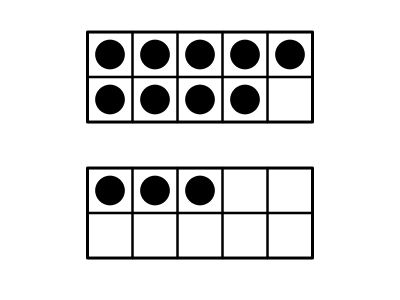
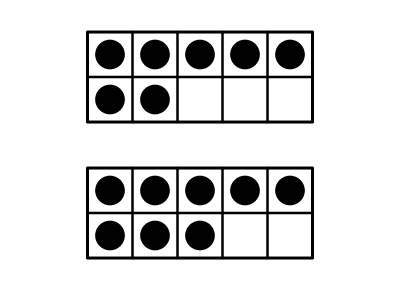
    How many counters move to fill the first ten frame? Circle it.

    1. 5.
      Two ten frames; 8 counters in the first, 4 in the second. 8 + 4
      • 1
      • 2
      • 4
    2. 6.
      Two ten frames; 9 counters in the first, 3 in the second. 9 + 3
      • 1
      • 3
      • 6
    3. 7.
      Two ten frames; 7 counters in the first, 8 in the second. 7 + 8
      • 2
      • 3
      • 5

    Challenge (optional)

    Solve 4 + 9 by making a ten. Which number did you fill to 10?

    You need: two ten frames and 20 counters

    Reading & Writing · Week 9 Day 1

    I can use headings, a table of contents and a glossary to find information.

    Look: a contents list and headings

    1. Say: "A table of contents lists the headings and the page where each part starts."
    2. Read the list together. Point: "Bake It starts on page 4."
    3. Say: "A heading tells what a page is about. A glossary at the back tells what hard words mean."

    Make a Cake

    Contents:

    Get a Pan . . . 2

    Make the Mix . . . 3

    Bake It . . . 4

    Page 4: Bake It

    Bake the cake in the pan. Then the cake can sit.

    Use the contents list. Write the page number.

    1. 1.
      Bake It
    2. 2.
      Get a Pan
    3. 3.
      Make the Mix

    Read the sentence. Circle the heading it would go under.

    1. 4.
      Put the cake in to bake.
      • Get a Pan
      • Bake It
    2. 5.
      Mix it up in a big dish.
      • Make the Mix
      • Bake It
    3. 6.
      Get the big pan.
      • Get a Pan
      • Make the Mix

    Challenge (optional)

    The glossary at the back of the book says: pan, a flat dish to bake in. What is a pan?

    Science · Week 9 Day 1

    I can test what happens when I shine light at different materials.

    Look: Bright, dim or dark?

    1. Shine the flashlight on a wall. Hold a thing in the beam.
    2. Look at the wall: is it bright, dim or dark?
    3. Bright means clear. Dim means cloudy. Dark means blocking.

    Each thing is held in the flashlight beam. Circle what the wall will look like.

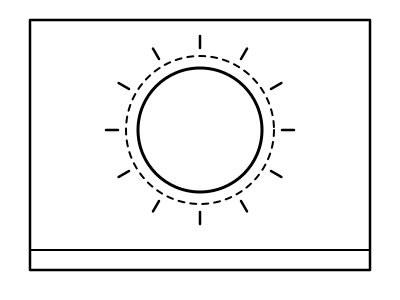
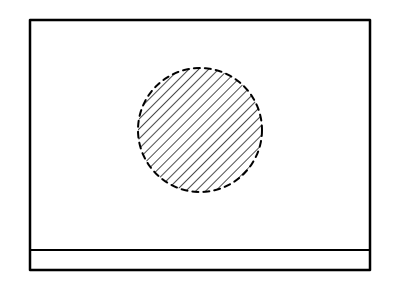
    1. 1.
      A clear plastic sheet protector
      • A wall with a bright circle of light.
      • A wall with a dim circle of light.
      • A wall with a dark shadow.
    2. 2.
      A wooden board
      • A wall with a bright circle of light.
      • A wall with a dim circle of light.
      • A wall with a dark shadow.
    3. 3.
      A sheet of white printer paper
      • A wall with a bright circle of light.
      • A wall with a dim circle of light.
      • A wall with a dark shadow.
    4. 4.
      An empty clear plastic water bottle
      • A wall with a bright circle of light.
      • A wall with a dim circle of light.
      • A wall with a dark shadow.
    5. 5.
      A metal baking pan
      • A wall with a bright circle of light.
      • A wall with a dim circle of light.
      • A wall with a dark shadow.

    Circle or draw.

    1. 6.
      Can you see through a clear thing?
      • yes
      • no
    2. 7.
      Does a closed book let the light through?
      • yes
      • no
    3. 8.
      Draw one thing in your home that lets light through.

    Challenge (optional)

    Why are windows made of a clear material?