1First Grade

    Putting together: part-part-whole

    Who and where

    Practice pages

    0 of 180 days complete · Saved on this device

    View all 180 days

    Math

    Putting together: part-part-whole

    I can put two groups together and find the whole.

    Standards: 1.OA.A.1

    Number practice (no timer)
    Make 5 and make 10 with fingers and ten frames
    Builds on
    Day 1 adding stories. One-minute check: say, "3 bunnies and 3 more bunnies. How many?" Your child shows it with beans and says 6.

    New words

    • part: one of the smaller groups inside a bigger group
    • whole: all of the parts together
    • put together: join two groups to make one group

    You need

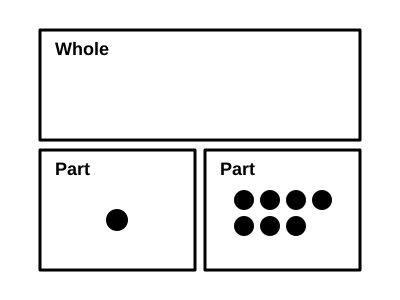
    • Part-part-whole mat: a sheet of paper with two boxes at the top labeled Part and one big box at the bottom labeled Whole
    • 20 counters in two colors (red and yellow beans, or two kinds of buttons)
    • Crayons
    • Notebook and pencil
    1. Warm-Up · 5 min

      Fluency: make 5 and make 10. Show 4 fingers. Ask: "How many more fingers make 5?" (1) Show 6 fingers. Ask: "How many more make 10?" (4) Repeat with 8 (2) and 5 (5). Spaced review from Day 1: "There are 5 toy cars. 2 more drive up. How many cars?" (7)

    2. Mini-Lesson · 10 min

      Say: "Today we put two groups together. Each group is a part. All of them together is the whole." Put 4 red counters in one Part box and 3 yellow counters in the other Part box. Ask: "How many red?" (4) "How many yellow?" (3) Say: "Now I put the parts together." Slide all 7 into the Whole box. Ask: "How many in the whole?" (7) Say: "4 and 3 make 7. The parts are 4 and 3. The whole is 7." Tell a put-together story for the mat: "4 red apples and 3 yellow apples are in a bowl. How many apples?" (7) Point out: "In a put-together story, nothing new arrives. The two groups were both there, and we count them together." Slide the counters back into the Part boxes. Ask: "Is the whole still 7?" (Yes.)

    3. Guided Practice · 10 min

      Your child grabs a small handful of red and yellow counters (no more than 10 in all) and sorts them onto the Part boxes. Your child names both parts, then slides them into the Whole box and names the whole. Do 4 rounds. Sample rounds: 2 red and 6 yellow (whole 8); 5 red and 5 yellow (whole 10); 1 red and 4 yellow (whole 5). After each round, ask: "Tell me a put-together story for your mat." For example: "2 red cars and 6 yellow cars are in the garage. There are 8 cars." If stuck, say: "Point to one part. How many? Point to the other part. How many? Now let's count them all."

    4. Play · 10 min

      Color the Whole. Your child draws a part-part-whole mat in the notebook. You call out two parts: "3 and 5." Your child draws 3 red dots and 5 yellow dots in the Part boxes, then draws all 8 dots in the Whole box with both colors. Do 3 more: 6 and 2 (8), 4 and 4 (8), 7 and 3 (10). Ask: "Why do 3 and 5 and 6 and 2 both make 8?" (Answers vary. Look for: the parts are different but they add up to the same whole.)

    5. Exit Ticket · 3-5 min

      Put the objects to one side but leave them on the table. Read each question aloud. Your child answers out loud, with objects or with a quick drawing. Check each answer together right away.

    Exit ticket

    1. The parts are 5 and 3. What is the whole?
    2. I have 2 red cars and 7 blue cars. How many cars?
    3. Draw a mat with parts 1 and 4. What is the whole?
    Answers
    1. 8
    2. 9 cars
    3. 5. Look for: 1 dot in one Part box, 4 in the other, and 5 dots in the Whole box.
    Watch for, and help or stretch
    Watch for
    Putting the whole number into a Part box, or counting only one part as the answer.
    Try
    Trace the big Whole box with your finger and say: "Everything goes here. The whole is the biggest number."
    Extra help
    Keep the whole at 6 or less. Use two very different objects, such as spoons and blocks, so the parts are easy to see.
    Stretch
    Give a whole of 10. Ask your child to find as many pairs of parts as possible (0 and 10, 1 and 9, 2 and 8, 3 and 7, 4 and 6, 5 and 5).

    At home (optional): Look in a drawer or toy bin for two kinds of things, such as forks and spoons. Count each part and then the whole.

    Reading & Writing

    Who and where

    I can tell who is in a story and where it happens.

    Standards: RL.1.3, RF.1.2.d, RF.1.3.b

    Phonics
    Short a and short i in CVC words (cat, map, sit, pig); blending and segmenting 3 sounds
    Reading
    Chrysanthemum (Kevin Henkes); original decodable story "Pam and the Big Cat"
    Writing
    Drawing and labeling an All About My Name page; spelling by sounds · Handwriting: lowercase c, a, d, g, o, q
    Builds on
    Asking and answering questions about a story (Day 1). One-minute check: ask "Who was the story about?" Your child names the main character and one thing that happened.

    New words

    • character: a person or animal in a story
    • setting: where and when a story happens
    • sound box: a box for each sound we hear in a word

    You need

    • Chrysanthemum (Kevin Henkes), optional read-aloud; any picture book about a child starting school or about a name works
    • Sound boxes: 3 squares drawn in a row on paper
    • 6 counters (beans or coins)
    • Paper folded in half for a two-box chart
    • Lined handwriting paper
    1. Phonics & Word Work · 15 min

      I do: Say: "I hear three sounds in sit." Push one counter into a box for each sound: /s/ /i/ /t/. Then run your finger under the boxes and say sit. We do: do map together (/m/ /a/ /p/, 3 sounds). You do: your child pushes counters for pig, tan and tip. Ask: "How many sounds in pig?" (3) "What is the middle sound in tan?" (/a/) Now write letters in the boxes for sit, map and tan. Read: "Tim can sit in a big pit." Dictation: pig, tap, sat, pin. If stuck, say the word in slow motion and tap your arm from shoulder to wrist, one tap per sound.

    2. Sight Words · 5 min

      Review kindergarten words with Swat It: spread I, a, is, it, can, see, like, my, we, look, go and no on the table. Say a word; your child taps it with a clean spatula and reads it. Move any slow words to the Practice pile and reread them once.

    3. Read-Aloud & Shared Reading · 15 min

      Reread the picture book or a few pages of it. Fold paper to make two boxes: Characters and Setting. Ask: "Who are the characters?" (The people or animals in the story. With Chrysanthemum: Chrysanthemum, her parents, her classmates and her teacher.) Your child draws two characters in the first box. Ask: "Where does the story happen?" (With Chrysanthemum: at home and at school. For another book, look for: two places shown in the pictures.) Your child draws the places in the second box. Ask: "How do you know?" (Answers vary. Look for: a picture or a word that shows the place.) Then echo-read "Pam and the Big Cat": you read a line, your child reads it back. Ask: "Who is in this story?" (Pam and the cat) "Where is the cat at the start?" (in a bag)

    4. Writing & Handwriting · 15 min

      Add to the name page. Your child draws one thing they love next to their picture and labels it by sounds (cat, pig, mat). Say: "Say the word slowly. Write a letter for each sound you hear." Accept sound spelling such as kat. Handwriting (4 min): model each letter large in the air, then on paper while saying the path aloud. g: make a c, go up, then down below the line and hook left; o: start at 2 o'clock, go all the way around and close it. Your child writes each letter 3 times on lined paper and circles the best one.

    5. Exit Ticket · 5 min

      Ask each question aloud; your child answers orally or by pushing counters.

    Exit ticket

    1. How many sounds do you hear in map? Push a counter for each one.
    2. Who is one character in our story?
    3. Where does the story happen?
    Answers
    1. 3 (/m/ /a/ /p/)
    2. Answers vary. Look for: a person or animal from the book, such as Chrysanthemum or Pam.
    3. Answers vary. Look for: a place from the story, such as home or school.
    Watch for, and help or stretch
    Watch for
    Pushing one counter per letter name, or one counter for the whole word.
    Try
    Say the word slowly with your child and pause between sounds. Push the counter only as each sound is said, then check by blending back.
    Extra help
    Use only two sound boxes first (at, it, in), then move to three. Say the word once with your child before pushing counters.
    Stretch
    Your child segments 4 spoken words with no counters, tapping fingers instead, and then writes them: tip, mat, sap, nip.

    At home (optional): At dinner, play I Spy with sounds: say "I spy /k/ /a/ /p/" and your child blends the word. Then switch roles.

    Social Studies

    All about me and my name

    I can tell something special about me and listen to what is special about someone else.

    Standards: D2.Civ.10.K-2, D2.Civ.9.K-2

    Builds on
    Knowing my own name and my family. One-minute check: your child says their first and last name and points to the first letter of their first name on a page you write.

    New words

    • special: something that makes a person who they are
    • alike: the same in some way
    • different: not the same

    You need

    • 2 sheets of paper
    • Crayons
    • A name story, if your family has one (optional)
    • A small object to pass as the talking turn (a spoon or a block)
    1. Warm-Up / Wonder · 5 min

      Play "Name Claps." Say your own name and clap once for each part: "Ma-ri-a" is 3 claps. Your child claps their own name. Ask: "How many claps in your name?" (Answers vary.) Wonder question: "What makes you, you?" (Answers vary.)

    2. Explore · 10–15 min

      You and your child each make an "All About My Name" page. 1) Write your name in big letters across the top. 2) Count the letters. 3) Draw or write one thing about the name: who chose it or what it means, if you know. If your child does not know their name story, they can write "a name I like" or a fun fact instead, such as a favorite food or color. 4) Draw yourself in the middle. Then trade pages. Say: "When it is your turn, you hold the spoon and talk. The other person looks at you and listens." Your child holds the spoon and tells about their page. Then you hold it and tell about yours. After you finish, ask: "What is one thing you heard about my page?" (Answers vary; look for a real detail.) If stuck, point to one part of your page and ask: "What did I say about this part?"

    3. Talk & Record · 5–10 min

      Put the two pages side by side. Your child finds one thing the same and one thing different. Sentence frames: "We are alike because we both ___." "We are different because ___." Your child says them; you write them at the bottom of their page.

    4. Exit Ticket · 3–5 min

      Ask the three questions aloud.

    Exit ticket

    1. Tell one special thing about you.
    2. Tell one thing you learned from my page.
    3. Name one way you and I are alike.
    Answers
    1. Answers vary. Look for: a true detail about your child, such as a favorite thing or their name.
    2. Answers vary. Look for: a detail from your page, which shows your child listened.
    3. Answers vary. Look for: a real thing you share, such as liking the same color or living in the same home.
    Watch for, and help or stretch
    Watch for
    Talking only about their own page and not listening during the other person's turn.
    Try
    Before your child talks again, they must say back one thing they heard. Hand over the spoon only after that.
    Extra help
    Your child draws only the picture and says one fact about their name. You write it.
    Stretch
    Your child interviews a second family member about their name and finds one way all three names are alike.

    At home (optional): Your child asks one family member, "How did you get your name?" or "What is a fun fact about you?" and tells you the answer.

    Practice

    Read each direction aloud. Your child works on the page; answers are in the grown-up view.

    Warm-up

    Remember?

    Math

    1. 3 + 2 = ?
    2. 8 stars in two rows of 4. How many stars?

    Reading & Writing

    Math · Week 1 Day 2

    I can put two groups together and find the whole.

    Look: parts 3 and 6

    1. Put 3 red counters in one Part box and 6 yellow counters in the other Part box.
    2. Slide both parts into the Whole box.
    3. Count them all: 3 and 6 make 9. The whole is 9.

    The parts are given. Write the whole.

    1. 1.
      Parts: 2 and 3. Whole: ___
    2. 2.
      Parts: 6 and 1. Whole: ___
    3. 3.
      Parts: 4 and 5. Whole: ___
    4. 4.
      Parts: 8 and 2. Whole: ___

    Listen to the story. Draw both parts. Write the whole.

    1. 5.
      3 red balls and 3 blue balls are in a box. How many balls?
    2. 6.
      5 big shells and 2 small shells are in a pail. How many shells?
    3. 7.
      A part-part-whole mat with 1 dot in one Part box and 7 dots in the other Part box. Draw the dots in the Whole box. How many?
    Challenge (optional)

    The whole is 6. Draw two parts that make 6. Can you find a second way?

    You need: red and yellow crayons

    Reading & Writing · Week 1 Day 2

    I can tell who is in a story and where it happens.

    Look: who and where

    1. Say: "The characters are the people or animals in a story. The setting is where it happens."
    2. Read "Tim and Max" together. Point to Tim and Max: "These are the characters."
    3. Point to the word van: "They sit in a van. The van is the setting."

    Tim and Max

    Tim and Max sit in a van. Max is a cat. Max can nap in the van. Tim can see a big pig! The pig can see Max.

    Read each sentence. Circle the word that matches the story.

    1. 1.
      Tim and ___ sit in a van.
      • Max
      • Pam
    2. 2.
      Max is a ___.
      • cat
      • pig
    3. 3.
      Max can nap in the ___.
      • van
      • pit
    4. 4.
      Tim and Max in the van

    Say each sound. Write one letter for each sound you hear.

    1. 5.
      A fan.
    2. 6.
      A lid.
    3. 7.
      A bib.
    4. 8.
      A ham.

    Challenge (optional)

    Tim had a ___ in the van.

    You need: crayons

    Social Studies · Week 1 Day 2

    I can tell something special about me and listen to what is special about someone else.

    Look: tell and listen

    1. I hold the spoon and tell one special thing: "I like to bake bread."
    2. You look at me and listen. You do not talk while I hold the spoon.
    3. Then you say back what you heard: "You like to bake bread."

    Two Name Pages

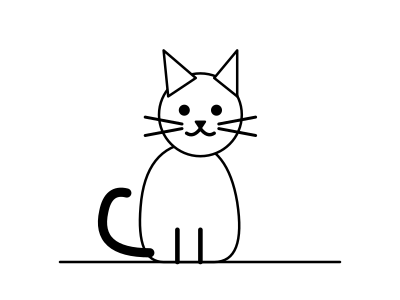
    Lena made a name page. Her name has 4 letters. She drew a cat because she loves cats. Omar made a name page too. His name also has 4 letters. He drew a soccer ball because he loves to play soccer.

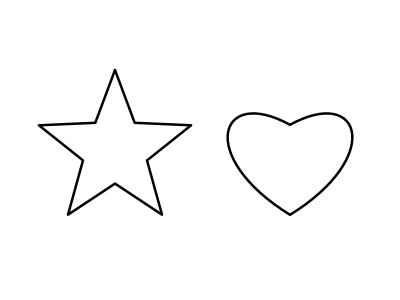
    Listen to the story. Circle the picture. Two same stars mean alike; a star and a heart mean different.

    1. 1.
      What does Lena love?
      • A cat.
      • A soccer ball.
    2. 2.
      What does Omar love to do?
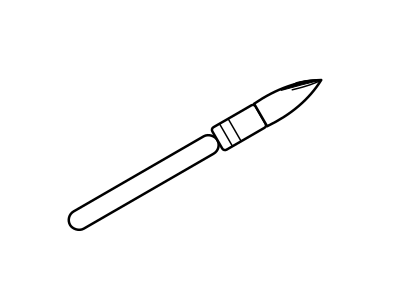
      • A paintbrush.
      • A soccer ball.
    3. 3.
      Lena and Omar both have 4 letters in their names. Is that alike or different? Circle the same stars for alike. Circle the star and heart for different.
      • Two stars that are the same.
      • A star and a heart.
    4. 4.
      Lena loves cats and Omar loves soccer. Is that alike or different?
      • Two stars that are the same.
      • A star and a heart.

    Talk and draw. Write what your child says.

    1. 5.
      Draw yourself doing something you love.
    2. 6.
      Tell me about your drawing.
    3. 7.
      Ask someone in your family what they love. What did they say?

    Challenge (optional)

    Tell one special thing about a cousin or a friend. Then ask them if you got it right.

    You need: crayons, a spoon or a block to pass as the talking turn