1First Grade

    Lesson + weekly check: addition stories

    Share and check: short a and i

    Practice pages

    0 of 180 days complete · Saved on this device

    View all 180 days

    MathWeekly check

    Lesson + weekly check: addition stories

    I can show an addition story with objects, a drawing and an equation.

    Standards: 1.OA.A.1

    Number practice (no timer)
    Make 5 and make 10 with fingers and ten frames
    Builds on
    Days 1 to 4: act out, part-part-whole, number bonds and equations. One-minute check: "What do the + and = signs mean?" (Plus means add; equals means is the same as.)

    New words

    • equation: a number sentence with an equal sign, such as 3 + 3 = 6

    You need

    • 20 counters
    • Playing cards ace to 5
    • Crayons and paper
    • The stored Week 1 check and its answer key
    • Notebook and pencil
    1. Warm-Up · 5 min

      Fluency: make 5 and make 10 with fingers and the ten frame. You say a number from 0 to 10; your child shows the partner to 10 with fingers. Spaced review from Day 3: "9 and what make 10?" (1)

    2. Short Lesson: Review Game · 10 min

      Draw and Tell. Each player flips two cards from the ace-to-5 pile. Tell an adding story using those two numbers, draw a quick picture for it, and write the equation. For example, you flip 3 and 5: "3 cats sit on a step. 5 more cats come. 3 + 5 = 8." Take 3 turns each. Your child checks your drawings and equations, and you check theirs. If stuck, say: "Show me the first card with counters. Now add the second card's counters. Count them all."

    3. Weekly Check · 15 min

      Give the stored Week 1 check. The printed check has 8 items. It covers these goals: (1) I can act out an adding story and tell how many in all; (2) I can put two groups together and find the whole; (3) I can show two parts that make 10; (4) I can write an equation with + and = to match a story. Read each story aloud, slowly, as many times as your child needs. Your child may use counters or a drawing for any item and writes an equation where the item asks for one. There is no time limit. Do not help with the math, but you may help with reading. Score it with the answer key. Secure: 7 of 8 correct, with at least 1 right on each goal. If the check is secure, start Week 2. If it is not, first do the reteach step on the check page for each group of items missed, then start Week 2.

    4. Exit Ticket · 3-5 min

      After the check, ask these two questions. Then go over any missed check items together, using objects.

    Exit ticket

    1. Draw a picture for this story: 3 cats are on a mat. 3 more cats come. How many cats?
    2. Write the equation for your picture.
    Answers
    1. 6 cats. Look for: a group of 3, a group of 3 more, and 6 in all.
    2. 3 + 3 = 6
    Watch for, and help or stretch
    Watch for
    Mixing up the order of numbers in the equation or forgetting the = sign.
    Try
    Have your child read the equation back as a story: "3 cats plus 3 cats is the same as 6 cats."
    Extra help
    Let your child use counters for every check item and say the answer before writing it.
    Stretch
    After the check, your child writes a story problem for you to solve, with a total of 10.

    At home (optional): Tell a family member one adding story from this week and show the equation.
    Reading & WritingWeekly check

    Share and check: short a and i

    I can read short a and short i words and tell about my name page.

    Standards: RF.1.3.b, RF.1.2.b, SL.1.1

    Phonics
    Short a and short i in CVC words (cat, map, sit, pig); blending and segmenting 3 sounds
    Reading
    Chrysanthemum (Kevin Henkes); original decodable story "Pam and the Big Cat"
    Writing
    Drawing and labeling an All About My Name page; spelling by sounds · Handwriting: lowercase c, a, d, g, o, q
    Builds on
    This week's CVC practice. One-minute check: read cat, sit, map with your child to warm up before the check.

    New words

    • check: a short time to show what we can do on our own

    You need

    • Word cards (10 CVC words)
    • Name page
    • Kindergarten sight word cards
    • Pencil and a recording sheet for you
    1. Review Game · 10 min

      Play Word Bingo: draw a 3-by-3 grid with short a and short i words (cat, map, sit, pig, tan, pin, dig, bag, lip). Say a word; your child finds it, reads it and covers it with a bean. Three in a row wins. Then play I Spy with sounds: you say /m/ /a/ /p/ and your child blends it. If stuck on a word during the game (not during the check), cover all but the first sound, say it together, then uncover the rest and blend.

    2. Sight Words · 5 min

      Read the kindergarten word cards one more time. Celebrate the Keep pile and note which words are still in the Practice pile.

    3. Weekly Check · 15 min

      Give the check one part at a time, in a quiet spot. The printed check has 10 items. It covers these goals: (1) I can read short a and short i words; (2) I can blend sounds into a word and write a letter for each sound; (3) I can tell who is in a story and where it happens; (4) I can find the capital letter at the start and the end mark at the end of a sentence. Do not help during the check except to say "Try your best" or "Skip it". Record each answer as right or wrong. Secure: 8 of the 10 words in items 1 and 2, 2 of the 3 blended words in items 3 to 5, and 4 of the 5 items 6 to 10. Note any vowel your child mixed up (a or i) and plan extra practice on it next week. For any part that is not yet secure, use the matching reteach step on the check page next week.

    4. Share & Listen · 10 min

      Your child shares the name page with a family member. The listener follows the reading rules: eyes on the talker, one talker at a time. Then you ask one question about the page and your child answers in a full sentence. (SL.1.1)

    5. Handwriting · 10 min

      Model each letter large in the air, then on paper while saying the path aloud. c: start at 2 o'clock, curve up and back around, and stop at 4 o'clock; a: make a c, go back up to the top, then straight down; d: make a c, go up to the tall line, then straight down; g: make a c, go up, then down below the line and hook left; o: start at 2 o'clock, go all the way around and close it; q: make a c, go up, then down below the line and flick right. Your child writes each letter 3 times on lined paper and circles the best one. Then your child writes their own name neatly on a new card for the fridge.

    6. Exit Ticket · 5 min

      Talk about the week together.

    Exit ticket

    1. Which word from this week is easy for you now? Read it to me.
    2. What do good listeners do?
    Answers
    1. Answers vary. Look for: a correctly read CVC word.
    2. Look at the talker and wait their turn; one talker at a time.
    Watch for, and help or stretch
    Watch for
    Reading the first letter and guessing the rest (cat read as cap).
    Try
    After the check, practise with Change One Tile using the missed word, and have your child look at every letter, left to right.
    Extra help
    If your child is tired, split the check: items 1 and 2 now and items 3 to 10 after a short break.
    Stretch
    Your child reads 3 bonus words with other short vowels (dog, sun, bed) to preview next week. Do not count them in the score.

    At home (optional): Read "Pam and the Big Cat" to a family member or a stuffed animal.

    ScienceWeekly check

    Sound Journal: what makes sound?

    I can tell what I think makes a sound and draw my idea.

    Standards: 1-PS4-1

    Builds on
    Sorting sounds as loud or quiet and high or low. One-minute check: your child makes one quiet, high sound and one loud, low sound with their voice.

    New words

    • predict: to make a smart guess before you find out

    You need

    • Sound Journal
    • Crayons
    • Pot and spoon
    • Keys
    • A sheet of scrap paper
    • A plastic bowl and a handful of dry beans
    1. Warm-Up / Wonder · 5 min

      Spaced review: name 4 sounds and your child sorts each one out loud. A mosquito buzzing (quiet and high). Thunder (loud and low). A fire truck siren (loud and high). A cat purring (quiet and low). Wonder question: "What do you think has to happen for a sound to be made?" Do not answer it yet.

    2. Review Game · 10 min

      Play "Guess the Sound-Maker." Your child closes their eyes. Make 5 sounds, one at a time: shake the keys, tap the pot with the spoon, crumple the paper, clap your hands, pour the beans into the bowl. After each, ask: "What made that sound?" Then your child opens their eyes and watches you make it again. Ask: "What did I do to make the sound?" (Sample: shook the keys, hit the pot, squished the paper.) Ask: "Was anything moving?" (Yes.) Do not explain more. Say: "Hold on to that idea. Scientists test their ideas." If stuck on a guess, give a choice: "Was it the keys or the paper?"

    3. Check · 10 min

      Give the Week 1 science check. The check items are on the Week 1 check page; do not show them ahead of time. Items 7 and 8 are a prediction, so there is no right answer for them yet. Read each part aloud. Your child answers by talking, pointing, showing with the real materials or drawing. You write down their words exactly. It is not timed; stop and finish later if your child is tired. Make a check mark next to each part your child shows on their own. The printed check has 8 items. It covers these goals: (1) I can listen closely and tell about sounds I hear; (2) I can sort sounds as loud or quiet and high or low; (3) I can tell what I think makes a sound and draw my idea. Your child draws one thing that makes a sound and finishes this sentence: "I think sound is made when ___." Write the date on the page and keep it. Say: "Scientists start with a prediction and then test it. In Week 6 we will look back at this." Do not correct the idea. Secure: 5 of 6 correct on items 1 to 6, and your child gives a drawing and a prediction for items 7 and 8 (any idea counts). If the check is not yet secure, use the reteach step on the check page that matches the items missed.

    4. Exit Ticket · 3–5 min

      Ask the two questions aloud. Praise a full sentence.

    Exit ticket

    1. What sound-maker did you draw?
    2. Say your prediction: "I think sound is made when ___."
    Answers
    1. Answers vary. Look for: a real thing that makes a sound, such as a drum or a dog.
    2. Answers vary. Any idea is fine today. Look for: a complete sentence. Many children say "when you hit something" or "when something moves."
    Watch for, and help or stretch
    Watch for
    Waiting for you to tell the right answer before saying a prediction.
    Try
    Say: "Scientists guess first. Any idea is a good start." Share one of your own guesses, such as "I think sound happens when things bump."
    Extra help
    Your child chooses one of the 5 sound-makers from the game to draw. You offer the sentence frame and point to each word as they say it.
    Stretch
    Your child adds a second sentence: "I think this because ___."

    At home (optional): Your child tells a family member their prediction about how sound is made and asks for theirs.

    Practice

    Read each direction aloud. Your child works on the page; answers are in the grown-up view.

    Warm-up

    Remember?

    Math

    1. 4 and what number make 5?
    2. Which is less, 8 or 5?

    Reading & Writing

    Math · Week 1 check

    Weekly check

    How to give it: Read every item aloud, slowly, as many times as your child needs. Untimed. Your child may use counters, a ten frame or a drawing before writing. Help with reading only, not with the math.

    Secure when: 7 of 8 correct, with at least 1 right on each goal

    • I can act out an adding story and tell how many in all.
    • I can put two groups together and find the whole.
    • I can show two parts that make 10.
    • I can write an equation with + and = to match a story.
    1. 1.
      2 bees are on a flower. 4 more bees come. Draw it. How many bees in all?
    2. 2.
      7 kids are at the pool. 1 more kid jumps in. How many kids in all?
    3. 3.
      1 big dog and 6 small dogs are at the park. How many dogs?
    4. 4.
      The parts are 2 and 2. What is the whole?
    5. 5.
      8 and ___ make 10.
    6. 6.
      Color a ten frame with 2 colors. Write your two parts.
    7. 7.
      Write the equation: 4 frogs sit on a rock. 1 more frog hops up.
    8. 8.
      Write the equation: 2 green pens and 1 red pen are in a cup.

    Reading & Writing · Week 1 check

    Weekly check

    How to give it: Give the check after the review game, in a quiet spot, one part at a time. It is untimed; take a stretch break between parts if needed. Read every direction aloud, but do not read the words or story for your child. Do not help except to say "Try your best" or "Skip it." Mark each item right or wrong. Items 1 and 2 (Part 1): your child reads each word aloud. Items 3 to 5 (Part 2): say the sounds; your child blends them, says the word and writes it. Part 3: your child reads "Tam and the Pig" aloud (a new story, so you see real decoding), then you read the directions for items 6 to 10 while your child reads and circles or writes. The name-page share and handwriting follow, as in the lesson.

    Secure when: 8 of the 10 words in items 1 and 2, 2 of the 3 blended words in items 3 to 5, and 4 of the 5 items 6 to 10.

    • I can read short a and short i words.
    • I can blend sounds into a word and write a letter for each sound.
    • I can tell who is in a story and where it happens.
    • I can find the capital letter at the start and the end mark at the end of a sentence.

    Tam and the Pig

    Tam had a van. A big pig sat in the van! Tam can pat the pig. The pig can nap in the van.

    1. 1.
      rag fin dim tap kid
    2. 2.
      sat wig ham rim zip
    3. 3.
    4. 4.
    5. 5.
    6. 6.
      ___ can pat the pig.
      • Tam
      • Dad
    7. 7.
      A big ___ sat in the van!
      • pig
      • cat
    8. 8.
      The pig can nap in the ___.
      • van
      • pit
    9. 9.
      Pam had a cap.
    10. 10.
      dad can dig

    Science · Week 1 check

    Weekly check

    How to give it: Read every direction, question and choice aloud. It is not timed; stop and finish later if your child is tired. Your child answers by talking, pointing, showing with the real materials or drawing, and you write their words exactly. Have a zipper ready for item 2. Items 7 and 8 are a prediction, so do not correct the idea. Write the date on the page and keep it for Week 6.

    Secure when: 5 of 6 correct on items 1 to 6, and your child gives a drawing and a prediction for items 7 and 8 (any idea counts).

    • I can listen closely and tell about sounds I hear.
    • I can sort sounds as loud or quiet and high or low.
    • I can tell what I think makes a sound and draw my idea.
    1. 1.
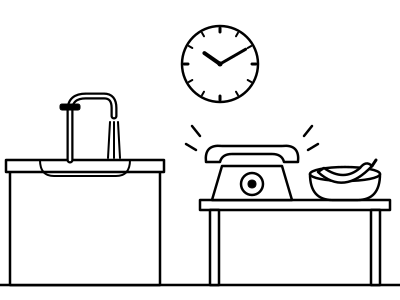
      A kitchen with a running faucet, a ticking wall clock, a ringing phone on the table and a banana in a bowl. Point to two things that are making a sound. Make a mark on each one.
    2. 2.
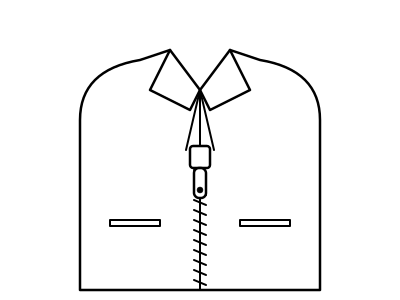
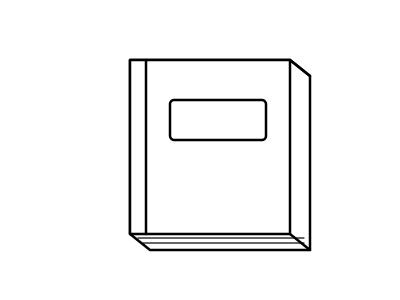
      Close your eyes. Your grown-up zips a zipper up and down. Open your eyes and circle what made the sound.
      • A book.
      • A jacket zipper.
      • A cup.
    3. 3.
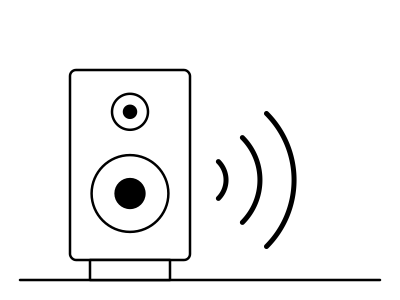
      A rooster crows very loudly at the farm. Circle loud or quiet.
      • A speaker with 3 big sound lines.
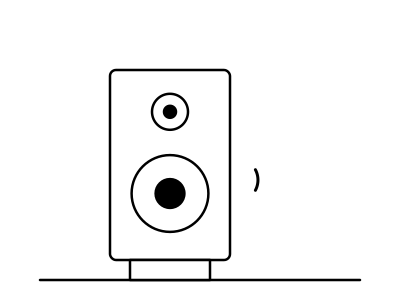
      • A speaker with 1 small sound line.
    4. 4.
      A person whispers a secret. Circle loud or quiet.
      • A speaker with 3 big sound lines.
      • A speaker with 1 small sound line.
    5. 5.
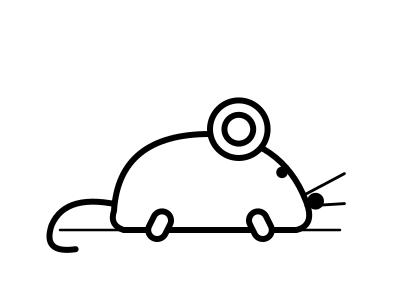
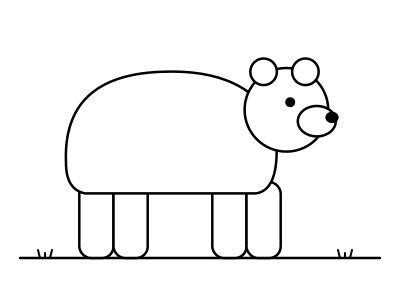
      A big ship's horn goes BOOOM across the water. Circle the mouse for high or the bear for low.
      • A mouse.
      • A bear.
    6. 6.
      A baby says a tiny "eee" squeal. Circle the mouse for high or the bear for low.
      • A mouse.
      • A bear.
    7. 7.
      Draw one thing that makes a sound.
    8. 8.
      Tell your prediction. Your grown-up writes it: "I think sound is made when ___."