Math
Both sides the same
I can check equations with adding on both sides.
Standards: 1.OA.D.7, 1.OA.B.3
- Number practice (no timer)
- Facts within 10 with a known-fact partner
- Builds on
- Day 2 true and false, and Week 3 turn-around facts. One-minute check: "Is 3 + 5 the same as 5 + 3?" (Yes. Both are 8.)
New words
- both sides: the part before the equal sign and the part after it
- turn-around fact: the same two numbers added in the other order, like 5 + 2 and 2 + 5
You need
- 20 linking cubes in two colors (or two kinds of beans)
- Equation cards made from paper squares (written in the lesson)
- Two paper labels: TRUE and FALSE
- Notebook and pencil
Warm-Up · 5 min
Fluency: facts within 10 with a known-fact partner. "2 + 7 = 9, so 9 - 7 = ?" (2) "4 + 6 = 10, so 10 - 6 = ?" (4) Spaced review from Week 5: "4 + 3 + 6: look for a ten." (4 + 6 = 10, 10 + 3 = 13)
Mini-Lesson · 10 min
Say: "Today there is adding on both sides of the equal sign." Write 3 + 3 = 2 + 4. Build the left side as one train: 3 red and 3 blue. Build the right side: 2 red and 4 blue. Stand the trains side by side. Ask: "How long is each train?" (6 and 6) "True or false?" (True.) Say: "The numbers are different, but both sides are worth 6, so it is true." Write 5 + 2 = 2 + 5. Build 5 + 2, then turn the same train around. Ask: "Did the number of cubes change?" (No. Both are 7.) Say: "Turn-around facts are always true. We can add in any order." Write 4 + 1 = 5 + 2. Ask your child to find each side first. (4 + 1 is 5. 5 + 2 is 7.) "True or false?" (False. 5 is not the same as 7.) Write the value under each side: 5 under the left side and 7 under the right.
Guided Practice · 10 min
Your child finds the value of each side, writes it under that side, then says true or false. Prove with cubes when needed. 1) 4 + 4 = 5 + 3 (true; 8 and 8) 2) 6 + 1 = 1 + 6 (true; a turn-around fact, 7 and 7) 3) 2 + 3 = 4 + 2 (false; 5 and 6) 4) 5 + 5 = 6 + 4 (true; 10 and 10) 5) 7 + 2 = 8 + 2 (false; 9 and 10) 6) 1 + 9 = 9 + 1 (true; turn-around, 10 and 10) If stuck, say: "Cover the right side with your hand. What is the left side worth? Now cover the left side. What is the right side worth?"
Play · 10 min
Make It Balance. Write the left side and leave two blanks on the right: 6 + 2 = __ + __. Your child builds the left side, then finds a different pair for the right side that makes the equation true, such as 5 + 3 or 4 + 4. Use these left sides: 6 + 2, 5 + 4, 7 + 3, 3 + 3, 8 + 1. Score 1 point for each different pair your child finds. Take turns: you fill one in and your child checks it, sometimes catching a mistake you make on purpose.
Exit Ticket · 3-5 min
Put the objects to one side but leave them on the table. Read each question aloud. Your child answers out loud, with objects or with a quick drawing. Check each answer together right away.
Exit ticket
- Is 6 + 2 = 3 + 5 true or false?
- Is 3 + 4 = 5 + 3 true or false?
- Make it true: 6 + 3 = __ + __
Answers
- True. Both sides are 8.
- False. 3 + 4 is 7 and 5 + 3 is 8.
- Answers vary. Look for: any two numbers that make 9, such as 5 + 4, 7 + 2 or 3 + 6.
Watch for, and help or stretch
- Watch for
- Treating the equal sign as "the answer comes next," such as reading 3 + 3 = 2 + 4 as "3 + 3 = 6, then + 4 = 10."
- Try
- Cover one side at a time and write each side's value underneath it. Then compare only the two values.
- Extra help
- Use totals up to 6 and build every side with cubes before deciding.
- Stretch
- Check 8 + 6 = 10 + 4 and 9 + 5 = 10 + 4. (Both true; both sides are 14.) Ask: "Which strategy does this remind you of?" (Making a ten.)
At home (optional): Find two ways to make 10 with spoons and forks, and write them as one equation, such as 6 + 4 = 7 + 3.
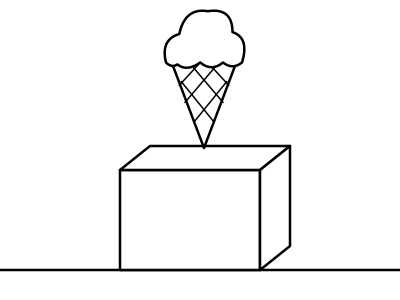 The cone is ___ the box.
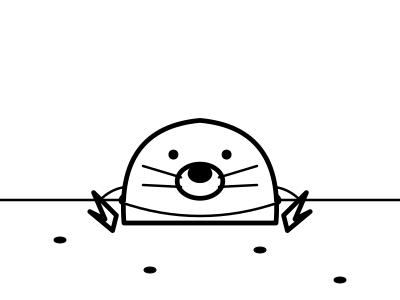 The mole is ___ the hole.
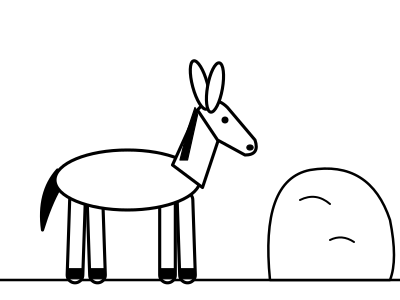 The mule is ___ the stone.
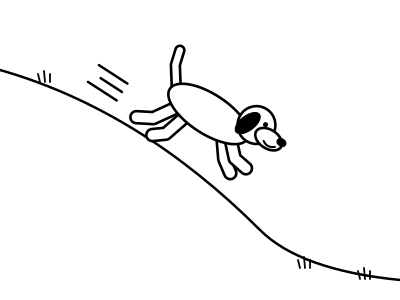 The dog ran ___ the slope.