1First Grade

    What the equal sign means

    What does that word mean?

    Practice pages

    0 of 180 days complete · Saved on this device

    View all 180 days

    Math

    What the equal sign means

    I can explain that = means 'the same as'.

    Standards: 1.OA.D.7

    Number practice (no timer)
    Facts within 10 with a known-fact partner
    Builds on
    Week 1 writing addition equations (3 + 4 = 7). One-minute check: "Write an equation for 3 ducks and 4 more ducks." (3 + 4 = 7)

    New words

    • equal sign: the sign = ; it means "is the same as"
    • balance: when both sides have the same amount, the scale is level
    • equation: a number sentence with an equal sign

    You need

    • Hanger scale (an adult sets it up): a plastic coat hanger with a notch near each end. Hang it where it can swing without touching anything, such as from a broom handle laid across the backs of two chairs or from a shower curtain rod, not flat against a door, where the cups rub. Hang a small paper cup or plastic bag from each notch with string or a clip, so both sit the same distance from the hook. Check that it hangs level when empty; if it does not, stick a small piece of tape on the high end until it does.
    • 20 linking cubes, or 20 pennies (all the same kind, so each one weighs the same)
    • Paper and a marker
    • Notebook and pencil
    1. Warm-Up · 5 min

      Fluency: facts within 10 with a known-fact partner. "3 + 4 = 7. What take-away fact goes with it?" (7 - 4 = 3, or 7 - 3 = 4) "6 + 2 = 8, so 8 - 2 = ?" (6) Spaced review from Week 10: "15 - 6: get to 10 first." (15 - 5 = 10, 10 - 1 = 9)

    2. Mini-Lesson · 10 min

      Say: "Some kids think the equal sign means 'the answer comes next.' Today we find out what it really means." Put 3 cubes and then 4 more cubes in the left bag. Put 7 cubes in the right bag. Ask: "What happened to the hanger?" (It is level.) Say: "Level means both sides have the same amount." Write 3 + 4 = 7. Point to the = and say: "This sign means 'is the same as.' 3 + 4 is the same as 7." Now switch the bags to the other ends. Ask: "Is it still level?" (Yes.) Write 7 = 3 + 4. Read it together: "7 is the same as 3 plus 4." Ask: "Is it still true?" (Yes. 7 is the same as 3 + 4.) Now put 5 cubes in one bag and 6 in the other. Ask: "Level?" (No, it tips.) Say: "5 is not the same as 6, so we cannot write 5 = 6." Note: a homemade hanger is not perfect. If it is hard to tell, count the cubes on each side to decide.

    3. Guided Practice · 10 min

      For each pair, your child first predicts "level" or "tips," then builds both sides and checks. Write an equation only when the sides are the same, and read it with "is the same as." 1) 2 + 6 and 8 (level; 2 + 6 = 8) 2) 9 and 5 + 4 (level; 9 = 5 + 4) 3) 4 + 4 and 9 (tips; 8 is not the same as 9) 4) 10 and 6 + 4 (level; 10 = 6 + 4) 5) 5 + 1 and 7 (tips; 6 is not the same as 7) If stuck, say: "Count the cubes in each bag. Are the two numbers the same?"

    4. Play · 10 min

      Balance It. You put some cubes in one bag, from 5 to 10, and say how many. Your child makes the other side balance using two groups of cubes in two colors (or two small piles of pennies) and says the equation with the single number first: "8 = 5 + 3." Then ask: "Can you balance 8 a different way?" (Answers vary: 6 + 2, 4 + 4, 7 + 1.) Take turns. Play 6 rounds.

    5. Exit Ticket · 3-5 min

      Put the objects to one side but leave them on the table. Read each question aloud. Your child answers out loud, with objects or with a quick drawing. Check each answer together right away.

    Exit ticket

    1. What does the equal sign mean?
    2. Is 7 = 3 + 4 true? How do you know?
    3. Is 6 = 2 + 5 true?
    Answers
    1. "Is the same as": both sides have the same amount.
    2. Yes. 3 + 4 is 7, so both sides are the same.
    3. No. 2 + 5 is 7, and 7 is not the same as 6.
    Watch for, and help or stretch
    Watch for
    Saying that 7 = 3 + 4 is "backwards" or wrong because the answer is on the left.
    Try
    Read it with the words "is the same as" and check the hanger. The sign works both ways.
    Extra help
    Keep all amounts to 6 or less, and count each side aloud together before deciding.
    Stretch
    Put 6 + 2 in one bag and 5 + 3 in the other. Is it level? (Yes, both are 8.) Write 6 + 2 = 5 + 3.

    At home (optional): Your child writes 2 equations with the single number on the left, such as 10 = 6 + 4, and reads them to a family member using "is the same as."
    Reading & Writing

    What does that word mean?

    I can ask questions to figure out a new word in a nonfiction book.

    Standards: RI.1.4, SL.1.1.c, RF.1.3.c

    Phonics
    Long o and long u with final e (o_e: home, rope; u_e: cute, tube)
    Sight words
    how, now, down, know, just
    Reading
    Rabbits, Rabbits & More Rabbits (Gail Gibbons); original fact cards about rabbits
    Writing
    Shared research: we read two sources together and write a class fact page · Handwriting: capitals V, W, X, Y, Z
    Builds on
    Asking questions about facts (Week 7) and i_e (Week 10). One-minute check: your child reads kite, ride and pine.

    New words

    • burrow: a tunnel or hole under the ground that an animal digs to live in
    • litter: a group of baby animals born at the same time to one mother
    • clue: a hint that helps you figure something out

    You need

    • Rabbits, Rabbits & More Rabbits (Gail Gibbons), optional read-aloud; any simple information book about rabbits works, or use the Rabbit Fact Cards in the lesson
    • Rabbit Fact Cards (in the lesson), printed or read from the page
    • o_e and u_e word cards and a sticky note with the letter e
    • Sight word cards: how, now, down, know, just
    • Printed "Mole and the Big Stone" (in the lesson)
    • Lined handwriting paper
    1. Phonics & Word Work · 15 min

      I do: write hop. Read it: /h/ /o/ /p/. Add an e: hope. Say: "The silent e makes the o say its name, /ō/." Then write cub and add an e: cube. Say: "The silent e makes the u say its name, /ū/, as in cute and mule. In some words, such as June, tube, rule and flute, u_e says /oo/." We do: read pairs together: not, note; rob, robe; tub, tube; cut, cute. You do: your child reads home, rope, bone, hole, cute, tube, mule, June. Read: "June has a cute mule." "The rope is by the home." Dictation: home, rope, cute, tube. If stuck, cover the e and read the short word, then uncover it: "Now the vowel says its name."

    2. Sight Words · 5 min

      Introduce this week's words with see-say-spell-write. For each card: Say: "This word is ___. Say it with me." Your child reads it, spells it aloud while tapping each letter, then writes it once while saying each letter, and reads it again. Draw a small heart over any tricky part, the part we must learn by heart: how (ow says /ow/, like when you bump your toe); now (ow says /ow/, just like in how); down (ow says /ow/, just like in how and now); know (the k is silent, and ow says long o /ō/); just (every sound is one you know: /j/ /u/ /s/ /t/). Finish by reading all five cards in mixed order twice. If stuck, cover the tricky part, read the rest together, then uncover it and say the whole word.

    3. Read-Aloud & Shared Reading · 15 min

      Read part of the rabbit book, or read the Rabbit Fact Cards below. Say: "When we meet a new word, we ask: What does it mean? Then we look for clues in the sentence and the picture." Stop at burrow. Ask: "What does burrow mean? What words help?" (a tunnel under the ground; the clue is "a tunnel under the ground" right after it) Stop at litter. Ask: "What is a litter? Find the clue." (a group of babies born at the same time; the clue is right after the word) Your child asks "What does ___ mean?" about one more word, such as warren or kits, and you find the clue together. (warren: many burrows joined together; kits: baby rabbits) Rabbit Fact Cards (an original information text; you read it aloud) Card 1, Homes: Some rabbits dig a burrow, a tunnel under the ground, to sleep in and hide in. Many burrows joined together make a warren. Cottontail rabbits do not dig their own burrows. They rest in a shallow dip in the grass and hide in thick plants. Card 2, Babies: Baby rabbits are called kits. A mother rabbit has a litter, a group of babies born at the same time. She lines the nest with fur from her body to keep the kits warm. Card 3, Staying Safe: A rabbit's eyes are on the sides of its head, so it can see almost all the way around. When a rabbit senses danger, it may stop and stay very still. It may thump its back feet to warn other rabbits. It can run fast and zigzag away. Card 4, Food: Rabbits eat grass, clover and leafy plants. In winter they nibble twigs and bark. A rabbit's front teeth never stop growing, and chewing keeps them short. Then echo-read this week's decodable story: you read a line, your child reads it back. Mole and the Big Stone Mole has a home in a hole. The hole is down, down in the mud. Mole woke up. A big stone sat on top of the hole! "How can I get up?" said Mole. "I am stuck." Mole had a plan. Mole dug and dug. Mole dug a tube in the mud, up and up. Pop! Mole got to the top. June the mule was on the slope. June gave the stone a kick. The stone slid down the slope. Now Mole had a top hole and a back hole. "Thank you, June," said Mole. "I know just what to do. Come to my home!" June is a big mule. "I can not fit in the hole!" said June. Mole and June had a big grin.

    4. Writing & Handwriting · 15 min

      Your child starts a Word Wall page: write burrow and litter, and draw a picture for each. Under each picture, your child writes a short meaning in their own words, spelling by sounds (a hole in the ground). Handwriting (4 min): capitals start at the top line and touch the bottom line. V slants down from the top line to the bottom line, then slants back up. W is slant down, up, down, up. Your child writes each capital 3 times, then writes one word that starts with it (Val, Wes). Circle the best letter in each row.

    5. Exit Ticket · 5 min

      Oral answers.

    Exit ticket

    1. What does burrow mean?
    2. What can you ask when you meet a new word?
    3. Read these words: home, cute.
    Answers
    1. A tunnel or hole under the ground where an animal lives.
    2. What does ___ mean? (then look for clues in the sentence or picture)
    3. home, cute
    Watch for, and help or stretch
    Watch for
    Reading cute as cut.
    Try
    Point to the e first and say: "Silent e, u says its name."
    Extra help
    Practice only o_e today with 3 pairs: hop/hope, not/note, rob/robe.
    Stretch
    Your child rereads "Mole and the Big Stone" alone and finds 4 words with o_e and 3 with u_e. (o_e: Mole, home, hole, woke, stone, slope. u_e: tube, June, mule.)

    At home (optional): Your child asks "What does ___ mean?" about one new word heard at home or on a walk, and you find the answer together.

    Science

    Talking far away

    I can name ways people use sound or light to send messages.

    Standards: 1-PS4-4

    Builds on
    Sound and light investigations (Weeks 1–10). One-minute check: ask "How does a sound start?" (Something vibrates.) "What can bounce light to a new place?" (a mirror)

    New words

    • signal: a sound or light that sends a message
    • message: words or news you send to someone
    • distance: how far apart two things are

    You need

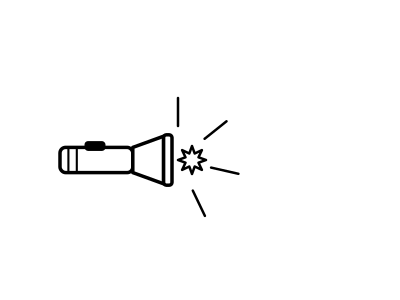
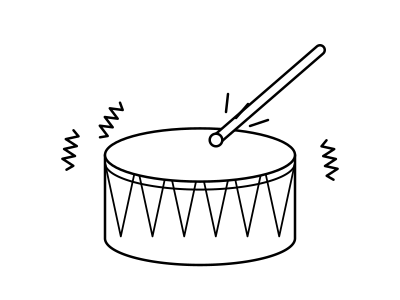
    • 5 picture cards (draw or print): a whistle, a drum, a lighthouse, a traffic light, a flashlight
    • Sorting mat: a paper with 2 columns, Sound and Light
    • Flashlight
    • Pot and wooden spoon (from Unit 1)
    • Engineering notebook (start a Message Makers section)
    • Crayons
    1. Warm-Up / Wonder · 5 min

      Spaced review: ask: "What did the mirror do to the flashlight beam?" (It bounced it in a new direction.) Wonder question: "If I were at the far end of the yard, how could you tell me 'Come here' without walking over?" Write your child's ideas at the top of the first Message Makers page.

    2. Explore · 10–15 min

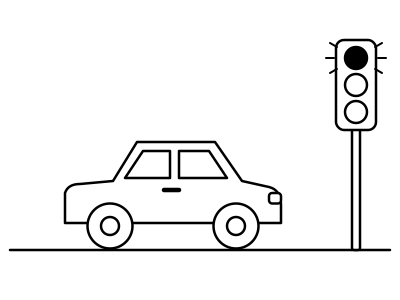
      Say: "People use sound and light to send messages over a distance. Engineers design tools to do it." Your child sorts the 5 cards on the mat. Expected: Sound: whistle, drum. Light: lighthouse, traffic light, flashlight. Talk about each one: Whistle: a coach or a lifeguard blows it so everyone hears "Stop!" Drum: a beat that people far away can hear. Traffic light: red means stop, green means go, so drivers get the message without any words. Lighthouse: its light warns ships that land and rocks are near. Each lighthouse flashes its own pattern so sailors can tell which lighthouse they see; the Cape Lookout Lighthouse in North Carolina flashes once every 15 seconds. Then test 2 signals. Stand as far apart as your home or yard allows. You say "Come here" in a whisper. Ask: "Could you hear it?" (Probably not.) Your child bangs the pot 2 times for "come here." (Easy to hear.) Turn the lights down and your child blinks the flashlight at the wall near you 2 times. Ask: "Which signal would work if the baby were sleeping?" (the light) "Which would work if I could not see you, like from the next room?" (the sound) Your child picks which idea to build first: a cup phone (sound) or a flashlight code (light). Say: "We will build both this week, and you will test which works better." If stuck sorting, ask: "Do you hear it or see it?" Safety: never shine the flashlight, or light bounced off the mirror, into anyone's eyes.

    3. Talk & Record · 5–10 min

      On the Message Makers page, your child draws the problem: themselves, a person far away, and a signal going between them. Sentence frame: "I want to send a message to ___. I could use ___."

    4. Exit Ticket · 3–5 min

      Ask the three questions aloud.

    Exit ticket

    1. Name one way to send a message with sound.
    2. Name one way to send a message with light.
    3. Why does each lighthouse flash its own pattern?
    Answers
    1. Answers vary. Look for: a whistle, a drum, a bell, banging a pot or a siren.
    2. Answers vary. Look for: a flashlight, a lighthouse, a traffic light or turning a lamp on and off.
    3. So sailors can tell which lighthouse they are seeing (and know where they are).
    Watch for, and help or stretch
    Watch for
    Sorting a traffic light as sound because cars make noise near it.
    Try
    Ask: "Does the traffic light send its message by making a noise or by showing a color?" (showing a color, so light)
    Extra help
    Sort only 3 cards: whistle, flashlight and drum.
    Stretch
    Your child thinks of a sound or light signal used at home or in town, such as a smoke alarm beep or a crosswalk light, and adds a card for it.

    At home (optional): On a walk or drive, your child spots 2 signals, one sound and one light, and tells what message each one sends.

    Practice

    Read each direction aloud. Your child works on the page; answers are in the grown-up view.

    Warm-up

    Remember?

    Math

    1. 15 - 8 = ? Think 8 + ? = 15.
    2. 1 + 7 + 9 = ? Find two numbers that make 10 first.

    Reading & Writing

    1. wide, pile, dime

    Math · Week 11 Day 1

    I can explain that = means 'the same as'.

    Look: 5 + 3 and 8

    1. Put 5 cubes and 3 more cubes in the left bag. Put 8 cubes in the right bag.
    2. The hanger is level. Both sides have 8.
    3. Write 5 + 3 = 8 or 8 = 5 + 3. The = sign means "is the same as."

    Are both sides the same? Circle yes or no.

    1. 1.
      2 + 7 and 9
      • yes
      • no
    2. 2.
      6 + 1 and 8
      • yes
      • no
    3. 3.
      10 and 5 + 5
      • yes
      • no
    4. 4.
      3 + 3 and 7
      • yes
      • no

    Write the number that makes both sides the same.

    1. 5.
      6 = 4 + ___
    2. 6.
      ___ = 1 + 8
    3. 7.
      7 + 3 = ___

    Challenge (optional)

    Write 8 = ___ + ___ two different ways.

    You need: cubes (optional)

    Reading & Writing · Week 11 Day 1

    I can ask questions to figure out a new word in a nonfiction book.

    Look: ask about a new word

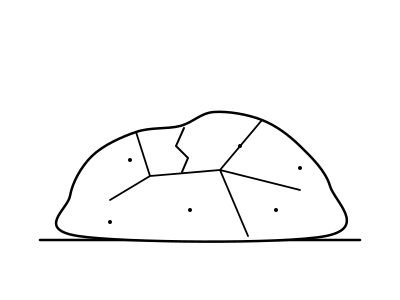
    1. Read "Jude and the Dune" together. Stop at dune.
    2. Ask: "What is a dune? What words help us?" Point to the clue: a big pile of sand.
    3. Say: "When we meet a new word, we ask what it means and look for clues in the words and the picture."

    Jude and the Dune

    Jude and Mom went to a dune. A dune is a big pile of sand. Jude can slide down the dune. "I like the dune!" said Jude.

    Read and circle. Underline the clue. Then ask about a new word.

    1. 1.
      A dune is ___.
      • a big pile of sand
      • a pond
    2. 2.
      A dune is a big pile of sand.
    3. 3.
      What is a ___?

    Look at the picture. Circle the word that matches.

    1. 4.
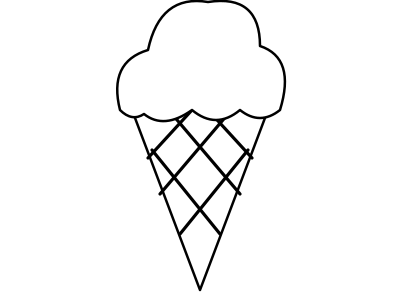
      An ice cream cone.
      • cone
      • can
    2. 5.
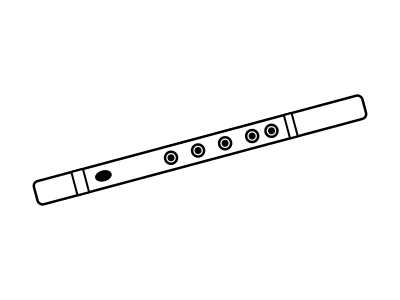
      A flute.
      • flute
      • flat
    3. 6.
      A stone.
      • stone
      • stem
    4. 7.
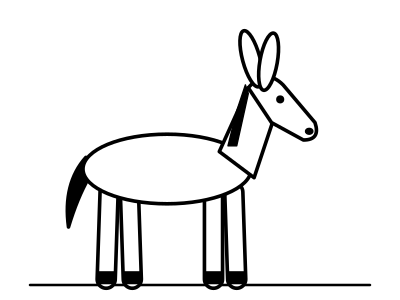
      A mule.
      • mule
      • mile

    Challenge (optional)

    Can Jude slide down the dune?

    Science · Week 11 Day 1

    I can name ways people use sound or light to send messages.

    Look: Sound or light message?

    1. A signal is a sound or a light that sends a message.
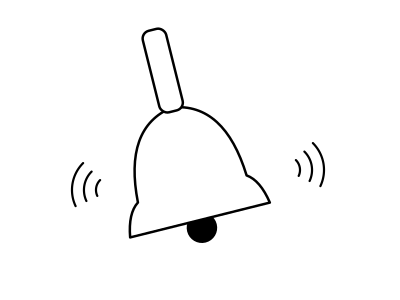
    2. A bell rings for lunch. You hear it, so it is a sound signal.
    3. A porch light turns on to say "come home." You see it, so it is a light signal.

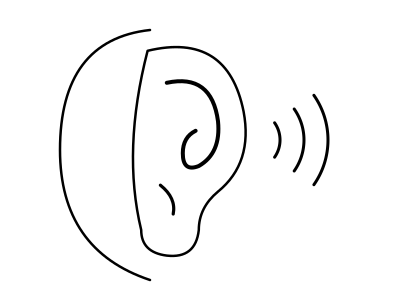
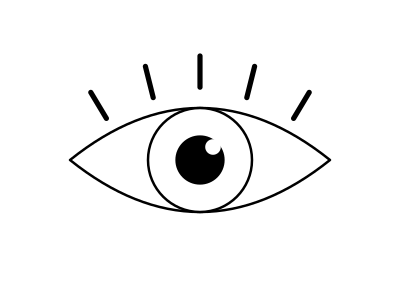
    Do you hear it or see it? Circle the ear for sound or the eye for light.

    1. 1.
      A school bell rings at the end of the day.
      • An ear (sound).
      • An eye (light).
    2. 2.
      A walk sign lights up at the street corner.
      • An ear (sound).
      • An eye (light).
    3. 3.
      A smoke alarm beeps.
      • An ear (sound).
      • An eye (light).
    4. 4.
      A bike has a blinking red light on the back.
      • An ear (sound).
      • An eye (light).
    5. 5.
      A dog barks at the door to go out.
      • An ear (sound).
      • An eye (light).

    Circle the better signal.

    1. 6.
      The baby is sleeping. Which signal should you use to say "come here"?
      • A flashlight blinking.
      • A drum being hit.
    2. 7.
      Your friend is in the next room and cannot see you. Which signal should you use?
      • A bell ringing.
      • A flashlight blinking.
    3. 8.
      A traffic light is green. What message does it send to drivers?
      • A car stopped.
      • A car driving forward.

    Challenge (optional)

    Fire trucks have a loud siren and flashing lights. Why do they use both?