    1First Grade

    Equal sign with subtraction

    Shared research, part 2

    Practice pages

    0 of 180 days complete · Saved on this device

    View all 180 days

    Math

    Equal sign with subtraction

    I can check equations that use adding and subtracting.

    Standards: 1.OA.D.7

    Number practice (no timer)
    Facts within 10 with a known-fact partner
    Builds on
    Day 3 adding on both sides, and Week 10 subtraction. One-minute check: "Is 5 + 4 = 6 + 3 true?" (Yes. Both are 9.)

    New words

    • value: how much a side of an equation is worth

    You need

    • 20 linking cubes (or beans)
    • 8 blank paper cards
    • Two paper labels: TRUE and FALSE
    • Notebook and pencil
    1. Warm-Up · 5 min

      Fluency: facts within 10 with a known-fact partner. "3 + 5 = 8, so 8 - 5 = ?" (3) "6 + 4 = 10, so 10 - 4 = ?" (6) Spaced review from Week 10: "13 - 9: think addition." (9 + 4 = 13, so 4)

    2. Mini-Lesson · 10 min

      Say: "The equal sign works with take-away too." Write 7 = 8 - 1. Build a train of 7 for the left side. For the right side, build a train of 8 and break off 1. Ask: "What is each side worth?" (7 and 7) "True or false?" (True.) Read it: "7 is the same as 8 take away 1." Write 8 - 2 = 5 + 2. Your child finds each side: 8 - 2 is 6 and 5 + 2 is 7. Write 6 and 7 under the sides. Ask: "True or false?" (False. 6 is not the same as 7.) Write 10 - 3 = 4 + 3. (7 and 7; true.) Say: "Our rule: find what each side is worth, then compare."

    3. Guided Practice · 10 min

      Your child writes the value under each side, then says true or false. 1) 6 = 9 - 3 (true; 6 and 6) 2) 10 - 5 = 4 (false; 10 - 5 is 5) 3) 7 - 1 = 3 + 3 (true; 6 and 6) 4) 9 - 4 = 2 + 2 (false; 5 and 4) 5) 4 + 4 = 10 - 2 (true; 8 and 8) 6) 5 = 5 - 0 (true; 5 and 5) If stuck, say: "Build each side with cubes. For a take-away side, build the first number and break off the second number."

    4. Play · 10 min

      Equation Makers. Your child writes 5 equations on the blank cards: 3 true and 2 false. At least one must use a take-away sign, and at least one must have numbers on both sides of the equal sign. Shuffle them. You sort them under TRUE and FALSE out loud, and sort one card wrong on purpose. Your child checks every card, finds the mistake and proves it with cubes. If there is time, you write 3 cards for your child to sort.

    5. Exit Ticket · 3-5 min

      Put the objects to one side but leave them on the table. Read each question aloud. Your child answers out loud, with objects or with a quick drawing. Check each answer together right away.

    Exit ticket

    1. Is 6 = 10 - 4 true or false?
    2. Is 9 - 2 = 4 + 4 true or false? Why?
    3. Write a true equation that uses a take-away sign.
    Answers
    1. True. 10 - 4 is 6.
    2. False. 9 - 2 is 7 and 4 + 4 is 8.
    3. Answers vary. Look for: both sides with the same value, such as 9 - 3 = 6 or 4 = 6 - 2.
    Watch for, and help or stretch
    Watch for
    Working left to right without stopping at the equal sign, such as "8 - 2 is 6, and 6 + 5 is 11."
    Try
    Draw a line down through the equal sign. Find each side's value on its own, then compare.
    Extra help
    Keep all numbers to 6 and build every side.
    Stretch
    Check 12 - 3 = 4 + 5 (true; 9 and 9) and 15 - 7 = 9 - 1 (true; 8 and 8).

    At home (optional): Make a 3-card True or False quiz for a family member. Include one card with a take-away sign.

    Reading & Writing

    Shared research, part 2

    I can help write a class fact page from our research.

    Standards: W.1.7, W.1.2, L.1.2.b

    Phonics
    Long o and long u with final e (o_e: home, rope; u_e: cute, tube)
    Sight words
    how, now, down, know, just
    Reading
    Rabbits, Rabbits & More Rabbits (Gail Gibbons); original fact cards about rabbits
    Writing
    Shared research: we read two sources together and write a class fact page · Handwriting: capitals V, W, X, Y, Z
    Builds on
    Research chart (Day 2). One-minute check: your child reads one fact from the chart.

    New words

    • fact page: a page that tells true facts about one question
    • period: the dot at the end of a telling sentence

    You need

    • Chart from Day 2
    • Large paper for the class fact page
    • Crayons
    • Sight word cards
    • Printed "Mole and the Big Stone"
    1. Phonics & Word Work · 15 min

      Final e with digraphs. I do: read white, shake, choke. We do: read chime, whale, shine. You do: your child reads shape, while, shade, chase, whine, shame. Read: "The whale can shake." "Mike woke up at nine." Dictation: white, choke, chime, shake. If stuck, have your child box the digraph first, then read the vowel with its silent e.

    2. Sight Words · 5 min

      Review: how, now, down, know, just. Rainbow Write: your child writes two of this week's words three times each in different crayons, saying each letter, then reads them. Use know and just.

    3. Read-Aloud & Shared Reading · 15 min

      Reread the chart. Say: "Today we turn our research into one fact page." Ask: "What is the title of our page?" (How Rabbits Stay Safe) Ask: "Which fact should go first?" (Answers vary. Look for: any fact from the chart, with a reason.) Then your child reads "Mole and the Big Stone" aloud with expression, pausing at each period. Ask: "How did June help Mole?" (June kicked the stone down the slope.)

    4. Writing & Handwriting · 15 min

      Write a shared page titled "How Rabbits Stay Safe". You write the title. Your child writes one sentence from the chart, such as "Rabbits thump to warn other rabbits.", and draws a matching picture. Check: capital at the start and a period at the end (L.1.2.b). You add a second fact. Read the whole page together. Handwriting (4 min): your child writes the capitals V, W, X, Y and Z once each, then copies the title neatly.

    5. Exit Ticket · 5 min

      Your child reads the fact page.

    Exit ticket

    1. Read me your sentence on the fact page.
    2. What mark goes at the end of a telling sentence?
    3. Read these words: whale, white.
    Answers
    1. Answers vary. Look for: a fact from the chart, with a capital and a period.
    2. a period
    3. whale, white
    Watch for, and help or stretch
    Watch for
    Forgetting the period at the end of the sentence.
    Try
    Read the sentence aloud and ask your child to put up a hand when it stops. That is where the period goes.
    Extra help
    Your child says the sentence and you write it lightly in highlighter for your child to trace.
    Stretch
    Your child adds a third fact and a picture with a label.

    At home (optional): Read the class fact page to a family member.

    Social StudiesWeekly check

    Working together

    I can describe how people work together to get a big job done.

    Standards: D2.Civ.6.K-2

    Builds on
    Interview a helper (Day 2). One-minute check: your child tells one fact they learned and where it came from.

    New words

    • task: a piece of work to do
    • together: with other people, helping each other

    You need

    • The story "The Corner Garden" (written in this lesson)
    • For a shared job, pick one: a trash bag and 2 pairs of gloves to tidy a corner of the yard, or a plant pot, potting soil, a seed or a small plant and a watering can
    • "Who did what?" page: 3 boxes labeled First, Next, Last
    • Pencil
    • Crayons
    1. Warm-Up / Wonder · 5 min

      Spaced review: ask: "Name one helper in our community." (Answers vary.) Wonder question: "Could one person build a whole playground alone?"

    2. Review Game · 10 min

      Read the story aloud: "The Corner Garden. On Maple Street there was an empty lot full of weeds. The neighbors had a meeting. Ms. Rivera, the leader of the neighborhood group, asked, 'What should we do with it?' They voted to make a garden. First, the town said yes and sent a water hose. Next, Mr. Lee and his kids pulled weeds, and Grandma Ade brought soil. Then everyone planted seeds. Ms. Rivera made a list so each family took a turn to water. Last, in summer, the whole street shared the tomatoes." Ask: "Who was the leader?" (Ms. Rivera) "What did the town do?" (said yes and sent a hose) "Why did they make a watering list?" (so everyone took a turn and the job got done) Then do a small shared job together for about 5 minutes: tidy a corner of the yard (wear gloves; a grown-up picks up anything sharp) or plant the pot. Decide who leads, then split the tasks. If stuck splitting tasks, list the steps first, then give each person a step.

    3. Check · 10 min

      Give the Week 11 social studies check. The check items are on the Week 11 check page; do not show them ahead of time. Read each part aloud. Your child answers by talking, pointing, showing with the real materials or drawing. You write down their words exactly. It is not timed; stop and finish later if your child is tired. Make a check mark next to each part your child shows on their own. The printed check has 8 items. It covers these goals: (1) I can ask good questions and learn facts from a person; (2) I can describe how people work together to get a big job done. This week the check is an oral retell. Your child tells the steps of the shared job (or of the Corner Garden story) in order, using first, next and last, and tells who did each part and who led. Look for: 3 steps in the right order, a person named for each part, the leader named, and an idea such as "We got it done because we each did a part." Secure: 6 of 8 correct, with at least one right on each goal. If the check is not yet secure, use the reteach step on the check page that matches the items missed.

    4. Exit Ticket · 3–5 min

      Ask the three questions aloud.

    Exit ticket

    1. Who was the leader in the Corner Garden story?
    2. Why did the neighbors make a watering list?
    3. Tell one job you did in our shared task.
    Answers
    1. Ms. Rivera.
    2. So everyone took a turn and the plants got water every day.
    3. Answers vary. Look for: a real task from today, such as pulling weeds or adding soil.
    Watch for, and help or stretch
    Watch for
    Telling the steps out of order.
    Try
    Ask: "Could they plant seeds before the weeds were pulled?" Act out the steps in order.
    Extra help
    Use the story only, and your child puts 3 picture boxes in order (weeds pulled, seeds planted, tomatoes shared).
    Stretch
    Your child plans a shared family job, such as washing the car, with a leader and a task for each person.

    At home (optional): Your child does a 5-minute shared chore with a family member and tells who did each part.

    Practice

    Read each direction aloud. Your child works on the page; answers are in the grown-up view.

    Warm-up

    Remember?

    Math

    1. 8 + 9 = ? Use the double 8 + 8.
    2. 1 + 6 + 2 = ?

    Reading & Writing

    1. stem, swam, snip
    2. The skunk sat on a stump.

    Math · Week 11 Day 4

    I can check equations that use adding and subtracting.

    Look: 9 - 3 = 4 + 2

    1. Find the left side: 9 - 3 is 6.
    2. Find the right side: 4 + 2 is 6.
    3. 6 and 6 are the same, so it is true.

    Find each side. Is it true? Circle yes or no.

    1. 1.
      5 = 8 - 3
      • yes
      • no
    2. 2.
      10 - 6 = 5
      • yes
      • no
    3. 3.
      7 - 2 = 1 + 4
      • yes
      • no
    4. 4.
      6 - 3 = 2 + 2
      • yes
      • no

    Write the number that makes it true.

    1. 5.
      8 = 10 - ___
    2. 6.
      9 - 1 = 4 + ___
    3. 7.
      ___ = 6 - 1

    Challenge (optional)

    Write a true equation with a take-away on one side and adding on the other side.

    You need: cubes (optional)

    Reading & Writing · Week 11 Day 4

    I can help write a class fact page from our research.

    Look: write a fact page

    1. Say: "Today we turn our research into a fact page."
    2. Read "The Mole" together.
    3. Check each fact: a capital at the start and a period at the end.

    The Mole

    A mole can dig. It can live in a hole. It can make a long tube in the land. It has a pink nose.

    Is it a true fact for our page? Circle yes or no.

    1. 1.
      A mole can dig.
      • yes
      • no
    2. 2.
      A mole can fly.
      • yes
      • no
    3. 3.
      A mole has a nose.
      • yes
      • no

    Write each fact with a capital and a period.

    1. 4.
      a mole can dig
    2. 5.
      it has a pink nose
    3. 6.
      a mole can live in a hole
    4. 7.
      Your fact for the page:

    Challenge (optional)

    What can a mole make?

    Social Studies · Week 11 check

    Weekly check

    How to give it: Read every question and choice aloud, and point to each picture as you name it. This week the check is an oral retell. Your child answers by talking, pointing, circling, acting it out or drawing; write their words exactly on the line. It is not timed; stop and finish later if your child is tired. Do not show the page ahead of time. For items 4 to 6, your child retells the shared job (or the Corner Garden story) using first, next and last. Make a check mark next to each part your child shows on their own.

    Secure when: 6 of 8 correct, with at least one right on each goal

    • I can ask good questions and learn facts from a person.
    • I can describe how people work together to get a big job done.
    1. 1.
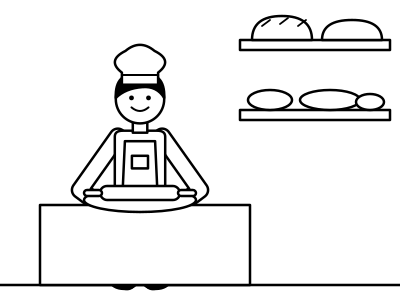
      You want true facts about bakers. Which source is better?
      • A real baker in a bakery.
      • A cartoon cupcake with a face.
    2. 2.
      Tell one good question to ask a bus driver about the job.
    3. 3.
      What is a fact?
    4. 4.
      Tell the steps of our shared job in order. Use first, next and last.
    5. 5.
      Who led our shared job? What did the leader do?
    6. 6.
      Tell one part someone else did.
    7. 7.
      In "The Corner Garden," how did the neighbors decide to make a garden?
    8. 8.
      Why does a big job go better when people work together?