1First Grade

    Lesson + weekly check: true or false

    Share and check: o_e and u_e

    Practice pages

    0 of 180 days complete · Saved on this device

    View all 180 days

    MathWeekly check

    Lesson + weekly check: true or false

    I can sort equations into true and false and explain why.

    Standards: 1.OA.D.7

    Number practice (no timer)
    Facts within 10 with a known-fact partner
    Builds on
    Days 1 to 4: the equal sign, true and false, and both sides. One-minute check: "Is 10 - 4 = 3 + 3 true?" (Yes. Both are 6.)

    New words

    • equal sign: the sign = ; it means "is the same as"

    You need

    • 12 equation cards made from paper squares (written in the game below)
    • Two paper labels: TRUE and FALSE
    • 20 linking cubes (or beans)
    • The stored Week 11 check and its answer key
    • Notebook and pencil
    1. Warm-Up · 5 min

      Fluency: facts within 10 with a known-fact partner. "8 + 2 = 10, so 10 - 8 = ?" (2) "4 + 3 = 7, so 7 - 3 = ?" (4) Spaced review from Week 9: "9 + 6: make a ten." (9 + 1 = 10, 10 + 5 = 15)

    2. Short Lesson: Review Game · 10 min

      True/False Showdown. Stack these 12 cards face down: 4 + 5 = 9 (true), 10 = 7 + 3 (true), 6 + 2 = 9 (false; 8), 8 = 8 (true), 3 + 4 = 4 + 3 (true), 5 + 5 = 6 + 3 (false; 10 and 9), 9 - 2 = 7 (true), 6 = 10 - 3 (false; 7), 2 + 6 = 4 + 4 (true), 7 - 1 = 5 (false; 6), 10 - 4 = 3 + 3 (true; 6 and 6), 5 + 3 = 9 - 2 (false; 8 and 7). Flip one card. Each player thinks for as long as they need, then shows thumbs up for true or thumbs down for false. There is no racing. The player who flipped the card proves it with cubes, and each correct thumb earns 1 point. Take turns flipping. If stuck, say: "Find what each side is worth. Write it under the side. Then compare."

    3. Weekly Check · 15 min

      Give the stored Week 11 check. The printed check has 9 items. It covers these goals: (1) I can explain that = means 'the same as'; (2) I can tell if an equation is true or false; (3) I can check equations with adding on both sides; (4) I can check equations that use adding and subtracting. Read each item aloud. There is no time limit. If your child is stuck on an item, say only: "What is each side worth?" Do not give the answer. Score it with the answer key. Secure: 8 of 9 correct. If the check is secure, start Week 12. If it is not, first do the reteach step on the check page for each group of items missed, then start Week 12.

    4. Exit Ticket · 3-5 min

      After the check, ask these two questions. Then go over any missed check items together.

    Exit ticket

    1. Is 10 = 6 + 4 true or false?
    2. Write a true equation with the single number on the left.
    Answers
    1. True. 6 + 4 is 10.
    2. Answers vary. Look for: one number on the left with the same value as the right side, such as 8 = 5 + 3.
    Watch for, and help or stretch
    Watch for
    Marking every equation with the single number on the left as false.
    Try
    Read the card aloud with "is the same as" and build both sides.
    Extra help
    Let your child build each side with cubes during the check, and note it on the check.
    Stretch
    After the check, your child writes a true equation with take-away on both sides, such as 9 - 3 = 8 - 2.

    At home (optional): Play True/False Showdown with a family member using the same 12 cards. Remember: no racing.
    Reading & WritingWeekly check

    Share and check: o_e and u_e

    I can read o_e and u_e words and explain a new word I learned.

    Standards: RF.1.3.c, RI.1.4, RF.1.3.g

    Phonics
    Long o and long u with final e (o_e: home, rope; u_e: cute, tube)
    Sight words
    how, now, down, know, just
    Reading
    Rabbits, Rabbits & More Rabbits (Gail Gibbons); original fact cards about rabbits
    Writing
    Shared research: we read two sources together and write a class fact page · Handwriting: capitals V, W, X, Y, Z
    Builds on
    This week's o_e and u_e work and new rabbit words. One-minute check: warm up with home, cute and stone.

    New words

    • explain: tell what something means or why it happens

    You need

    • Word cards: o_e, u_e and short vowel words (written in step 4)
    • Sight word cards: how, now, down, know, just
    • Recording sheet
    • Class fact page "How Rabbits Stay Safe"
    1. Review Game · 10 min

      Rabbit Hop: lay 10 word cards in a path: hop, hope, not, note, cub, cube, tub, tube, rob, robe. Your child hops like a rabbit to each card and reads it. On a silent e word, your child thumps a foot like a rabbit. If stuck on a word during the game (not during the check), cover all but the first sound, say it together, then uncover the rest and blend.

    2. Sight Words · 5 min

      Review: how, now, down, know, just, his, her, him, has, had. Bean Bag Toss: lay the cards on the floor. Your child tosses a bean bag or a rolled-up sock, reads the card it lands on and spells it without looking. Mix this week's and last week's words.

    3. Weekly Check · 15 min

      The printed check has 8 items. It covers these goals: (1) I can read o_e, u_e and short vowel words; (2) I can read the sight words how, now, down, know and just; (3) I can use clues to tell what a new word means; (4) I can use words like in, on and by to tell where something is; (5) I can write a fact with a capital and a period. Give no hints. Record each answer. Secure: 8 of the 10 words in items 1 and 2, 4 of the 5 sight words, item 4 (the meaning), and 3 of items 5 to 8. For any part that is not yet secure, use the matching reteach step on the check page next week.

    4. Share & Listen · 10 min

      Your child reads the class fact page to a family member, who asks one question about rabbits. Your child answers from the page or the fact cards.

    5. Handwriting · 5 min

      Capitals start at the top line and touch the bottom line. Review all five slant capitals. Your child writes each capital 3 times, then writes one word that starts with it (Val, Wes, Xan, Yan, Zed). Circle the best letter in each row.

    6. Exit Ticket · 5 min

      Talk about the week.

    Exit ticket

    1. Read a word with o_e and a word with u_e.
    2. What do you do when you find a word you do not know?
    Answers
    1. Answers vary. Look for: correct reads such as home and cute.
    2. Ask what it means and look for clues in the sentence and the picture.
    Watch for, and help or stretch
    Watch for
    Reading know with a /k/ sound.
    Try
    Review the heart part (the k is silent) and read "I know Mole." three times.
    Extra help
    Do items 1 and 2 as two sets of 5 words with a stretch in between.
    Stretch
    Your child reads 4 mixed final e words (cake, bike, home, cute) to preview next week. Do not score them.

    At home (optional): Read "Mole and the Big Stone" to a family member.

    ScienceWeekly check

    Flashlight code

    I can make a light code to send a message.

    Standards: 1-PS4-4

    Builds on
    Light carries messages (Day 1). One-minute check: ask "Why do lighthouses flash a pattern?" (so sailors know which lighthouse it is)

    New words

    • code: a set of signals that stand for words, that two people agree on

    You need

    • Flashlight
    • Code card: 1 blink = yes, 2 blinks = no
    • A blank code card for your child's own signal
    • Message log: a paper with 3 lines, numbered 1 to 3, for the partner to write what they received
    • Colored cellophane or a colored plastic folder piece and a rubber band (optional)
    • Pencil
    • Engineering notebook
    1. Warm-Up / Wonder · 5 min

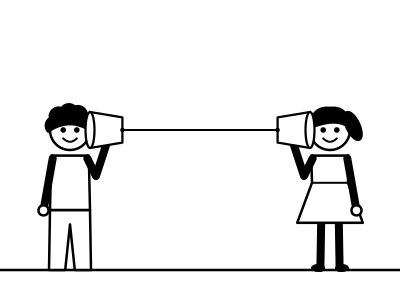
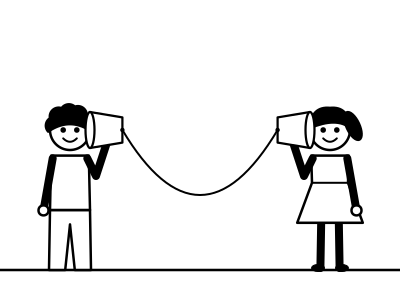
      Spaced review: ask: "Which cup phone string worked better, tight or loose?" (tight) Wonder question: "How could you say 'yes' with a flashlight?" Safety: never shine the flashlight, or light bounced off the mirror, into anyone's eyes.

    2. Review Game · 10 min

      Play "Yes or No?" Read the code card together. You ask questions and your child answers with blinks on the wall: "Is the sky green?" (2 blinks, no) "Do fish swim?" (1 blink, yes) Say: "Leave a long pause between messages so your partner can count the blinks." Then your child invents one more signal on the blank card, for example 3 blinks = come here, or a long blink = I am hungry. Optional: put colored cellophane over the flashlight with a rubber band and agree that red means stop. Practice across a room or down a hallway, with the light aimed at the wall near the partner. If stuck counting, blink very slowly and count out loud together the first time.

    3. Check · 10 min

      Give the Week 11 science check. The check items are on the Week 11 check page; do not show them ahead of time. Read each part aloud. Your child answers by talking, pointing, showing with the real materials or drawing. You write down their words exactly. It is not timed; stop and finish later if your child is tired. Make a check mark next to each part your child shows on their own. The printed check has 8 items. It covers these goals: (1) I can name ways people use sound or light to send messages; (2) I can build and test a cup phone; (3) I can make a light code to send a message. This week the check is a hands-on task. Your child stands across a room or hallway and sends 3 messages with the code, including the signal they invented. The partner writes each message on the log. Then your child compares the log with what they meant to send and tells how the light carried the message. Look for: messages the partner could read, clear pauses between signals, and words such as "We agreed on the code first" and "The light carried the message across the room." Secure: 6 of 8 correct, including item 1 (3 readable messages) and item 2 (tells how the light carried the message). If the check is not yet secure, use the reteach step on the check page that matches the items missed.

    4. Exit Ticket · 3–5 min

      Ask the three questions aloud.

    Exit ticket

    1. How did your partner know what your blinks meant?
    2. On our card, what does 2 blinks mean?
    3. Name one time a light message works better than shouting.
    Answers
    1. We agreed on the code before we started.
    2. No.
    3. Answers vary. Look for: when someone is sleeping, when it is too noisy to hear, or when the person is far away but can see you.
    Watch for, and help or stretch
    Watch for
    Blinking so fast the partner cannot count.
    Try
    Say: "Blink like a slow turtle: on, off, wait." Your child counts each blink out loud.
    Extra help
    Send only yes and no messages, with the grown-up as the partner.
    Stretch
    Your child adds 2 more signals to the code and sends a 2-part message, such as "come here" then "yes."

    At home (optional): After dark, your child sends a yes or no flashlight message to a family member from across a room and checks that they understood.

    Practice

    Read each direction aloud. Your child works on the page; answers are in the grown-up view.

    Warm-up

    Remember?

    Math

    1. 8 + 6 = ? Make a ten first.
    2. 5 + 5 + 6 = ? Find two numbers that make 10 first.

    Reading & Writing

    Math · Week 11 check

    Weekly check

    How to give it: Read each item aloud. Untimed. Your child circles yes for true and no for false, explains item 7 with cubes or words, and writes items 8 and 9. If your child is stuck, say only: "What is each side worth?" Do not give the answer.

    Secure when: 8 of 9 correct

    • I can explain that = means 'the same as'.
    • I can tell if an equation is true or false.
    • I can check equations with adding on both sides.
    • I can check equations that use adding and subtracting.
    1. 1.
      Circle yes if it is true: 7 = 5 + 2
      • yes
      • no
    2. 2.
      Circle yes if it is true: 6 + 3 = 8
      • yes
      • no
    3. 3.
      Circle yes if it is true: 10 = 10
      • yes
      • no
    4. 4.
      Circle yes if it is true: 2 + 5 = 4 + 3
      • yes
      • no
    5. 5.
      Circle yes if it is true: 6 + 2 = 5 + 4
      • yes
      • no
    6. 6.
      Circle yes if it is true: 8 - 3 = 4
      • yes
      • no
    7. 7.
      Is 6 - 1 = 2 + 3 true? Show or tell why.
    8. 8.
      Use 9, 6 and 3. Write a true equation that starts with 9 =
    9. 9.
      Finish it so it is true: 7 = ___ + ___

    Reading & Writing · Week 11 check

    Weekly check

    How to give it: Give the check after the review game, in a quiet spot, one part at a time. It is untimed; take a stretch break between parts if needed. Read every direction aloud, but do not read the words or story for your child. Do not help except to say "Try your best" or "Skip it." Mark each item right or wrong. Items 1 and 2 (Part 1): your child reads the words aloud. Item 3 (Part 2): your child reads the 5 sight words. Part 3: your child reads "The Cove" (a new word in place of a rabbit-text word such as burrow), tells you what cove means and shows where the clue is (items 4 and 5). Then read the directions for items 6 to 8.

    Secure when: 8 of the 10 words in items 1 and 2, 4 of the 5 sight words, item 4 (the meaning), and 3 of items 5 to 8.

    • I can read o_e, u_e and short vowel words.
    • I can read the sight words how, now, down, know and just.
    • I can use clues to tell what a new word means.
    • I can use words like in, on and by to tell where something is.
    • I can write a fact with a capital and a period.

    The Cove

    Jude and Rose went to a cove. A cove is a bit of a lake set in a bend of the land. Jude can swim in the cove. Rose can dive.

    1. 1.
      cod code tune mute mop
    2. 2.
      mope dud dude tot tote
    3. 3.
      how now down know just
    4. 4.
      A cove is ___.
      • a bit of a lake set in a bend of the land
      • a big cake
    5. 5.
      A cove is a bit of a lake set in a bend of the land.
    6. 6.
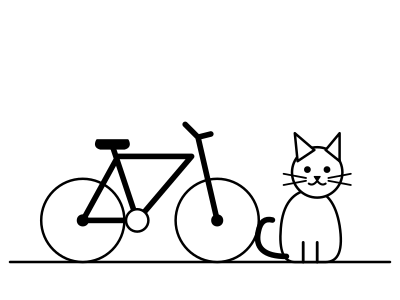
      A cat sitting next to a bike. The cat is ___ the bike.
      • by
      • in
    7. 7.
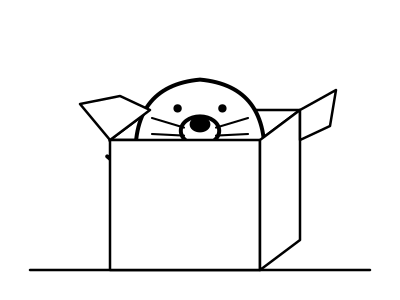
      A mole peeking out from inside a box. The mole is ___ the box.
      • on
      • in
    8. 8.
      jude can swim in the cove

    Science · Week 11 check

    Weekly check

    How to give it: Read every direction, question and choice aloud. It is not timed; stop and finish later if your child is tired. Your child answers by talking, pointing, showing with the real materials or drawing, and you write their words exactly. Have the flashlight, the code card (1 blink = yes, 2 blinks = no), your child's own signal card, the message log and a pencil. Aim the light at the wall near the partner, never into anyone's eyes.

    Secure when: 6 of 8 correct, including item 1 (3 readable messages) and item 2 (tells how the light carried the message).

    • I can name ways people use sound or light to send messages.
    • I can build and test a cup phone.
    • I can make a light code to send a message.
    1. 1.
      Stand across the room. Send 3 messages with the light code, with a pause between each. One must be the signal you made up. Your partner writes each one on the message log.
    2. 2.
      Look at the message log. Did your partner get what you meant? Tell how the light carried the message. Your grown-up writes it.
    3. 3.
      On our code card, how many blinks mean "yes"?
      • 1
      • 2
      • 3
    4. 4.
      Do you hear it or see it? A car's turn signal blinks.
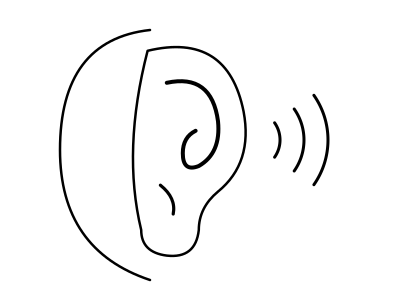
      • An ear (sound).
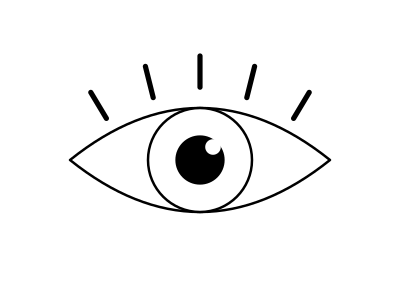
      • An eye (light).
    5. 5.
      Do you hear it or see it? A train horn honks at a crossing.
      • An ear (sound).
      • An eye (light).
    6. 6.
      It is very noisy at a fair. Which signal will your family notice better?
      • A person whispering.
      • A person waving a flashlight.
    7. 7.
      Circle the cup phone that will carry the voice best.
      • A cup phone with a tight string.
      • A cup phone with a loose, drooping string.
    8. 8.
      Tell what the string does when someone talks into the cup. Your grown-up writes it.