1First Grade

    Quick pictures

    Using picture borders

    Practice pages

    0 of 180 days complete · Saved on this device

    View all 180 days

    Math

    Quick pictures

    I can draw a quick picture to show tens and ones.

    Standards: 1.NBT.B.2

    Number practice (no timer)
    Facts within 10 (keep-up practice)
    Builds on
    Day 1 Number of the Day. One-minute check: "What is 4 tens and 2 ones?" (42)

    New words

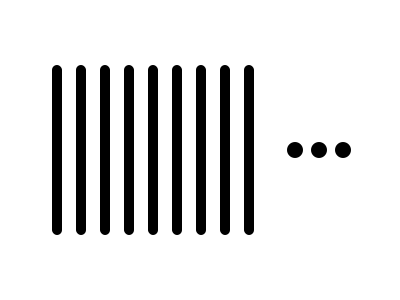
    • quick picture: a drawing with a stick for each ten and a dot for each one

    You need

    • Notebook and pencil
    • 12 blank paper squares for the Play
    • Straw bundles (for checking only)
    1. Warm-Up · 5 min

      Fluency: facts within 10. "5 + 4?" (9) "8 - 3?" (5) "2 + 6?" (8) Spaced review from Week 12: "15 - ? = 8." (7)

    2. Mini-Lesson · 10 min

      Say: "Bundles take a long time to build. A quick picture is faster." Draw 34: 3 tall sticks and 4 dots. Say: "Each stick is a ten. Each dot is a one." Show how to group the dots in a little row so they are easy to count. Draw 40: 4 sticks and no dots. Ask: "Why no dots?" (There are 0 ones.) Draw 19: 1 stick and 9 dots. Say: "Do not draw 19 sticks. Draw 1 stick for the ten."

    3. Guided Practice · 10 min

      Your child draws a quick picture for each number, then says it in tens and ones. 1) 23 (2 sticks and 3 dots) 2) 40 (4 sticks, no dots) 3) 19 (1 stick and 9 dots) 4) 66 (6 sticks and 6 dots) 5) 85 (8 sticks and 5 dots) 6) 51 (5 sticks and 1 dot) If stuck, say: "Draw the tens first, as sticks, left to right. Then draw the dots for the ones."

    4. Play · 10 min

      Picture Swap. Each player secretly writes 3 two-digit numbers and draws a quick picture of each on its own paper square. Swap squares. Read each other's pictures and write the numbers. Check together. Make one mistake on purpose, such as drawing 5 sticks for 45 instead of 4. Your child finds and fixes it.

    5. Exit Ticket · 3-5 min

      Put the objects to one side but leave them on the table. Read each question aloud. Your child answers out loud, with objects or with a quick drawing. Check each answer together right away.

    Exit ticket

    1. Draw a quick picture of 40.
    2. A quick picture has 3 sticks and 6 dots. What number is it?
    3. Draw a quick picture of 19.
    Answers
    1. 4 sticks and no dots
    2. 36
    3. 1 stick and 9 dots
    Watch for, and help or stretch
    Watch for
    Drawing a stick for every one, such as 19 sticks for 19.
    Try
    Ask: "How many tens are in 19?" (1) "So how many sticks?" (1)
    Extra help
    Build each number with straws first, then draw what you built.
    Stretch
    Draw a quick picture of 104: 10 sticks and 4 dots. Count the sticks by tens to check.

    At home (optional): Your child draws quick pictures for the ages of 3 family members or friends.

    Reading & Writing

    Using picture borders

    I can use pictures and details to describe what happens in a story.

    Standards: RL.1.7, RL.1.3, SL.1.2

    Phonics
    Vowel teams oa and ow as long o (boat, road, snow, grow)
    Sight words
    as, with, this, that, because
    Reading
    The Gingerbread Man (traditional, public domain); The Mitten (Jan Brett)
    Writing
    Opinion: a favorite character, with a closing sentence · Handwriting: copying a sentence neatly
    Builds on
    Picture clues in stories (Unit 1). One-minute check: your child tells one thing a picture can show that the words might not say.

    New words

    • border: a strip of pictures around the edge of a page
    • predict: use clues to guess what will happen next

    You need

    • The Mitten (Jan Brett), optional read-aloud; any picture book whose pictures give clues about what happens next works
    • Sticky notes
    • Sight word cards
    • Printed "Toad on the Road"
    1. Phonics & Word Work · 15 min

      oa and ow with blends. I do: read float, croak, slow. We do: read toast, coast, blow, glow. You do: your child reads groan, cloak, flow, grown, coach, boast. Read: "The toad can float." "The crow is slow." Dictation: float, toast, glow, crow. If stuck, read the team first, then add the blend: fl-oa-t.

    2. Sight Words · 5 min

      Review: as, with, this, that, because. Swat It: spread the cards on the table. Say a word; your child taps it with a clean spatula, reads it and spells it. Then your child calls a word for you to swat. Point out that this and that both start with th.

    3. Read-Aloud & Shared Reading · 15 min

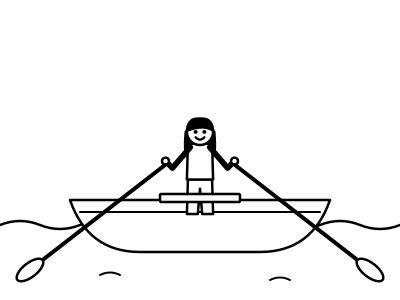
      Read The Mitten. On each page, before you read the words, your child looks at the side borders. In this book, the small mitten-shaped picture in the left border shows what has just happened, and the one in the right border shows what is coming next. Ask: "Which animal do you think comes next? What clue did you use?" (Answers vary. Look for: a reason from the border picture.) After reading, ask: "Why did the mitten stretch so much?" (So many animals squeezed inside.) Ask: "What did the pictures tell you about the setting?" (Answers vary. Look for: it is snowy and cold, in the woods.) If you do not have The Mitten, use any picture book: cover the words on a page, and your child predicts from the picture, then you read to check. Then your child reads "Toad on the Road" and uses one detail to describe Fox. (Answers vary. Look for: Fox sat in a boat with a coat on and tried to trick Toad.)

    4. Writing & Handwriting · 15 min

      Your child draws one page of a story where a picture gives a clue about what comes next, and writes a caption: "The toad is on the road. Look out!" Handwriting (4 min): copying neatly. Your child copies one sentence from "Toad on the Road" and checks it word by word.

    5. Exit Ticket · 5 min

      Oral answers.

    Exit ticket

    1. How can pictures help you predict what will happen next?
    2. Describe Fox from Toad on the Road using one detail.
    3. Read this sentence: "The crow is slow."
    Answers
    1. Answers vary. Look for: pictures can show what is coming before the words tell it.
    2. Answers vary. Look for: Fox sat in a boat with a coat on, or Fox tried to trick Toad.
    3. The crow is slow.
    Watch for, and help or stretch
    Watch for
    Predicting with no clue (a dinosaur comes next) rather than from the pictures.
    Try
    Ask: "What do you see in the picture that makes you think that?"
    Extra help
    Point to the border picture and ask: "What animal is this?"
    Stretch
    Your child makes a 3-page mini story with a border clue on each page.

    At home (optional): Your child looks at the pictures of a new book before reading it and predicts what will happen.

    Social Studies

    Land and water on a globe

    I can find land and water on a globe and name the continents and oceans.

    Standards: D2.Geo.3.K-2

    Builds on
    Where in the world am I? (Week 14). One-minute check: your child puts the 6 place cards in order from smallest to biggest.

    New words

    • ocean: a very large body of salt water
    • land: the dry part of Earth's surface

    You need

    • A globe, or a world map
    • Blue and green crayons
    • A world map page to color (draw or print an outline)
    • Tally chart: 2 columns, Land and Water
    • Continent puzzle (optional): a printed world map the grown-up cuts into continents
    1. Warm-Up / Wonder · 5 min

      Spaced review: ask: "What continent do we live on?" (North America, or the Pacific Ocean for Hawaii and other Pacific islands) Wonder question: "Is there more land or more water on Earth?" Your child guesses.

    2. Explore · 10–15 min

      Spin and point: your child closes their eyes, the grown-up gently spins the globe (or your child taps the world map with eyes closed), and your child stops it with one finger. Land or water? Make a tally. Do it 10 times. Count the tallies. Ask: "Which got more?" (Most likely water.) Say: "About 7 out of every 10 parts of Earth's surface are covered with water. Most of that is ocean." Name the big pieces. Say: "The 7 continents are Africa, Antarctica, Asia, Australia, Europe, North America and South America. The 5 oceans are the Pacific, the Atlantic, the Indian, the Arctic and the Southern Ocean." Point to each on the globe or map. Chant them together, clapping once for each name: "Africa (clap), Antarctica (clap), Asia (clap), Australia (clap), Europe (clap), North America (clap), South America (clap)!" Ask: "Which is the biggest ocean?" Let your child find it by size. (the Pacific) If you made the puzzle, your child puts the continents back on a blue page. This is naming practice only; your child does not need to remember all 12 names. If stuck on land and water, ask: "Is that spot blue or another color?"

    3. Talk & Record · 5–10 min

      Your child colors the world map: blue for water and green for land, and marks our continent with a star. Sentence frame: "Earth has more ___ than ___." (water, land)

    4. Exit Ticket · 3–5 min

      Ask the three questions aloud.

    Exit ticket

    1. Does Earth have more land or more water?
    2. Name one continent.
    3. Name one ocean.
    Answers
    1. More water.
    2. Answers vary. Look for: one of Africa, Antarctica, Asia, Australia, Europe, North America or South America.
    3. Answers vary. Look for: one of the Pacific, Atlantic, Indian, Arctic or Southern Ocean.
    Watch for, and help or stretch
    Watch for
    Calling a country, such as Mexico, a continent.
    Try
    Use the nesting cups: a country fits inside a continent. Mexico is a country on the continent of North America.
    Extra help
    Name only our continent and the 2 oceans nearest us.
    Stretch
    Your child finds which ocean is closest to our state and which continent is farthest away.

    At home (optional): Your child shows a family member the colored map and names one continent and one ocean.

    Practice

    Read each direction aloud. Your child works on the page; answers are in the grown-up view.

    Warm-up

    Remember?

    Math

    1. Count on: 107, 108, 109, ___, ___
    2. 7 + 6 = ? Make a ten first.

    Reading & Writing

    1. Jake ate a cake a grape and a plum.

    Math · Week 15 Day 2

    I can draw a quick picture to show tens and ones.

    Look: 52

    1. Draw 5 tall sticks for the 5 tens.
    2. Draw 2 dots for the 2 ones.
    3. 5 sticks and 2 dots is 52.

    Draw a quick picture.

    1. 1.
      31
    2. 2.
      70
    3. 3.
      15
    4. 4.
      48

    Write the number for the quick picture.

    1. 5.
      2 sticks and 7 dots.
    2. 6.
      9 sticks and 3 dots.
    3. 7.
      6 sticks and no dots.

    Challenge (optional)

    A friend drew 13 dots to show 13. Draw it a quicker way.

    You need: pencil

    Reading & Writing · Week 15 Day 2

    I can use pictures and details to describe what happens in a story.

    Look: pictures help us see what happens

    1. Look at the picture with your child before reading.
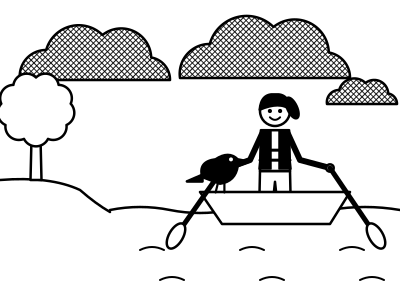
    2. Ask: "What do you see? What might happen next?" (Dark clouds are coming, so rain may come.)
    3. Read "Joan and the Boat" and check: did the picture help?

    Joan and the Boat

    A girl in a life jacket rowing a small boat near the shore of a lake; dark clouds in the sky; a crow on the boat. Joan got in a boat. Joan can row the boat on the lake. The wind can blow. A crow sat on the boat. "Go, crow!" said Joan.
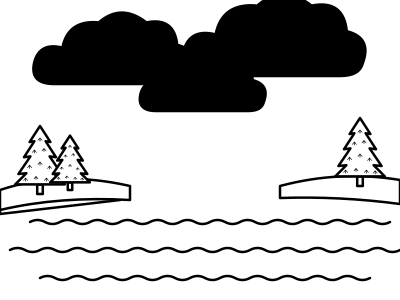
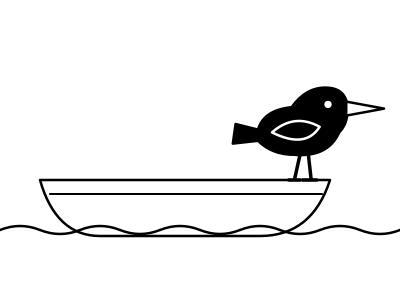
    Look at the picture. Circle the sentence that tells what you see or what may come next.

    1. 1.
      Dark clouds over the lake.
      • Rain may come.
      • Joan can nap.
    2. 2.
      A crow sitting on the end of the boat.
      • A crow is on the boat.
      • A goat is on the boat.
    3. 3.
      Joan pulling the oars.
      • Joan can row.
      • Joan can float.

    Read the word. Circle oa or ow.

    1. 4.
      toast
      • oa
      • ow
    2. 5.
      glow
      • oa
      • ow
    3. 6.
      cloak
      • oa
      • ow
    4. 7.
      stow
      • oa
      • ow

    Challenge (optional)

    What did Joan say to the crow?

    Social Studies · Week 15 Day 2

    I can find land and water on a globe and name the continents and oceans.

    Look: land or water?

    1. On a globe, find the land and the water.
    2. Earth has 7 continents (big areas of land) and 5 oceans.
    3. Most of Earth's surface is covered with water.

    Listen. Circle the land or the waves.

    1. 1.
      the Atlantic Ocean
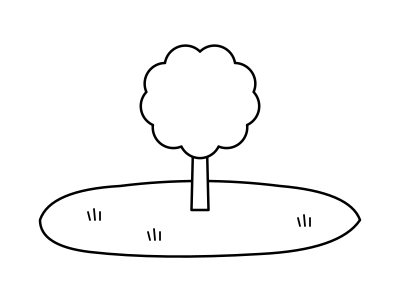
      • A patch of land with a tree.
      • Waves.
    2. 2.
      Asia
      • A patch of land with a tree.
      • Waves.
    3. 3.
      South America
      • A patch of land with a tree.
      • Waves.
    4. 4.
      the Arctic Ocean
      • A patch of land with a tree.
      • Waves.
    5. 5.
      What covers most of Earth?
      • A patch of land with a tree.
      • Waves.

    Use the globe. Write what your child says.

    1. 6.
      How many continents does Earth have?
    2. 7.
      Find the biggest ocean on the globe. What is its name?
    3. 8.
      Find our continent on the globe. What is its name?

    Challenge (optional)

    Spin the globe (or tap the map with closed eyes) 5 more times. Did you land on more land or more water?

    You need: a globe or a world map