1First Grade

    Number of the Day

    Characters and events

    Practice pages

    0 of 180 days complete · Saved on this device

    View all 180 days

    Math

    Number of the Day

    I can show one number in many ways.

    Standards: 1.NBT.B.2, 1.NBT.A.1

    Number practice (no timer)
    Facts within 10 (keep-up practice)
    Builds on
    Week 14 tens and ones and quick pictures. One-minute check: "Draw a quick picture of 23." (2 sticks and 3 dots)

    New words

    • Number of the Day: one number that we show in many different ways

    You need

    • 9 straw bundles of 10 and 10 loose straws (or base-ten blocks)
    • Number line 0 to 40 drawn on a long strip of paper (mark every number and make 10, 20, 30 and 40 bold)
    • A Number of the Day page: a sheet folded into 6 boxes labeled Number, Build It, Quick Picture, Tens and Ones, Tens + Ones, Number Line
    • Notebook and pencil
    1. Warm-Up · 5 min

      Fluency: facts within 10. "6 + 3?" (9) "9 - 4?" (5) "7 + 2?" (9) Spaced review from Week 14: "1 ten and 7 ones is what number?" (17)

    2. Mini-Lesson · 10 min

      Say: "Today's Number of the Day is 28. Let us show it every way we know." Fill each box together. Number: 28. Build It: 2 bundles and 8 loose straws. Quick Picture: 2 sticks and 8 dots. Tens and Ones: 2 tens and 8 ones. Tens + Ones: 20 + 8. Number Line: find 28 and circle it. Ask: "Is 28 closer to 20 or to 30?" (30; it is only 2 away.) Say: "All 6 boxes show the same number."

    3. Guided Practice · 10 min

      Your child makes a new Number of the Day page for 35 and fills every box. (Build It: 3 bundles and 5 loose straws. Quick Picture: 3 sticks and 5 dots. 3 tens and 5 ones. 30 + 5. On the number line, halfway between 30 and 40.) Then do 17 the same way, quickly out loud. (1 ten and 7 ones; 10 + 7.) If stuck, say: "Start with Build It. Look at what you built, then fill the next box."

    4. Play · 10 min

      Family Number of the Day. Your child picks a number between 20 and 40, such as a family member's age or a page number, and makes a page for it. Then a family member picks one between 41 and 99, and your child fills every box except the number line. Check each box together.

    5. Exit Ticket · 3-5 min

      Put the objects to one side but leave them on the table. Read each question aloud. Your child answers out loud, with objects or with a quick drawing. Check each answer together right away.

    Exit ticket

    1. Show 46 as tens and ones.
    2. 30 + 9 = ?
    3. What number is 5 tens and 2 ones?
    Answers
    1. 4 tens and 6 ones
    2. 39
    3. 52
    Watch for, and help or stretch
    Watch for
    Writing 208 for 20 + 8.
    Try
    Build 20 and 8 with straws, push them together and count: 28.
    Extra help
    Fill only 4 boxes: Number, Build It, Quick Picture and Tens and Ones.
    Stretch
    Add a box: "Write it in words" (twenty-eight).

    At home (optional): Make a Number of the Day page for today's date (for example, the 23rd).
    Reading & Writing

    Characters and events

    I can describe the characters and the big events in a tale.

    Standards: RL.1.3, RF.1.3.c, RF.1.3.g

    Phonics
    Vowel teams oa and ow as long o (boat, road, snow, grow)
    Sight words
    as, with, this, that, because
    Reading
    The Gingerbread Man (traditional, public domain); The Mitten (Jan Brett)
    Writing
    Opinion: a favorite character, with a closing sentence · Handwriting: copying a sentence neatly
    Builds on
    Story maps and retelling (Unit 1). One-minute check: your child tells who the characters were in The Three Billy Goats Gruff. (three goats and a troll)

    New words

    • event: something that happens in a story
    • chase: run after someone to catch them
    • repeat: say or do again

    You need

    • "The Gingerbread Man" (in the lesson)
    • 6 event cards you draw: oven, old woman, old man, cow, horse, fox
    • oa and ow word cards
    • Sight word cards: as, with, this, that, because
    • Printed "Toad on the Road" (in the lesson)
    • Lined handwriting paper
    1. Phonics & Word Work · 15 min

      I do: write boat and underline oa. Say: "oa is a team. It says /ō/, the name of o. We see it in the middle of a word." Write snow and underline ow. Say: "ow at the end can say /ō/ too. Remember, ow can also say /ow/ as in how and down, so try /ō/ and check that it is a real word." We do: read coat, goat, slow, show. You do: your child reads road, soap, toad, float, snow, grow, blow, crow. Read: "The goat is on the boat." "The crow can see the snow." Dictation: boat, road, snow, grow. If stuck on ow, say: "Try /ō/. Is it a real word?"

    2. Sight Words · 5 min

      Introduce this week's words with see-say-spell-write. For each card: Say: "This word is ___. Say it with me." Your child reads it, spells it aloud while tapping each letter, then writes it once while saying each letter, and reads it again. Draw a small heart over any tricky part, the part we must learn by heart: as (a is short, but the s says /z/); with (every sound is one you know: /w/ /i/ th); this (every sound is one you know: th, /i/, /s/); that (every sound is one you know: th, /a/, /t/); because (be-cause: the e says its name, au says /aw/ or /u/, and the s says /z/). Finish by reading all five cards in mixed order twice. If stuck, cover the tricky part, read the rest together, then uncover it and say the whole word.

    3. Read-Aloud & Shared Reading · 15 min

      Read "The Gingerbread Man" below. Your child joins in on the repeating line each time. Then your child puts the event cards in order and names each character who chased him. (Order: oven, old woman, old man, cow, horse, fox. The chasers: the old woman, the old man, the cow and the horse.) Ask: "Where did the chase end?" (at the river) Ask: "Why did the gingerbread man get on the fox?" (He could not swim, and the fox offered to carry him across.) Ask: "What kind of character is the fox? What is your clue?" (tricky; he pretended to help but ate him) The Gingerbread Man (a traditional tale, retold; you read it aloud) A little old woman baked a gingerbread man. When she opened the oven, he jumped out and ran out the door. "Run, run, as fast as you can! You can't catch me, I'm the Gingerbread Man!" The little old woman ran after him. The little old man ran after him. They could not catch him. He ran past a cow. "Stop! I want to eat you!" mooed the cow. "Run, run, as fast as you can! You can't catch me, I'm the Gingerbread Man!" The cow could not catch him. He ran past a horse. "Stop! I want to eat you!" neighed the horse. But the horse could not catch him either. Then he came to a river and stopped. He could not swim. A fox said, "Jump on my tail, and I will carry you across." Partway across, the fox said, "The water is deep. Climb onto my back." Then, "It is deeper still. Climb onto my nose." The gingerbread man climbed onto the fox's nose, and SNAP! The fox ate him up. That was the end of the gingerbread man. Then echo-read this week's decodable story: you read a line, your child reads it back. Toad on the Road Toad sat in the sun on the road. A goat came up the road. "Stop, Toad!" said Goat. "I can get you!" Toad did a big hop. "Hop, hop, as fast as I can! You can not get me. I am Toad!" A crow came down. "Stop, Toad!" said Crow. "I can get you!" "Hop, hop, as fast as I can! You can not get me. I am Toad!" Toad came to a pond. A fox sat in a boat with a coat on. "Hop in my boat," said Fox. "I can row you on this pond." "No," said Toad. "I know that trick!" Toad did not get in the boat because Toad can swim. Toad swam to a log and sat in the sun. Goat, Crow and Fox went home. Toad had a nap.

    4. Writing & Handwriting · 15 min

      Your child draws the chase and writes one sentence about a character: "The fox is tricky." Handwriting (4 min): copying a sentence neatly. Your child copies "The toad can float." Say: "Look at a whole word, say it, write it, then check it." Your child checks spacing, letters on the line and the period.

    5. Exit Ticket · 5 min

      Oral answers.

    Exit ticket

    1. Read these words: boat, snow.
    2. Name two characters who chased the gingerbread man.
    3. How did the story end?
    Answers
    1. boat, snow
    2. Answers vary. Look for: two of the old woman, the old man, the cow or the horse.
    3. The fox tricked him and ate him.
    Watch for, and help or stretch
    Watch for
    Reading snow with the /ow/ sound in how.
    Try
    Say: "Try both sounds. Which one makes a real word?"
    Extra help
    Use only 4 event cards: oven, old woman, cow, fox.
    Stretch
    Your child rereads "Toad on the Road" alone and finds 4 oa words and 2 ow words that say /ō/. (oa: Toad, road, goat, boat, coat. ow: Crow, row. Know also has ow that says /ō/; it is a sight word. In down, ow says /ow/.)

    At home (optional): Your child retells The Gingerbread Man to a family member and has them join in on the repeating line.

    Science

    Spines, thorns and shells

    I can tell how outside parts protect plants and animals.

    Standards: 1-LS1-1

    Builds on
    Plant and animal parts (Weeks 13 and 14). One-minute check: ask "What did the celery stem do?" (It carried water up to the leaves.)

    New words

    • spine: a sharp, stiff point on a plant like a cactus
    • quill: a sharp, stiff hair on a porcupine
    • armor: a hard covering that protects

    You need

    • 5 pictures (draw or print; pictures only for spiny things): a cactus, a rose stem, a turtle, a porcupine and an armadillo
    • 3 people pictures (draw or print): a bike helmet, work gloves and a fence
    • Sorting mat: a paper with 2 columns, Sharp points and Hard covers
    • Notebook
    • Crayons
    1. Warm-Up / Wonder · 5 min

      Spaced review: ask: "What job does a turtle's shell do?" (keeps its body safe) Wonder question: "How can a plant protect itself when it can't run away?"

    2. Explore · 10–15 min

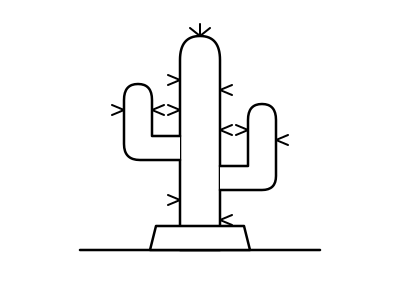
      Look at each picture and talk about the part that protects. Cactus: sharp spines keep animals from biting it. Rose: sharp points on the stem, often called thorns. Porcupine: quills. Say: "A porcupine cannot shoot its quills. They come off easily when an animal touches them, and they stick in that animal's nose or paw, so it learns to stay away." Turtle: a hard shell; many turtles can pull their head and legs in. Armadillo: hard plates of armor. Say: "Only three-banded armadillos can roll up into a whole ball. Other armadillos have too many plates to curl all the way." Your child sorts the 5 pictures onto the mat. Expected: Sharp points: cactus, rose, porcupine. Hard covers: turtle, armadillo. Then ask: "How do people protect themselves?" Talk about the people pictures, but leave them off the mat. A bike helmet is a hard cover, like a turtle shell. Work gloves cover our hands so thorns and splinters can't poke them. A fence keeps animals out, the way a cactus's spines keep animals away. Say: "People copy living things to solve problems. Next lesson we will see real inventions that copy nature." If stuck sorting, ask: "Would it poke you, or is it a hard cover over the body?"

    3. Talk & Record · 5–10 min

      Your child draws one plant or animal and one person's tool that protects in the same way. Sentence frame: "A ___ is like a ___ because both ___." (Sample: "A helmet is like a turtle shell because both are hard covers.")

    4. Exit Ticket · 3–5 min

      Ask the three questions aloud.

    Exit ticket

    1. How do a cactus's spines help it?
    2. Can a porcupine shoot its quills?
    3. What do people wear that works like a turtle's shell?
    Answers
    1. They keep animals from biting or eating it.
    2. No. The quills come off when an animal touches them.
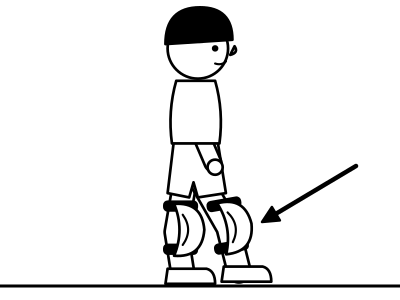
    3. A helmet (a hard cover). Other answers can work if they are hard covers, such as knee pads.
    Watch for, and help or stretch
    Watch for
    Thinking porcupines throw their quills.
    Try
    Say: "The quills come off only when something touches them." Your child acts it out: a pretend fox touches a pillow porcupine and gets a pretend quill.
    Extra help
    Sort 3 pictures only: cactus, turtle and porcupine.
    Stretch
    Your child thinks of another animal with armor or sharp parts, such as a hedgehog or a crab, and sorts it.

    At home (optional): Your child finds 2 things at home that protect people, such as a helmet, oven mitts or a raincoat, and tells which plant or animal part each one is like.

    Practice

    Read each direction aloud. Your child works on the page; answers are in the grown-up view.

    Warm-up

    Remember?

    Math

    1. Write the number one hundred fourteen.
    2. 12 - 4 = ? Get to 10 first.

    Reading & Writing

    1. weed, heat, sleep

    Math · Week 15 Day 1

    I can show one number in many ways.

    Look: Number of the Day: 43

    1. Build it: 4 bundles and 3 loose straws. Quick picture: 4 sticks and 3 dots.
    2. Tens and ones: 4 tens and 3 ones. Tens + ones: 40 + 3.
    3. Number line: 43 is between 40 and 50, closer to 40.

    Number of the Day: 26. Fill in each box.

    1. 1.
      Draw a quick picture of 26.
    2. 2.
      26 is ___ tens and ___ ones.
    3. 3.
      26 = 20 + ___
    4. 4.
      Is 26 closer to 20 or to 30?
      • 20
      • 30

    Write the number.

    1. 5.
      70 + 1 = ___
    2. 6.
      9 tens and 4 ones
    3. 7.
      10 + 8 = ___

    Challenge (optional)

    Pick a number from 50 to 99. Show it 3 ways.

    You need: straw bundles (optional)

    Reading & Writing · Week 15 Day 1

    I can describe the characters and the big events in a tale.

    Look: characters and big events

    1. Read "Goat and Crow" together.
    2. Say: "The characters are Goat and Crow." Retell the big events on your fingers.
    3. Ask: "What kind of character is Goat? What did Goat do to show it?" (kind; Goat gave Crow the coat)

    Goat and Crow

    Goat had a coat. "Can I have that coat?" said Crow. "No," said Goat. Then the snow came, and Crow got wet. Goat gave Crow the coat. "Thank you!" said Crow.

    Write 1, 2 and 3 to put the big events in order.

    1. 1.
      Goat gave Crow the coat.
    2. 2.
      Crow said, "Can I have that coat?"
    3. 3.
      The snow came, and Crow got wet.

    Say the picture name. Write oa or ow.

    1. 4.
      A boat. b ___ t
    2. 5.
      Snow falling. sn ___
    3. 6.
      A bar of soap. s ___ p
    4. 7.
      A black crow. cr ___

    Challenge (optional)

    Who gave Crow the coat?

    Science · Week 15 Day 1

    I can tell how outside parts protect plants and animals.

    Look: Parts that protect

    1. Look at the part. Ask: would it poke you, or is it a hard cover?
    2. A hedgehog has sharp spines. They poke, so hungry animals stay away.
    3. A snail has a hard shell. It covers and protects its soft body.

    Sort each one. Circle the cactus for sharp points or the turtle shell for a hard cover.

    1. 1.
      A thistle plant with prickly leaves
      • A cactus (sharp points).
      • A turtle shell (hard cover).
    2. 2.
      A clam's shell
      • A cactus (sharp points).
      • A turtle shell (hard cover).
    3. 3.
      A sea urchin's spines
      • A cactus (sharp points).
      • A turtle shell (hard cover).
    4. 4.
      A beetle's hard wing covers
      • A cactus (sharp points).
      • A turtle shell (hard cover).

    Circle what people use that works the same way.

    1. 5.
      Which one is a hard cover, like a turtle shell?
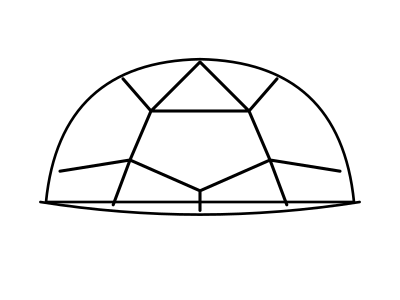
      • Knee pads.
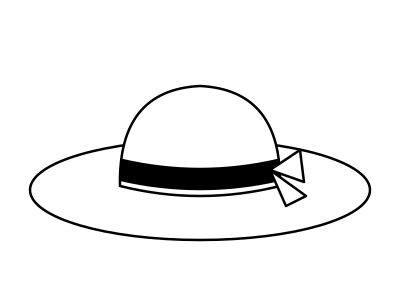
      • A sun hat.
    2. 6.
      Which one keeps animals out, like sharp spines?
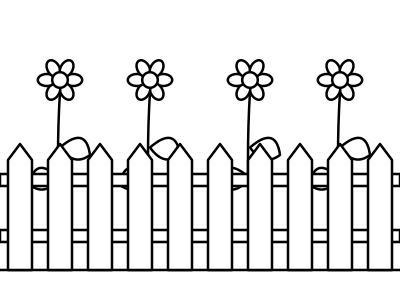
      • A garden fence.
      • A pillow.
    3. 7.
      Does a crab's hard shell keep its soft body safe?
      • yes
      • no
    4. 8.
      Draw one plant or animal that protects itself. Draw the part that protects it.

    Challenge (optional)

    Why might a turtle pull its head into its shell?

    You need: crayons