1First Grade

    Matching forms of a number

    Because

    Practice pages

    0 of 180 days complete · Saved on this device

    View all 180 days

    Math

    Matching forms of a number

    I can match a number to its picture and its tens and ones.

    Standards: 1.NBT.B.2

    Number practice (no timer)
    Facts within 10 (keep-up practice)
    Builds on
    Day 2 quick pictures and Day 1 tens + ones (20 + 8). One-minute check: "40 + 5 = ?" (45)

    New words

    • match: find things that show the same number

    You need

    • 24 match cards made from paper squares: for each of 53, 35, 70, 17, 42 and 24, make 4 cards: the numeral, a quick picture, the tens-and-ones words (such as 5 tens and 3 ones), and the tens + ones form (such as 50 + 3)
    • Notebook and pencil
    1. Warm-Up · 5 min

      Fluency: facts within 10. "3 + 7?" (10) "9 - 6?" (3) "4 + 5?" (9) Spaced review from Week 13: "Count on from 106 to 112." (107, 108, 109, 110, 111, 112)

    2. Mini-Lesson · 10 min

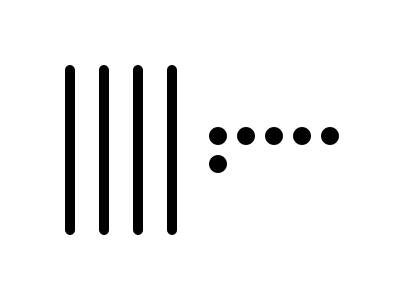
      Say: "One number can wear 4 different outfits." Lay out the 4 cards for 53 in a row: 53, a quick picture with 5 sticks and 3 dots, 5 tens and 3 ones, 50 + 3. Say: "These all show the same number." Then lay out the 4 cards for 35 below them. Ask: "What is the same and what is different?" (The same digits, but 53 has 5 tens and 35 has 3 tens.) Say: "Always check the tens."

    3. Guided Practice · 10 min

      Mix up the 16 cards for 70, 17, 42 and 24. Your child sorts them into 4 sets of 4 and says why each card belongs. (70: 7 sticks and no dots, 7 tens and 0 ones, 70 + 0. 17: 1 stick and 7 dots, 1 ten and 7 ones, 10 + 7. 42: 4 sticks and 2 dots, 4 tens and 2 ones, 40 + 2. 24: 2 sticks and 4 dots, 2 tens and 4 ones, 20 + 4.) If stuck, say: "Find the numeral card first. Then look for the card with that many tens."

    4. Play · 10 min

      Four in a Set. Mix all 24 cards and deal 6 to each player. Put the rest face down in a pile. Take turns asking for a card you need: "Do you have 40 + 2?" If yes, take it. If no, take one from the pile. When you have all 4 cards for one number, lay them down and say the number. The player with the most sets wins.

    5. Exit Ticket · 3-5 min

      Put the objects to one side but leave them on the table. Read each question aloud. Your child answers out loud, with objects or with a quick drawing. Check each answer together right away.

    Exit ticket

    1. Which number matches 50 + 3: 53 or 35?
    2. What number is 7 tens and 0 ones?
    3. Finish this: 42 = 40 + ?
    Answers
    1. 53
    2. 70
    3. 2
    Watch for, and help or stretch
    Watch for
    Matching 35 with 50 + 3 because they have the same digits.
    Try
    Build both numbers with straws side by side and compare the tens.
    Extra help
    Use only 3 numbers (12 cards), and leave out the tricky pair 42 and 24.
    Stretch
    Your child makes a new set of 4 cards for a number of their choice.

    At home (optional): Your child makes 4 cards for a family member's favorite number and shows them.
    Reading & Writing

    Because

    I can use because to tell why.

    Standards: L.1.6, L.1.1.g, SL.1.6

    Phonics
    Vowel teams oa and ow as long o (boat, road, snow, grow)
    Sight words
    as, with, this, that, because
    Reading
    The Gingerbread Man (traditional, public domain); The Mitten (Jan Brett)
    Writing
    Opinion: a favorite character, with a closing sentence · Handwriting: copying a sentence neatly
    Builds on
    Joining ideas with and, but and so (Week 13). One-minute check: your child says one sentence with so.

    New words

    • why question: a question that asks for a reason
    • because: a joining word that tells why

    You need

    • Because cards: write because on 3 index cards
    • "The Gingerbread Man"
    • Sight word cards
    • Printed "Toad on the Road"
    1. Phonics & Word Work · 15 min

      Reading because sentences. I do: read "Toad did not get in the boat because Toad can swim." Point to because and say: "The part after because tells why." We do: read "Toad sat in the sun because it was hot." You do: your child reads coat, soap, show, low, oak, roast. Dictation: coat, soap, show, because. If stuck on because, look at its heart parts on the card.

    2. Sight Words · 5 min

      Review: as, with, this, that, because. Flip and Read: lay the five cards face down with last week's words. Your child flips a card, reads it and uses it in a short spoken sentence. Missed words go back in the pile.

    3. Read-Aloud & Shared Reading · 15 min

      Ask why questions about the tales. Your child answers in a full sentence with because, holding up a because card. "Why did the gingerbread man run?" (He ran because he did not want to be eaten.) "Why did the gingerbread man get on the fox?" (He got on the fox because he could not swim.) "Why did the mitten stretch?" (It stretched because many animals squeezed inside. Skip this one if you did not read The Mitten.) "Why did Toad say no to Fox?" (Toad said no because Toad knew it was a trick.) If stuck, start the answer: "He ran because..."

    4. Writing & Handwriting · 15 min

      Your child writes one because sentence about either tale, then copies it neatly: "The fox ate him because he was tricky." Handwriting (4 min): your child checks the copy word by word against the first try.

    5. Exit Ticket · 5 min

      Oral answers.

    Exit ticket

    1. Why did the gingerbread man stop at the river? Use because.
    2. What does the part after because tell?
    3. Read this sentence: "Fox went home because Toad did not get in the boat."
    Answers
    1. He stopped because he could not swim.
    2. why (the reason)
    3. Fox went home because Toad did not get in the boat.
    Watch for, and help or stretch
    Watch for
    Answering with just because and no reason (Because!).
    Try
    Say: "Because what? Tell me the reason."
    Extra help
    Ask yes/no why questions first, then build the because sentence together.
    Stretch
    Your child asks you two why questions about a tale and checks your because answers.

    At home (optional): At dinner, your child answers one why question with because.

    Science

    Copying nature

    I can match a plant or animal part to an invention that works like it.

    Standards: 1-LS1-1

    Builds on
    Protective parts (Day 1). One-minute check: ask "What do people wear that works like a turtle shell?" (a helmet)

    New words

    • burr: a seed case covered with tiny hooks that sticks to fur and clothes
    • invention: a new thing that a person makes to solve a problem
    • copy: to make something that works the same way

    You need

    • A burr picture, or a real burr the grown-up picks up (it can tangle in hair)
    • A strip of hook-and-loop tape (from a shoe, a jacket or a craft store)
    • Magnifying glass
    • An old sock or a piece of fleece
    • 4 pairs of picture cards (draw or print): duck feet and swim fins, turtle shell and bike helmet, bird beak and kitchen tongs, burr and hook-and-loop tape
    • Notebook
    • Crayons
    1. Warm-Up / Wonder · 5 min

      Spaced review: ask: "How does a cactus protect itself?" (sharp spines) Wonder question: "Have you ever come home from a walk with little prickly balls stuck to your socks?"

    2. Explore · 10–15 min

      Tell the true story. Say: "In 1941, a man named George de Mestral walked in the woods in Switzerland with his dog. Burrs from burdock plants stuck to his pants and to his dog's fur. At home he looked at a burr under a microscope and saw thousands of tiny hooks. The hooks caught on loops of thread and fur. He used that idea to invent hook-and-loop tape." Look closely: your child looks at the burr (or the picture) with the magnifying glass. Ask: "What is at the tips?" (tiny hooks) Press the burr onto the sock. (It sticks.) Then look at both sides of the hook-and-loop tape. Ask: "Which side looks like the burr?" (the rough side with hooks) "Which side is like the sock?" (the soft side with loops) Your child presses and pulls them apart and listens to the rip. Match more pairs: your child matches the 4 pairs and tells how each invention works like the living thing. Duck feet and swim fins: both are wide and flat to push water. Turtle shell and helmet: both are hard covers. Bird beak and tongs: both pinch and pick up food. Say: "Hook-and-loop tape was really invented from burrs. Swim fins, helmets and tongs work like the animal parts too, even if we don't know whether the inventors were thinking of animals." If stuck matching, ask: "What does this invention do? Which living thing does the same job?" Wash hands after handling a real burr.

    3. Talk & Record · 5–10 min

      Your child draws the burr and the hook-and-loop tape side by side and labels the hooks. Sentence frame: "Hook-and-loop tape copies a burr because ___." (both have tiny hooks that catch on loops)

    4. Exit Ticket · 3–5 min

      Ask the three questions aloud.

    Exit ticket

    1. Which plant part gave the idea for hook-and-loop tape?
    2. How are swim fins like a duck's feet?
    3. Which kitchen tool works like a bird's beak?
    Answers
    1. A burr (from a burdock plant).
    2. Both are wide and flat, so they push water to help swimming.
    3. Tongs. (Tweezers or chopsticks also work if your child explains that they pinch and pick up.)
    Watch for, and help or stretch
    Watch for
    Matching by color or looks only, such as a green burr with a green helmet.
    Try
    Ask: "What job does each one do?" Match by job, not by color.
    Extra help
    Match 2 pairs only: burr and tape, duck feet and swim fins.
    Stretch
    Your child thinks of a new pair: a living thing and something people make that works the same way, such as a bird's nest and a basket.

    At home (optional): Your child finds hook-and-loop tape at home, on shoes or a bag, and explains to a family member how it copies a burr.

    Practice

    Read each direction aloud. Your child works on the page; answers are in the grown-up view.

    Warm-up

    Remember?

    Math

    1. 1 ten and 6 ones make what number?
    2. 12 - 8 = ? Think 8 + ? = 12.

    Reading & Writing

    1. them, then, when

    Math · Week 15 Day 3

    I can match a number to its picture and its tens and ones.

    Look: 61 and 16

    1. 61: 6 sticks and 1 dot, 6 tens and 1 one, 60 + 1.
    2. 16: 1 stick and 6 dots, 1 ten and 6 ones, 10 + 6.
    3. Same digits, different numbers. Always check the tens.

    Circle the one that matches.

    1. 1.
      80 + 9
      • 98
      • 89
    2. 2.
      2 tens and 5 ones
      • 52
      • 25
      • 205
    3. 3.
      4 sticks and 6 dots.
      • 46
      • 64
    4. 4.
      30 + 7
      • 37
      • 73
      • 307

    Write the missing number.

    1. 5.
      58 = 50 + ___
    2. 6.
      93 = ___ + 3
    3. 7.
      14 = 10 + ___

    Challenge (optional)

    Show 75 four ways.

    Reading & Writing · Week 15 Day 3

    I can use because to tell why.

    Look: because tells why

    1. Say: "The part after because tells why."
    2. Read: Joan had a coat on because of the snow. Ask: "Why did Joan have a coat on?" (because of the snow)
    3. Read "Because" together and point to each because.

    Because

    Joan had a coat on because of the snow. The toad sat in the shade because the sun was hot. The goat ate the soap because it did not know it was soap!

    Read the start. Circle the part that tells why.

    1. 1.
      Joan had a coat on because ___.
      • of the snow
      • of the hot sun
    2. 2.
      The toad sat in the shade because ___.
      • the sun was hot
      • the boat was big
    3. 3.
      The goat ate the soap because ___.
      • it did not know it was soap
      • it had a coat

    Finish each sentence. Tell why. Then write the words your grown-up says.

    1. 4.
      I like snow because ___.
    2. 5.
      I need a coat because ___.
    3. 6.
    4. 7.

    Challenge (optional)

    Did the goat know it was soap?

    Science · Week 15 Day 3

    I can match a plant or animal part to an invention that works like it.

    Look: An invention that works like nature

    1. Look at a living thing's part and its job: a gecko's feet grip walls.
    2. Find an invention with the same job: grippy shoe soles help us not slip.
    3. Say: the shoe works like the gecko's foot because both grip.

    Circle the invention that works like the living thing.

    1. 1.
      A woodpecker pecks holes in wood.
      • A hammer and nail.
      • A pillow.
    2. 2.
      A squirrel's bushy tail keeps it warm.
      • A fan.
      • A warm scarf.
    3. 3.
      A spider spins a web to catch food.
      • A fishing net.
      • A sock.
    4. 4.
      A crab pinches with its claws.
      • A cup.
      • A clothespin.

    Circle yes or no.

    1. 5.
      Does the soft side of hook-and-loop tape have loops?
      • yes
      • no
    2. 6.
      Do the tiny hooks on a burr catch on fur?
      • yes
      • no
    3. 7.
      Is a helmet soft and floppy?
      • yes
      • no
    4. 8.
      Draw an invention and the living thing it works like.

    Challenge (optional)

    What job do a duck's feet and a boat's paddle both do?

    You need: crayons