1First Grade

    Same tens? Look at the ones

    Two stories, two cooks

    Practice pages

    0 of 180 days complete · Saved on this device

    View all 180 days

    Math

    Same tens? Look at the ones

    I can compare numbers that have the same tens.

    Standards: 1.NBT.B.3

    Number practice (no timer)
    Subtraction facts within 10 (keep-up practice)
    Builds on
    Day 1 comparing by the tens. One-minute check: "Which is greater, 45 or 54?" (54)

    New words

    • equal: the same amount

    You need

    • Two sets of 9 straw bundles of 10 and 10 loose straws (or base-ten blocks), one set for each number. If you have only one set, build one number and draw the other as a quick picture.
    • Notebook and pencil
    1. Warm-Up · 5 min

      Fluency: subtraction facts within 10. "6 - 4?" (2) "9 - 5?" (4) "10 - 8?" (2) Spaced review from Week 13: "Write one hundred nineteen." (119)

    2. Mini-Lesson · 10 min

      Say: "What if both numbers have the same tens?" Build 56 and 53. Ask: "Which has more tens?" (Neither. Both have 5 tens.) Say: "When the tens are the same, look at the ones." Ask: "6 ones or 3 ones?" (6) Say: "56 is greater than 53." Then build 74 and 74. Ask: "Same tens? Same ones?" (Yes and yes.) Say: "74 is equal to 74."

    3. Guided Practice · 10 min

      Your child compares the tens first. If they match, your child compares the ones. 1) 47 and 42 (47 is greater; same tens, 7 ones is more) 2) 81 and 89 (81 is less; same tens, 1 one is less) 3) 35 and 33 (35 is greater) 4) 62 and 68 (62 is less) 5) 90 and 90 (equal) 6) 29 and 31 (29 is less; the tens are different, 2 tens and 3 tens) If stuck, say: "Cover the ones digits. Are the tens the same? If yes, uncover the ones and compare them."

    4. Play · 10 min

      Close Call. You write a two-digit number. Your child writes a number with the same tens digit that is greater, then one that is less, and says both sentences: "You wrote 64. 67 is greater than 64. 61 is less than 64." Take turns. Play 6 rounds. Add one round where your child writes a number that is equal to yours.

    5. Exit Ticket · 3-5 min

      Put the objects to one side but leave them on the table. Read each question aloud. Your child answers out loud, with objects or with a quick drawing. Check each answer together right away.

    Exit ticket

    1. Which is greater, 36 or 32?
    2. Which is less, 75 or 78?
    3. Compare 40 and 40.
    Answers
    1. 36
    2. 75
    3. 40 is equal to 40.
    Watch for, and help or stretch
    Watch for
    Jumping to the ones when the tens are different, such as saying 29 is greater than 31.
    Try
    Always cover the ones first. Only look at them when the tens are the same.
    Extra help
    Build both numbers each time and count the loose ones.
    Stretch
    Compare 3 numbers and put them in order from least to greatest: 47, 42, 74. (42, 47, 74)

    At home (optional): Compare the prices on 2 things at a store or in an ad, using only the dollar numbers from 10 to 99.
    Reading & Writing

    Two stories, two cooks

    I can compare the experiences of characters in two stories.

    Standards: RL.1.9, SL.1.1.b, RF.1.3.b

    Phonics
    r-controlled ar (car, farm, star, park)
    Sight words
    your, our, their, these, which
    Reading
    Stone Soup (traditional, public domain) and Strega Nona's Harvest (Tomie dePaola)
    Writing
    Opinion: a book review (name the book, give an opinion, reasons, recommendation) · Handwriting: neat book-review copy
    Builds on
    Comparing the two mice (Week 16). One-minute check: your child tells one way the two mice were different.

    New words

    • harvest: the crops picked when they are ready
    • generous: happy to share

    You need

    • Strega Nona's Harvest (Tomie dePaola), optional read-aloud; any picture book in which characters share food works, or compare Stone Soup with "Our Pot"
    • Comparison chart on paper: two columns, Stone Soup and the second story, with rows What was shared? and How did it turn out?
    • Sight word cards
    • Printed "Our Pot"
    1. Phonics & Word Work · 15 min

      ar with blends and digraphs. I do: read start, shark, chart. We do: read smart, sharp, march, spark. You do: your child reads scarf, harp, starch, marsh, card, jar, tart, park. Read: "The shark is smart." "Barb had a sharp card." Dictation: start, shark, chart, march. If stuck, read the beginning blend or digraph, then ar, then the end: sh-ar-k.

    2. Sight Words · 5 min

      Review: your, our, their, these, which. Swat It: spread the cards on the table. Say a word; your child taps it with a clean spatula, reads it and spells it. Then your child calls a word for you to swat. Point out that their and these both start with t-h-e; look closely at the letters after the e.

    3. Read-Aloud & Shared Reading · 15 min

      Read Strega Nona's Harvest, or reread "Our Pot" as the second story. Fill the chart. Ask: "In Stone Soup, what was shared? How did it turn out?" (Each villager shared a little food, and everyone had a feast together.) Ask: "In the second story, what was shared? How did it turn out?" (Answers vary. With Our Pot: Barb, Carl and Jan each gave one food, and they all had a big hot dish. With Strega Nona's Harvest: Answers vary. Look for: food from the garden is shared and people celebrate together.) Ask: "How are the two stories alike?" (Answers vary. Look for: sharing a little from each person made something big for everyone.) Keep the talk going (SL.1.1.b): after your child answers, ask a follow-up: "Why do you think so?" or "Can you tell me more?"

    4. Writing & Handwriting · 15 min

      Your child writes one sentence comparing the stories: "In both stories, people shared food and had a big meal." Handwriting (4 min): your child copies the sentence neatly.

    5. Exit Ticket · 5 min

      Oral answers.

    Exit ticket

    1. How are the two stories alike?
    2. How did sharing turn out in Stone Soup?
    3. Read this sentence: "The shark is smart."
    Answers
    1. Answers vary. Look for: in both, people shared food and everyone ended up with plenty.
    2. Everyone had a big pot of soup and ate together.
    3. The shark is smart.
    Watch for, and help or stretch
    Watch for
    Retelling one whole story instead of comparing.
    Try
    Hold up two fingers: "One thing from each story. How are they the same?"
    Extra help
    Fill only the What was shared? row today.
    Stretch
    Your child tells one way the two stories are different. (Answers vary. With Our Pot: Stone Soup has a trick, but in Our Pot, Mark just asks.)

    At home (optional): Your child shares something (a snack, a toy) with a family member and tells how it felt.

    Social Studies

    People change places

    I can tell how people change the land and how that helps or harms a place.

    Standards: D2.Geo.5.K-2

    Builds on
    Jobs that fit the land (Week 16). One-minute check: ask "What is a natural resource?" (something from nature people use, like water, soil or trees)

    New words

    • change: to make something different
    • harm: to hurt or damage

    You need

    • 3 before-and-after photo pairs (draw or print): an empty field, then a park; a forest, then a new road; a clean beach, then a beach with litter
    • T-chart with 2 columns: Helps and Harms
    • Pencil
    • Crayons
    1. Warm-Up / Wonder · 5 min

      Spaced review: ask: "What job fits snowy mountains?" (running a ski hill) Wonder question: "Have you ever seen a place near us change, like a new building or a new playground?"

    2. Explore · 10–15 min

      Say: "People change the places where they live. Some changes help, some harm, and some do both." Look at each photo pair. Ask: "What changed? Who changed it? Does it help, harm or both?" Field to park: people built a park (helps: a place to play and grow trees). Forest to road: people built a road (both: it helps people travel, but some trees and animal homes are gone). Clean beach to litter: people left trash (harms: it is dirty and can hurt animals). Your child sorts the changes onto the T-chart. Put the road in the middle with an arrow to both sides. Ask: "What could people do to fix the beach?" (pick up litter, put out trash cans) Then think of a real change near us. If stuck, ask: "Is the place better for people? For animals and plants?"

    3. Talk & Record · 5–10 min

      Your child draws a before-and-after picture of a change they would make to help a place near home. Sentence frame: "I would change ___ so that ___."

    4. Exit Ticket · 3–5 min

      Ask the three questions aloud.

    Exit ticket

    1. Name one way people change a place that helps it.
    2. Name one way people change a place that harms it.
    3. How can a new road both help and harm?
    Answers
    1. Answers vary. Look for: building a park, planting trees or cleaning up.
    2. Answers vary. Look for: littering or cutting down too many trees.
    3. It helps people get places, but trees and animal homes may be lost.
    Watch for, and help or stretch
    Watch for
    Thinking every change is good or every change is bad.
    Try
    Ask: "Who is helped by this change? Who is harmed?" Some changes do both.
    Extra help
    Use 2 pairs only: field to park and clean beach to litter.
    Stretch
    Your child interviews a family member about one place that changed since they were young.

    At home (optional): On a walk, your child finds one change people made, such as a garden, a sign or litter, and tells whether it helps or harms.

    Practice

    Read each direction aloud. Your child works on the page; answers are in the grown-up view.

    Warm-up

    Remember?

    Math

    1. A quick picture of 2 ten sticks and 8 ones dots. What number is this?
    2. True or false? 2 + 7 = 7 + 2

    Reading & Writing

    Math · Week 17 Day 2

    I can compare numbers that have the same tens.

    Look: 85 and 82

    1. Both numbers have 8 tens. The tens are the same.
    2. Look at the ones: 5 ones and 2 ones.
    3. 5 is more than 2, so 85 is greater than 82.

    The tens are the same. Circle the greater number.

    1. 1.
      27 or 24
      • 27
      • 24
    2. 2.
      51 or 58
      • 51
      • 58
    3. 3.
      93 or 96
      • 93
      • 96

    Circle the number that is less. In the last one, write a number.

    1. 4.
      44 or 49
      • 44
      • 49
    2. 5.
      60 or 61
      • 60
      • 61
    3. 6.
      83 or 87
      • 83
      • 87
    4. 7.
      Write a number with 4 tens that is greater than 43.

    Challenge (optional)

    Are 77 and 77 equal? How do you know?

    Reading & Writing · Week 17 Day 2

    I can compare the experiences of characters in two stories.

    Look: compare two stories

    1. Read both short stories together.
    2. Ask: "What did Barb do with the jam? What did Mark do with the tart?" (Barb gave some away; Mark ate it all.)
    3. Say: "We compare what happened to the characters in two stories."

    Jam and a Tart

    1. Barb had a jar of jam. Barb gave a bit to Carl. Barb and Carl had a fun snack. 2. Mark had a tart for a snack. Mark ate it all. Then Mark sat in the yard with no pal.

    Read each one. Circle Barb, Mark or Barb and Mark.

    1. 1.
      had a snack
      • Barb
      • Mark
      • Barb and Mark
    2. 2.
      gave a bit to a pal
      • Barb
      • Mark
      • Barb and Mark
    3. 3.
      ate it all
      • Barb
      • Mark
      • Barb and Mark
    4. 4.
      sat in the yard with no pal
      • Barb
      • Mark
      • Barb and Mark

    Write how the stories are the same and how they are not. Then write the word your grown-up says.

    1. 5.
      The same:
    2. 6.
      Not the same:
    3. 7.

    Challenge (optional)

    Which one had a pal at the end?

    Social Studies · Week 17 Day 2

    I can tell how people change the land and how that helps or harms a place.

    Look: helps, harms or both?

    1. People change the places where they live.
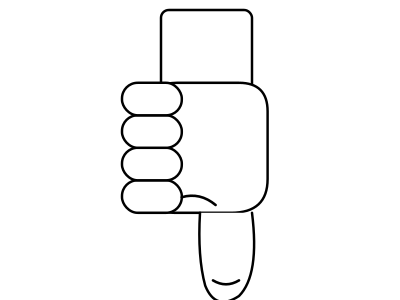
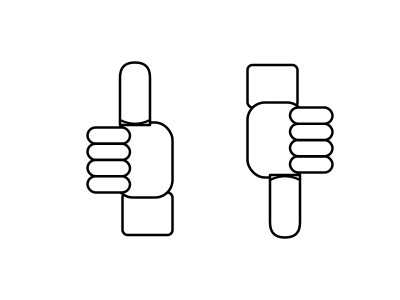
    2. Ask: "Does this change help the place, harm it or do both?" On this page, thumbs up means helps, thumbs down means harms, and one thumb up and one thumb down means both.
    3. Planting a garden helps. Leaving trash harms. A new parking lot helps drivers but takes away grass and trees, so it does both.

    Listen. Circle thumbs up if it helps, thumbs down if it harms or both thumbs if it does both.

    1. 1.
      People plant trees along a street.
      • A thumbs up.
      • A thumbs down.
      • One thumb up and one thumb down.
    2. 2.
      People dump trash into a river.
      • A thumbs up.
      • A thumbs down.
      • One thumb up and one thumb down.
    3. 3.
      People build a new school on a field where rabbits lived.
      • A thumbs up.
      • A thumbs down.
      • One thumb up and one thumb down.
    4. 4.
      Kids pick up litter at the park.
      • A thumbs up.
      • A thumbs down.
      • One thumb up and one thumb down.
    5. 5.
      A truck leaks oil onto the grass.
      • A thumbs up.
      • A thumbs down.
      • One thumb up and one thumb down.

    Talk and draw. Write what your child says.

    1. 6.
      Name a change you have seen near our home. Does it help, harm or both?
    2. 7.
      A park has lots of litter. How could people fix it?
    3. 8.
      Draw a sign that asks people to keep a place clean.

    Challenge (optional)

    Can one change help people but harm animals? Tell your own example.

    You need: crayons