This week's lessons
Math and reading every day; science and social studies take turns
- Day 1 · Monday
- MathCompare by the tensI can compare two numbers by looking at the tens first.
- Reading & WritingClever charactersI can describe how a character solves a problem.
- ScienceBuild my nature designI can build my design with simple materials.
- Day 2 · Tuesday
- MathSame tens? Look at the onesI can compare numbers that have the same tens.
- Reading & WritingTwo stories, two cooksI can compare the experiences of characters in two stories.
- Social StudiesPeople change placesI can tell how people change the land and how that helps or harms a place.
- Day 3 · Wednesday
- MathGreater than, less than, equal toI can use >, < and = to compare two numbers.
- Reading & WritingListening for answersI can ask a question about what a speaker said.
- ScienceTest and improveI can test my design and make it better.
- Day 4 · Thursday
- MathPlace Value WarI can make two-digit numbers and compare them.
- Reading & WritingMy book reviewI can write a book review with my opinion and reasons.
- Social Studies · CheckHow things get from here to thereI can explain how people, goods and ideas move from place to place.
- Day 5 · Friday
- Math · CheckLesson + weekly check: comparing numbersI can compare two-digit numbers and explain using tens and ones.
- Reading & Writing · CheckShare and check: arI can read ar words and share my book review.
- Science · CheckShow my nature designI can show my design and tell which living thing I copied.
This week's checks
Short checks on the last day each subject meets this week
Social Studies · Day 4
- I can tell how people change the land and how that helps or harms a place.
- I can explain how people, goods and ideas move from place to place.
Secure when: 6 of 8 correct, with at least one right on each goal
Open the checkMath · Day 5
- I can compare two numbers by looking at the tens first.
- I can compare numbers that have the same tens.
- I can use >, < and = to compare two numbers.
- I can make two-digit numbers and compare them.
Secure when: 9 of 10 correct
Open the checkReading & Writing · Day 5
- I can read ar words.
- I can read the sight words your, our, their, these and which.
- I can tell how a character solves a problem.
- I can ask a question about what someone said.
- I can write a book review with an opinion and a reason.
Secure when: 8 of the 10 words in items 1 and 2, 4 of the 5 sight words, items 4 and 5, a real question in item 6, and items 7 and 8.
Open the checkScience · Day 5
- I can build my design with simple materials.
- I can test my design and make it better.
- I can show my design and tell which living thing I copied.
Secure when: all 4 talk parts (items 1, 2, 3 and 5) and at least 6 of 8 in all.
Open the check
Reading About Our World: Sticky Seeds
Read it aloud. Your child reads the sentences marked with a star. Builds science knowledge.
Hooks on Seeds
Some plants have seed cases with tiny hooks. These seed cases are called burrs. When a dog or a deer brushes past, the burrs hook onto its fur.
Going for a Ride
The animal walks far away. Later the burr falls off, and a new plant can grow in a new place. The seed can stick to a dog and go far.
People Learn From Plants
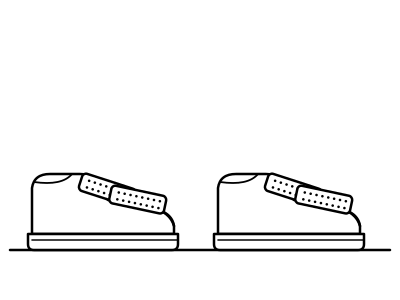
In 1941, a man named George de Mestral saw burrs stuck to his dog's fur. He looked closely and saw tiny hooks. He made a fastener with tiny hooks on one side and soft loops on the other. It works like a burr. You may have one on your shoes or a jacket.
Words to know
- seed: the part of a plant that can grow into a new plant
- burr: a seed case with tiny hooks
- fastener: something that holds two things together
Talk about it
- What do burrs have that helps them stick?
- How does a burr get to a new place?
- Why is it good for a plant if its seeds travel far away?
Home Connection
Five-minute ideas for the whole family, with things you already have
Math
To compare two-digit numbers, look at the tens first.
Do: Play Place Value War: each player turns over two digit cards (0 to 9) to make a two-digit number. The greater number wins the round. Say it: "47 is greater than 38."
Talk: Which is greater, 47 or 74? How do you know?
Reading & Writing
We can compare two versions of a story.
Do: Write car, farm, star, park and yard for your child to read. Talk about two stories you know that are almost the same.
Talk: Which of the two stories did you like better, and why?
Science
Designers build, test and make things better.
Do: Your child shows their nature design to the family and tells which living thing it works like.
Talk: What would you change to make it work better?
Social Studies
People change the land, and people, goods and ideas move from place to place.
Do: Read the labels on a few foods and talk about how food gets to the store: by truck, train, ship or plane.
Talk: How did the food on your plate get to our home?
This week's words: your, our, their, these, which
Celebrate a Place Value War win, two stories compared and a finished design.
Math catch-up: Look at the Tens First
10 minutes, if this week's math check was not secure · 1.NBT.B.3
Many children compare the ones digits first and say 28 is greater than 34. Building both numbers shows that tens are worth more, so we look at the tens first.
You need: paper and a pencil for quick pictures (a stick for each ten, a dot for each one), a paper strip with > on one side and < on the other
- Draw quick pictures of 46 and 64. Ask: "Which picture has more tens?" (64) Say: "More tens means a greater number."
- Draw 29 and 31. Cover the ones with your hands. Ask: "Who has more tens?" (31) Say: "9 loose ones are less than one more ten."
- Draw 57 and 52. The tens are the same, so now look at the ones: 57 is greater.
- Write 29 ___ 31. Your child places the strip so the open side faces the greater number and reads it from left to right: "29 is less than 31."
Try again
- Which is greater, 37 or 73?
- Write >, < or =: 39 ___ 41
- Write >, < or =: 68 ___ 63
Specials This Week
Weeks 13–18 unit • ~90 min/week per subject
Manipulative Skills (Throwing and Catching)
Developing underhand and overhand throwing, catching with two hands, aiming at targets.
Form and Space
Understanding 2D vs. 3D forms (cubes, spheres), exploring foreground, middle ground, background in drawings.
Tempo and Dynamics
Forte/piano (loud/soft), fortissimo/pianissimo, expressing musical ideas through tempo and dynamics.
For guiding principles and full standards reference, visit How to use this curriculum
As an Amazon Associate, we earn from qualifying purchases. Book and supply links on this page are affiliate links — using them supports this curriculum at no extra cost to you.