1First Grade

    Place Value War

    My book review

    Practice pages

    0 of 180 days complete · Saved on this device

    View all 180 days

    Math

    Place Value War

    I can make two-digit numbers and compare them.

    Standards: 1.NBT.B.3, 1.NBT.B.2

    Number practice (no timer)
    Subtraction facts within 10 (keep-up practice)
    Builds on
    Days 1 to 3: comparing by tens and ones and using > < =. One-minute check: "Put a symbol between 73 and 37." (73 > 37)

    New words

    • tens digit: the left digit in a two-digit number

    You need

    • Deck of cards ace to 9 (remove the 10s and face cards; ace = 1)
    • 3 symbol cards: >, < and =
    • 9 straw bundles of 10 and 10 loose straws (or base-ten blocks) (for checking)
    • Notebook and pencil
    1. Warm-Up · 5 min

      Fluency: subtraction facts within 10. "7 - 3?" (4) "9 - 6?" (3) "10 - 9?" (1) Spaced review from Week 10: "16 - 9: think addition." (9 + 7 = 16, so 7)

    2. Mini-Lesson · 10 min

      Say: "Today we play Place Value War. You get to choose which card is the tens." Flip a 3 and a 7. Ask: "What two numbers can you make?" (37 or 73) "Which is greater? Why?" (73. It has 7 tens.) Say: "To make the biggest number, put the bigger digit in the tens place." Show how a round works: you flip 2 and 5 and make 52; your child flips 4 and 6 and makes 64. Your child places the symbol card: 52 < 64. Say the winning sentence: "I compared the tens first. 6 tens is more than 5 tens, so 64 is greater."

    3. Guided Practice · 10 min

      Play 4 rounds together, slowly. In each round, each player flips 2 cards, makes the greatest number they can, writes it, places the symbol card between the two numbers and reads the sentence. The winner explains with "I compared the tens first ..." If the tens match, explain with the ones. If both numbers are the same, place = and call it a tie. If stuck, say: "Which of your two cards is bigger? Put it in the tens place."

    4. Play · 10 min

      Place Value War, round 2. Play 6 more rounds, but switch the goal: now the smaller number wins. Ask first: "How do you make the smallest number?" (Put the smaller digit in the tens place.) Record each round in the notebook with a symbol, such as 18 < 35.

    5. Exit Ticket · 3-5 min

      Put the objects to one side but leave them on the table. Read each question aloud. Your child answers out loud, with objects or with a quick drawing. Check each answer together right away.

    Exit ticket

    1. You flip a 3 and an 8. What is the greatest number you can make?
    2. Compare 83 and 38 with a symbol.
    3. Which wins, 57 or 75? Why?
    Answers
    1. 83
    2. 83 > 38 (or 38 < 83)
    3. 75. It has 7 tens and 57 has only 5 tens.
    Watch for, and help or stretch
    Watch for
    Making 38 instead of 83 when trying to make the greatest number.
    Try
    Build 38 and 83 with bundles. Ask: "Which pile is bigger?"
    Extra help
    Build both numbers with bundles each round before choosing the symbol.
    Stretch
    Flip 3 cards and choose the best 2 to make the greatest number.

    At home (optional): Play Place Value War with a family member. The winner says "I compared the tens first."
    Reading & Writing

    My book review

    I can write a book review with my opinion and reasons.

    Standards: W.1.1, L.1.2.a, L.1.1.j

    Phonics
    r-controlled ar (car, farm, star, park)
    Sight words
    your, our, their, these, which
    Reading
    Stone Soup (traditional, public domain) and Strega Nona's Harvest (Tomie dePaola)
    Writing
    Opinion: a book review (name the book, give an opinion, reasons, recommendation) · Handwriting: neat book-review copy
    Builds on
    Opinion pieces (Weeks 13 to 16). One-minute check: your child names the three parts of an opinion piece. (opinion, reason, closing)

    New words

    • recommend: tell others they should try something
    • rating: a score that shows how much you liked something, such as 1 to 5 stars

    You need

    • Book review frame: Title ___; Date ___; Stars (1 to 5); I think ___ because ___. Also ___. Read it! or Skip it!
    • Crayons
    • Sight word cards
    • Printed "Our Pot"
    1. Phonics & Word Work · 15 min

      ar review. I do: read "Mark had a part in the play." We do: read "Barb can start the car." You do: your child reads part, start, smart, dark, arm, shark. Dictation: part, start, smart, dark. If stuck, say: "Find the ar and say /ar/, then blend."

    2. Sight Words · 5 min

      Review: your, our, their, these, which. Memory Match: make two cards for each of three words. Turn them face down and play Memory; read the word on every card turned over. Use your, our and their.

    3. Read-Aloud & Shared Reading · 15 min

      Look at a book review together (you can model one): "The Gingerbread Man. 4 stars. I think it is exciting because he runs from everyone. Also, the ending is a surprise. Read it!" Ask: "What is my opinion?" (it is exciting) "What are my reasons?" (he runs from everyone; the ending is a surprise) "Do I recommend it?" (yes: Read it!) Say: "Book titles, names and the month in a date all start with capitals" (L.1.2.a). Your child picks a Unit 3 tale to review: The Little Red Hen, The Three Billy Goats Gruff, The Gingerbread Man, The Town Mouse and the Country Mouse or Stone Soup.

    4. Writing & Handwriting · 15 min

      Your child completes the book review: the date with a capital month, the title with capitals, 1 to 5 stars, the opinion and two reasons, and ends with "Read it!" or "Skip it!" Use and, because or also to join ideas into longer sentences (L.1.1.j). Handwriting (4 min): your child writes the title neatly at the top.

    5. Exit Ticket · 5 min

      Your child reads the review.

    Exit ticket

    1. Read me your book review. Do you recommend the book?
    2. Which words in a book title get capitals?
    3. Read this sentence: "Barb can start the car."
    Answers
    1. Answers vary. Look for: a title, an opinion, two reasons and Read it! or Skip it!
    2. the first word and the important words
    3. Barb can start the car.
    Watch for, and help or stretch
    Watch for
    Forgetting the reasons and writing only "I like it. Read it!"
    Try
    Ask: "Why should someone read it? Give two reasons."
    Extra help
    Your child draws the stars and says the reasons; you help write the first one.
    Stretch
    Your child writes a second review of a different tale and compares the stars.

    At home (optional): Your child reads the book review to a family member.

    Social StudiesWeekly check

    How things get from here to there

    I can explain how people, goods and ideas move from place to place.

    Standards: D2.Geo.7.K-2

    Builds on
    People change places (Day 2). One-minute check: your child names one change that helps a place and one that harms it.

    New words

    • transportation: ways to move people and things from place to place
    • idea: a thought or a plan in your mind

    You need

    • Toy trucks, boats and planes (or paper pictures of each)
    • A letter or a postcard
    • A banana
    • A phone or computer (to show a video call or an email)
    • A world map
    • Masking tape for a pretend route on the floor
    • Notebook
    1. Warm-Up / Wonder · 5 min

      Spaced review: ask: "Where do most bananas in our stores come from?" (warm countries far away, such as Guatemala and Costa Rica) Wonder question: "How did this banana get to our kitchen?"

    2. Review Game · 10 min

      Trace 4 trips with the toys and the map. Make a tape route on the floor from "far away" to "our home." 1) A banana (goods): grown on a farm in a warm country, put on a ship across the sea, then a truck drives it to the store. Your child moves the boat, then the truck. 2) A letter: a mail carrier picks it up, a truck takes it to the post office, a plane or truck carries it far, and another mail carrier delivers it. 3) A family visit (people): a car, a bus, a train or a plane carries people to see family, to move to a new home or to go to work. 4) An idea: a recipe or a story can travel by phone, email, a video call or a book, with no truck at all. For each trip, ask: "Why does it move?" (The banana grows far away and we want to eat it. People want to see family or work. Ideas move so people can share them.) If stuck, ask: "Where did it start? Where did it end? What carried it?"

    3. Check · 10 min

      Give the Week 17 social studies check. The check items are on the Week 17 check page; do not show them ahead of time. Read each part aloud. Your child answers by talking, pointing, showing with the real materials or drawing. You write down their words exactly. It is not timed; stop and finish later if your child is tired. Make a check mark next to each part your child shows on their own. The printed check has 8 items. It covers these goals: (1) I can tell how people change the land and how that helps or harms a place; (2) I can explain how people, goods and ideas move from place to place. This week the check is a show-and-tell. Your child chooses one trip (a good, a person or an idea), shows it with the toys or tells it, naming what carries it, and tells why it moves. Look for: a start and an end, a way it travels (ship, truck, plane, car, phone, internet or mail), and a reason, such as "It grows far away" or "to visit Grandma." Secure: 6 of 8 correct, with at least one right on each goal. If the check is not yet secure, use the reteach step on the check page that matches the items missed.

    4. Exit Ticket · 3–5 min

      Ask the three questions aloud.

    Exit ticket

    1. Name two ways a banana travels to our store.
    2. How can an idea move from place to place?
    3. Why do people move from place to place?
    Answers
    1. A ship and a truck.
    2. Answers vary. Look for: phone, email, video call, a letter or a book.
    3. Answers vary. Look for: to visit family, to go to work or school, or to move to a new home.
    Watch for, and help or stretch
    Watch for
    Thinking ideas travel only in trucks, like things.
    Try
    Make a short video call or send a message to a relative and ask: "Did a truck carry that?"
    Extra help
    Trace 2 trips: the banana and a family visit.
    Stretch
    Your child finds where a piece of clothing was made from its tag and shows its trip on the map.

    At home (optional): Your child tells a family member the banana's trip from farm to kitchen in order.

    Practice

    Read each direction aloud. Your child works on the page; answers are in the grown-up view.

    Warm-up

    Remember?

    Math

    1. How many tens and how many ones are in 81?
    2. What number goes in the blank? 12 - ___ = 5

    Reading & Writing

    1. peel, beak, sweet
    2. kit, kite, rob, robe

    Math · Week 17 Day 4

    I can make two-digit numbers and compare them.

    Look: flip 4 and 9

    1. You can make 49 or 94.
    2. Put the bigger digit in the tens place: 94.
    3. 94 has 9 tens, so 94 is the greatest number you can make.

    Make the greatest number you can with the two cards.

    1. 1.
      2 and 6
    2. 2.
      5 and 1
    3. 3.
      7 and 9
    4. 4.
      4 and 4

    Write >, < or = between the two numbers.

    1. 5.
      You make 61. Your grown-up makes 59.
    2. 6.
      You make 72. Your grown-up makes 76.
    3. 7.
      You make 34. Your grown-up makes 43.

    Challenge (optional)

    With the cards 2 and 8, make the smallest number you can. Compare it with the greatest number you can make.

    You need: playing cards ace to 9 (optional)

    Reading & Writing · Week 17 Day 4

    I can write a book review with my opinion and reasons.

    Look: a book review

    1. Read the sample review together.
    2. Point to each part: the title, the opinion, the reason and "Read it!"
    3. Say: "Titles, names and months start with a capital letter."

    Goat and Crow

    I give it a 5. I think it is a sweet tale. Goat gave Crow a coat when Crow got wet. Read it!

    Write each one with capitals. Then circle the opinion.

    1. 1.
      goat and crow
    2. 2.
      march 3
    3. 3.
      i think it is fun
    4. 4.
      The opinion:
      • I think it is a sweet tale.
      • Read it!

    Write a review of a tale you like.

    1. 5.
      Title:
    2. 6.
      I think ___ because ___.
    3. 7.
      Write Read it! or Skip it!

    Challenge (optional)

    I give it a ___.

    Social Studies · Week 17 check

    Weekly check

    How to give it: Read every question and choice aloud, and point to each picture as you name it. This week the check is a show-and-tell. Your child answers by talking, pointing, circling, acting it out or drawing; write their words exactly on the line. It is not timed; stop and finish later if your child is tired. Do not show the page ahead of time. Have the toys, the letter and the world map from Day 4 ready for item 8. Make a check mark next to each part your child shows on their own.

    Secure when: 6 of 8 correct, with at least one right on each goal

    • I can tell how people change the land and how that helps or harms a place.
    • I can explain how people, goods and ideas move from place to place.
    1. 1.
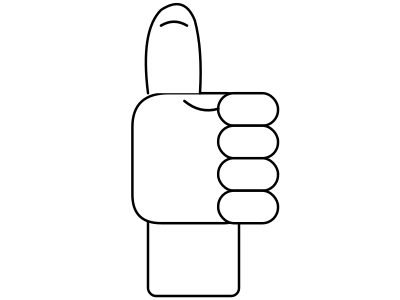
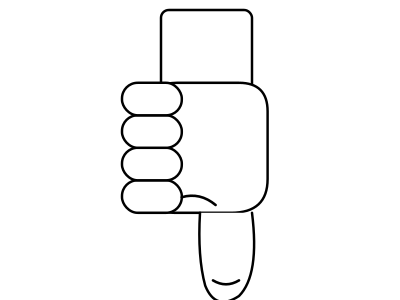
      People cut down a whole forest and leave the land bare. Circle thumbs up for helps, thumbs down for harms or both thumbs for both.
      • A thumbs up.
      • A thumbs down.
      • One thumb up and one thumb down.
    2. 2.
      People build a playground on an empty lot.
      • A thumbs up.
      • A thumbs down.
      • One thumb up and one thumb down.
    3. 3.
      How can a new store built on an empty field both help and harm a place?
    4. 4.
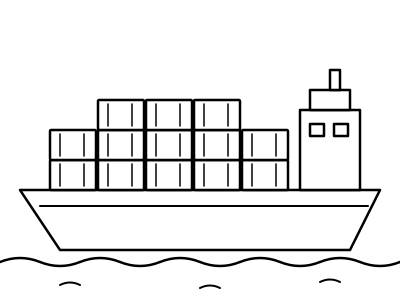
      A big ship carrying boxes across the sea. What can a ship like this carry from far away?
    5. 5.
      Name two ways people can travel to visit family far away.
    6. 6.
      A grandparent far away wants to send you a cookie recipe. How could the recipe get to you?
    7. 7.
      Why do oranges travel to places where they cannot grow?
    8. 8.
      Show and tell one trip: a good, a person or an idea. Tell where it starts, where it ends, what carries it and why it moves.