1First Grade

    Lesson + weekly check: 10 more and 10 less

    Share and check: er, ir, ur

    Practice pages

    0 of 180 days complete · Saved on this device

    View all 180 days

    MathWeekly check

    Lesson + weekly check: 10 more and 10 less

    I can find 10 more and 10 less and explain.

    Standards: 1.NBT.C.5

    Number practice (no timer)
    Ten more and ten less (mental, no counting)
    Builds on
    Days 1 to 4: 10 more and 10 less with the kit, on the chart and in your head. One-minute check: "10 more than 66? 10 less than 66?" (76 and 56)

    New words

    • story problem: a math question told as a short story

    You need

    • Tens and ones kit: 9 tens and 9 ones. Use straw bundles of 10 (a rubber band around each) and loose straws, base-ten rods and unit cubes, or paper ten-strips (strips of 10 squares, cut by an adult) with beans as ones
    • The stored Week 19 check and its answer key
    • Notebook and pencil
    • Beans and unit cubes are small parts: keep them away from children under 3.
    1. Warm-Up · 5 min

      Fluency: ten more and ten less. "10 more than 39?" (49) "10 less than 80?" (70) Spaced review from Week 8: "7 + 7?" (14) "7 + 8?" (15, a near double)

    2. Short Lesson: Review Game · 10 min

      Ten Stories. Read each story. Your child says the answer and whether it was 10 more or 10 less, then checks with the kit. 1) "Mia has 34 stickers. Her aunt gives her a sheet of 10 more. How many stickers now?" (44; 10 more) 2) "A box had 62 crackers. The family ate one pack of 10. How many are left?" (52; 10 less) 3) "Leo read to page 75. Tomorrow he will read 10 more pages. What page will he reach?" (85; 10 more) 4) "There were 51 leaves on the path. The wind blew 10 away. How many are left?" (41; 10 less) 5) "A jar had 88 beads. Ana took out 10 to make a bracelet. How many beads are in the jar now?" (78; 10 less) 6) "Sam has 19 toy cars. He gets a set of 10. How many now?" (29; 10 more) If stuck, say: "Build the first number. Does the story add a ten or take a ten away?"

    3. Weekly Check · 15 min

      Give the stored Week 19 check. The printed check has 9 items. It covers these goals: (1) I can find 10 more and 10 less than a number; (2) I can explain which digit changes. Read each item aloud. There is no time limit. If your child is stuck, say only: "Which digit changes?" Do not give the answer. Score it with the answer key. Secure: 15 to 17 of the 17 parts right (items 1 to 8 have 2 parts each; item 9 has 1 part). If the check is secure, start Week 20. If it is not, first do the reteach step on the check page for each group of items missed, then start Week 20.

    4. Exit Ticket · 3-5 min

      After the check, ask these two questions. Then go over any missed check items together.

    Exit ticket

    1. What is 10 less than 47?
    2. Zoe has 23 crayons. She gets a box of 10 more. How many crayons does she have now?
    Answers
    1. 37
    2. 33
    Watch for, and help or stretch
    Watch for
    Mixing up the two answers, writing 10 less where 10 more goes.
    Try
    Ask: "Is this one bigger or smaller?" 10 more must be the bigger number.
    Extra help
    Let your child build each check number with the kit, and note it on the check.
    Stretch
    After the check, your child makes up a 10 more story and a 10 less story for you to solve.

    At home (optional): Your child tells a family member one 10 more story and one 10 less story with real things at home.
    Reading & WritingWeekly check

    Share and check: er, ir, ur

    I can read er, ir and ur words and read a poem smoothly.

    Standards: RF.1.3.b, RF.1.4.b, RF.1.3.g

    Phonics
    r-controlled er, ir and ur (her, bird, fur, turn)
    Sight words
    will, if, so, make, like
    Reading
    Mother Goose rhymes (public domain); "Rain" by Robert Louis Stevenson (public domain)
    Writing
    Narrative: a small moment told with sense words · Handwriting: copying a poem neatly
    Builds on
    This week's er, ir and ur work, plural -s and the poem "Rain". One-minute check: warm up with her, bird, fur.

    New words

    • smooth: reading that flows like talking

    You need

    • Word cards: er, ir and ur words (written in step 4)
    • 10 game cards (index cards): her, bird, fur, turn, chirp, dirt, swirl, church, firm, clerk
    • Sight word cards: will, if, so, make, like, each, about, out, into, use
    • Printed "Rain" (from Day 1)
    • Recording sheet
    • The small moment story (from Day 4)
    • Printed copy poem "Rain on the Fern" and lined paper
    1. Review Game · 10 min

      Flip and Act: lay 10 cards face down: her, bird, fur, turn, chirp, dirt, swirl, church, firm, clerk. Your child flips a card and reads it, then acts: an er word gets a wave, an ir word gets a bird flap and a ur word gets a turn around. If stuck on a word during the game (not during the check), cover all but the first sound, say it together, then uncover the rest and blend.

    2. Sight Words · 5 min

      Review: will, if, so, make, like, each, about, out, into, use. Hop and Read: lay the 10 cards on the floor. Your child hops to a card, reads it and picks it up. Mix this week's and last week's words.

    3. Weekly Check · 15 min

      The printed check has 9 items. It covers these goals: (1) I can read er, ir and ur words and read a poem smoothly; (2) I can find sense words, connect words to my home and read words that end in s; (3) I can write a small moment with First and Then. Score item 4 (reading "Rain" aloud, the poem practiced all week) for smoothness: choppy, mostly smooth, or smooth with feeling. If your child stops on raining, around, falls, field, rains or umbrellas, say the word and let them go on; these words are not scored. Give no other hints. Record each answer. Secure: 8 of 10 words in items 1-2, 4 of 5 sight words, a mostly smooth read of Rain, and 4 of 5 on items 5-9. For any part that is not yet secure, use the matching reteach step on the check page next week.

    4. Share & Listen · 10 min

      Your child reads the small moment story to a listener. The listener names one sense word they heard and asks one question. Your child answers in a full sentence.

    5. Handwriting · 5 min

      Your child copies Rain on the Fern as a title and the line And mud in the dirt!, with a capital at the start of each. Circle the best word.

    6. Exit Ticket · 5 min

      Talk about the week.

    Exit ticket

    1. Read two words that have an r-team.
    2. Which of your reads of "Rain" was the smoothest? Why?
    Answers
    1. Answers vary. Look for: correct reads such as burn and fern.
    2. Answers vary. Look for: a reason such as practice or fewer stops.
    Watch for, and help or stretch
    Watch for
    Reading word by word in item 4 (the poem).
    Try
    Before the check, model one line in phrases ("The rain is raining / all around") and have your child copy your phrasing. Do not model during the scored read.
    Extra help
    Give the check in two sittings. Echo-read "Rain" once before item 4 as a warm-up.
    Stretch
    Your child reads 3 bonus plural words: skirts, ferns, curls. Do not score them.

    At home (optional): Your child reads "Rain on the Porch" to a family member with feeling.

    ScienceWeekly check

    Parents Help chart

    I can find a pattern in how animal parents help babies.

    Standards: 1-LS1-2

    Builds on
    Parents feed (Day 1) and protect (Day 3). One-minute check: ask "How do elephants keep their calves safe?" (The grown-ups make a ring with the calves in the middle.)

    New words

    • pattern: something that happens again and again
    • teach: to show someone how to do something

    You need

    • Parents Help chart from Days 1 and 3
    • 4 sticky notes or paper strips labeled Feed, Protect, Keep warm, Teach
    • 1 index card with the Orangutan Fact Card copied on it (the text is in the Review Game)
    • 8 blank index cards and a marker
    • Week 19 science check page (given separately)
    • Science Notebook
    1. Warm-Up / Wonder · 5 min

      Spaced review: ask: "Who feeds a baby robin?" (both parents) "Who holds the emperor penguin egg?" (the father) Wonder question: "Do animal parents do the same kinds of things again and again?"

    2. Review Game · 10 min

      Play "Help Sort." Read the Orangutan Fact Card: "Orangutans are apes that live in rain forest trees. A baby orangutan holds on to its mother as she climbs. Its mother teaches it which foods to eat, where to find them and how to open fruit. Young orangutans stay with their mothers for years." Ask: "What does the orangutan mother do?" (She teaches her baby about food.) Lay out the 4 labels: Feed, Protect, Keep warm, Teach. Together, write one animal from the chart on each blank card (robin, whale, penguin chick, penguin egg, alligator, elephant, orangutan, and one your child picks). Your child reads or tells each card and puts it under a label. Some cards can fit under two labels; let your child explain. Ask: "Which kinds of help did we see more than once?" (feeding and protecting) Say: "When the same thing happens again and again, it is a pattern. Animal parents feed, protect, keep warm and teach their babies." If stuck, ask: "Is the parent giving food, keeping the baby safe, keeping it warm or showing it how?"

    3. Check · 10 min

      Give the Week 19 science check. The check items are on the Week 19 check page; do not show them ahead of time. Read each part aloud. Your child answers by talking, pointing, showing with the real materials or drawing. You write down their words exactly. It is not timed; stop and finish later if your child is tired. Make a check mark next to each part your child shows on their own. The printed check has 8 items. It covers these goals: (1) I can find out from a book how animal parents feed their young; (2) I can tell how animal parents keep babies safe; (3) I can find a pattern in how animal parents help babies. This week the check is an oral sorting task about parent behaviors. Look for: your child names the pattern (parents feed, protect, keep warm and teach their young) and gives one correct animal example for each kind of help. If stuck on a part, point to the matching row on the Parents Help chart and ask your child to tell it in their own words. Secure: 6 of 8 correct, including item 6 (names the pattern) and item 7 (one example for each kind of help). If the check is not yet secure, use the reteach step on the check page that matches the items missed.

    4. Exit Ticket · 3–5 min

      Ask the three questions aloud. Your child answers by talking or drawing.

    Exit ticket

    1. A hen spreads her wings over her chicks on a cold night. Which kind of help is that?
    2. A father bird brings a caterpillar to the nest. Which kind of help is that?
    3. What pattern did we find about animal parents?
    Answers
    1. Keeping them warm.
    2. Feeding.
    3. Animal parents help their babies survive: they feed them, protect them, keep them warm and teach them.
    Watch for, and help or stretch
    Watch for
    Putting each card in only one group when it fits two.
    Try
    Say: "Scientists can sort one thing more than one way." Ask: "Does the penguin father keep the egg warm and safe?" (yes, both)
    Extra help
    Use only 2 labels, Feed and Protect, and 4 cards.
    Stretch
    Your child thinks of a pet or farm animal and tells which kinds of help its parent gives.

    At home (optional): Your child tells a family member the four ways animal parents help their babies.

    Practice

    Read each direction aloud. Your child works on the page; answers are in the grown-up view.

    Warm-up

    Remember?

    Math

    1. Which is greater, 91 or 19?
    2. 1 ten and 4 ones make what number?

    Reading & Writing

    1. Can we sail the boat

    Math · Week 19 check

    Weekly check

    How to give it: Read every item aloud. It is untimed. Your child writes the answers; the tens and ones kit can stay on the table but is put aside unless your child asks for it. If your child is stuck, say only: "Which digit changes?" Do not give the answer. There are 17 parts in all. 15 to 17 right: start Week 20. 11 to 14 right: redo Day 3 Guided Practice before Week 20. 10 or fewer right: redo Day 1 and Day 2 with the kit before Week 20.

    Secure when: 15 to 17 of the 17 parts right (items 1 to 8 have 2 parts each; item 9 has 1 part).

    • I can find 10 more and 10 less than a number.
    • I can explain which digit changes.
    1. 1.
      10 less: ____ 25 10 more: ____
    2. 2.
      10 less: ____ 61 10 more: ____
    3. 3.
      10 less: ____ 38 10 more: ____
    4. 4.
      10 less: ____ 74 10 more: ____
    5. 5.
      10 less: ____ 50 10 more: ____
    6. 6.
      10 less: ____ 13 10 more: ____
    7. 7.
      10 less: ____ 86 10 more: ____
    8. 8.
      10 less: ____ 49 10 more: ____
    9. 9.
      Tell how you know 10 less than 92 is 82.

    Reading & Writing · Week 19 check

    Weekly check

    How to give it: Give it in one sitting, untimed. Read each direction aloud. For items 1-3, your child reads each word aloud and you tick the ones read right; give no hints. For item 4, use the copy of Rain printed in item 4 (the same poem as in the Day 1 lesson) and say raining, around, falls, field, rains and umbrellas if your child stops; those words are not scored. Your child reads The Third Bird aloud before items 5-6. For item 5, your child picks the sense word that finishes the line. For item 8, say the word hurt twice. For item 9, say: Tell what you did first on a wet day. Your child may look at the er, ir, ur chart only after the check.

    Secure when: 8 of 10 words in items 1-2, 4 of 5 sight words, a mostly smooth read of Rain, and 4 of 5 on items 5-9.

    • I can read er, ir and ur words and read a poem smoothly.
    • I can find sense words, connect words to my home and read words that end in s.
    • I can write a small moment with First and Then.

    The Third Bird

    Six birds sat on a birch. The third bird had a red spot. Chirp, chirp! It did a twirl and a turn. Then it sat on a fern. It will not stir.

    1. 1.
      term smirk slurp turf hurl
    2. 2.
      whirl perk blur fir verb
    3. 3.
      will if so make like
    4. 4.
      Rain (Robert Louis Stevenson) The rain is raining all around, It falls on field and tree, It rains on the umbrellas here, And on the ships at sea.
    5. 5.
      The bird can ____.
      • chirp
      • birch
      • spot
    6. 6.
      In my home, a soft thing is my ____.
    7. 7.
      one shirt, two ____
    8. 8.
      Spell it: ____
    9. 9.
      First, I ____.

    Science · Week 19 check

    Weekly check

    How to give it: Read every direction, question and choice aloud. It is not timed; stop and finish later if your child is tired. Your child answers by talking, pointing, showing with the real materials or drawing, and you write their words exactly. Have the Parents Help chart on the table. If your child is stuck, point to the matching row on the chart and ask them to tell it in their own words.

    Secure when: 6 of 8 correct, including item 6 (names the pattern) and item 7 (one example for each kind of help).

    • I can find out from a book how animal parents feed their young.
    • I can tell how animal parents keep babies safe.
    • I can find a pattern in how animal parents help babies.
    1. 1.
      A mother bat lets her pup drink her milk. Which kind of help is that?
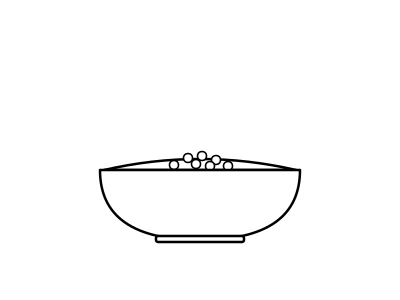
      • A bowl of food (feed).
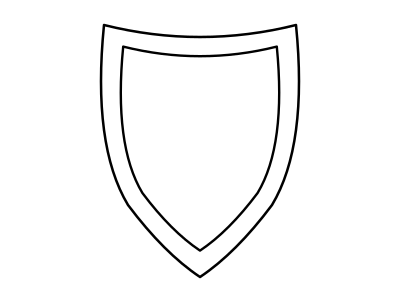
      • A shield (protect).
      • A blanket (keep warm).
      • A grown-up showing a child how (teach).
    2. 2.
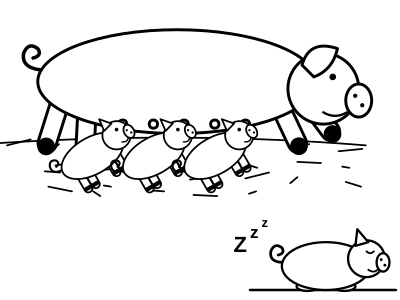
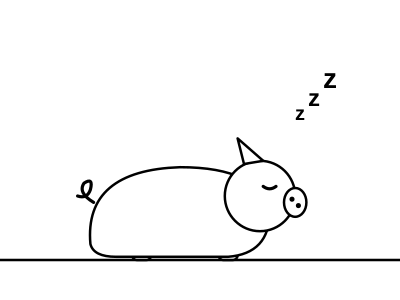
      A mother pig with piglets drinking her milk, and a pig sleeping alone. Circle the parent that is feeding its babies.
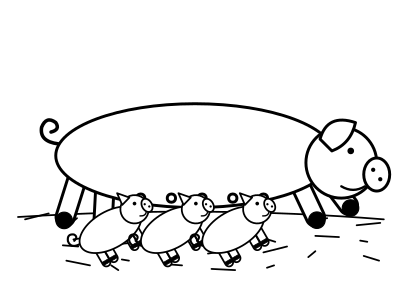
      • The mother pig with the piglets drinking.
      • The pig sleeping alone.
    3. 3.
      A mother sea otter spends a lot of time grooming her pup's thick, fluffy fur. The fur keeps the pup warm in the cold ocean. Which kind of help is that?
      • A bowl of food (feed).
      • A shield (protect).
      • A blanket (keep warm).
      • A grown-up showing a child how (teach).
    4. 4.
      A mother zebra keeps her new foal right beside her and chases other zebras away from it. Which kind of help is that?
      • A bowl of food (feed).
      • A shield (protect).
      • A blanket (keep warm).
      • A grown-up showing a child how (teach).
    5. 5.
      A mother cheetah shows her cubs how to catch food. Which kind of help is that?
      • A bowl of food (feed).
      • A shield (protect).
      • A blanket (keep warm).
      • A grown-up showing a child how (teach).
    6. 6.
      Name the 4 kinds of help animal parents give their babies. Your grown-up writes them.
    7. 7.
      Give one animal example for each kind of help. Your grown-up writes them.
    8. 8.
      Draw a parent protecting its baby.