    1First Grade

    Adding tens and tens

    Pictures in my head

    Practice pages

    0 of 180 days complete · Saved on this device

    View all 180 days

    Math

    Adding tens and tens

    I can add groups of ten.

    Standards: 1.NBT.C.4

    Number practice (no timer)
    Adding tens: 3 tens + 4 tens
    Builds on
    Week 14 decade numbers (60 is 6 tens and 0 ones) and Week 19 (10 more). One-minute check: "How many tens are in 60?" (6)

    New words

    • multiple of 10: a number made of only tens, like 20, 30 or 40
    • add tens: put groups of ten together

    You need

    • 10 tens: straw bundles of 10 (a rubber band around each), base-ten rods, or paper ten-strips (strips of 10 squares, cut by an adult). 10 are needed so 100 can be built.
    • 12 memory cards made from paper squares: 10 + 10, 20, 20 + 20, 40, 20 + 30, 50, 40 + 20, 60, 70 + 20, 90, 50 + 30, 80
    • Notebook and pencil
    1. Warm-Up · 5 min

      Fluency: adding tens. Ask: "3 + 4?" (7) "So 3 tens + 4 tens?" (7 tens, 70) "2 + 5?" (7) "So 2 tens + 5 tens?" (7 tens, 70) Spaced review from Week 19: "10 more than 48?" (58)

    2. Mini-Lesson · 10 min

      Say: "Today we add tens to tens." Write 30 + 40. Ask: "How many tens is 30?" (3) "How many tens is 40?" (4) Build 3 bundles and 4 bundles in two piles. Push them together and count by tens: "10, 20, 30, 40, 50, 60, 70." Say: "3 tens + 4 tens = 7 tens. 7 tens is 70." Write: 30 + 40 = 70. Under it write 3 + 4 = 7. Ask: "What do you notice?" (The small fact 3 + 4 = 7 helps. It is just tens instead of ones.) Do one more: 20 + 60. Ask: "What small fact helps?" (2 + 6 = 8) "So 20 + 60?" (8 tens, 80) Build it to check.

    3. Guided Practice · 10 min

      Your child builds each problem with bundles, writes the equation and says the small fact that helps. 1) 50 + 20 (70; 5 + 2 = 7) 2) 40 + 40 (80; 4 + 4 = 8, a double) 3) 10 + 70 (80; 1 + 7 = 8) 4) 60 + 30 (90; 6 + 3 = 9) 5) 50 + 50 (100; 5 + 5 = 10. 10 tens is 100.) If stuck, say: "Count the bundles by tens: 10, 20, 30. How many tens in all?"

    4. Play · 10 min

      Tens Memory. Mix the 12 memory cards and lay them face down in 3 rows of 4. On your turn, flip 2 cards. If a problem card and its answer card match (such as 20 + 30 and 50), say the equation and keep the pair. If not, turn them back over. Take turns until all 6 pairs are found. Use the bundles to settle any question. Pairs: 10 + 10 = 20, 20 + 20 = 40, 20 + 30 = 50, 40 + 20 = 60, 70 + 20 = 90, 50 + 30 = 80. Play twice.

    5. Exit Ticket · 3-5 min

      Put the objects to one side but leave them on the table. Read each question aloud. Your child answers out loud, with objects or with a quick drawing. Check each answer together right away.

    Exit ticket

    1. 60 + 10 = ?
    2. How many tens is 10 + 80? What number is that?
    3. Draw a quick picture of 10 + 40 and solve it.
    Answers
    1. 70
    2. 9 tens. 90.
    3. 5 sticks. 50.
    Watch for, and help or stretch
    Watch for
    Writing 30 + 40 = 7, forgetting that the 7 means 7 tens.
    Try
    Count the bundles by tens together. Say: "7 tens. How do we write 7 tens?" (70)
    Extra help
    Keep the totals under 60 and build every problem with bundles before writing it.
    Stretch
    Ask: "What two tens numbers make 90? Find 3 ways." (Answers vary, such as 40 + 50 and 60 + 30.)

    At home (optional): Ask: "If you have 4 dimes (each worth 10 cents) and get 2 more dimes, how many cents?" (60) Make up 2 more with real or pretend dimes.
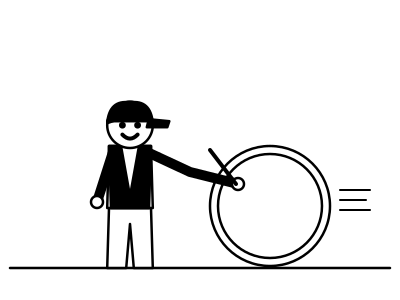
    Reading & Writing

    Pictures in my head

    I can find words in a poem that appeal to the senses.

    Standards: RL.1.4, RF.1.4.a, RF.1.3.b

    Phonics
    r-controlled review (ar, or, er, ir, ur) and word sorts
    Sight words
    time, look, more, write, number
    Reading
    "My Shadow" by Robert Louis Stevenson (public domain)
    Writing
    Narrative and poem: describing with adjectives · Handwriting: illustrated poem copy
    Builds on
    er, ir and ur (Week 19) and ar and or (Weeks 17 and 18). One-minute check: your child reads star, fork, fern, bird, burn.

    New words

    • shadow: the dark shape made when something blocks light
    • shrink: to get smaller
    • india-rubber ball: an old name for a bouncy rubber ball

    You need

    • Printed "My Shadow" (in the lesson)
    • 10 r-controlled sort cards (index cards): shark, yard, corn, porch, short, herd, third, curl, chirp, hurt
    • Three header cards: ar (car), or (fork), er/ir/ur (her)
    • Sight word cards: time, look, more, write, number (5 index cards)
    • Printed "Bert and the Dark Shape" (in the lesson)
    • Printed copy poem "My Dark Shape" (in the lesson)
    • Lined handwriting paper, pencil and crayons
    1. Phonics & Word Work · 15 min

      r-controlled review and sort. I do: lay out the header cards. Say: "r changes the vowel before it. ar says /ar/, as in car. or says /or/, as in fork. er, ir and ur all say /er/, as in her." We do: read and sort barn, horn, fern, bird, burn together. You do: your child reads and sorts the 10 cards: shark, yard, corn, porch, short, herd, third, curl, chirp, hurt. (ar: shark, yard. or: corn, porch, short. er/ir/ur: herd, third, curl, chirp, hurt.) Read: "A bird sat on the barn." "The shark has sharp fins." Dictation: yard, horn, skirt, turn. If stuck, ask: "Find the vowel. Is r right after it? Then say the team sound."

    2. Sight Words · 5 min

      Introduce this week's words with see-say-spell-write. For each card: Say: "This word is ___. Say it with me." Your child reads it, spells it aloud while tapping each letter, writes it once while saying each letter, and reads it again. Draw a small heart over any part we must learn by heart: time (i_e, regular); look (oo says /oo/ as in book: heart over oo); more (or says /or/, and the e at the end is silent: heart over e); write (the w is silent: heart over w; i_e is regular); number (two parts, num and ber; er says /er/ as you learned last week). Finish by reading all five cards in mixed order twice. If stuck, cover the tricky part, read the rest together, then uncover it and say the whole word.

    3. Read-Aloud & Shared Reading · 15 min

      Say: "Poets help us make pictures in our heads. Listen for how the shadow grows and shrinks." Read "My Shadow" twice. On the second read, your child acts it out: stand tall for "shoots up taller" and crouch small for "gets so little". My Shadow (Robert Louis Stevenson, A Child's Garden of Verses, 1885; public domain) I have a little shadow that goes in and out with me, And what can be the use of him is more than I can see. He is very, very like me from the heels up to the head; And I see him jump before me, when I jump into my bed. The funniest thing about him is the way he likes to grow— Not at all like proper children, which is always very slow; For he sometimes shoots up taller like an india-rubber ball, And he sometimes gets so little that there's none of him at all. He hasn't got a notion of how children ought to play, And can only make a fool of me in every sort of way. He stays so close beside me, he's a coward you can see; I'd think shame to stick to nursie as that shadow sticks to me! One morning, very early, before the sun was up, I rose and found the shining dew on every buttercup; But my lazy little shadow, like an arrant sleepy-head, Had stayed at home behind me and was fast asleep in bed. Ask: "Which words show the shadow getting big?" (He sometimes shoots up taller like an india-rubber ball.) Ask: "Which words show the shadow getting small?" (He sometimes gets so little that there's none of him at all.) Ask: "In the last part, the child goes out before the sun is up. Why do you think the shadow stayed in bed?" (Answers vary. Look for: there was no sunshine yet to make a shadow, so the poet pretends the shadow is lazy and asleep.) Then echo-read this week's decodable story: you read a line, your child reads it back. Bert and the Dark Shape Bert is a short dog with black fur. It was dark. Bert sat on the porch by a lamp. "Look!" A big dark shape was on the shed. The shape had fur and a tail. "Arf! Arf!" said Bert. Bert did a turn. The dark shape did a turn. Bert did a jump. The dark shape did a jump. Bert did more jumps. The shape did more jumps! Mom came out to the porch. "Bert, that shape is not a beast," said Mom. "That shape is you! The lamp is bright. You block the light, so you make a dark shape." Bert sat by the lamp. His dark shape sat with him. "It is time for bed," said Mom. "You and your shape can rest."

    4. Writing & Handwriting · 15 min

      Shadow word web: your child draws themself and their shadow in the middle of a page. Around it, list words that tell what a shadow is like. Your child says each word and writes it by sounds; you add any word your child asks for. (Answers vary. Look for: dark, flat, thin, big, black.) Save the web for Day 4. Handwriting (4 min): tall letters b, d, h, k, l and t start at the top line. Your child writes each letter 3 times, then copies the first two lines of the copy poem: My Dark Shape My shape can jump, My shape can turn, My shape is dark And has no fur.

    5. Exit Ticket · 5 min

      Oral answers. Your child reads the words from a card you write.

    Exit ticket

    1. Read these words: sport, girl, harm.
    2. In the poem, what does the shadow do when the child jumps into bed?
    3. Show me with your body what the shadow does when it "shoots up taller".
    Answers
    1. sport, girl, harm
    2. It jumps too (the child sees it jump before him).
    3. Your child stretches up tall: the shadow grows bigger.
    Watch for, and help or stretch
    Watch for
    Mixing up or and ar, such as reading short as "shart".
    Try
    Hold up the key cards: car for ar, fork for or. Ask: "Which team is it? Say its sound."
    Extra help
    Sort only two groups today: ar and or. Add er, ir and ur on Day 2.
    Stretch
    Your child finds every r-team word in "Bert and the Dark Shape". (Bert, short, fur, dark, porch, Arf, turn. Bonus: the sight words for and more also have or.)

    At home (optional): Before bed, make shadows with a flashlight. Your child tells you when the shadow grows and when it shrinks.

    Social Studies

    Then and now: toys and school

    I can compare toys and schools long ago with toys and schools today.

    Standards: D2.His.2.K-2

    Builds on
    Past, present and future (Week 19). One-minute check: ask "Is long ago in the past or the future?" (the past)

    New words

    • then: a time long ago
    • now: the time today
    • change: to become different

    You need

    • 4 to 6 old photos of toys and schools and 4 to 6 photos from today. For old photos, search the Library of Congress website (loc.gov) for "one-room school" and "children playing marbles," or use a library book about long ago. For today, use photos of your child's toys and a picture of a school today
    • T-chart: a sheet of paper with a line down the middle, labeled Then and Now
    • Marker
    • Crayons
    1. Warm-Up / Wonder · 5 min

      Spaced review: ask: "Is tomorrow past, present or future?" (future) Wonder question: "What did children play with long, long ago?"

    2. Explore · 10–15 min

      Look at the old toy photos first. Ask: "What toys do you see?" (Answers vary: marbles, tops, jump ropes, dolls, hoops, wooden blocks.) "What are they made of?" (Answers vary: wood, cloth, glass, metal.) Then look at toys today. Ask: "What is the same?" (Answers vary: children still play with balls, dolls, jump ropes and blocks.) "What is different?" (Answers vary: many toys today are plastic, and some use batteries or screens.) Write answers on the T-chart. Next, look at the old school photos. Say: "Long ago, many children went to a one-room school. One teacher taught children from many grades together in one room. Many children walked to school, rain or shine." Ask: "How is that different from schools today?" (Answers vary: schools today have many rooms and teachers, some children ride a bus, and schools have electric lights and computers.) "What stayed the same?" (Answers vary: children learn to read and write, have a teacher and play at recess.) Add to the T-chart. Ask: "What changed? What stayed the same?" If stuck, point to one thing in an old photo and ask: "Do we still have this today? Does it look the same?"

    3. Talk & Record · 5–10 min

      Your child draws one toy from then and one toy from now on the two sides of a page. Sentence frame: "Then, children played with ___. Now, children play with ___."

    4. Exit Ticket · 3–5 min

      Ask the three questions aloud. Your child answers by talking or drawing.

    Exit ticket

    1. Name one toy that children played with long ago and still play with today.
    2. Name one way school is different today.
    3. Name one thing about school that stayed the same.
    Answers
    1. Answers vary. Look for: balls, dolls, jump ropes, marbles, tops or blocks.
    2. Answers vary. Look for: more rooms and teachers, buses, electric lights or computers.
    3. Answers vary. Look for: children learn to read and write, have a teacher, or play at recess.
    Watch for, and help or stretch
    Watch for
    Thinking children long ago had no toys or no fun.
    Try
    Ask: "Look at the marbles and the jump rope. Do those look fun?" Say: "Children have always played. The toys have changed."
    Extra help
    Compare toys only, with 2 old photos and 2 new ones.
    Stretch
    Your child finds a toy at home that a grown-up also played with as a child and tells how it is the same and different now.

    At home (optional): Your child asks a grown-up at home: "What was your favorite toy when you were little?" and adds it to the Then side of the chart.

    Practice

    Read each direction aloud. Your child works on the page; answers are in the grown-up view.

    Warm-up

    Remember?

    Math

    1. What is 10 more than 47?
    2. True or false? 11 = 6 + 5

    Reading & Writing

    1. herd, firm, burn

    Math · Week 20 Day 1

    I can add groups of ten.

    Look: 40 + 50

    1. 40 is 4 tens. 50 is 5 tens.
    2. 4 tens + 5 tens = 9 tens. The small fact is 4 + 5 = 9.
    3. 9 tens is 90. So 40 + 50 = 90.

    Add the tens.

    1. 1.
      30 + 30 = ____
    2. 2.
      60 + 20 = ____
    3. 3.
      10 + 30 = ____
    4. 4.
      40 + 60 = ____

    Draw sticks for the tens and solve.

    1. 5.
      Draw sticks to show 70 + 10. 70 + 10 = ____
    2. 6.
      Which small fact helps with 20 + 70?
      • 2 + 7
      • 20 + 7
      • 7 - 2
    3. 7.
      ____ + 30 = 80

    Challenge (optional)

    10 + 20 + 30 = ____

    You need: Pencil

    Reading & Writing · Week 20 Day 1

    I can find words in a poem that appeal to the senses.

    Look: sense words in a poem

    1. Read the line: The stars are bright.
    2. Ask: Which word helps me see? Bright.
    3. Poets pick words that help us see, hear, smell or feel.

    Night on the Farm

    The barn is dark at night. A pig snorts in the pen. The stars are bright. The corn is soft and still. I can smell the wet grass.

    Read the line. Circle the word that helps you see, hear, smell or feel.

    1. 1.
      A pig snorts in the pen.
      • pig
      • snorts
      • pen
    2. 2.
      The stars are bright.
      • stars
      • bright
    3. 3.
      The corn is soft and still.
      • corn
      • soft
    4. 4.
      I can smell the wet grass.
      • wet
      • I

    Finish the line with a sense word. Then draw the farm at night.

    1. 5.
      The barn is ____.
    2. 6.
      The grass is ____.
    3. 7.
      The farm at night

    Challenge (optional)

    A star is ____ and ____.

    You need: crayons

    Social Studies · Week 20 Day 1

    I can compare toys and schools long ago with toys and schools today.

    Look: then and now

    1. Look at a toy or a school from long ago.
    2. Ask: "Do we still have this today? Does it look the same?"
    3. Some things are only from then, some are only from now and some are from then and now.

    Listen. Your child circles then, now or then and now.

    1. 1.
      A child rolling a wooden hoop with a stick.
      • then
      • now
      • then and now
    2. 2.
      a video game
      • then
      • now
      • then and now
    3. 3.
      a jump rope
      • then
      • now
      • then and now
    4. 4.
      a teacher helping children learn to read
      • then
      • now
      • then and now
    5. 5.
      a one-room schoolhouse heated by a wood stove, with children of all grades and one teacher
      • then
      • now
      • then and now
    6. 6.
      a laptop computer at school
      • then
      • now
      • then and now

    Talk and draw. Write what your child says.

    1. 7.
      Pick a toy you have. How might it look if it were made long ago?
    2. 8.
      Draw a school from long ago.
    3. 9.
      Long ago, many children walked to school in rain or snow. How do you get to your lessons now?

    Challenge (optional)

    Ask a grown-up what toy they loved as a child. Is it like a toy you have?

    You need: crayons