1First Grade

    Quick pictures to add

    Peek, look, stare

    Practice pages

    0 of 180 days complete · Saved on this device

    View all 180 days

    Math

    Quick pictures to add

    I can draw tens and ones to add.

    Standards: 1.NBT.C.4, 1.OA.B.3

    Number practice (no timer)
    Add ones to a two-digit number: just add the ones
    Builds on
    Day 1 (adding ones with the kit) and Week 15 quick pictures (sticks for tens, dots for ones). One-minute check: "Draw a quick picture of 26." (2 sticks and 6 dots)

    New words

    • quick picture: a simple drawing of a number: a stick for each ten and a dot for each one

    You need

    • 8 problem cards made from paper squares: 61 + 5, 24 + 4, 73 + 3, 32 + 7, 90 + 8, 46 + 2, 15 + 4, 87 + 1
    • Notebook and pencil
    • A crayon
    1. Warm-Up · 5 min

      Fluency: add ones to a two-digit number. "5 + 4?" (9) "So 25 + 4?" (29) "3 + 6?" (9) "So 73 + 6?" (79) Spaced review from Week 4: "There were some birds on a fence. 3 flew away. Now there are 5. How many were there at first?" (8)

    2. Mini-Lesson · 10 min

      Say: "We do not always have a kit. A quick picture works just as well." Write 53 + 4. Draw 53: 5 sticks and 3 dots. Say: "Now I add 4." Draw 4 more dots with the crayon. Ask: "How many sticks?" (5) "How many dots?" (7) "What number?" (57) Write 53 + 4 = 57 next to the drawing. Say: "The picture and the equation show the same thing." Now write 6 + 31. Say: "Which is bigger?" (31) "Draw 31 first, then add the 6. Same numbers, same total." Draw 3 sticks and 1 dot, add 6 dots: 37. Write 6 + 31 = 37.

    3. Guided Practice · 10 min

      Your child draws a quick picture for each one, adds the dots in crayon, and writes the equation beside the drawing. 1) 44 + 5 (4 sticks, 9 dots; 49) 2) 82 + 6 (88) 3) 7 + 21 (draw 21 first; 28) 4) 20 + 7 (2 sticks, 7 dots; 27) 5) 95 + 4 (99) If stuck, say: "Draw the sticks first. Then draw the dots for the ones. Count the dots."

    4. Play · 10 min

      Draw and Swap. Mix the 8 problem cards face down. On your turn, flip a card and draw the quick picture without saying the answer. The other player reads the picture and writes the equation. Check together. Then swap jobs. Answers: 61 + 5 = 66, 24 + 4 = 28, 73 + 3 = 76, 32 + 7 = 39, 90 + 8 = 98, 46 + 2 = 48, 15 + 4 = 19, 87 + 1 = 88.

    5. Exit Ticket · 3-5 min

      Put the objects to one side but leave them on the table. Read each question aloud. Your child answers out loud, with objects or with a quick drawing. Check each answer together right away.

    Exit ticket

    1. Draw a quick picture to solve 52 + 6. What is the answer?
    2. In a quick picture, what does each stick stand for?
    3. 4 + 63 = ?
    Answers
    1. 58 (5 sticks and 8 dots)
    2. One ten (10)
    3. 67
    Watch for, and help or stretch
    Watch for
    Drawing 10 dots for each ten instead of a stick, which takes a long time and leads to counting errors.
    Try
    Say: "A stick already means 10. Draw one stick for each ten."
    Extra help
    Draw the tens sticks for your child and let them add and count the dots.
    Stretch
    Your child writes 2 problems that make 49 by adding ones (such as 43 + 6 and 47 + 2).

    At home (optional): Your child draws a quick picture of their age plus 20 and plus 3, and explains it to a family member.
    Reading & Writing

    Peek, look, stare

    I can show the difference between words like look, peek and stare.

    Standards: L.1.5.d, L.1.5, SL.1.4

    Phonics
    Vowel sounds ou and ow (out, house, cow, down)
    Sight words
    way, people, than, first, water
    Reading
    "Who Has Seen the Wind?" by Christina Rossetti; "The Owl and the Pussy-cat" by Edward Lear (both public domain)
    Writing
    Poetry: a list poem and a feelings poem · Handwriting: poem in neat lines
    Builds on
    ou and ow (Day 1). One-minute check: your child reads out, cow, town.

    New words

    • peek: to take a quick look, often in secret
    • glance: to look at something very quickly
    • stare: to look at something for a long time

    You need

    • 12 sort cards (index cards): house, mouse, cloud, gown, clown, frown, crown, blow, show, grow, slow, row
    • Sight word cards: way, people, than, first, water
    • A tic-tac-toe grid drawn on paper and two colors of crayons
    • 4 action cards you write and read: look, peek, glance, stare
    • Printed "Out in the Wind" (from Day 1)
    • The feelings poem (from Day 1) and lined paper
    1. Phonics & Word Work · 15 min

      Sort ou and ow. I do: say "Some words have ow that says /ow/, and some have ow that says /o/." Read cow and snow. We do: read and sort 3 cards together into three piles (ou says /ow/, ow says /ow/, ow says /ō/): house, gown, blow. You do: your child reads and sorts the other 9 cards. (ou /ow/: house, mouse, cloud. ow /ow/: gown, clown, frown, crown. ow /o/: blow, show, grow, slow, row.) Read: "The clown has a big frown." "Snow is on the ground." Dictation: shout, how, town, cloud. If stuck, say both sounds and ask: "Which one makes a word you know?"

    2. Sight Words · 5 min

      Review: way, people, than, first, water. Tic-Tac-Toe: write one word in each square (repeat words to fill 9). To claim a square, read the word in it and color it. Three in a row wins.

    3. Read-Aloud & Shared Reading · 15 min

      Say: "Some words are cousins. They all mean look, but each one is a different kind of look." Show the action cards (you read them). Act out each one: look is a plain look; peek is a quick look you hide, like peeking through your fingers; glance is a very quick look; stare is a long look without looking away. Play charades: your child picks a card and acts it out; you guess. Then swap. Ask: "When would you peek?" (Answers vary. Look for: in hide-and-seek, or at a hidden present.) Ask: "Which is longer, a glance or a stare?" (a stare) Ask: "Why might you glance at a clock?" (Answers vary. Look for: to check the time quickly.) If stuck, count for each look: a glance is "one!" and a stare is "one, two, three, four, five". Then your child reads "Out in the Wind" and acts out how Gus looked at the flag.

    4. Writing & Handwriting · 15 min

      Finish the feelings poem. Your child adds two lines, one with a looking word: "I peek out at the clouds." and one more feeling line. (Answers vary. Look for: at least 3 lines and a looking word.) Your child reads the poem aloud. Handwriting (4 min): letters made with slants: v, w, x and z. Your child writes each letter 3 times, then copies the last two lines of "The Wind" (printed on Day 1).

    5. Exit Ticket · 5 min

      Oral answers.

    Exit ticket

    1. Act out stare, then glance. How are they different?
    2. Read this: I peek out of the house.
    3. When might you stare at something?
    Answers
    1. A stare is long; a glance is quick.
    2. I peek out of the house.
    3. Answers vary. Look for: something interesting to watch, such as a bird or a fire truck.
    Watch for, and help or stretch
    Watch for
    Acting out every looking word the same way.
    Try
    Count it out: a glance is "one!" and a stare is "one, two, three, four, five".
    Extra help
    Use only two words today: peek and stare.
    Stretch
    Add glare (an angry stare) and scowl (an angry face) and act them out.

    At home (optional): Play peek-a-boo or hide-and-seek. Your child uses peek and stare during the game.

    Social Studies

    Clues from the past

    I can name different kinds of sources that tell about the past.

    Standards: D2.His.9.K-2

    Builds on
    Family interview (Week 20). One-minute check: ask "What source did we use last week?" (a person we interviewed)

    New words

    • clue: something that helps you figure something out
    • object: a thing you can touch
    • history: the story of what happened in the past

    You need

    • A mystery box (a shoebox or a plastic bin) with 5 to 8 things from the past: an old photo, an old letter or card, a coin with a year on it, an old tool or kitchen utensil, a recipe card, and a ticket stub or map if you have one
    • 4 sort labels: Pictures, Writing, Objects, Things people tell
    • A sticky note and pencil (to write down one thing a family member tells about the past)
    • Notebook
    1. Warm-Up / Wonder · 5 min

      Spaced review: ask: "Name one way life was different when the person you interviewed was little." (Answers vary.) Wonder question: "How do we know about things that happened before we were born?" Safety: coins and other small objects are a choking hazard for children under 3. Keep them away from little brothers and sisters, and coins never go in mouths.

    2. Explore · 10–15 min

      Say: "A source is anything that helps us learn about the past. Historians are history detectives who use sources as clues." Your child opens the mystery box and takes out one thing at a time. For each, ask: "What is it? What could it tell us about the past?" (Answers vary.) Then lay out the 4 labels. Say: "Sources come in different kinds." Pictures (photos, drawings, paintings). Writing (letters, cards, recipes, diaries, newspapers). Objects (tools, coins, toys, clothes). Things people tell (stories from people who remember, like your interview). Your child sorts each thing. For Things people tell, a grown-up tells one short memory from long ago and you write it on the sticky note; your child puts it with that label. Ask: "Which kind did we use last week?" (Things people tell, the interview.) "Can one source fit two groups?" (Yes. A postcard has a picture and writing.) If stuck sorting, ask: "Is it a picture, is it words, or is it a thing you can hold?"

    3. Talk & Record · 5–10 min

      Your child draws one source from each group in the notebook and labels the group. Sentence frame: "A ___ is a source because it tells us ___."

    4. Exit Ticket · 3–5 min

      Ask the three questions aloud. Your child answers by talking or drawing.

    Exit ticket

    1. An old newspaper is what kind of source?
    2. Your great-grandmother's old cooking pot is what kind of source?
    3. Name one kind of source that is a picture.
    Answers
    1. Writing.
    2. An object.
    3. Answers vary. Look for: a photo, a drawing or a painting.
    Watch for, and help or stretch
    Watch for
    Thinking only old photos count as sources.
    Try
    Hold up the old tool. Ask: "Can this tell us how people cooked or worked long ago?" (yes) Say: "Then it is a source too."
    Extra help
    Use 4 items, one for each group.
    Stretch
    Your child finds one more source at home and tells which group it belongs in and why.

    At home (optional): Your child finds one old thing at home and asks a grown-up what it is and how old it is.

    Practice

    Read each direction aloud. Your child works on the page; answers are in the grown-up view.

    Warm-up

    Remember?

    Math

    1. What is 10 more than 61?
    2. A quick picture of 3 ten sticks and 5 ones dots. What number is this?

    Reading & Writing

    Math · Week 21 Day 2

    I can draw tens and ones to add.

    Look: 3 + 65

    1. Start with the bigger number. Draw 65: 6 sticks and 5 dots.
    2. Draw 3 more dots.
    3. 6 sticks and 8 dots is 68. So 3 + 65 = 68.

    Draw a quick picture and write the answer.

    1. 1.
      41 + 8 = ____
    2. 2.
      5 + 72 = ____
    3. 3.
      33 + 6 = ____
    4. 4.
      2 + 86 = ____

    Read the quick picture.

    1. 5.
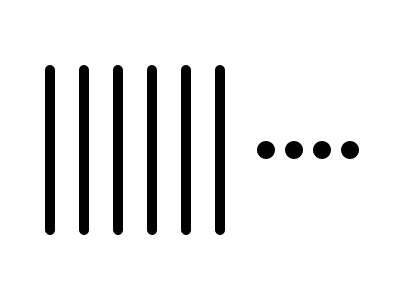
      6 sticks and 4 dots. What number is it? ____
    2. 6.
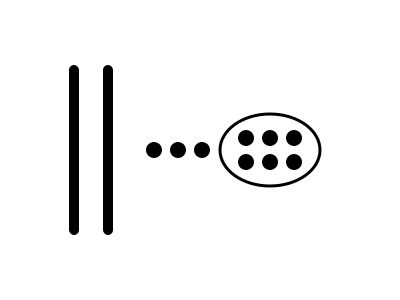
      2 sticks and 3 dots, then 6 more dots set a little apart and circled. Which problem does it show?
      • 23 + 6
      • 23 + 60
      • 26 + 3
    3. 7.
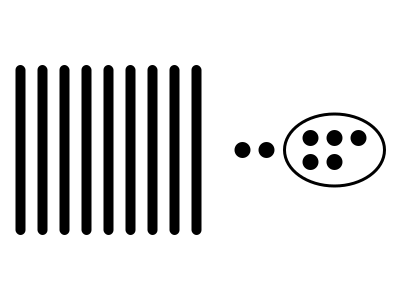
      9 sticks and 2 dots, then 5 more dots set a little apart and circled. What is the answer? ____

    Challenge (optional)

    Draw a quick picture for 40 + 7. How many sticks? How many dots? What number?

    You need: Pencil, A crayon

    Reading & Writing · Week 21 Day 2

    I can show the difference between words like look, peek and stare.

    Look: look, peek, stare

    1. Look is a plain look.
    2. Peek is a quick look you hide. Glance is a very quick look.
    3. Stare is a long, long look.

    Peek at the Owl

    An owl sits in the barn. I peek in. The owl looks at me. I look at the owl. We look and look! Then it is time to go.

    Write the word I say. It has ou or ow.

    1. 1.
      ____
    2. 2.
      ____
    3. 3.
      ____

    Read the line. Circle quick look or long look.

    1. 4.
      I peek at the gift.
      • quick
      • long
    2. 5.
      I look and look at the owl.
      • quick
      • long
    3. 6.
      I peek out of the tent.
      • quick
      • long
    4. 7.
      Mom and I sit and look at the stars.
      • quick
      • long

    Challenge (optional)

    I peek at ____.

    Social Studies · Week 21 Day 2

    I can name different kinds of sources that tell about the past.

    Look: kinds of sources

    1. A source is anything that helps us learn about the past.
    2. Sources come in 4 kinds: pictures, writing, objects and things people tell.
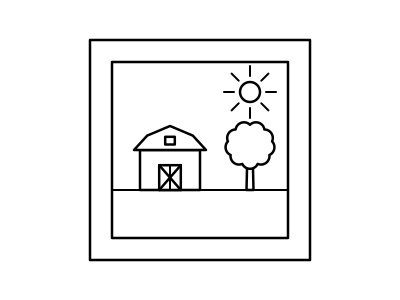
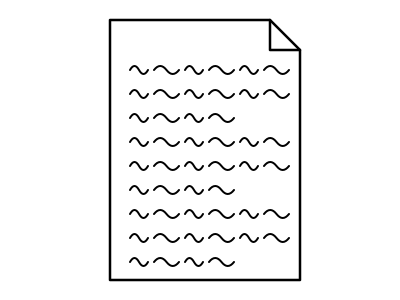
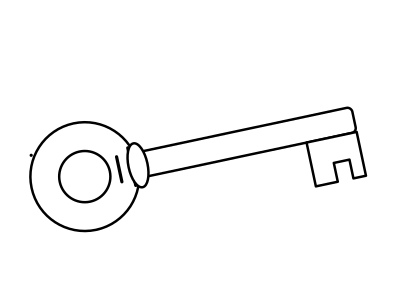
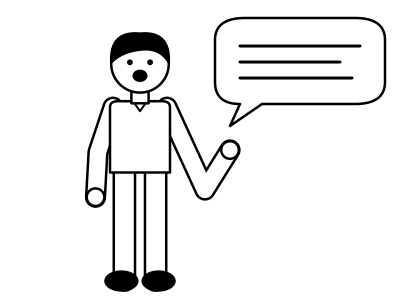
    3. Ask: "Is it a picture, is it words, is it a thing you can hold, or is it a story someone tells?" On this page, the framed photo means a picture, the page means writing, the old key means any object you can hold, and the talking person means things people tell.

    Listen. Circle the photo for a picture, the page for writing, the key for an object or the talking person for things people tell.

    1. 1.
      an old photo of a farm
      • A framed photo.
      • A page of writing.
      • An old key.
      • A person talking.
    2. 2.
      a recipe card in Grandma's handwriting
      • A framed photo.
      • A page of writing.
      • An old key.
      • A person talking.
    3. 3.
      an old metal iron for pressing clothes
      • A framed photo.
      • A page of writing.
      • An old key.
      • A person talking.
    4. 4.
      Uncle Ray tells a story about his first bike
      • A framed photo.
      • A page of writing.
      • An old key.
      • A person talking.
    5. 5.
      a diary written long ago
      • A framed photo.
      • A page of writing.
      • An old key.
      • A person talking.

    Talk and draw. Write what your child says.

    1. 6.
      What could an old metal iron teach us about the past?
    2. 7.
      An old map has drawings and words. Which two kinds of source is it?
    3. 8.
      Draw a thing in our home that someone in 100 years could learn from.

    Challenge (optional)

    Ask a family member to tell one short memory. What kind of source is that?

    You need: crayons