This week's lessons
Math and reading every day; science and social studies take turns
- Day 1 · Monday
- MathAdding ones to a two-digit numberI can add a one-digit number to a two-digit number.
- Reading & WritingFeeling wordsI can find words in a poem that show feelings.
- ScienceBaby and grown-up matchI can match baby animals to their parents.
- Day 2 · Tuesday
- MathQuick pictures to addI can draw tens and ones to add.
- Reading & WritingPeek, look, stareI can show the difference between words like look, peek and stare.
- Social StudiesClues from the pastI can name different kinds of sources that tell about the past.
- Day 3 · Wednesday
- MathUse a fact I knowI can use a small fact to add to a bigger number.
- Reading & WritingFix it as I readI can go back and reread when a word doesn't make sense.
- ScienceAlike, but not exactlyI can find ways a baby animal is different from its parent.
- Day 4 · Thursday
- MathAdding ones in storiesI can solve stories that add a one-digit number.
- Reading & WritingList poemI can write a list poem about one topic.
- Social Studies · CheckSources help us learnI can explain how a source helps us learn about the past.
- Day 5 · Friday
- Math · CheckLesson + weekly check: adding onesI can add a one-digit number to a two-digit number.
- Reading & Writing · CheckShare and check: ou and owI can read ou and ow words and fix my reading when it doesn't make sense.
- Science · CheckPlant babiesI can compare a young plant with a grown plant of the same kind.
This week's checks
Short checks on the last day each subject meets this week
Social Studies · Day 4
- I can name different kinds of sources that tell about the past.
- I can explain how a source helps us learn about the past.
Secure when: 6 of 8 correct, with at least one right on each goal
Open the checkMath · Day 5
- I can add a one-digit number to a two-digit number.
- I can solve stories that add a one-digit number.
Secure when: 7 or 8 of the 8 items right.
Open the checkReading & Writing · Day 5
- I can read ou and ow words and fix my reading when it doesn't make sense.
- I can find feeling words and tell look, peek and stare apart.
- I can write a list with commas.
Secure when: 8 of 10 words in items 1-2, 4 of 5 sight words, one stop-and-reread in item 4 (or no errors), and 4 of 6 on items 5-10.
Open the checkScience · Day 5
- I can match baby animals to their parents.
- I can find ways a baby animal is different from its parent.
- I can compare a young plant with a grown plant of the same kind.
Secure when: 6 of 8 correct, including items 1 and 2 (one same and one different for the young and grown plant).
Open the check
Reading About Our World: Just Like Mom and Dad?
Read it aloud. Your child reads the sentences marked with a star. Builds science knowledge.
Alike
A baby animal looks a lot like its parents. They are alike in many ways. A puppy has fur, four legs and a tail like its mom. The pup looks like the dog.
Not Exactly
But babies are not exactly like their parents. A puppy may have spots its mom does not have. Puppies in one litter can have different colors.
Big Changes
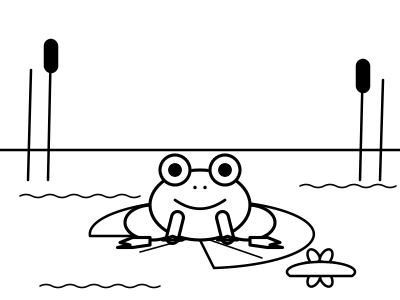
Some babies look very different at first. A frog starts as a tadpole that swims with a tail. Slowly it grows legs and loses its tail. Then it looks like its parents.
Words to know
- alike: the same in some ways
- litter: a group of babies born to one mother at the same time
- tadpole: a baby frog that lives in water
Talk about it
- Name one way a puppy is like its mom.
- What does a frog start out as?
- A kitten has stripes, but its mom does not. Is it still a cat? How do you know?
Home Connection
Five-minute ideas for the whole family, with things you already have
Math
We can add ones to a two-digit number by adding to the ones.
Do: Show 32 with 3 cups of ten beans and 2 loose beans. Add 5 more loose beans. How many now?
Talk: What is 41 + 6? Which digit changed?
Reading & Writing
Words like peek, look and stare mean almost the same thing, but not exactly.
Do: Act out peek, look and stare. Write out, loud, cloud, cow and town for your child to read.
Talk: When would you peek instead of stare?
Science
Young animals and plants look like their parents, but not exactly.
Do: Look at pictures of babies and grown-ups: a puppy and a dog, a chick and a hen, a tadpole and a frog. Match each baby to its parent.
Talk: How is a tadpole different from a frog?
Social Studies
Sources like photos, letters and objects help us learn about the past.
Do: Look at an old photo, letter or object in your home together.
Talk: What clue tells you this is old?
This week's words: way, people, than, first, water
Celebrate adding ones, a word acted out and a clue from the past.
Math catch-up: Loose Ones Stay Loose
10 minutes, if this week's math check was not secure · 1.NBT.C.4
When adding a one-digit number, children often add it to the tens digit (34 + 5 = 84). Putting new loose ones with the loose ones keeps the tens the same.
You need: 80 straws or craft sticks, 8 rubber bands, paper and a pencil
- Build 42: 4 bundles and 2 loose. Add 6 loose straws. Ask: "Are these new straws bundles or loose ones?" (Loose.)
- Count the loose ones: 8. Count the tens: still 4. Write 42 + 6 = 48.
- Draw 73 as a quick picture. Add 5 dots. Your child says the new number (78) and tells which digit changed.
- Write 3 + 54. Ask: "Which number shows the tens?" Solve: 57.
Try again
- 53 + 6 = ___
- 61 + 7 = ___
- 4 + 45 = ___
Specials This Week
Weeks 19–24 unit • ~90 min/week per subject
Manipulative Skills (Kicking and Dribbling)
Developing kicking skills (stationary and moving ball), dribbling with hands (bouncing) and feet (soccer style).
Value and Self-Expression
Light and dark (value), creating form and shadow, using art to express feelings, drawing self-portraits.
Form and Timbre
Identifying repeating sections (ABA, AABB format), recognizing different instrument sounds (timbre), classifying instruments (strings, woodwinds, brass).
For guiding principles and full standards reference, visit How to use this curriculum
As an Amazon Associate, we earn from qualifying purchases. Book and supply links on this page are affiliate links — using them supports this curriculum at no extra cost to you.