1First Grade

    Use a fact I know

    Fix it as I read

    Practice pages

    0 of 180 days complete · Saved on this device

    View all 180 days

    Math

    Use a fact I know

    I can use a small fact to add to a bigger number.

    Standards: 1.NBT.C.4, 1.OA.C.6

    Number practice (no timer)
    Add ones to a two-digit number: just add the ones
    Builds on
    Days 1 and 2 and facts within 10 from Unit 2. One-minute check: "3 + 4?" (7)

    New words

    • pattern: something that repeats or changes in the same way

    You need

    • Hundred chart to 120: printed, or drawn as 12 rows of 10 boxes (1 to 10 in the top row, 111 to 120 in the bottom row)
    • 4 fact cards made from paper squares: 2 + 6, 5 + 4, 1 + 7, 3 + 3
    • Crayons in 2 colors
    • Notebook and pencil
    1. Warm-Up · 5 min

      Fluency: add ones to a two-digit number. "41 + 4?" (45) "60 + 3?" (63) Spaced review from Week 7: "Count on 3 from 18." (19, 20, 21)

    2. Mini-Lesson · 10 min

      Say: "A small fact you know can solve big ones." Write 3 + 4 = 7. Under it write 23 + 4 = ?. Ask: "What is the same?" (The 3 and the 4.) Say: "The 3 ones and 4 ones still make 7 ones. The 2 tens just come along." (27) Write 53 + 4 = ?. (57) Then 13 + 4 (17), 33 + 4 (37), 93 + 4 (97). Color 7, 17, 27, 37, 57, 97 on the chart. Ask: "What do you notice?" (They are all in the same column. They all end in 7.) Say: "3 + 4 = 7, so any number ending in 3 plus 4 ends in 7."

    3. Guided Practice · 10 min

      Say the small fact first, then your child solves the big ones. 1) "2 + 5 = 7. So 32 + 5?" (37) "72 + 5?" (77) 2) "6 + 3 = 9. So 46 + 3?" (49) "86 + 3?" (89) 3) "1 + 8 = 9. So 61 + 8?" (69) 4) Your child finds the small fact for 54 + 2. (4 + 2 = 6; 56) After each, ask: "Why does the small fact work?" (The ones add the same way. The tens stay.) If stuck, say: "Cover the tens digit with your finger. Solve the small fact. Then uncover the tens."

    4. Play · 10 min

      Fact Ladders. Your child flips a fact card, such as 2 + 6, and writes a ladder in the notebook: 2 + 6 = 8, 12 + 6 = 18, 22 + 6 = 28, and on to 92 + 6 = 98. Then they color the answers on the chart with one crayon. (They make a column.) Do the next card with the other color: 5 + 4 = 9, 15 + 4 = 19 ... 95 + 4 = 99. Take turns writing the next rung with your child. Finish with 1 + 7 (8, 18 ... 98) and 3 + 3 (6, 16 ... 96) if there is time.

    5. Exit Ticket · 3-5 min

      Put the objects to one side but leave them on the table. Read each question aloud. Your child answers out loud, with objects or with a quick drawing. Check each answer together right away.

    Exit ticket

    1. What small fact helps you solve 65 + 2? What is 65 + 2?
    2. 84 + 4 = ?
    3. Finish the ladder: 11 + 5, 21 + 5, 31 + 5. What is 31 + 5?
    Answers
    1. 5 + 2 = 7. 67.
    2. 88
    3. 36
    Watch for, and help or stretch
    Watch for
    Changing the tens digit too, such as 53 + 4 = 93.
    Try
    Ask: "How many tens are we adding?" (None.) The tens digit stays 5.
    Extra help
    Use small facts with sums up to 6 and keep the hundred chart in view.
    Stretch
    Ask: "Which numbers can you add 5 to and land on 99, 79 and 59?" (94, 74 and 54)

    At home (optional): Your child picks one small fact and makes a ladder from it for a family member, then shows the column on the chart.
    Reading & Writing

    Fix it as I read

    I can go back and reread when a word doesn't make sense.

    Standards: RF.1.4.c, RF.1.4.a, RF.1.3.b

    Phonics
    Vowel sounds ou and ow (out, house, cow, down)
    Sight words
    way, people, than, first, water
    Reading
    "Who Has Seen the Wind?" by Christina Rossetti; "The Owl and the Pussy-cat" by Edward Lear (both public domain)
    Writing
    Poetry: a list poem and a feelings poem · Handwriting: poem in neat lines
    Builds on
    Reading for meaning (Week 20) and ou/ow (Days 1 and 2). One-minute check: your child reads cloud, frown and tells what each means.

    New words

    • make sense: sound right and mean something
    • reread: go back and read again
    • nonsense: silly words or ideas that are not real, on purpose

    You need

    • Printed "The Owl and the Pussy-cat" (in the lesson)
    • Sight word cards: way, people, than, first, water
    • Printed "Out in the Wind" (from Day 1)
    • 5 sticky notes with "?" on them
    • 4 sticky notes for the list poem
    • Lined handwriting paper
    1. Phonics & Word Work · 15 min

      ou and ow with blends and plurals. I do: read sprout, scout: blend, then /ow/, then the end. We do: read crowds, clouds, trout, growl. You do: your child reads spout, frowns, plow, prowl, shouts, gowns, couch, ground, stout, crowns. Read: "The scout sat on the couch." "Gray clouds drift down." Dictation: sprout, clouds, crown, couch. If stuck, cover the blend, read the ou or ow part, then add the blend back.

    2. Sight Words · 5 min

      Review: way, people, than, first, water. Sentence Builder: your child picks a card and says a sentence with it; you write the sentence; your child finds and circles the sight word.

    3. Read-Aloud & Shared Reading · 15 min

      Say: "Good readers notice when something doesn't make sense. Then they go back and reread." Read the poem once all the way through for fun. Say: "Edward Lear liked nonsense: runcible is a word he made up, so nobody knows just what a runcible spoon is." The Owl and the Pussy-cat (Edward Lear, Nonsense Songs, 1871; public domain) The Owl and the Pussy-cat went to sea In a beautiful pea-green boat, They took some honey, and plenty of money, Wrapped up in a five-pound note. The Owl looked up to the stars above, And sang to a small guitar, "O lovely Pussy! O Pussy, my love, What a beautiful Pussy you are, You are, You are! What a beautiful Pussy you are!" Pussy said to the Owl, "You elegant fowl! How charmingly sweet you sing! O let us be married! too long we have tarried: But what shall we do for a ring?" They sailed away, for a year and a day, To the land where the Bong-tree grows And there in a wood a Piggy-wig stood With a ring at the end of his nose, His nose, His nose, With a ring at the end of his nose. "Dear Pig, are you willing to sell for one shilling Your ring?" Said the Piggy, "I will." So they took it away, and were married next day By the Turkey who lives on the hill. They dined on mince, and slices of quince, Which they ate with a runcible spoon; And hand in hand, on the edge of the sand, They danced by the light of the moon, The moon, The moon, They danced by the light of the moon. Then reread the first verse with mistakes on purpose: "went to sleep" for went to sea, "pea-green goat" for pea-green boat, and "a five-pound boat" for a five-pound note. Your child says "That doesn't make sense!" each time, and you reread the line the right way together. Ask: "Where did the Owl and the Pussy-cat go?" (To sea in a boat, to the land where the Bong-tree grows.) Ask: "What did they buy from the Piggy-wig?" (His ring.) Ask: "How did they feel at the end? How do you know?" (Happy: they danced by the light of the moon.) Then your child reads "Out in the Wind" with a ? sticky note at the end of 5 lines. At each note, your child asks: "Did that make sense?" If not, reread the line.

    4. Writing & Handwriting · 15 min

      Plan a list poem. Say: "A list poem lists things about one topic. Ours is Things the Wind Can Do." Brainstorm together. Your child writes one action word on each of 4 sticky notes, spelling by sounds. (Answers vary. Look for: real wind actions, such as bend, spin, flap, blow, howl.) Save them for Day 4. Handwriting (4 min): each line of a poem starts with a capital. Your child copies The Wind and its first line in neat lines.

    5. Exit Ticket · 5 min

      Oral answers.

    Exit ticket

    1. Listen: "The owl sat in a tree and said, Moo!" Does that make sense? What could it say?
    2. What do good readers do when a sentence doesn't make sense?
    3. Read this. Does it make sense? The brown cow sat on the cloud.
    Answers
    1. No. Answers vary. Look for: an owl sound such as hoo or hoot.
    2. Stop, go back and reread, and fix the word.
    3. The brown cow sat on the cloud. No: a cow can not sit on a cloud.
    Watch for, and help or stretch
    Watch for
    Reading on past a word that does not make sense.
    Try
    Use the ? sticky notes at the end of each line. At each note, stop and ask: "Did that make sense?"
    Extra help
    Use only 2 planned mistakes, and point to the line as you read it.
    Stretch
    Your child makes a planned mistake while reading "Out in the Wind" for you to catch.

    At home (optional): At bedtime, read a book and make one silly mistake on purpose. Your child catches it and fixes it.

    Science

    Alike, but not exactly

    I can find ways a baby animal is different from its parent.

    Standards: 1-LS3-1

    Builds on
    Babies are the same kind of animal as their parents (Day 1). One-minute check: ask "What does a fawn grow up to be?" (a deer)

    New words

    • litter: a group of babies born to one mother at the same time
    • different: not the same

    You need

    • Photos of a mother cat and her litter of kittens (from a library book, an animal shelter or rescue website, or a family you know)
    • Same and Different chart: a sheet of paper with 2 columns labeled Same and Different
    • Marker
    • Science Notebook and crayons
    • Bean Bag Garden from Day 1
    1. Warm-Up / Wonder · 5 min

      Spaced review: ask: "What does a calf grow up to be?" (a cow) Wonder question: "Kittens are cats like their mother. Do they look exactly like her?" Peek at the Bean Bag Garden. Ask: "Do you see any change yet?" (Answers vary: the beans may look fatter, and a tiny root may be starting.) Add a few drops of water if the towel feels dry.

    2. Explore · 10–15 min

      Look closely at the mother cat and the kittens. Say: "Let's be scientists and compare." Ask about one feature at a time and write each answer on the chart. Ask: "Do the kittens have whiskers like their mother?" (yes) "Pointed ears?" (yes) "Four legs and a tail?" (yes) "Fur?" (yes) Write these under Same. Ask: "Are they the same size as the mother?" (No. They are smaller.) "Are all the kittens the same color?" (Answers vary, often no: one may be gray, one striped, one with white paws.) "Do the kittens' spots or stripes match their mother's exactly?" (often no) Write these under Different. Ask: "Are the kittens still cats?" (yes) Say: "Young animals are like their parents, but not exactly like them. Even brothers and sisters in one litter can look different." If stuck finding differences, cover all but one kitten with your hand and compare just that kitten with the mother, one body part at a time. Note for grown-ups: keep today's talk about animals. If your child brings up how people in your family look, keep it light. Not every child looks like the grown-ups who raise them, and every family is a real family.

    3. Talk & Record · 5–10 min

      Your child draws the mother cat and one kitten side by side and circles one thing that is the same in one color and one thing that is different in another color. Sentence frame: "The kitten is like its mother because ___. It is different because ___."

    4. Exit Ticket · 3–5 min

      Ask the three questions aloud. Your child answers by talking or drawing.

    Exit ticket

    1. Two puppies have the same mother. One is all black and one has white spots. Are they both dogs?
    2. Name one way a baby animal can be different from its parent.
    3. Name one way a baby animal is like its parent.
    Answers
    1. Yes. They are both dogs, even though they look different.
    2. Answers vary. Look for: size, color, spots or stripes, or fur length.
    3. Answers vary. Look for: the same kind of body parts, such as ears, whiskers, fur, feathers, legs or a tail.
    Watch for, and help or stretch
    Watch for
    Saying the kittens are "exactly the same" as their mother.
    Try
    Ask: "Is the kitten as big as its mother? Point to one spot on the kitten. Is that spot on the mother too?"
    Extra help
    Compare the mother with 1 kitten only, and write 2 sames and 1 difference.
    Stretch
    Your child compares 2 kittens with each other and finds 2 ways they are different.

    At home (optional): Your child looks at a family pet, a neighbor's pet or a book about baby animals and names one way the baby is like its parent and one way it is different.

    Practice

    Read each direction aloud. Your child works on the page; answers are in the grown-up view.

    Warm-up

    Remember?

    Math

    1. 20 + 40 = ?
    2. 6 + 2 + 4 = ?

    Reading & Writing

    1. time, look, more

    Math · Week 21 Day 3

    I can use a small fact to add to a bigger number.

    Look: 34 + 5

    1. The small fact is 4 + 5 = 9.
    2. In 34 + 5, the 4 ones and 5 ones still make 9 ones.
    3. The 3 tens come along. 34 + 5 = 39.

    Use the small fact to solve the big one.

    1. 1.
      2 + 4 = 6, so 42 + 4 = ____
    2. 2.
      3 + 5 = 8, so 63 + 5 = ____
    3. 3.
      7 + 2 = 9, so 17 + 2 = ____ and 87 + 2 = ____
    4. 4.
      1 + 6 = 7, so 51 + 6 = ____

    Circle the small fact that helps.

    1. 5.
      75 + 3
      • 5 + 3
      • 7 + 3
      • 75 + 30
    2. 6.
      43 + 5
      • 3 + 5
      • 43 + 3
      • 5 - 3
    3. 7.
      Finish the ladder: 4 + 4 = 8, 14 + 4 = 18, 24 + 4 = ____, 34 + 4 = ____

    Challenge (optional)

    What small fact helps with 92 + 7? What is 92 + 7?

    You need: Pencil

    Reading & Writing · Week 21 Day 3

    I can go back and reread when a word doesn't make sense.

    Look: fix it as you read

    1. Read: The owl sat on the cloud.
    2. Ask: Does that make sense? No!
    3. Go back and reread. Fix the word: The owl sat on the ground.

    The Brown Owl

    A brown owl sat in the barn. At night, the owl went out. It sat on a stump. It did not make a sound. A mouse ran on the ground. Then the owl got the mouse!

    Read the line. Does it make sense? Circle yes or no.

    1. 1.
      The owl can fly at night.
      • yes
      • no
    2. 2.
      The mouse ate the house.
      • yes
      • no
    3. 3.
      A clown can sit on a couch.
      • yes
      • no
    4. 4.
      The fish ran up the hill.
      • yes
      • no

    Read the line. Write the word that makes sense.

    1. 5.
      The cat went to ____. (sleep or sheep)
    2. 6.
      The crowd can ____. (shout or snout)
    3. 7.
      I sit on the ____. (couch or cloud)

    Challenge (optional)

    Fix it: The mouse ran on the cloud.

    Science · Week 21 Day 3

    I can find ways a baby animal is different from its parent.

    Look: Same and different

    1. Look at a mother duck and her ducklings.
    2. Same: bills, webbed feet and 2 legs.
    3. Different: the ducklings are smaller and fluffy. They are still ducks.

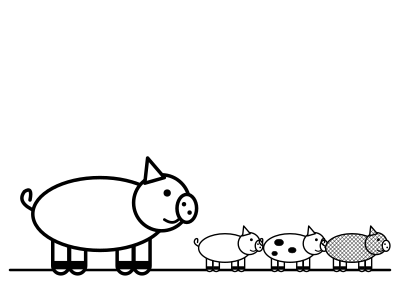
    A mother pig and 3 piglets: one pink, one pink with black spots, one brown. Circle yes or no.

    1. 1.
      Do the piglets have a snout like their mother?
      • yes
      • no
    2. 2.
      Are all the piglets the same color?
      • yes
      • no
    3. 3.
      Are the piglets as big as their mother?
      • yes
      • no
    4. 4.
      Are the piglets still pigs?
      • yes
      • no

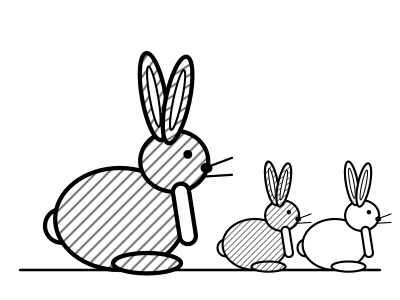
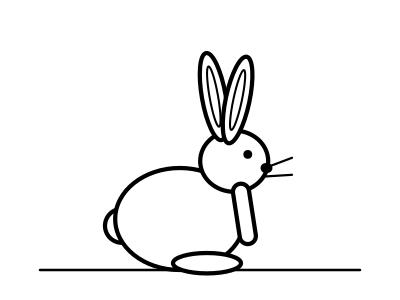
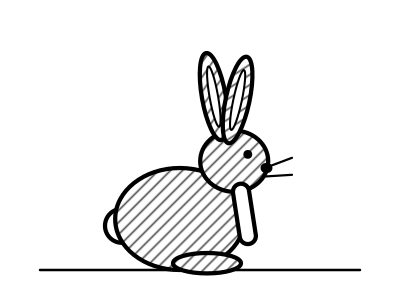
    A gray mother rabbit with 2 bunnies: one gray, one white. Mark, circle or draw.

    1. 5.
      Make a mark on one part the bunnies have just like their mother.
    2. 6.
      Circle the bunny that is a different color from its mother.
      • The white bunny.
      • The gray bunny.
    3. 7.
      Draw a mother bird and her chick. Circle one thing that is different.

    Challenge (optional)

    Two kittens are from one litter. One has long fur and one has short fur. Are they both cats?

    You need: crayons