1First Grade

    Lesson + weekly check: making a new ten

    Share and check: oi and oy

    Practice pages

    0 of 180 days complete · Saved on this device

    View all 180 days

    MathWeekly check

    Lesson + weekly check: making a new ten

    I can add and make a new ten when I need to.

    Standards: 1.NBT.C.4

    Number practice (no timer)
    Make a new ten: 8 + 5 = 13 helps 28 + 5
    Builds on
    Days 1 to 4: making a new ten and explaining the steps. One-minute check: "Does 56 + 3 make a new ten?" (No. 59.)

    New words

    • regroup: another word for trading 10 ones for a new ten

    You need

    • Tens and ones kit: 9 tens and 20 ones. Use straw bundles of 10 (a rubber band around each) and loose straws, base-ten rods and unit cubes, or paper ten-strips (strips of 10 squares, cut by an adult) with beans as ones
    • 6 review cards made from paper squares: 43 + 5, 43 + 9, 76 + 2, 76 + 8, 51 + 7, 59 + 7
    • 2 sorting labels: New ten / No new ten
    • The stored Week 22 check and its answer key
    • Notebook and pencil
    • Beans and unit cubes are small parts: keep them away from children under 3.
    1. Warm-Up · 5 min

      Fluency: make a new ten. "9 + 5?" (14) "So 39 + 5?" (44) Spaced review from Week 10: "13 - 9? Think addition." (4, because 9 + 4 = 13)

    2. Short Lesson: Review Game · 10 min

      Regroup or Not? Your child sorts the 6 review cards under the labels, then solves each one with the kit or a quick picture. No new ten: 43 + 5 = 48, 76 + 2 = 78, 51 + 7 = 58. New ten: 43 + 9 = 52, 76 + 8 = 84, 59 + 7 = 66. Ask: "43 + 5 and 43 + 9 start the same. Why does only one make a new ten?" (3 + 5 = 8 but 3 + 9 = 12.) If stuck, say: "Add only the ones digits first. 10 or more means a new ten."

    3. Weekly Check · 15 min

      Give the stored Week 22 check. The printed check has 7 items. It covers these goals: (1) I can add when no new ten is made; (2) I can make a new ten when I add; (3) I can explain my adding. Read each item aloud. There is no time limit. Your child may use the kit or quick pictures. If your child is stuck, say only: "Look at the ones. Is it 10 or more?" Do not give the answer. Score it with the answer key. Secure: 6 or 7 of the 7 items right. If the check is secure, start Week 23. If it is not, first do the reteach step on the check page for each group of items missed, then start Week 23.

    4. Exit Ticket · 3-5 min

      After the check, ask these two questions. Then go over any missed check items together.

    Exit ticket

    1. Solve 29 + 8.
    2. Does 64 + 3 make a new ten? What is 64 + 3?
    Answers
    1. 37
    2. No. 67.
    Watch for, and help or stretch
    Watch for
    Trading even when there are fewer than 10 ones.
    Try
    Count the loose ones together. Ask: "Do we have 10 to bundle?"
    Extra help
    Let your child use the kit for every check problem, and note it on the check.
    Stretch
    After the check, your child makes up a story where adding makes a new ten.

    At home (optional): Your child tells a family member the rule for a new ten: add the ones, and if it is 10 or more, make a new ten.
    Reading & WritingWeekly check

    Share and check: oi and oy

    I can read oi and oy words and share my story.

    Standards: RF.1.3.b, RF.1.3.g, SL.1.4

    Phonics
    Vowel sounds oi and oy (coin, soil, boy, toy)
    Sight words
    been, call, find, long, day
    Reading
    The Snowy Day (Ezra Jack Keats)
    Writing
    Narrative: a small moment with sense details and an ending · Handwriting: neat final copy
    Builds on
    This week's oi and oy work and the small moment story. One-minute check: warm up with coin, boy, soil.

    New words

    • share: to read or show your work to others

    You need

    • Word cards: oi and oy words (written in step 4)
    • 10 game cards (index cards): oil, coin, join, point, soil, boy, toy, joy, Roy, boil
    • Sight word cards: been, call, find, long, day, way, people, than, first, water
    • Recording sheet
    • The small moment story (from Day 4)
    • Lined handwriting paper
    1. Review Game · 10 min

      Coin Toss: lay 10 cards on the floor: oil, coin, join, point, soil, boy, toy, joy, Roy, boil. Your child tosses a real coin (or a button) gently onto the cards and reads the card it lands on or nearest to. Turn read cards over until all are read. If stuck on a word during the game (not during the check), cover all but the first sound, say it together, then uncover the rest and blend.

    2. Sight Words · 5 min

      Review: been, call, find, long, day, way, people, than, first, water. Swat It with a clean spatula: say a word; your child swats it and reads it.

    3. Weekly Check · 15 min

      The printed check has 10 items. It covers these goals: (1) I can read oi and oy words and share my story; (2) I can find words that help me see and hear, and tell where I use a word; (3) I can write a small moment with end marks and an ending. Give no hints on items 1 to 3. Record each answer. Secure: 8 of 10 words in items 1-2, 4 of 5 sight words, a story read with two events in order (item 4), and 4 of 6 on items 5-10. For any part that is not yet secure, use the matching reteach step on the check page next week.

    4. Share & Listen · 10 min

      The listener says one detail they could picture and asks one question. Your child answers in a complete sentence.

    5. Handwriting · 5 min

      Your child copies the first sentence of the story neatly as a title line for the top of the page. Circle the best word.

    6. Exit Ticket · 5 min

      Talk about the week.

    Exit ticket

    1. Read two words: one with oi and one with oy.
    2. What is your favorite detail in your story?
    Answers
    1. Answers vary. Look for: correct reads such as coin and boy.
    2. Answers vary. Look for: a detail from the story.
    Watch for, and help or stretch
    Watch for
    Reading oi words with /o/ only, such as soil read as "sol".
    Try
    Before the check (not during it), review: "o and i are a team: /oi/."
    Extra help
    Give item 4 after a short break. Let your child point under each word while reading.
    Stretch
    Your child reads 3 bonus words: hoist, moist, coils. Do not score them.

    At home (optional): Your child reads the small moment story to a relative on the phone or a video call.

    Social StudiesWeekly check

    Two people, two stories

    I can compare two people's stories about the same event.

    Standards: D2.His.6.K-2

    Builds on
    Question starters (Day 3). One-minute check: ask "Name three question starters." (who, what, when, where, why, how)

    New words

    • account: a person's telling of what happened
    • memory: something a person remembers

    You need

    • Two family members who were at the same past event (a trip, a birthday, a move or a holiday), in person or by phone. If you cannot do this, use the two Picnic Stories written in the Review Game
    • A same and different chart: a sheet of paper with 2 columns, labeled Same and Different
    • Week 22 social studies check page (given separately)
    • Pencil
    1. Warm-Up / Wonder · 5 min

      Spaced review: ask: "Make a who question about a family photo." (Answers vary.) Wonder question: "If two people tell about the same day, will their stories be exactly the same?"

    2. Review Game · 10 min

      Two people, one event. Ask the first family member to tell the story of the event in about a minute. Your child listens. Then ask the second person to tell the same event. (Ask them not to listen to each other first, if you can.) If you cannot use family members, read the Picnic Stories. Story 1, told by Aunt Rosa: "We had a picnic at the lake last summer. It was hot and sunny. We ate sandwiches and watermelon. The best part was swimming." Story 2, told by cousin Leo: "We had a picnic at the lake last summer. We ate sandwiches. A big dog ran by and grabbed a napkin. Then it started to rain, so we ran to the car." Fill in the chart together. Ask: "What is the same in both?" (the picnic at the lake, last summer, sandwiches) "What is different?" (Rosa remembers sun, watermelon and swimming; Leo remembers the dog and rain.) Ask: "Why might two people tell the same event differently?" (They noticed different things, they were in different places, they remember the parts they cared about, or one forgot part.) Say: "Historians read more than one account so they get the whole story." If stuck, read one sentence from each story and ask: "Did both people say this?"

    3. Check · 10 min

      Give the Week 22 social studies check. The check items are on the Week 22 check page; do not show them ahead of time. Read each part aloud. Your child answers by talking, pointing, showing with the real materials or drawing. You write down their words exactly. It is not timed; stop and finish later if your child is tired. Make a check mark next to each part your child shows on their own. The printed check has 8 items. It covers these goals: (1) I can find clues in a source that tell who made it, when and where; (2) I can ask questions about a source to learn about the past; (3) I can compare two people's stories about the same event. This week the check is a compare task with two short accounts of one event. Look for: one thing that is the same in both accounts, one thing that is different, and a reason why two people's stories can differ. If stuck on a part, point to one detail in the first account and ask: "Is this in the other story too?" Secure: 6 of 8 correct, with at least one right on each goal. If the check is not yet secure, use the reteach step on the check page that matches the items missed.

    4. Exit Ticket · 3–5 min

      Ask the three questions aloud. Your child answers by talking or drawing.

    Exit ticket

    1. You and your friend both went to a parade. You remember the drums and your friend remembers the clowns. Is one of you wrong?
    2. Why is it good to hear more than one account?
    3. Name one reason two stories about the same day can be different.
    Answers
    1. No. You each noticed different parts.
    2. You learn more of the whole story.
    3. Answers vary. Look for: people notice different things, were in different places, or remember different parts.
    Watch for, and help or stretch
    Watch for
    Deciding that the second story is wrong because it is different.
    Try
    Ask: "Could both things have happened that day?" Say: "Different does not always mean wrong."
    Extra help
    Use 2 short stories of 2 sentences each.
    Stretch
    Your child tells their own account of the same event and compares it with the other two.

    At home (optional): Your child asks 2 family members what they remember about the same family day and tells one same and one different.

    Practice

    Read each direction aloud. Your child works on the page; answers are in the grown-up view.

    Warm-up

    Remember?

    Math

    1. 10 + 70 = ?
    2. True or false? 9 - 4 = 2 + 3

    Reading & Writing

    1. The wet dog ran.

    Math · Week 22 check

    Weekly check

    How to give it: Read every item aloud. It is untimed. Your child may use the kit or quick pictures. If your child is stuck, say only: "Look at the ones. Is it 10 or more?" Do not give the answer. There are 7 parts. 6 or 7 right: start Week 23. 5 right: redo Day 3 Guided Practice before Week 23. 4 or fewer right: redo Day 1 and Day 2 with the kit before Week 23.

    Secure when: 6 or 7 of the 7 items right.

    • I can add when no new ten is made.
    • I can make a new ten when I add.
    • I can explain my adding.
    1. 1.
      82 + 5 = ____
    2. 2.
      54 + 4 = ____
    3. 3.
      Will 16 + 3 make a new ten? Circle yes or no. Then solve: 16 + 3 = ____
    4. 4.
      37 + 7 = ____
    5. 5.
      65 + 9 = ____
    6. 6.
      48 + 3 = ____
    7. 7.
      Tell or draw how you solved 37 + 7.

    Reading & Writing · Week 22 check

    Weekly check

    How to give it: Give it in one sitting, untimed. Read each direction aloud. For items 1-3, your child reads each word aloud and you tick the ones read right; give no hints. For item 4, your child reads the small moment from Day 4. Your child reads A Coin in the Soil aloud before items 5-7. For item 6, say: Circle the word that helps you hear. For item 8, say: Put in the end mark. For item 9, say: Do we use a sled on a snow day or a hot day? For item 10, say the word boil twice.

    Secure when: 8 of 10 words in items 1-2, 4 of 5 sight words, a story read with two events in order (item 4), and 4 of 6 on items 5-10.

    • I can read oi and oy words and share my story.
    • I can find words that help me see and hear, and tell where I use a word.
    • I can write a small moment with end marks and an ending.

    A Coin in the Soil

    Roy dug in the soil by the shed. Clink! He hit a coin. The coin had a star on it. Roy ran to Mom. He was so glad! "Can I keep it?" said Roy.

    1. 1.
      toil joist oinks coil foil
    2. 2.
      ploy joys toils spoils hoists
    3. 3.
      been call find long day
    4. 4.
      My day
    5. 5.
      What did Roy dig in?
      • soil
      • sand
      • snow
    6. 6.
      Clink! He hit a coin.
      • Clink
      • coin
    7. 7.
      How did Roy feel?
      • glad
      • sad
      • mad
    8. 8.
      Can I keep the coin
    9. 9.
      a scarf
      • snow day
      • hot day
    10. 10.
      Spell it: ____

    Social Studies · Week 22 check

    Weekly check

    How to give it: Read every question and choice aloud, and point to each picture as you name it. This week the check is a compare task with two short accounts of one event. Your child answers by talking, pointing, circling, acting it out or drawing; write their words exactly on the line. It is not timed; stop and finish later if your child is tired. Do not show the page ahead of time. Read both snow day stories aloud before item 5. If you used two family members on Day 5, you may use their accounts instead and adjust the answers. Make a check mark next to each part your child shows on their own.

    Secure when: 6 of 8 correct, with at least one right on each goal

    • I can find clues in a source that tell who made it, when and where.
    • I can ask questions about a source to learn about the past.
    • I can compare two people's stories about the same event.

    Two Snow Day Stories

    Dad's story: "Last winter the snow was so deep that school was closed. We stayed inside, made hot cocoa and played a board game all afternoon." Nia's story: "Last winter school was closed because of snow. I took my sled and slid down the hill by the library. My boots got full of snow!"

    1. 1.
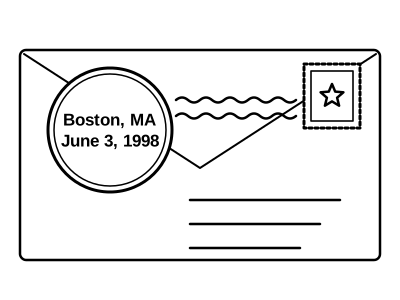
      An envelope with a round postmark that says "Boston, MA, June 3, 1998". Where and when was this mailed?
    2. 2.
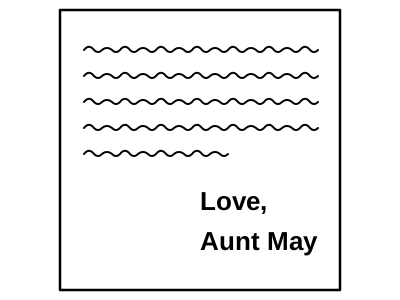
      The end of a letter signed "Love, Aunt May". Who wrote this letter?
    3. 3.
      Which question word asks about a time?
      • who
      • when
      • where
    4. 4.
      Make a "how" question about an old photo of children at a one-room school.
    5. 5.
      Listen to the two snow day stories again. What is the same in both?
    6. 6.
      What is different in the two stories?
    7. 7.
      Dad and Nia were both there. Why do their stories not match?
    8. 8.
      Should a history detective listen to more than one person's story?
      • yes
      • no