1First Grade

    Time to the hour

    More reasons

    Practice pages

    0 of 180 days complete · Saved on this device

    View all 180 days

    Math

    Time to the hour

    I can tell and write time to the hour.

    Standards: 1.MD.B.3

    Number practice (no timer)
    Facts within 10 (keep-up practice)
    Builds on
    Day 1 (the parts of a clock). One-minute check: "Which hand is the minute hand?" (The long hand)

    New words

    • o'clock: the time when the minute hand points to 12, like 3 o'clock
    • digital clock: a clock that shows the time with numbers only, like 3:00

    You need

    • The paper plate clock from Day 1
    • A digital clock (on a microwave, oven or phone), or 3:00 written on paper to show what one looks like
    • Notebook and pencil
    1. Warm-Up · 5 min

      Fluency: facts within 10. "7 + 2?" (9) "8 - 5?" (3) "4 + 6?" (10) Spaced review from Week 23: "80 - 40?" (40)

    2. Mini-Lesson · 10 min

      Set the paper clock with the short hand on 3 and the long hand on 12. Say: "When the long hand points straight up to 12, it is something o'clock. The short hand tells which hour. This is 3 o'clock." Write 3:00 in the notebook. Say: "This is how a digital clock shows 3 o'clock: the hour, two dots, then two zeros." Point to each part: "3 is the hour. The two zeros mean it is exactly o'clock." Show the digital clock in your home or the paper with 3:00. Set the clock to 6 o'clock. Ask: "What time is it?" (6 o'clock) "How do we write it?" (6:00)

    3. Guided Practice · 10 min

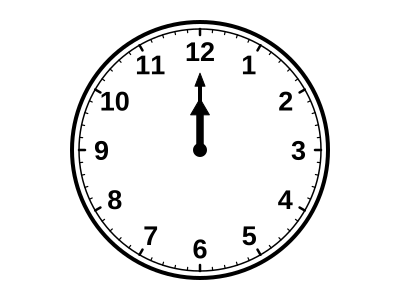
      You set the paper clock. Your child reads the time and writes it. 1) 7:00 2) 11:00 3) 2:00 4) 9:00 5) 12:00 (both hands point to 12) Then your child sets the clock for times you write: 6) 4:00 7) 10:00 Ask once: "At 12:00, why do the hands look like one hand?" (They both point to 12.) If stuck, say: "Look at the long hand first. Is it on 12? Then read the number the short hand points to."

    4. Play · 10 min

      What Time Is It, Wolf? Play in a hallway or yard. One player is the Wolf and stands at one end holding the paper clock. The others stand at the other end and call out: "What time is it, Wolf?" The Wolf sets the clock to an o'clock time and shows it. The players read the time out loud and take that many steps forward, walking and counting. Stand close enough to read the clock (about 15 big steps apart). If the Wolf shows 12:00, the Wolf calls "Lunch time!" and everyone walks back to the start. The first player to walk up to the Wolf becomes the next Wolf. Play several rounds.

    5. Exit Ticket · 3-5 min

      Before asking, set the paper clock to 8:00. Read each question aloud. Your child answers out loud, with the clock or with a quick drawing. Check each answer together right away.

    Exit ticket

    1. What time does my clock show? Write it the way a digital clock does.
    2. Draw a circle with 12, 3, 6 and 9. Draw the hands for 1:00.
    3. Where does the minute hand point at every o'clock time?
    Answers
    1. 8 o'clock. 8:00.
    2. Look for: a short hand pointing to 1 and a long hand pointing to 12.
    3. To the 12
    Watch for, and help or stretch
    Watch for
    Reading the long hand as the hour, such as calling 3:00 "12 o'clock."
    Try
    Cover the long hand with a finger. Ask: "Where does the short hand point?"
    Extra help
    Practice only times from 1:00 to 6:00 at first, and set the long hand on 12 for your child.
    Stretch
    Ask: "It is 5:00. What time will it be in 1 hour?" (6:00) "In 2 hours?" (7:00)

    At home (optional): Your child tells a family member the time at three different o'clock times today (such as lunch or bath), looking at a clock with hands.
    Reading & Writing

    More reasons

    I can tell which reasons support the author's point.

    Standards: RI.1.8, RI.1.10, SL.1.1.b

    Phonics
    Two-syllable words with final e and vowel teams (cupcake, rainbow, inside)
    Sight words
    help, before, much, line, right
    Reading
    Original persuasive texts "Why We Should Save Our Coins" and "Bats Are Good Neighbors"
    Writing
    Shared research: writing our answer with facts · Handwriting: neat final research page
    Builds on
    The author's point and reasons (Day 1). One-minute check: your child tells the point of the coin text.

    New words

    • support: to help show that something is true
    • pollen: a fine dust that plants need to make seeds
    • off-topic: not about the point

    You need

    • Printed "Bats Are Good Neighbors" (in the lesson)
    • 6 reason cards you write (in the lesson)
    • Two header cards you write: supports the point, does not
    • Sight word cards: help, before, much, line, right
    • Printed "Why We Should Save Our Coins" (from Day 1)
    • Lined handwriting paper
    1. Phonics & Word Work · 15 min

      Two-syllable words review. I do: read daytime (day | time) and sunset (sun | set). We do: read upside, inside, cupcake, picnic. You do: your child reads seaweed, rainbow, napkin, bedtime, pancake, rabbit, sailboat, insect. Read: "Bats rest in the daytime." Dictation: daytime, upside, seaweed. If stuck, find the vowel sound in each part first.

    2. Sight Words · 5 min

      Review: help, before, much, line, right. Hop and Read: your child hops to the card you name and reads it.

    3. Read-Aloud & Shared Reading · 15 min

      Your child reads the bat text, with your help on the title. Bats Are Good Neighbors (an original text; you read the title, and your child reads the rest) Bats are a big help to us. Here are three ways bats help. Bats eat bugs. At night, a bat can eat lots of bugs, like moths and bugs that bite. Bats help plants. Bat fur can pick up bits of plant dust. The bat will fly to the next plant with the dust. That can help the plant make seeds. Bats drop seeds. Some bats eat figs. The seeds in the figs drop to the ground. Then the seeds can grow into trees. In the daytime, bats rest inside caves or up in trees. At sunset, they fly out to eat. Bats are good to have in your town! Do not pick up a bat. If you see one, tell a grown-up. Note for you: the plant dust is pollen. Most bats in the United States eat insects. A few bats that drink nectar from flowers live in the desert Southwest; bats that eat fruit such as figs live in the tropics, including U.S. islands such as Guam and the Virgin Islands. Never touch a bat, alive or dead: bats can carry rabies. If one is inside your home, keep people and pets away, do not let it go, and call animal control or your health department so it can be tested. Bat bites can be tiny: if anyone may have touched a bat or woke up with one in the room, wash any scratch with soap and water and call your doctor or health department right away. Ask: "What is the author's point?" (Bats are good neighbors; bats are a big help to us.) Ask: "What three reasons does the author give?" (Bats eat bugs; bats help plants make seeds; bats drop seeds that grow into trees.) Then sort the reason cards. Your child reads each card and puts it under supports the point or does not: Bats eat bugs that bite. Bats help plants make seeds. Bats drop seeds that grow into trees. Bats hang upside down. Some bats have brown fur. Bats rest in caves. (Supports: the first three. Does not: the last three. They are true facts, but they do not tell why bats are good neighbors.) After each card, keep the talk going: ask "Why do you think so?" and add your own idea for your child to answer. If stuck, ask: "Does this tell how bats help us? If not, it does not support the point."

    4. Writing & Handwriting · 15 min

      Your child writes one sentence telling the bat author's point and one reason, using the frame: "Bats are a big help. Bats eat ___." Spelling by sounds is fine. Handwriting (4 min): your child copies one supporting reason card in neat letters.

    5. Exit Ticket · 5 min

      Oral answers.

    Exit ticket

    1. Does this support the point that bats are good neighbors: "Bats sleep in the day"? Why or why not?
    2. Read this: Some bats eat figs and drop the seeds. Does it support the point?
    3. What should you do if you see a bat on the ground?
    Answers
    1. No. It is true, but it does not tell how bats help us.
    2. Some bats eat figs and drop the seeds. Yes: the seeds can grow into trees.
    3. Do not touch it; tell a grown-up.
    Watch for, and help or stretch
    Watch for
    Putting every true fact under supports the point.
    Try
    Ask: "Is it true? Yes. Does it tell why bats are good neighbors? Let's check."
    Extra help
    Sort 4 cards today: two that support and two that do not.
    Stretch
    Your child writes a new reason card for the coin text and a new off-topic card for you to sort.

    At home (optional): Your child tells a family member why bats are good neighbors and one safety rule about bats.

    Social Studies

    Why people save

    I can explain why people save money.

    Standards: D2.Eco.10.K-2

    Builds on
    Pretend store (Week 26). One-minute check: ask "You have 10 dollars and spend 6. How many are left?" (4 dollars)

    New words

    • save: to keep money now so you can use it later
    • goal: something you want and plan to reach

    You need

    • A clear plastic jar or a clean plastic container with a lid (not glass)
    • A picture of a saving goal (drawn or cut from a flyer)
    • Tape
    • Paper and crayons
    • Optional: a few real or pretend coins
    1. Warm-Up / Wonder · 5 min

      Spaced review: ask: "What is a budget?" (the amount of money you have to spend) Wonder question: "Why don't people spend all their money right away?" Safety: coins and other small objects are a choking hazard for children under 3. Keep them away from little brothers and sisters, and coins never go in mouths.

    2. Explore · 10–15 min

      Say: "To save means keeping money now so you can use it later." Talk about 3 reasons people save. 1) For something big: "A bike costs more than you get at one time, so you save a little at a time until you have enough." 2) For later or for surprises: "Families save in case the car needs fixing or someone needs new shoes." 3) To help others: "Some people save to give to a food bank or a friend who needs help." Ask about each: "Can you think of a time someone might save for this?" (Answers vary.) Make the save jar. Your child picks a goal (something big, something for later, or something to give) and draws it. Tape the picture to the jar. Your child decorates a label: "My save jar: I am saving for ___." Ask: "Why can't you buy it today?" (Answers vary. Look for: there is not enough money yet.) "How does saving help?" (A little at a time adds up.) If stuck choosing a goal, offer 2 choices: a toy you really want, or a gift for someone you love.

    3. Talk & Record · 5–10 min

      Your child draws themselves reaching the goal. Sentence frame: "I am saving because ___."

    4. Exit Ticket · 3–5 min

      Ask the three questions aloud. Your child answers by talking or drawing.

    Exit ticket

    1. Your friend wants a 20-dollar game but has only 5 dollars. What could your friend do?
    2. Name one reason people save money.
    3. Why does it help to keep saved money in a jar instead of a pocket?
    Answers
    1. Save a little at a time until there is enough.
    2. Answers vary. Look for: for something big, for later or surprises, or to help others.
    3. Answers vary. Look for: it stays in one place, you don't spend it by mistake, and you can see it grow.
    Watch for, and help or stretch
    Watch for
    Thinking saving means never spending.
    Try
    Say: "Saving means waiting so you can spend on something that matters more later."
    Extra help
    Talk about one reason (saving for something big) and make the jar.
    Stretch
    Your child makes a chart and colors in a box each time money goes in the jar.

    At home (optional): Your child puts the save jar in a safe spot and tells a family member the goal.

    Practice

    Read each direction aloud. Your child works on the page; answers are in the grown-up view.

    Warm-up

    Remember?

    Math

    1. A bat is longer than a pencil. The pencil is longer than a bead. Which is the longest?
    2. 44 + 4 = ?

    Reading & Writing

    1. hilltop

    Math · Week 27 Day 2

    I can tell and write time to the hour.

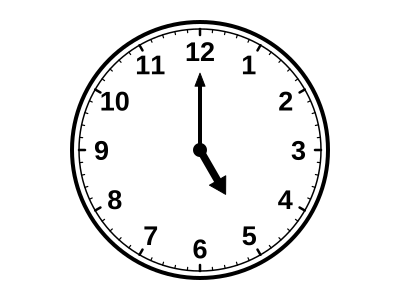
    Look: 5 o'clock

    1. The long hand points straight up to 12, so it is something o'clock.
    2. The short hand points to 5.
    3. It is 5 o'clock. We write 5:00.

    Write the time.

    1. 1.
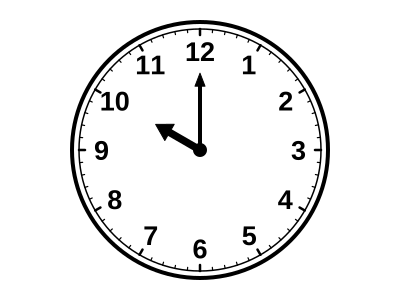
      A clock with the short hand on 5 and the long hand on 12. ____
    2. 2.
      A clock with the short hand on 10 and the long hand on 12. ____
    3. 3.
      A clock with both hands pointing straight up to 12. ____
    4. 4.
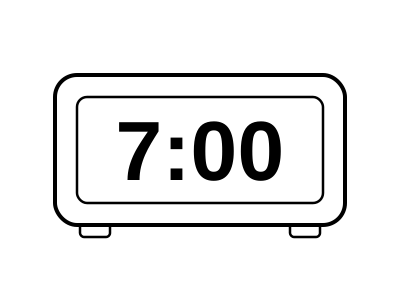
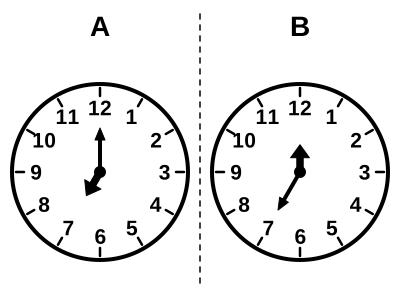
      A digital clock showing 7:00. Circle the clock with hands that shows the same time. Picture A: short hand on 7, long hand on 12; picture B: short hand on 12, long hand on 7.
      • A
      • B

    Draw the hands.

    1. 5.
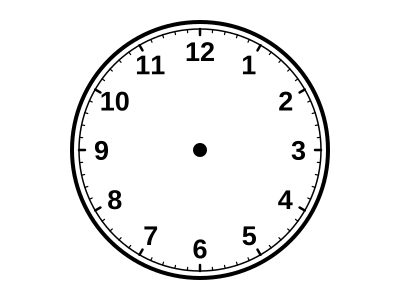
      A blank clock face with the numbers 1 to 12. Draw the hands for 2:00.
    2. 6.
      A blank clock face with the numbers 1 to 12. Draw the hands for 9:00.
    3. 7.
      A blank clock face with the numbers 1 to 12. Draw the hands for 12:00.

    Challenge (optional)

    It is 3:00. In one hour, what time will it be? Draw the hands.

    You need: Pencil

    Reading & Writing · Week 27 Day 2

    I can tell which reasons support the author's point.

    Look: reasons that support the point

    1. The point: Cats are good pets.
    2. A reason that supports it tells why cats are good pets: A cat can sit on your lap.
    3. A true fact that does not tell why, like Cats have tails, does not support the point.

    Cats Are Good Pets

    Cats are good pets. A cat can sit on your lap. You do not need to take a cat on a walk. A cat can keep you snug at night. Cats are fun to play with!

    Does it tell why cats are good pets? Circle yes or no.

    1. 1.
      A cat can sit on your lap.
      • yes
      • no
    2. 2.
      Some cats are black.
      • yes
      • no
    3. 3.
      A cat is fun to play with.
      • yes
      • no
    4. 4.
      A cat has a tail.
      • yes
      • no

    Read the line. Find the two-syllable word. Write it in two parts.

    1. 5.
      We play inside when it rains.
    2. 6.
      The cat sat in the sunshine.
    3. 7.
      Dad got a new raincoat.

    Challenge (optional)

    Cats are good pets because ____.

    Social Studies · Week 27 Day 2

    I can explain why people save money.

    Look: reasons to save

    1. To save means to keep money now so you can use it later.
    2. People save for something big, for surprises later, or to help others.
    3. A little at a time adds up.

    Listen. Circle yes if it is a reason to save. Circle no if it is not.

    1. 1.
      to buy a bike that costs a lot
      • yes
      • no
    2. 2.
      in case the car needs fixing
      • yes
      • no
    3. 3.
      to give to a food bank
      • yes
      • no
    4. 4.
      so you can spend it all today
      • yes
      • no

    Talk and count. Write what your child says.

    1. 5.
      You save 2 dollars each week. How many dollars after 3 weeks?
    2. 6.
      A game costs 10 dollars. You have 6 dollars. How many more dollars do you need?
    3. 7.
      What are you saving for in your save jar?
    4. 8.
      Draw your save jar getting fuller.

    Challenge (optional)

    Tell one way you could add a little to your save jar each week.

    You need: crayons