1First Grade

    Quarter review: numbers, tens and length

    Prefix un- and root words

    Practice pages

    0 of 180 days complete · Saved on this device

    View all 180 days

    Math

    Quarter review: numbers, tens and length

    I can show what I learned this quarter.

    Standards: 1.NBT.C.4, 1.NBT.C.6, 1.MD.A.2, 1.NBT.C.5, 1.MD.A.1

    Number practice (no timer)
    Facts within 10 (keep-up practice)
    Builds on
    Weeks 19 to 26: 10 more and 10 less, adding within 100, subtracting tens, comparing lengths and measuring. One-minute check: "10 more than 36?" (46) "What are the measuring rules?" (Start at the end, no gaps, no overlaps.)

    New words

    • quarter: one of the four parts of the school year

    You need

    • Game board: a path of 20 squares drawn on paper, with Start and Finish
    • 2 game pieces (a coin and a button)
    • 1 die
    • 12 review cards made from paper squares (written below)
    • Tens and ones kit: 9 tens and 20 ones. Use straw bundles of 10 (a rubber band around each) and loose straws, base-ten rods and unit cubes, or paper ten-strips (strips of 10 squares, cut by an adult) with beans as ones
    • 15 paper clips, all the same size, a spoon, and 3 crayons or pencils of different lengths
    • Notebook and pencil
    • Paper clips, beans and cubes are small parts: keep them away from children under 3.
    1. Warm-Up · 5 min

      Fluency: facts within 10. "8 + 2?" (10) "7 - 3?" (4) Spaced review from Week 15: "What number is 9 tens and 1 one?" (91)

    2. Mini-Lesson · 10 min

      Say: "We have reached the end of the third quarter of the year. Today we play a review game with what we learned since Week 19." Show the board and the cards. Say: "Roll the die and move. Then pick a card and solve it. If you get it right, move 1 more space. Use any tool you want." Model one card, thinking out loud: "Card: 36 + 7. The ones are 6 and 7. 6 + 7 = 13, so I make a new ten. 30 + 13 = 43."

    3. Guided Practice · 10 min

      Review Game Board. Take turns. Read each card aloud. The player solves it and tells how; the other player checks. Cards with answers: 1) "10 more than 47" (57) 2) "10 less than 82" (72) 3) "30 + 50" (80) 4) "24 + 40" (64) 5) "62 + 5" (67) 6) "58 + 6: make a new ten" (64) 7) "80 - 30" (50) 8) "60 - 60" (0) 9) "A basket has 50 apples. 20 are eaten. How many are left?" (30) 10) "Measure the spoon with paper clips." (Answers vary. Look for: start at the end, no gaps, no overlaps.) 11) "Put the 3 crayons in order from shortest to longest." (Answers vary. Look for: ends lined up.) 12) "The rope is longer than the belt. The belt is longer than the shoelace. Which is shortest?" (The shoelace) If stuck, say: "What kind of card is this: adding, taking away, or measuring? Which tool helps with that kind?"

    4. Quarter Wrap-Up · 10 min

      Quarter Wrap-Up. After the game, your child chooses a favorite card and teaches it back to you as if you were the student, using the kit, the chart, the clips or a drawing. Then ask: "Which card was hardest? What helped you?" Write your child's answer in the notebook. This tells you what to keep in the next quarter's warm-ups.

    5. Exit Ticket · 3-5 min

      Put the objects to one side but leave them on the table. Read each question aloud. Your child answers out loud, with objects or with a quick drawing. Check each answer together right away.

    Exit ticket

    1. What is 10 less than 39?
    2. 45 + 8 = ?
    3. 70 - 40 = ?
    Answers
    1. 29
    2. 53
    3. 30
    Watch for, and help or stretch
    Watch for
    Treating a ones card as tens, such as 62 + 5 = 112.
    Try
    Ask: "Is 5 a tens number or a ones number?" Build it with the kit.
    Extra help
    Let your child pick which cards to solve, and use the kit or the clips for every card.
    Stretch
    Your child writes 2 new hard cards for the game and you both solve them.

    At home (optional): Play the game board again with a family member using the same cards.
    Reading & Writing

    Prefix un- and root words

    I can use un- to figure out what a word means.

    Standards: L.1.4.b, L.1.4.c, RF.1.3.f

    Phonics
    Two-syllable words with final e and vowel teams (cupcake, rainbow, inside)
    Sight words
    help, before, much, line, right
    Reading
    Original persuasive texts "Why We Should Save Our Coins" and "Bats Are Good Neighbors"
    Writing
    Shared research: writing our answer with facts · Handwriting: neat final research page
    Builds on
    Context clues (Week 25) and plural -s (Week 19). One-minute check: your child reads cats and tells what the s means.

    New words

    • prefix: a word part added to the front of a word that changes its meaning
    • un-: a prefix that means not, or the opposite of
    • root word: the main word inside a longer word

    You need

    • Word cards (index cards): lock, unlock, pack, unpack, zip, unzip, snap, unsnap, safe, unsafe, load, unload
    • Two oral cards you read: happy, unhappy
    • A backpack with a zipper, a lunch box or bag with a snap, and a toy truck with a few blocks to load
    • Sight word cards: help, before, much, line, right (two sets: 10 cards for Memory Match)
    • Printed "Bats Are Good Neighbors" (from Day 2)
    • Lined handwriting paper
    1. Phonics & Word Work · 15 min

      Prefix un-. I do: write lock, then add un: unlock. Say: "un at the front means not, or the opposite. To unlock is to do the opposite of lock." Draw a box around the root word lock. We do: read pack, unpack, zip, unzip and box each root word. You do: your child reads snap, unsnap, safe, unsafe, load, unload, boxes the root word and tells what the un word means. (unsnap: open the snap; unsafe: not safe; unload: take the load off) Then read root words with the ending s: locks, packs, zips. Read: "Unpack the backpack." "Unzip the bag." Dictation: unlock, unpack, unsafe. If stuck, cover un with a finger, read the root word, then uncover it and say "not" or "the opposite".

    2. Sight Words · 5 min

      Review: help, before, much, line, right. Memory Match with 10 cards: turn two over and read both. A match is kept.

    3. Read-Aloud & Shared Reading · 15 min

      Say: "The prefix un- is a clue to what a word means." Act it out: your child zips the backpack, then unzips it; snaps the lunch box, then unsnaps it; loads blocks into the toy truck, then unloads them. After each, ask: "What did un- do to the word?" (It made it the opposite.) Read the oral cards: happy, unhappy. Ask: "What does unhappy mean?" (not happy, sad) Ask: "If a bridge is unsafe, should you walk on it? Why?" (No: unsafe means not safe.) Then your child rereads "Bats Are Good Neighbors" and finds the root word in seeds and caves. (seed, cave) If stuck, act out the root word first, then the un- word.

    4. Writing & Handwriting · 15 min

      Your child writes two sentences with un- words: "I unpack my bag." and "It is unsafe to pick up a bat." or their own, and draws one. Handwriting (4 min): your child writes un five times, then adds a root word to each: unlock, unzip, unpack, unsnap, unload.

    5. Exit Ticket · 5 min

      Oral answers.

    Exit ticket

    1. What does unplug mean? What is the root word?
    2. Read this: Can you unpack the box?
    3. Add un to kind. What does the new word mean?
    Answers
    1. To take the plug out (the opposite of plug). The root word is plug.
    2. Can you unpack the box?
    3. unkind: not kind.
    Watch for, and help or stretch
    Watch for
    Thinking un- means "again" or "more".
    Try
    Act it out: "Zip. Now unzip. Did we do it again, or do the opposite?"
    Extra help
    Act out three pairs only (zip, snap, load) before reading the cards.
    Stretch
    Your child thinks of a new un- word (such as unfold or untie) and acts it out for you to guess.

    At home (optional): Your child finds one thing at home to unpack, unzip or unload and tells you the un- word.

    Social StudiesWeekly check

    What do banks do? + Quarter 3 review

    I can tell how a bank keeps money safe and review what I learned this quarter.

    Standards: D2.Eco.9.K-2, D2.His.2.K-2, D2.His.9.K-2, D2.Eco.2.K-2

    Builds on
    Why people save (Day 2). One-minute check: ask "Name one reason people save." (Answers vary: for something big, for later, to help others.)

    New words

    • bank: a business that keeps people's money safe and lends money
    • deposit: money you put into a bank
    • interest: money a bank pays you for keeping your money there
    • loan: money a bank lends that must be paid back

    You need

    • Pictures of a bank (a photo of a bank building near you, or a drawing)
    • A pretend bank book: 2 sheets of paper folded and stapled, with columns labeled Date / Deposit / Total
    • 10 pretend coins or paper dollars
    • A small plastic box to be the bank's safe
    • 8 Quarter 3 review cards written on index cards: timeline, then and now, source, cost, need, want, scarce, save
    • A plastic bowl or bag to draw cards from
    • Week 27 social studies check page (given separately)
    • Pencil
    1. Warm-Up / Wonder · 5 min

      Spaced review: ask: "What is your save jar goal?" (Answers vary.) Wonder question: "Where do grown-ups keep a lot of money safe?" Safety: coins and other small objects are a choking hazard for children under 3. Keep them away from little brothers and sisters, and coins never go in mouths.

    2. Review Game · 10 min

      Play Bank (about 5 minutes). Say: "A bank is a business that keeps people's money safe. Putting money in a bank is called a deposit. Banks also lend money, called a loan, to people who need to buy big things, like a home, and the people pay it back. When you keep money in a savings account, the bank pays you a little extra money called interest. A part of our government, the FDIC, helps protect people's money in banks." You are the banker. Your child deposits 3 pretend dollars; the banker puts them in the safe and your child writes the date, 3 and the total in the bank book. Deposit 2 more (3 + 2 = 5). Say: "In our pretend bank, the bank pays you 1 dollar of interest for saving," and add it (5 + 1 = 6). Ask: "Why is the bank safer than a pocket?" (Answers vary: money in a pocket can be lost; the bank keeps it safe.) Quarter 3 review (about 5 minutes): play "Pick and Tell." Your child draws a review card and tells one thing about it. Timeline (shows events in order). Then and now (how life was different long ago and today). Source (pictures, writing, objects and things people tell help us learn about the past). Cost (what you give up when you make a choice, like giving up the library to go to the park). Need (something people must have to live). Want (something nice we can live without). Scarce (not enough for everyone, so we choose). Save (keep money now to use later). If stuck on a card, give a choice of 2 answers.

    3. Check · 10 min

      Give the Week 27 social studies check. The check items are on the Week 27 check page; do not show them ahead of time. Read each part aloud. Your child answers by talking, pointing, showing with the real materials or drawing. You write down their words exactly. It is not timed; stop and finish later if your child is tired. Make a check mark next to each part your child shows on their own. The printed check has 9 items. It covers these goals: (1) I can explain why people save money; (2) I can tell how a bank keeps money safe and review what I learned this quarter. This week the check is an oral task about banks plus a short quarter review. Look for: your child tells one thing a bank does (keeps money safe, takes deposits, lends money, or pays interest) and answers one quarter review prompt from each Unit 4 and Unit 5 topic (then and now or sources, and needs, wants or choices). If stuck on a part, hand your child the pretend bank book and say: "Show me what happens when you make a deposit." Secure: 7 of 9 correct, with at least one right on each goal. If the check is not yet secure, use the reteach step on the check page that matches the items missed.

    4. Exit Ticket · 3–5 min

      Ask the three questions aloud. Your child answers by talking or drawing.

    Exit ticket

    1. What is it called when you put money into a bank?
    2. Name one thing a bank does.
    3. Is a museum ticket from long ago a source? What kind?
    Answers
    1. A deposit.
    2. Answers vary. Look for: keeps money safe, takes deposits, lends money (loans), or pays interest.
    3. Yes. It is a writing source and an object (and maybe a picture).
    Watch for, and help or stretch
    Watch for
    Thinking the bank keeps your money and you can't get it back.
    Try
    Play a withdrawal: your child asks for 2 dollars back, and the banker gives them. Say: "It is still your money. The bank keeps it safe until you need it."
    Extra help
    Do 1 deposit and 4 review cards.
    Stretch
    Your child keeps the bank book for a week, adding a deposit each time money goes in the save jar.

    At home (optional): Your child tells a family member what a bank does and shows the pretend bank book.

    Practice

    Read each direction aloud. Your child works on the page; answers are in the grown-up view.

    Warm-up

    Remember?

    Math

    1. A rug is longer than a towel. The towel is longer than a napkin. Which is the shortest?
    2. Priya has 8 buttons. Luis has 5 buttons. How many more buttons does Priya have?

    Reading & Writing

    Math · Week 27 Day 4

    I can show what I learned this quarter.

    Look: 48 + 5

    1. Look at the ones: 8 + 5 = 13. That makes a new ten.
    2. 13 is 1 ten and 3 ones. 40 + 13 = 53.
    3. 48 + 5 = 53.

    Solve.

    1. 1.
      10 more than 68 is ____.
    2. 2.
      10 less than 55 is ____.
    3. 3.
      20 + 70 = ____
    4. 4.
      43 + 50 = ____
    5. 5.
      26 + 9 = ____
    6. 6.
      90 - 40 = ____

    Circle or write.

    1. 7.
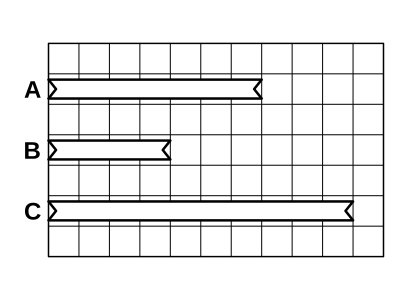
      3 ribbons, left ends lined up. A is 7 squares, B is 4 squares, C is 10 squares. Circle the shortest ribbon.
      • A
      • B
      • C
    2. 8.
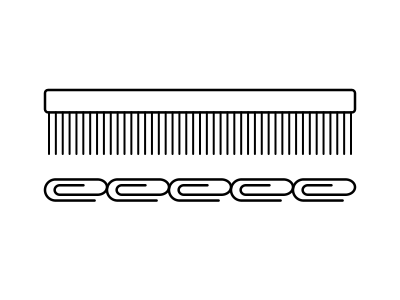
      A comb with 5 paper clips under it, end to end, from end to end. The comb is ____ paper clips long.
    3. 9.
      Line X is longer than line Y. Line Y is longer than line Z. Circle the longest line.
      • X
      • Y
      • Z

    Challenge (optional)

    A box has 50 crayons. 30 are taken out. Then 6 are put back. How many crayons are in the box?

    You need: Pencil, Tens and ones kit (optional)

    Reading & Writing · Week 27 Day 4

    I can use un- to figure out what a word means.

    Look: un- at the start of a word

    1. Read the root word: lock.
    2. Add un at the start: unlock. un means not, or the opposite.
    3. So unlock is the opposite of lock.

    Kit Gets Up

    The bed is unmade, so Kit has to make it. The lamp is unlit, and Kit can not see. Kit turns it on. Then Kit can uncap a pen and make a list.

    Add un. Write the new word.

    1. 1.
      lit ____
    2. 2.
      cap ____
    3. 3.
      fit ____
    4. 4.
      made ____

    Read the word. Circle what it means.

    1. 5.
      unlit
      • not lit
      • lit
    2. 6.
      unsafe
      • very safe
      • not safe
    3. 7.
      uncap
      • take the cap off
      • put the cap on

    Challenge (optional)

    unpins = un + ____ + s

    Social Studies · Week 27 check

    Weekly check

    How to give it: Read every question and choice aloud, and point to each picture as you name it. This week the check is an oral task about banks plus a short quarter review. Your child answers by talking, pointing, circling, acting it out or drawing; write their words exactly on the line. It is not timed; stop and finish later if your child is tired. Do not show the page ahead of time. Items 6 to 9 are the quarter review. If stuck on items 3 to 5, hand your child the pretend bank book and say "Show me what happens when you make a deposit." Make a check mark next to each part your child shows on their own.

    Secure when: 7 of 9 correct, with at least one right on each goal

    • I can explain why people save money.
    • I can tell how a bank keeps money safe and review what I learned this quarter.
    1. 1.
      Why might a family save money each month?
    2. 2.
      A bike costs more money than you have. What can you do?
    3. 3.
      You hand the bank worker 4 dollars to keep in your account. What is that called?
    4. 4.
      The bank pays you a little extra money for saving there. What is that extra money called?
    5. 5.
      A family needs money to buy a home. How can a bank help?
    6. 6.
      Most people traveled by horse and wagon. Your child circles then or now.
      • then
      • now
    7. 7.
      Is an old photo a source?
      • yes
      • no
    8. 8.
      Is water a need?
      • yes
      • no
    9. 9.
      There are 2 swings and 5 children. What word tells about the swings: scarce or saved?