1First Grade

    Measurement mini-project

    Write our answer

    Practice pages

    0 of 180 days complete · Saved on this device

    View all 180 days

    Math

    Measurement mini-project

    I can measure my room with one unit.

    Standards: 1.MD.A.2, 1.MD.A.1

    Number practice (no timer)
    Facts within 10 (keep-up practice)
    Builds on
    Weeks 25 and 26 (comparing lengths and measuring with same-size units). One-minute check: "What are the measuring rules?" (Start at the end, no gaps, no overlaps, all units the same size.)

    New words

    • project: a bigger job you plan and finish
    • table: rows and columns that keep information neat

    You need

    • 30 paper clips or 30 linking cubes, all the same size
    • 5 objects your child chooses from the room, each shorter than 30 units (such as a hairbrush, a shoe, a book, a cup and a stuffed animal)
    • Paper slips for labels: shortest, longest
    • Notebook and pencil
    • Paper clips, beans and cubes are small parts: keep them away from children under 3.
    1. Warm-Up · 5 min

      Fluency: facts within 10. "9 - 6?" (3) "3 + 4?" (7) Spaced review from Week 22: "39 + 7?" (46)

    2. Mini-Lesson · 10 min

      Say: "Today you are a measuring scientist. You will measure 5 things in this room with one kind of unit." Your child chooses the unit: clips or cubes. Ask: "Why only one kind?" (So we can trust and compare the numbers.) Draw a table in the notebook with 2 columns: Thing and How long. Write the unit at the top, such as "Unit: paper clips." Your child walks around the room and picks 5 things to measure. Each must be shorter than the number of units you have. Write their names in the first column.

    3. Guided Practice · 10 min

      Your child measures each of the 5 things, saying the rules aloud on the first one ("Start at the end. No gaps. No overlaps."), and writes each length in the table. Check each measure by counting again together. Answers vary. Look for: one kind of unit, the first unit at the end, a straight line and a careful count. If stuck, say: "Measure it again slowly, touching each unit as you count."

    4. Play · 10 min

      Room Museum. Your child finds the 3 longest things in the table and lines them up on the floor from shortest to longest, with the ends lined up. Put the label shortest under the first one and longest under the last one. Your child checks the order by lining up the real objects. Ask: "Does the table agree with the line-up?" (It should.) Then your child gives a tour to a family member or a stuffed animal: "The ___ is ___ paper clips long. It is the longest."

    5. Exit Ticket · 3-5 min

      Put the objects to one side but leave them on the table. Read each question aloud. Your child answers out loud, with objects or with a quick drawing. Check each answer together right away.

    Exit ticket

    1. A table says: lamp 13 clips, mug 4 clips, scarf 21 clips. Which is the longest?
    2. Which is the shortest?
    3. Say them in order from shortest to longest.
    Answers
    1. The scarf
    2. The mug
    3. Mug, lamp, scarf
    Watch for, and help or stretch
    Watch for
    Switching units partway, such as using clips for some things and cubes for others.
    Try
    Point to the top of the table. Say: "Our unit is clips. Every thing gets measured in clips."
    Extra help
    Measure 3 things instead of 5, and choose things shorter than 10 units.
    Stretch
    Ask: "How many units longer is the longest thing than the shortest?" (Answers vary; check with subtraction or cube trains.)

    At home (optional): Your child shows the measurement table to a family member and tells which thing is longest.
    Reading & Writing

    Write our answer

    I can help write the answer to our research question.

    Standards: W.1.7, W.1.2, W.1.8

    Phonics
    Two-syllable words with final e and vowel teams (cupcake, rainbow, inside)
    Sight words
    help, before, much, line, right
    Reading
    Original persuasive texts "Why We Should Save Our Coins" and "Bats Are Good Neighbors"
    Writing
    Shared research: writing our answer with facts · Handwriting: neat final research page
    Builds on
    Fact cards (Week 26) and sorting facts (Day 1). One-minute check: your child reads one fact card aloud.

    New words

    • paragraph: a group of sentences about one idea
    • closing: the last sentence that wraps up the writing

    You need

    • Fact cards and the moon chart (from Week 26)
    • Large paper for the shared paragraph
    • A word bank card you write: moon, light, Earth, shape, half, month
    • Sight word cards: help, before, much, line, right
    • Printed "Why We Should Save Our Coins" (from Day 1)
    • The final research page (from Day 1)
    1. Phonics & Word Work · 15 min

      Two-syllable words in our research. I do: read sunlit and daytime by parts. We do: read nighttime and sunset. You do: your child reads bedtime, inside, sunshine, hilltop and writes two of them in parts. Read: "At nighttime, the sky is dark." Dictation: sunlit, nighttime, inside. If stuck, split between the two parts and read each.

    2. Sight Words · 5 min

      Review: help, before, much, line, right. Swat It with a clean spatula: say a word; your child swats it and reads it.

    3. Read-Aloud & Shared Reading · 15 min

      Say: "Informative writing names the topic, gives facts and has a closing." Reread the coin text and point to its parts: the point at the start, reasons in the middle, a closing at the end. Ask: "Which sentence wraps up the coin text?" (Save your coins!) Then write our shared paragraph. You hold the pen and write as you talk it through; your child gives facts from the fact cards. The finished paragraph should say: "Why does the moon look different? The moon does not make its own light. Sunlight shines on half of the moon. As the moon moves around Earth, we see more or less of that lit half. It takes about a month to see all of the shapes. That is why the moon seems to change shape." Ask: "Which sentence tells our topic?" (Why does the moon look different?) Ask: "Which facts came from our fact cards?" (Answers vary. Look for: the moon does not make its own light; sunlight shines on it; it takes about a month.) Ask: "Which sentence is our closing?" (That is why the moon seems to change shape.) If stuck, reread one fact card and ask: "Where does this fit: the beginning, the middle or the end?"

    4. Writing & Handwriting · 15 min

      On the final research page, your child writes two sentences from the fact cards in their own words, for example "The moon is lit by the sun. We see the lit part." Your child copies any word bank words. Handwriting: your neatest writing, with a capital at the start and an end mark at the end of each sentence.

    5. Exit Ticket · 5 min

      Oral answers.

    Exit ticket

    1. What are the three parts of informative writing?
    2. Tell me one fact from our paragraph.
    3. Read this: The sunshine is bright in the daytime.
    Answers
    1. A topic, facts and a closing.
    2. Answers vary. Look for: a fact from the paragraph, such as the moon does not make its own light.
    3. The sunshine is bright in the daytime.
    Watch for, and help or stretch
    Watch for
    Writing an opinion ("The moon is pretty") instead of a fact.
    Try
    Ask: "Is that a fact we can check in our sources, or what you think?"
    Extra help
    Your child writes one sentence and draws the moon chart next to it.
    Stretch
    Your child adds a sentence about what they saw on their own moon page.

    At home (optional): Your child reads the shared paragraph to a family member and shows the moon chart.

    Science

    The moon changes shape

    I can find a pattern in how the moon looks.

    Standards: 1-ESS1-1

    Builds on
    Moon Journal (Day 1). One-minute check: ask "What shape did the moon look like the last time you saw it?" (Answers vary.)

    New words

    • pattern: something that happens again and again in the same order
    • repeat: to happen again

    You need

    • 8 moon picture cards drawn on index cards: no moon (dark), thin curve, half, more than half, round (full), more than half, half, thin curve. Draw the shrinking ones with the bright part on the other side
    • Moon Journal
    • A calendar
    • Optional: a printed moon calendar or NASA's daily Moon images
    1. Warm-Up / Wonder · 5 min

      Spaced review: ask: "Does the sun rise in the same place every day?" (yes, in the east) Look at the Moon Journal drawings so far. Ask: "Has the moon's shape changed since Monday?" (Answers vary: it may look a little fatter or thinner.) Wonder question: "Does the moon's shape change in a pattern, like the sun's?"

    2. Explore · 10–15 min

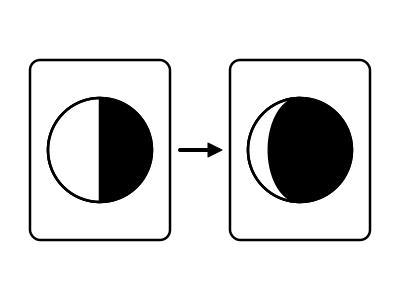
      Say: "People have watched the moon for thousands of years and seen the same pattern. These cards show how the moon looks over about one month, in order." Mix the 8 cards and give them to your child. Help your child put them in order starting with the dark card: dark, thin, half, more than half, round, more than half, half, thin. Ask: "What happens to the bright part from dark to round?" (It gets bigger.) "What happens after round?" (It gets smaller again.) "What comes after the last thin card?" (dark again, and then it starts over) Say: "The moon's shape changes in a pattern, and the pattern repeats about once a month." Lay the cards in a circle to show it repeats. Find this week's Moon Journal drawing on the circle. Ask: "Which card looks most like your drawing?" (Answers vary.) Predict: ask "What shape do you think the moon will be next week?" (Answers vary. Look for: the next card in the circle, such as rounder if it is growing.) If stuck putting cards in order, start with only 3: dark, half and round, then add the others between them. Note for grown-ups: Grade 1 describes shapes only. The names of the moon's phases and why they happen come in later grades.

    3. Talk & Record · 5–10 min

      Your child draws the 8 shapes in a circle on a page of the Moon Journal and draws an arrow to show the order. Sentence frame: "The moon gets ___, then ___, and the pattern ___."

    4. Exit Ticket · 3–5 min

      Ask the three questions aloud. Your child answers by talking or drawing.

    Exit ticket

    1. After the moon looks round, does it get thinner or rounder?
    2. Put these in order, starting with the thinnest: half, round, thin.
    3. About how long does the moon take to go through all its shapes and start over?
    Answers
    1. Thinner.
    2. Thin, half, round.
    3. About a month.
    Watch for, and help or stretch
    Watch for
    Thinking the moon changes shape completely in one night.
    Try
    Look at two Moon Journal drawings from nights close together. Ask: "Did it change a lot or a little?" (a little) Say: "It changes a little each night."
    Extra help
    Order 4 cards only: dark, thin, half, round.
    Stretch
    Your child uses the calendar to predict about when the moon will look round next, then checks it.

    At home (optional): Your child keeps drawing the moon on clear nights and compares each drawing to the cards.

    Practice

    Read each direction aloud. Your child works on the page; answers are in the grown-up view.

    Warm-up

    Remember?

    Math

    1. 36 + 40 = ?
    2. True or false? 7 + 1 = 10 - 3

    Reading & Writing

    1. name, good, man
    2. know, just

    Math · Week 27 Day 3

    I can measure my room with one unit.

    Look: a measuring table

    1. Pick one unit, such as paper clips, for every thing you measure.
    2. Measure each thing: start at the end, no gaps, no overlaps.
    3. Write each length in the table.

    Measure each thing with paper clips and write how long it is.

    1. 1.
      A book is ____ paper clips long.
    2. 2.
      A spoon is ____ paper clips long.
    3. 3.
      A shoe is ____ paper clips long.
    4. 4.
      Your hand is ____ paper clips long.

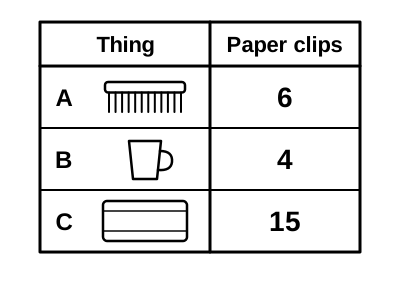
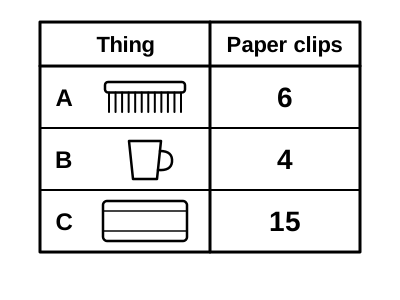
    Read this table: comb 6 clips, cup 4 clips, towel 15 clips.

    1. 5.
      A table with pictures in the first column: a comb (A) 6, a cup (B) 4, a towel (C) 15. Circle the shortest thing.
      • A
      • B
      • C
    2. 6.
      The same table. Circle the longest thing.
      • A
      • B
      • C
    3. 7.
      How many clips longer is the towel than the comb? ____

    Challenge (optional)

    Your book is longer than your spoon. Is your book longer than your hand? Use your table to tell.

    You need: About 20 paper clips, all the same size, A book, a spoon and a shoe, Pencil, Paper clips and cubes are small parts: keep them away from children under 3.

    Reading & Writing · Week 27 Day 3

    I can help write the answer to our research question.

    Look: writing an answer with facts

    1. Start with the topic: How do frogs grow?
    2. Give facts in the middle: A frog hatches from an egg as a tadpole. Then it gets legs.
    3. End with a closing line: That is how a tadpole turns into a frog.

    How Do Frogs Grow?

    How do frogs grow? When a frog is little, it is a tadpole. A tadpole has a tail, and it can swim. Then it gets legs. At last, it has no tail. That is how a tadpole turns into a frog.

    Read it. Circle the answer.

    1. 1.
      Which line is at the start?
      • How do frogs grow?
      • Then it gets legs.
    2. 2.
      Which line is at the end?
      • Then it gets legs.
      • That is how a tadpole turns into a frog.
    3. 3.
      What does a tadpole get?
      • legs
      • wings
    4. 4.
      Which one is in it?
      • A tadpole has a tail.
      • A frog can sing.

    Write it in your own words: the start, a fact and an end line.

    1. 5.
      First, a frog is a ____.
    2. 6.
      Then it ____.
    3. 7.
      That is how ____.

    Challenge (optional)

    A frog can ____ and ____.

    Science · Week 27 Day 3

    I can find a pattern in how the moon looks.

    Look: The moon's shape pattern

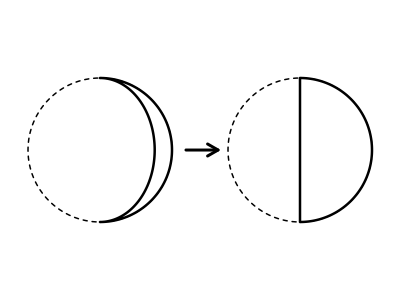
    1. Start with dark. The bright part grows: thin, half, round.
    2. Then it shrinks: half, thin, dark.
    3. Then the pattern starts over, about once a month.

    Circle the shape that comes next.

    1. 1.
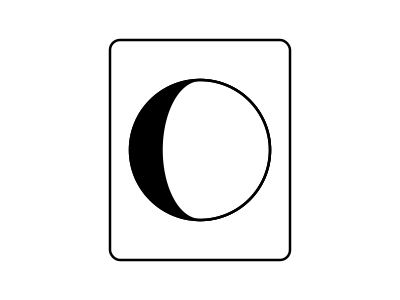
      A thin curve, then a half moon, both growing. What comes next?
      • A moon that is more than half.
      • A dark circle (no moon seen).
    2. 2.
      A round moon, then a moon that is more than half, shrinking. What comes next?
      • A round, full moon.
      • A half moon.
    3. 3.
      A half moon, then a thin curve, shrinking. What comes next?
      • A dark circle (no moon seen).
      • A round, full moon.
    4. 4.
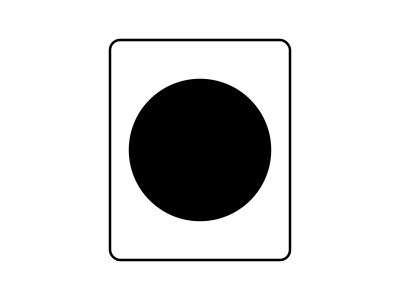
      A dark circle (no moon seen). What comes next?
      • A thin curved moon.
      • A round, full moon.

    Circle, mark or draw.

    1. 5.
      Does the moon's shape pattern repeat?
      • yes
      • no
    2. 6.
      Find your newest Moon Journal drawing. Make a mark on the card that looks most like it.
    3. 7.
      Draw the moon's shapes from dark to round.

    Challenge (optional)

    Tonight the moon is half and growing. Predict its shape in about one week.

    You need: Moon Journal, crayons