1First Grade

    Comparing: how many fewer?

    Who said it?

    Practice pages

    0 of 180 days complete · Saved on this device

    View all 180 days

    Math

    Comparing: how many fewer?

    I can find how many fewer one group has.

    Standards: 1.OA.A.1

    Number practice (no timer)
    Turn-around facts: 3 + 5 and 5 + 3
    Builds on
    Day 1 comparing. One-minute check: towers of 6 and 3. "How many more in the taller tower?" (3)

    New words

    • fewer: a smaller number of things
    • match: pair one thing with one thing

    You need

    • 20 counters in two colors (red and yellow)
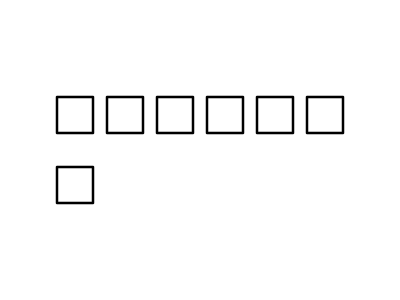
    • Two rows of paper squares, or a sheet with two lines drawn on it
    • Notebook and pencil
    1. Warm-Up · 5 min

      Fluency: turn-around facts. Ask: "4 + 2 = ?" (6) "2 + 4 = ?" (6) Then "1 + 6 and 6 + 1." (7 and 7) Spaced review from Day 1: "8 and 5: how many more is 8?" (3)

    2. Mini-Lesson · 10 min

      Say: "Yesterday we found how many more. Today we find how many fewer." Make a row of 9 red counters. Under it, make a row of 5 yellow counters, one under each red, starting from the left. Ask: "Which row has fewer?" (Yellow.) "How many fewer?" Your child points to the red counters with no yellow partner and counts them (4). Say: "Yellow has 4 fewer than red." Then ask: "How many more red than yellow?" (4) Say: "Look! How many more and how many fewer give the same number. Both questions find the difference between the rows." Write 9 - 5 = 4.

    3. Guided Practice · 10 min

      Your child builds two matched rows for each story and finds how many fewer. 1) "8 red balloons and 3 yellow balloons. How many fewer yellow?" (5 fewer; 8 - 3 = 5) 2) "10 red cars and 6 yellow cars. How many fewer yellow cars?" (4 fewer; 10 - 6 = 4) 3) "7 red fish and 5 yellow fish. How many fewer yellow fish?" (2 fewer; 7 - 5 = 2) If stuck, say: "Match one red with one yellow, all the way down. Count the ones left with no partner."

    4. Play · 10 min

      Snack Line-Up. Lay out 2 rows of small snacks or toys, such as 9 crackers and 6 grapes, matched one by one. Your child asks you a "how many fewer" question about the rows, and you answer. (3 fewer grapes) Then you ask your child a "how many more" question about the same rows. (3 more crackers) Make 3 new pairs of rows and swap roles each time. Your child may eat the snacks that match at the end.

    5. Exit Ticket · 3-5 min

      Put the objects to one side but leave them on the table. Read each question aloud. Your child answers out loud, with objects or with a quick drawing. Check each answer together right away.

    Exit ticket

    1. There are 6 dogs and 9 cats. How many fewer dogs than cats?
    2. Red row has 7. Yellow row has 4. How many fewer are yellow?
    3. Are 'how many more' and 'how many fewer' answers the same for two rows? Why?
    Answers
    1. 3 fewer
    2. 3 fewer
    3. Yes. Answers vary. Look for: both find the extra things with no partner, which is the difference.
    Watch for, and help or stretch
    Watch for
    Thinking fewer means smaller, and giving the smaller row's number (6) as the answer.
    Try
    Ask: "How many in the small row have partners?" (All.) "Which counters have no partner?" Count those.
    Extra help
    Use rows of 6 or less and match each pair with a line drawn between them.
    Stretch
    Ask an equalizing question: "Red has 12 and yellow has 8. How many yellow must you add to have the same?" (4)

    At home (optional): Set the table and compare: how many fewer cups than plates are out right now?

    Reading & Writing

    Who said it?

    I can describe a character using what they say and do.

    Standards: RL.1.3, SL.1.1.a, RF.1.3.a

    Phonics
    Digraphs sh and ch (ship, fish, chin, much)
    Sight words
    you, are, they, have, what
    Reading
    Tell Me Again About the Night I Was Born (Jamie Lee Curtis); original decodable "The Ship Shop"
    Writing
    Personal narrative: beginning, middle and end with time words (first, next, then, last) · Handwriting: lowercase b, p, r, n, m, h
    Builds on
    Naming characters (Week 1). One-minute check: ask "Who is one character in The Ship Shop?" (Chad or Mom)

    New words

    • describe: tell what someone or something is like
    • feeling: how someone feels inside, like happy, sad or proud

    You need

    • Tell Me Again About the Night I Was Born (Jamie Lee Curtis), optional read-aloud; any picture book about a family story or a new baby works
    • Sorting mat with two columns: sh and ch
    • Word cards (sh and ch words)
    • Sight word cards
    • Printed "The Ship Shop"
    1. Phonics & Word Work · 15 min

      I do: read shop and chop, pointing to the digraph. We do: sort 4 cards into the sh and ch columns: shin, chin, shed, chug. You do: your child sorts and reads 8 more: dish, much, mash, rich, shut, chat, fish, such. Then read each column aloud. Ask: "Which column has more words?" (Equal: 6 in each, counting all 12.) Read: "Shep had a fish in a dish." Dictation: shop, chop, dish, rich. If stuck, have your child say the word with the action (lips for sh, train arm for ch) before sorting.

    2. Sight Words · 5 min

      Review: you, are, they, have, what. Swat It: spread the cards on the table. Say a word; your child taps it with a clean spatula, reads it and spells it. Then your child calls a word for you to swat.

    3. Read-Aloud & Shared Reading · 15 min

      Talk about the main character in the picture book. Ask: "What does she ask her parents to do?" (Answers vary. With Tell Me Again About the Night I Was Born: tell her birth story again. Look for: something the character says or asks for.) Ask: "How does she feel when they tell it?" (Answers vary. Look for: a feeling word, such as happy or proud, and a clue from the words or pictures.) Ask: "What does that tell you about her?" (Look for: a trait, such as she loves her family.) Then partner-read "The Ship Shop" and ask: "What does Chad want? How does he get it?" (The big red ship; he uses his own cash.)

    4. Writing & Handwriting · 15 min

      Your child writes a describing sentence about a character from either story: "Chad is ___." (Answers vary, such as glad or kind.) Then adds why: "He ___." Handwriting (4 min): model each letter large in the air, then on paper while saying the path aloud. r: pull down, bounce up and over a little; n: pull down, bounce up and over and down; m: pull down, bounce up and over and down, up and over and down again. Your child writes each letter 3 times on lined paper and circles the best one.

    5. Exit Ticket · 5 min

      Oral answers.

    Exit ticket

    1. Does chin go in the sh or ch column?
    2. Tell me one thing the main character did or said.
    3. How did the character feel? How do you know?
    Answers
    1. ch
    2. Answers vary. Look for: an action or words from the story.
    3. Answers vary. Look for: a feeling word and a clue from the story.
    Watch for, and help or stretch
    Watch for
    Describing only what a character looks like, not what they say or do.
    Try
    Ask: "What did she do? What did she say? What does that tell us about her?"
    Extra help
    Sort with picture cards (ship, fish, chick, cheese) before word cards.
    Stretch
    Your child writes one sh word and one ch word that are not on the cards. (Answers vary, such as shut or chip.)

    At home (optional): Tell a family member about a character from this week's story and one thing that character did.

    Social Studies

    People in charge

    I can tell who is in charge in different places and what their jobs are.

    Standards: D2.Civ.1.K-2

    Builds on
    Rules in many places. One-minute check: your child tells one playground rule and the reason for it.

    New words

    • in charge: having the job of keeping a group safe and making sure rules are followed
    • authority: the right to be in charge

    You need

    • 7 picture cards (draw or print): parent or caregiver, teacher, principal, coach, crossing guard, librarian, lifeguard
    • 7 place cards: home, classroom, school, sports field, street corner, library, pool
    1. Warm-Up / Wonder · 5 min

      Spaced review: ask: "Name one rule at school." (Sample: raise your hand to talk.) Wonder question: "Who makes sure people follow the rules at the pool?"

    2. Explore · 10–15 min

      Say: "In every place, someone is in charge. Their job is to keep people safe and help rules work." Your child matches each person card to a place card. Expected: parent or caregiver (home), teacher (classroom), principal (school), coach (sports field), crossing guard (street corner), librarian (library), lifeguard (pool). Then act out 3 jobs and your child guesses who you are. Crossing guard: hold up a hand and walk children across. Lifeguard: watch the water and blow a pretend whistle. Librarian: help find a book and remind people to use quiet voices. Your child acts out one and you guess. Ask: "Why do we listen to people in charge?" (They keep us safe and help things be fair.) Add one safety note in calm words: "If anyone, even a grown-up in charge, asks you to do something that is unsafe or feels wrong, tell another grown-up you trust." If stuck matching, ask: "Where would you see this person working?"

    3. Talk & Record · 5–10 min

      Your child picks one person in charge and draws them at work. Sentence frame: "A ___ is in charge at the ___. Their job is to ___." (Sample: "A lifeguard is in charge at the pool. Their job is to keep swimmers safe.")

    4. Exit Ticket · 3–5 min

      Ask the two questions aloud.

    Exit ticket

    1. Who is in charge at the pool, and what is their job?
    2. Why do we listen to a crossing guard?
    Answers
    1. A lifeguard. Their job is to keep swimmers safe.
    2. They help us cross the street safely.
    Watch for, and help or stretch
    Watch for
    Thinking the person in charge is just the biggest or oldest person.
    Try
    Ask: "Is a lifeguard in charge because they are tall, or because it is their job to keep swimmers safe?"
    Extra help
    Match 4 pairs only: parent, teacher, lifeguard and crossing guard.
    Stretch
    Your child names a person in charge in your own community, such as a coach or librarian you know, and tells one thing they do.

    At home (optional): Your child notices one person in charge this week (at a store, library or park) and tells you what their job is.

    Practice

    Read each direction aloud. Your child works on the page; answers are in the grown-up view.

    Warm-up

    Remember?

    Math

    1. The parts are 3 and 4. What is the whole?
    2. There are 8 socks. 3 are in the drawer. The rest are on the bed. How many are on the bed?

    Reading & Writing

    1. said, was, of

    Math · Week 3 Day 2

    I can find how many fewer one group has.

    Look: rows of 7 and 3

    1. Make a row of 7 counters. Under it, make a row of 3, one under each.
    2. Count the top counters that have no partner: 4.
    3. The bottom row has 4 fewer. 7 - 3 = 4.

    Match the rows. Write how many fewer the bottom row has.

    1. 1.
      A top row of 10 circles and a bottom row of 7 circles, lined up under the first 7.
    2. 2.
      A top row of 6 squares and a bottom row of 1 square, lined up under the first square.
    3. 3.
      A top row of 9 stars and a bottom row of 8 stars, lined up under the first 8.

    Listen to the story. Circle how many fewer.

    1. 4.
      There are 8 kites and 4 bikes. How many fewer bikes than kites?
      • 4
      • 8
      • 12
    2. 5.
      10 coats hang on hooks. 5 hats sit on a shelf. How many fewer hats than coats?
      • 5
      • 10
      • 15
    3. 6.
      7 puppies are waiting for a bone. There are 6 bones. How many fewer bones than puppies?
      • 1
      • 6
      • 7
    4. 7.
      There are 2 pears and 9 plums. How many fewer pears than plums?
      • 2
      • 7
      • 9

    Challenge (optional)

    There are 6 cats. There are 2 fewer dogs than cats. How many dogs are there?

    You need: 10 counters (optional)

    Reading & Writing · Week 3 Day 2

    I can describe a character using what they say and do.

    Look: describe a character

    1. Read "Chip the Dog" together.
    2. Say: "We learn about a character from what the character says and does."
    3. Point: "Chip did a big jig when he got a fish. That tells me Chip is happy."

    Chip the Dog

    Chip is a big dog. Mom got a fish at the shop. "Yum, a fish!" said Chip. Chip did a big jig!

    Read each sentence. Circle the word that matches the story.

    1. 1.
      Chip is a big ___.
      • dog
      • cat
    2. 2.
      Mom got a ___ at the shop.
      • fish
      • dish
    3. 3.
      Chip did a big ___!
      • jig
      • nap
    4. 4.
      Chip is ___.

    Read the word. Circle sh or ch.

    1. 5.
      hush
      • sh
      • ch
    2. 6.
      chap
      • sh
      • ch
    3. 7.
      cash
      • sh
      • ch
    4. 8.
      chum
      • sh
      • ch

    Challenge (optional)

    What did Mom get?

    Social Studies · Week 3 Day 2

    I can tell who is in charge in different places and what their jobs are.

    Look: who is in charge here?

    1. Name the place: a ship.
    2. Ask: who keeps people safe here and makes sure the rules are followed?
    3. Say: "The captain is in charge of the ship. Her job is to steer it and keep everyone safe."

    Listen. Circle the person who is in charge.

    1. 1.
      Who is in charge on the school bus?
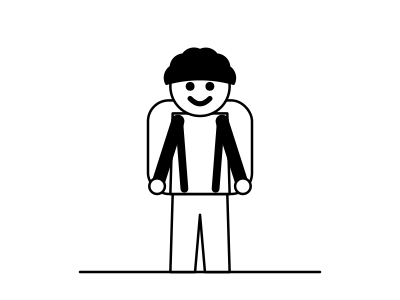
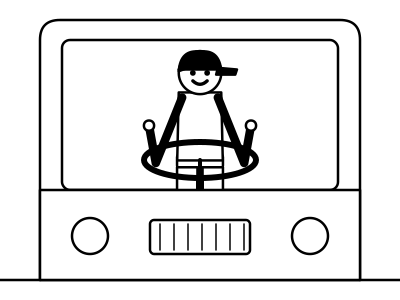
      • A child with a backpack.
      • A bus driver at the wheel.
    2. 2.
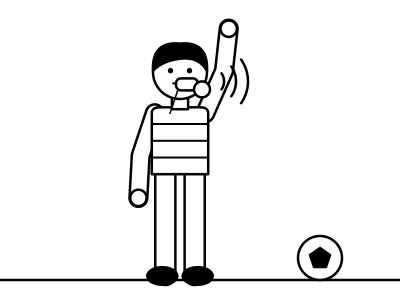
      Who is in charge at a soccer game?
      • A referee with a whistle.
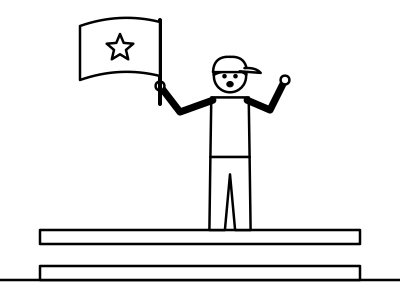
      • A fan holding a flag.
    3. 3.
      Who is in charge on a trail in a big park?
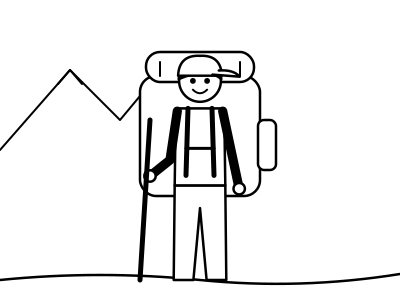
      • A hiker with a backpack.
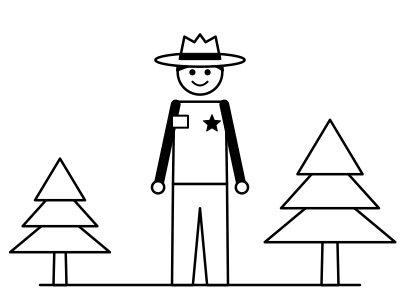
      • A park ranger in a ranger hat.

    Ask each question. Write what your child says.

    1. 4.
      What is a referee's job at a game?
    2. 5.
      What does a bus driver do to keep riders safe?
    3. 6.
      If any grown-up, even one in charge, asks you to do something unsafe, what should you do?
    4. 7.
      Draw a person in charge at a place you go.

    Challenge (optional)

    Name one thing you are in charge of at home. What is your job?

    You need: crayons