1First Grade

    Lesson + weekly check: comparing

    Share and check: sh and ch

    Practice pages

    0 of 180 days complete · Saved on this device

    View all 180 days

    MathWeekly check

    Lesson + weekly check: comparing

    I can solve 'how many more' and 'how many fewer' stories.

    Standards: 1.OA.A.1, 1.OA.B.3

    Number practice (no timer)
    Turn-around facts: 3 + 5 and 5 + 3
    Builds on
    Days 1 to 4: more, fewer, bars and turn-around facts. One-minute check: "Turn around 2 + 6." (6 + 2 = 8)

    New words

    • compare: look at two groups to see which has more and by how many

    You need

    • 20 cubes
    • Grid paper
    • Two sets of small objects
    • The stored Week 3 check and its answer key
    • Notebook and pencil
    1. Warm-Up · 5 min

      Fluency: turn-around facts. You say 4 + 5; your child says 5 + 4 and the sum (9). Repeat with 3 + 7 (10). Spaced review from Week 2: "10 - 3 = ?" (7)

    2. Short Lesson: Review Game · 10 min

      More or Fewer? Tell mixed comparing stories. Your child builds towers or draws bars, then tells the answer in a sentence. 1) "Kim has 8 marbles. Jo has 6. How many more does Kim have?" (2 more) 2) "There are 4 bowls and 9 spoons. How many fewer bowls?" (5 fewer) 3) "A red tower of 10 and a blue tower of 7. How many more red cubes?" (3 more) Ask after each: "Was that a more question or a fewer question? Did it change how we found the answer?" (No. Both find the extra.) If stuck, say: "Build both towers side by side. Count only the cubes with no partner."

    3. Weekly Check · 15 min

      Give the stored Week 3 check. The printed check has 8 items. It covers these goals: (1) I can line up two groups to find how many more; (2) I can find how many fewer one group has; (3) I can draw two bars to show a comparing story; (4) I can switch the order of two numbers and get the same sum. Read each item aloud as many times as needed. Your child uses cubes or grid paper. There is no time limit. Score it with the answer key. Secure: 7 of 8 correct, with at least 1 right on each goal. If the check is secure, start Week 4. If it is not, first do the reteach step on the check page for each group of items missed, then start Week 4.

    4. Exit Ticket · 3-5 min

      After the check, ask these two questions. Then go over any missed check items together.

    Exit ticket

    1. Mom has 9 keys. Ben has 5 keys. How many more keys does Mom have?
    2. Write the turn-around fact for 4 + 6.
    Answers
    1. 4 more
    2. 6 + 4 = 10
    Watch for, and help or stretch
    Watch for
    Adding the two numbers in a comparing story instead of finding the difference.
    Try
    Build both towers. Ask: "Are we putting these together, or seeing how much taller one is?"
    Extra help
    Let your child build towers for every comparing item during the check.
    Stretch
    After the check, your child makes a comparing story with numbers between 10 and 20 for you to solve.

    At home (optional): Compare the number of shoes at your front door with the number of coats on the hooks.
    Reading & WritingWeekly check

    Share and check: sh and ch

    I can read sh and ch words and read my story to a listener.

    Standards: RF.1.3.a, RF.1.3.g, SL.1.1

    Phonics
    Digraphs sh and ch (ship, fish, chin, much)
    Sight words
    you, are, they, have, what
    Reading
    Tell Me Again About the Night I Was Born (Jamie Lee Curtis); original decodable "The Ship Shop"
    Writing
    Personal narrative: beginning, middle and end with time words (first, next, then, last) · Handwriting: lowercase b, p, r, n, m, h
    Builds on
    This week's digraphs. One-minute check: warm up with ship, chin and fish.

    New words

    • fluent: reading smoothly, like talking

    You need

    • sh/ch word list
    • Sight word cards
    • Decodable story "The Ship Shop"
    • Finished family story
    • Recording sheet
    1. Review Game · 10 min

      Shh or Choo-Choo: say a word (shop, chin, dish, much). Your child puts a finger to the lips for sh or moves a train arm for ch. Then your child reads 6 sorted word cards. If stuck on a word during the game (not during the check), cover all but the first sound, say it together, then uncover the rest and blend.

    2. Sight Words · 5 min

      Review: you, are, they, have, what, the, of, to, said, was. Flip and Read: lay the five cards face down with last week's words. Your child flips a card, reads it and uses it in a short spoken sentence. Missed words go back in the pile. Mix this week's and last week's words.

    3. Weekly Check · 15 min

      The printed check has 8 items. It covers these goals: (1) I can read sh and ch words; (2) I can read the sight words you, are, they, have and what; (3) I can tell the beginning, middle and end of a story in order; (4) I can describe a character using what the character says and does. Give no hints. Record each answer. Secure: 6 of the 8 words in items 1 and 2, 4 of the 5 sight words, and 4 of the other 5 items. Note if your child reads sh or ch as two sounds. For any part that is not yet secure, use the matching reteach step on the check page next week.

    4. Share & Listen · 10 min

      Your child reads the finished family story aloud to a listener. The listener says one thing they liked. Then your child answers one question from the listener. (SL.1.1)

    5. Handwriting · 10 min

      Model each letter large in the air, then on paper while saying the path aloud. b: tall line down, bounce back up, and go around to the right; p: pull down below the line, bounce back up, and go around to the right; r: pull down, bounce up and over a little; n: pull down, bounce up and over and down; m: pull down, bounce up and over and down, up and over and down again; h: tall line down, bounce up and over and down. Your child writes each letter 3 times on lined paper and circles the best one. Then copy "They have a fish."

    6. Exit Ticket · 5 min

      Talk about the week.

    Exit ticket

    1. Read a sh word and a ch word from this week.
    2. What is your favorite part of your family story?
    Answers
    1. Answers vary. Look for: correct reads such as ship and chin.
    2. Answers vary. Look for: a part of the story in a full sentence.
    Watch for, and help or stretch
    Watch for
    Reading what as wat (short a) instead of /wut/.
    Try
    Review the heart part (a says /u/), then read "What can you see?" three times.
    Extra help
    Point under each word during items 4 to 6 if tracking is hard, but do not say the words.
    Stretch
    Your child reads the whole "The Ship Shop" with expression, making Chad sound excited.

    At home (optional): Read "The Ship Shop" to a family member and find all the sh and ch words together.

    ScienceWeekly check

    My first science claim

    I can say what I found out and tell my evidence.

    Standards: 1-PS4-1

    Builds on
    Stopping sounds by stopping the shaking. One-minute check: tap the pot lid and your child stops the ringing, then tells how. (I held it so it stopped shaking.)

    New words

    • claim: what you think is true
    • evidence: what you saw or heard that shows your claim is true

    You need

    • Sound Journal
    • Station chart from Day 1
    • Ruler, rubber band box, metal pot lid (not glass) and spoon
    1. Warm-Up / Wonder · 5 min

      Spaced review: ask: "What did you predict in Week 1 about how sound is made?" Your child reads or tells it. Wonder question: "Do we have enough clues now to say what makes sound?"

    2. Review Game · 10 min

      Play "Show Me." Name an object: "Ruler." Your child makes it sound and points to the part that shakes. Do the rubber band, the pot lid and their own throat. Then teach the two new words. Say: "A claim is what you think is true. Evidence is what you saw or heard that shows it." Build the claim together: "Shaking things make sound." Then the evidence: "I know because when the ___ shook, I heard it." Your child fills the blank. If stuck, point to the station chart and ask: "What did you see the ruler do when you heard it?"

    3. Check · 10 min

      Give the Week 3 science check. The check items are on the Week 3 check page; do not show them ahead of time. This week the check is your child's first science claim. Read each part aloud. Your child answers by talking, pointing, showing with the real materials or drawing. You write down their words exactly. It is not timed; stop and finish later if your child is tired. Make a check mark next to each part your child shows on their own. The printed check has 8 items. It covers these goals: (1) I can test things to see if they shake when they make a sound; (2) I can find a way to stop a sound and tell why it works; (3) I can say what I found out and tell my evidence. Watch for three things: your child says the claim (shaking things make sound), gives one piece of evidence and shows it with one real object. The claim and evidence can be spoken or drawn. Write it in the Sound Journal under the title "My First Science Claim." If your child gives the claim but no evidence, ask: "How do you know? What did you see?" Secure: 6 of 8 correct, including item 5 (the claim) and item 6 or 7 (one piece of evidence). If the check is not yet secure, use the reteach step on the check page that matches the items missed.

    4. Exit Ticket · 3–5 min

      Ask the two questions aloud.

    Exit ticket

    1. What is a claim?
    2. Tell your evidence that shaking things make sound.
    Answers
    1. What you think is true.
    2. Answers vary. Look for: a real observation, such as "The ruler shook and I heard it."
    Watch for, and help or stretch
    Watch for
    Giving a new claim as the evidence, such as "because sound is shaking."
    Try
    Ask: "What did your eyes see? What did your ears hear?" Evidence is something you observed.
    Extra help
    Your child chooses one object, shows it, and you say the claim and evidence together, word for word.
    Stretch
    Your child gives two pieces of evidence from two different stations.

    At home (optional): Your child tells the claim and evidence to a family member and shows it with one object.

    Practice

    Read each direction aloud. Your child works on the page; answers are in the grown-up view.

    Warm-up

    Remember?

    Math

    1. The parts are 2 and 7. What is the whole?
    2. 7 apples are on a plate. 2 get eaten. How many are left?

    Reading & Writing

    1. lid, fan, wig
    2. ben got a pup

    Math · Week 3 check

    Weekly check

    How to give it: Read every item aloud as many times as needed. Untimed. Your child may use cubes and grid paper. Before solving a story, ask: "Is it a more or a fewer question?" Help with reading only, not with the math.

    Secure when: 7 of 8 correct, with at least 1 right on each goal

    • I can line up two groups to find how many more.
    • I can find how many fewer one group has.
    • I can draw two bars to show a comparing story.
    • I can switch the order of two numbers and get the same sum.
    1. 1.
      Lee has 10 blocks. Pat has 1 block. How many more blocks does Lee have?
    2. 2.
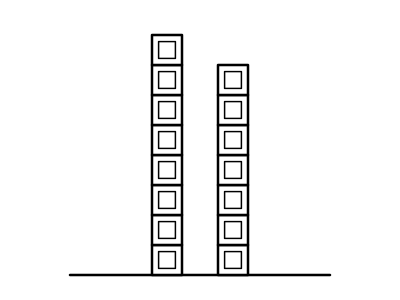
      A tower of 8 cubes next to a tower of 7 cubes, bottoms lined up. How many more cubes are in the tall tower?
    3. 3.
      There are 9 spoons and 3 forks. How many fewer forks than spoons?
    4. 4.
      A red row has 10 beads. A blue row has 2 beads. How many fewer blue beads?
    5. 5.
      Draw bars. Mom has 8 keys. You have 1 key. How many more keys does Mom have?
    6. 6.
      You have 4 crayons. Your friend has 5 more crayons than you. Draw bars. How many crayons does your friend have?
    7. 7.
      Write the turn-around fact for 3 + 4 = 7.
    8. 8.
      6 + 1 = 7, so 1 + 6 = ___

    Reading & Writing · Week 3 check

    Weekly check

    How to give it: Give the check after the review game, in a quiet spot, one part at a time. It is untimed; take a stretch break between parts if needed. Read every direction aloud, but do not read the words or story for your child. Do not help except to say "Try your best" or "Skip it." Mark each item right or wrong. Items 1 and 2 (Part 1): your child reads the sh and ch words aloud. Item 3 (Part 2): your child reads the 5 sight words. Part 3: your child reads "Shan and the Chip" aloud (in place of two sentences from "The Ship Shop"), then you read the directions for items 4 to 8. Note if your child reads sh or ch as two sounds. The story share follows, as in the lesson.

    Secure when: 6 of the 8 words in items 1 and 2, 4 of the 5 sight words, and 4 of the other 5 items.

    • I can read sh and ch words.
    • I can read the sight words you, are, they, have and what.
    • I can tell the beginning, middle and end of a story in order.
    • I can describe a character using what the character says and does.

    Shan and the Chip

    Shan had a chip. A big dog ran up to Shan. "Can I have a bit?" said the dog. Shan said, "You can have it." The dog had the chip.

    1. 1.
      chap rash shot lash chit
    2. 2.
      mush chub hash
    3. 3.
      you are they have what
    4. 4.
      Shan said, "You can have it."
    5. 5.
      A big dog ran up to Shan.
    6. 6.
      The dog had the chip.
    7. 7.
      "Can I have a bit?" said ___.
      • the dog
      • Shan
    8. 8.

    Science · Week 3 check

    Weekly check

    How to give it: Read every direction, question and choice aloud. It is not timed; stop and finish later if your child is tired. Your child answers by talking, pointing, showing with the real materials or drawing, and you write their words exactly. Have the ruler, the rubber band box, a metal pot lid (not glass) and a spoon ready. If your child gives the claim but no evidence, ask: "How do you know? What did you see?" Write the claim in the Sound Journal under "My First Science Claim."

    Secure when: 6 of 8 correct, including item 5 (the claim) and item 6 or 7 (one piece of evidence).

    • I can test things to see if they shake when they make a sound.
    • I can find a way to stop a sound and tell why it works.
    • I can say what I found out and tell my evidence.
    1. 1.
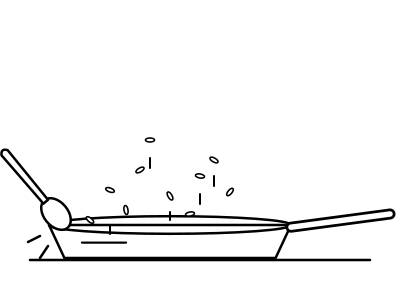
      Grains of rice bouncing on a metal pan as a spoon taps its edge. Is the pan shaking?
      • yes
      • no
    2. 2.
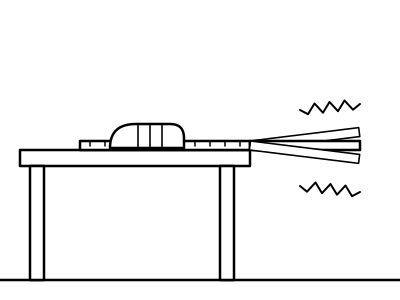
      A ruler sticking out past a table edge, drawn blurry, with zigzag lines. Is the ruler making a sound?
      • yes
      • no
    3. 3.
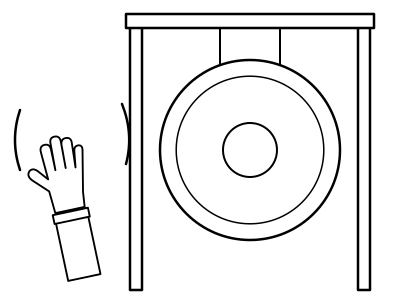
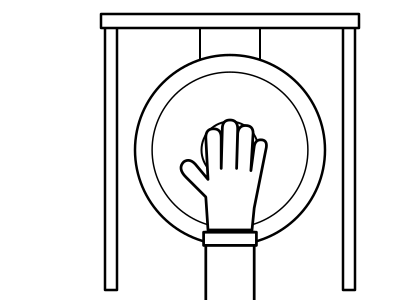
      A metal gong keeps ringing after a hit. Circle the way to stop it.
      • A hand waving near the gong.
      • A hand pressed flat on the gong.
    4. 4.
      Tell why your hand on the gong stops the sound. Your grown-up writes it.
    5. 5.
      Say your science claim about sound. Your grown-up writes it.
    6. 6.
      Make a sound with one thing from our stations. Point to the part that shakes.
    7. 7.
      Finish your evidence. Your grown-up writes it: "I know because when the ___ shook, I heard it."
    8. 8.
      Draw your claim: one thing shaking and making a sound.