1First Grade

    Comparing: how many more?

    Beginning, middle, end

    Practice pages

    0 of 180 days complete · Saved on this device

    View all 180 days

    Math

    Comparing: how many more?

    I can line up two groups to find how many more.

    Standards: 1.OA.A.1

    Number practice (no timer)
    Turn-around facts: 3 + 5 and 5 + 3
    Builds on
    Week 2 subtraction. One-minute check: "7 - 4 = ?" (3) Your child may use fingers.

    New words

    • compare: look at two groups to see which has more and by how many
    • how many more: the number of extra things one group has

    You need

    • 20 cubes that snap together (or blocks, or coins stacked in towers)
    • Small snacks or toys
    • Notebook and pencil
    1. Warm-Up · 5 min

      Fluency: turn-around facts. Hold up 3 fingers on one hand and 5 on the other. Ask: "How many?" (8) Swap hands. Ask: "Now how many?" (Still 8.) Spaced review from Week 2: "9 - 3 = ?" (6) "10 - 2 = ?" (8)

    2. Mini-Lesson · 10 min

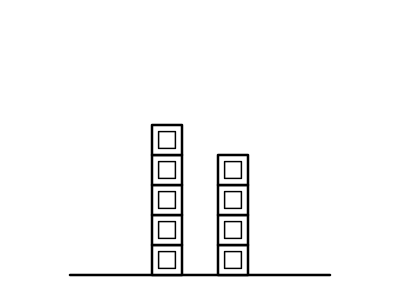
      Say: "Today we compare two groups to find how many more." Build a tower of 7 cubes and a tower of 4 cubes. Stand them side by side, starting from the same place. Ask: "Which tower is taller?" (The 7 tower.) Say: "Sam has 7 apples. Mia has 4 apples. How many more apples does Sam have?" Point to the cubes on the 7 tower that are taller than the 4 tower. Your child counts the extra cubes (3). Say: "The cubes that match up are the same. The extra cubes show how many more. Sam has 3 more apples." Write 7 - 4 = 3. Say: "We can also think: 4 and how many more make 7? 4 + 3 = 7."

    3. Guided Practice · 10 min

      Your child builds two towers for each story, lines them up and counts the extra cubes. 1) "Lee has 8 stickers. Ana has 5 stickers. How many more does Lee have?" (3 more; 8 - 5 = 3) 2) "6 dogs and 2 cats. How many more dogs than cats?" (4 more; 6 - 2 = 4) 3) "You have 9 blocks. I have 9 blocks. How many more do you have?" (0 more; we have the same) If stuck, say: "Line up the bottoms. Put your hand at the top of the short tower. Count the cubes above your hand."

    4. Play · 10 min

      Tower Compare. Each player grabs a small handful of cubes (no more than 10), builds a tower and stands it next to the other tower. The person with the taller tower says, "I have __ more." Both players check by counting the extra cubes. Write the subtraction equation each time. Play 5 rounds.

    5. Exit Ticket · 3-5 min

      Put the objects to one side but leave them on the table. Read each question aloud. Your child answers out loud, with objects or with a quick drawing. Check each answer together right away.

    Exit ticket

    1. Sam has 6 stickers. Mia has 4. How many more stickers does Sam have?
    2. Towers of 5 and 9: how many more cubes in the taller tower?
    3. Write an equation for question 2.
    Answers
    1. 2 more
    2. 4 more
    3. 9 - 5 = 4
    Watch for, and help or stretch
    Watch for
    Giving the bigger number as the answer (7 instead of 3 more).
    Try
    Hold the two towers together. Ask: "Which cubes have no partner?" Count only those.
    Extra help
    Use towers of 5 or less, and keep the cube colors different for each tower.
    Stretch
    Compare towers of 15 and 11 (4 more), and ask your child to explain the answer without cubes.

    At home (optional): Compare two groups at home, such as forks and spoons in a drawer. Say how many more there are.
    Reading & Writing

    Beginning, middle, end

    I can tell what happens at the beginning, middle and end of a story.

    Standards: RL.1.2, RL.1.3, RF.1.3.a

    Phonics
    Digraphs sh and ch (ship, fish, chin, much)
    Sight words
    you, are, they, have, what
    Reading
    Tell Me Again About the Night I Was Born (Jamie Lee Curtis); original decodable "The Ship Shop"
    Writing
    Personal narrative: beginning, middle and end with time words (first, next, then, last) · Handwriting: lowercase b, p, r, n, m, h
    Builds on
    Retelling with key details (Week 2). One-minute check: your child retells "Ten in a Hut" on three fingers. (They sat in a hot hut; the fan did not go; they ran to the bus and had fun.)

    New words

    • digraph: two letters that make one sound, like sh or ch
    • beginning, middle, end: the three parts of a story, in order

    You need

    • Tell Me Again About the Night I Was Born (Jamie Lee Curtis), optional read-aloud; any picture book about a family story or a new baby works
    • Story strip: paper folded into three
    • sh and ch cards
    • Sight word cards: you, are, they, have, what
    • Printed "The Ship Shop"
    1. Phonics & Word Work · 15 min

      I do: Say: "s and h together make one new sound, /sh/. Put a finger to your lips: shhh." Then: "c and h together say /ch/. Move your arm like a train: ch, ch." Read ship and chip by touching the digraph as one sound: /sh/ /i/ /p/. We do: read shop, chin, fish, much, shed, chop. You do: your child reads 8 words: shut, rich, dish, chug, mash, chat, shin, such. Ask: "How many sounds in fish?" (3: /f/ /i/ /sh/) Read: "Chad can chop a fish." Dictation: ship, chin, fish, much. If stuck, underline the two letters together and say: "These two are buddies. They make one sound."

    2. Sight Words · 5 min

      Introduce this week's words with see-say-spell-write. For each card: Say: "This word is ___. Say it with me." Your child reads it, spells it aloud while tapping each letter, then writes it once while saying each letter, and reads it again. Draw a small heart over the tricky part, the part we must learn by heart: you (ou says /oo/); are (the whole word says /ar/; the e is silent); they (ey says /ay/); have (the e is silent and does not change the a); what (a says /u/). Finish by reading all five cards in mixed order twice. If stuck, cover the tricky part, read the regular part together, then uncover it and say the whole word.

    3. Read-Aloud & Shared Reading · 15 min

      Read the picture book aloud. Your child draws one picture for each part on the story strip: beginning, middle and end. Ask: "What happens at the beginning?" (Answers vary. With Tell Me Again About the Night I Was Born: a girl asks her parents to tell the story of the night she was born. Look for: the first event.) Ask: "What happens in the middle?" (Look for: the main events of the story.) Ask: "How does it end?" (Look for: the last event, such as the family coming home together.) Then read "The Ship Shop" aloud while your child follows: The Ship Shop Chad and Mom go to a ship shop. "What can you see?" said Mom. "I can see a big red ship!" said Chad. "Can I get it?" "It is a lot of cash," said Mom. "I have cash in my dish!" said Chad. Chad got the red ship. Chad and Mom sat on the bus. They had a chat. "I can get the ship wet in the tub!" said Chad. "Yes, you can," said Mom.

    4. Writing & Handwriting · 15 min

      Return to the family story from Week 2. Your child rereads box 1, then tells you what happened in the middle, using the word next. Write the word next on a card to copy. Your child writes one sentence under box 2. Handwriting (4 min): model each letter large in the air, then on paper while saying the path aloud. b: tall line down, bounce back up, and go around to the right; p: pull down below the line, bounce back up, and go around to the right. Your child writes each letter 3 times on lined paper and circles the best one. Say: "b: bat first, then ball. p goes below the line."

    5. Exit Ticket · 5 min

      Your child reads the words and answers orally.

    Exit ticket

    1. Read these words: shop, chin.
    2. How many sounds are in fish?
    3. What happened at the beginning of the story?
    Answers
    1. shop, chin
    2. 3 (/f/ /i/ /sh/)
    3. Answers vary. Look for: an event from the start of the book.
    Watch for, and help or stretch
    Watch for
    Reading s and h as two sounds (/s/ /h/ /i/ /p/).
    Try
    Cover the two letters with one finger and say: "One finger, one sound: /sh/."
    Extra help
    Teach sh only today and add ch tomorrow. Use the finger-to-lips and train-arm actions for every word.
    Stretch
    Your child reads "The Ship Shop" alone and circles every sh and ch word. (ship, shop, Chad, cash, dish, chat)

    At home (optional): Look for sh and ch in words around the house, such as on a shampoo bottle or a cheese label.

    Science

    Vibration stations

    I can test things to see if they shake when they make a sound.

    Standards: 1-PS4-1

    Builds on
    Plucking the rubber band guitar. One-minute check: your child plucks a band and tells what it does. (It vibrates, or shakes fast.)

    New words

    • station: a spot where you do one test
    • record: to write or draw what happened so you remember it

    You need

    • Ruler (12-inch, wood or plastic)
    • A table edge
    • Rubber band box from Week 2
    • Metal pot lid (not a glass lid) or a metal pie pan, and a metal spoon
    • 1 tablespoon of uncooked rice
    • Recording chart: 3 rows (Ruler, Rubber band, Rice) and 3 columns (What I did, What I saw, What I heard)
    • Crayons
    • Optional: a tuning fork, if your family has one
    1. Warm-Up / Wonder · 5 min

      Spaced review: ask: "What does vibrate mean?" (to shake back and forth very fast) "Name one thing that vibrated last week." (my throat, the balloon or the rubber band) Wonder question: "Does everything that makes a sound vibrate?" Say: "Let's test it at three stations."

    2. Explore · 10–15 min

      Station 1, Ruler: lay the ruler flat on the table so half of it (6 inches) sticks out past the edge. You press the table end down firmly. Your child pushes the loose end down a little and lets go. Ask: "What do you see?" (It shakes up and down; it looks blurry.) "What do you hear?" (A buzzy thwap.) Station 2, Rubber band: your child plucks a band. (It blurs and twangs.) Station 3, Rice: lay the pie pan flat, or set the pot lid flat on the table if it does not wobble. Sprinkle the rice on it. Your child taps the edge gently with the spoon. Ask: "What did the rice do?" (It jumped or bounced.) "Why do you think it jumped?" (The pan was shaking.) After each station, your child fills in that row of the chart with a drawing or a word. If stuck, slow it down: do the ruler again and say, "Watch the end, not my hand. Is it moving?"

    3. Talk & Record · 5–10 min

      Look at the whole chart together. Ask: "What was the same at all three stations?" (Something shook every time we heard a sound.) Your child writes or dictates under the chart: "At every station, something ___." (vibrated or shook)

    4. Exit Ticket · 3–5 min

      Ask the three questions aloud. Your child may look at the chart.

    Exit ticket

    1. At the ruler station, what did you see when you heard the sound?
    2. What did the rice do when you tapped the pan?
    3. What was the same at all three stations?
    Answers
    1. The ruler shook up and down, or looked blurry.
    2. It jumped or bounced.
    3. Something vibrated (shook) every time there was a sound.
    Watch for, and help or stretch
    Watch for
    Saying the rice made the sound.
    Try
    Tap the pan with no rice on it. Ask: "Is there still a sound?" (Yes.) "So what is shaking?" (The pan. The rice just shows us.)
    Extra help
    Do 2 stations (ruler and rubber band) and fill in only the "What I saw" column with a drawing.
    Stretch
    Your child slides the ruler so less of it sticks out, twangs it again and tells how the sound changed. (It gets higher.)

    At home (optional): Your child finds one more thing at home that vibrates when it makes a sound (with a grown-up), and draws it for the chart.

    Practice

    Read each direction aloud. Your child works on the page; answers are in the grown-up view.

    Warm-up

    Remember?

    Math

    1. 9 birds are on a branch. 3 fly away. How many are left?
    2. 4 ducks are on a pond. 3 more swim over. How many ducks in all?

    Reading & Writing

    1. mop, rug, pen
    2. bat, pin, rag

    Math · Week 3 Day 1

    I can line up two groups to find how many more.

    Look: towers of 6 and 3

    1. Build a tower of 6 cubes and a tower of 3 cubes. Line up the bottoms.
    2. Put your hand on top of the short tower. Count the cubes above your hand: 3.
    3. The tall tower has 3 more. 6 - 3 = 3.

    Count the cubes in each tower. Write how many more the tall tower has.

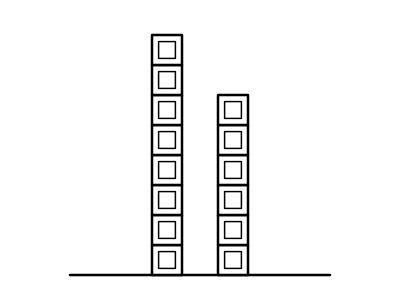
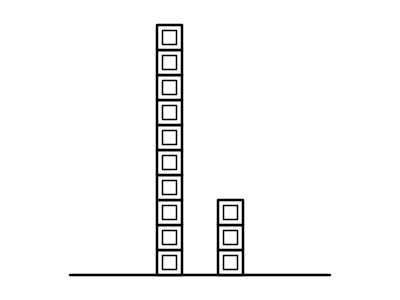
    1. 1.
      A tower of 8 cubes next to a tower of 6 cubes, bottoms lined up.
    2. 2.
      A tower of 10 cubes next to a tower of 3 cubes, bottoms lined up.
    3. 3.
      A tower of 5 cubes next to a tower of 4 cubes, bottoms lined up.

    Listen to the story. Write how many more.

    1. 4.
      Jo has 9 marbles. Kai has 4 marbles. How many more marbles does Jo have?
    2. 5.
      There are 7 cups and 2 plates. How many more cups than plates?
    3. 6.
      Write the equation for the cups and plates story.
    4. 7.
      You have 3 stickers. Your friend has 3 stickers. How many more do you have?

    Challenge (optional)

    Draw two towers where one tower has 4 more cubes than the other.

    You need: crayons, 10 cubes (optional)

    Reading & Writing · Week 3 Day 1

    I can tell what happens at the beginning, middle and end of a story.

    Look: beginning, middle and end

    1. Read "Shep on the Ship" together.
    2. Say: "The beginning is how a story starts. The middle is the main part. The end is how it finishes."
    3. Point: "Beginning: Shep and Josh hop on a ship. Middle: Josh got Shep a fish. End: Shep had a nap."

    Shep on the Ship

    Shep is a pup. Shep and Josh hop on a ship. The ship had a fish shop. Josh got Shep a fish. Shep had a nap on the ship.

    Write B for beginning, M for middle or E for end.

    1. 1.
      Shep had a nap on the ship.
    2. 2.
      Shep and Josh hop on a ship.
    3. 3.
      Josh got Shep a fish.

    Say the picture name. Circle sh or ch to finish the word.

    1. 4.
      A chin. ___ i n
      • sh
      • ch
    2. 5.
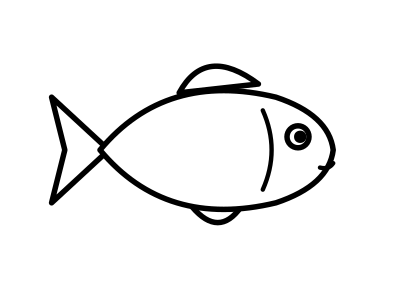
      A fish. f i ___
      • sh
      • ch
    3. 6.
      A potato chip. ___ i p
      • sh
      • ch
    4. 7.
      A dish. d i ___
      • ch
      • sh

    Challenge (optional)

    What did Josh get Shep?

    Science · Week 3 Day 1

    I can test things to see if they shake when they make a sound.

    Look: Test it: does it shake?

    1. Pick a thing that makes a sound, like a bell.
    2. Make the sound. Watch it and touch it lightly.
    3. Record it: it shakes, so circle yes.

    Test each thing with your grown-up. Circle yes if it shakes when it makes a sound.

    1. 1.
      Tap a metal bowl gently with a spoon. Touch the bowl lightly.
      • yes
      • no
    2. 2.
      Hum into a paper towel tube. Touch the tube.
      • yes
      • no
    3. 3.
      Run your thumbnail along the teeth of a plastic comb. Touch the comb.
      • yes
      • no
    4. 4.
      Shake the closed bottle of beans. Hold it in your hand.
      • yes
      • no

    Circle the picture that shows something shaking to make a sound.

    1. 5.
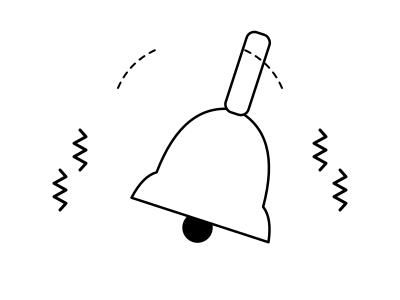
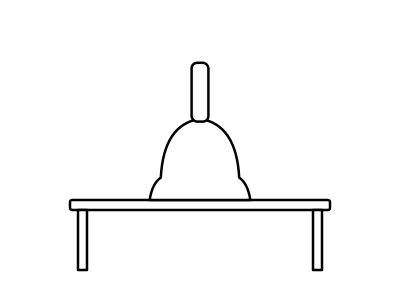
      Which bell is making a sound?
      • A bell swinging, with zigzag lines.
      • A bell sitting still on a table.
    2. 6.
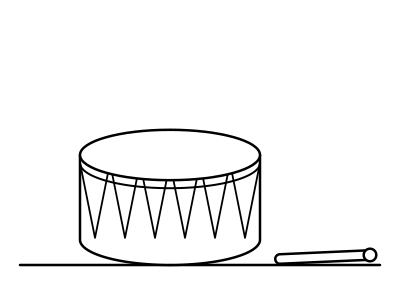
      Which drum is making a sound?
      • A drum with a stick lying beside it.
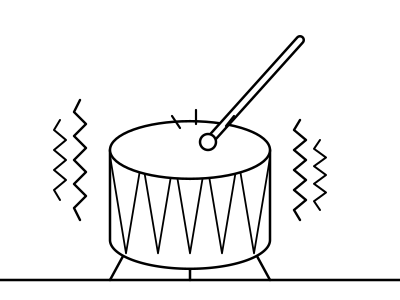
      • A stick hitting a drum, with zigzag lines.
    3. 7.
      Draw one thing you tested today. Add zigzag lines to show it shaking.

    Challenge (optional)

    Sing into a plastic cup and touch the bottom of the cup. What is the cup doing?

    You need: a metal bowl (not glass) and a metal spoon, a paper towel tube, a plastic comb, a small plastic bottle with 5 dry beans inside and the lid closed tight by a grown-up (dry beans are a choking hazard for children under 3), crayons