1First Grade

    Turn-around facts

    Ending my story

    Practice pages

    0 of 180 days complete · Saved on this device

    View all 180 days

    Math

    Turn-around facts

    I can switch the order of two numbers and get the same sum.

    Standards: 1.OA.B.3

    Number practice (no timer)
    Turn-around facts: 3 + 5 and 5 + 3
    Builds on
    Days 1 to 3 comparing, and Week 1 equations. One-minute check: "Write the equation for 2 dogs and 5 more dogs." (2 + 5 = 7)

    New words

    • turn-around fact: the same two numbers added in the other order, such as 2 + 5 and 5 + 2

    You need

    • Dominoes, or paper rectangles with dots drawn on each half
    • 20 cubes in two colors
    • Notebook and pencil
    1. Warm-Up · 5 min

      Fluency: turn-around facts. Your child shows 3 + 5 with fingers, then 5 + 3, and says the sum both times (8). Spaced review from Day 3: "9 and 6: how many more is 9?" (3)

    2. Mini-Lesson · 10 min

      Say: "Today we find out what happens when we switch the order of two numbers." Hold up a domino with 2 dots and 5 dots. Ask: "How many dots?" (7) Write 2 + 5 = 7. Turn the domino around. Ask: "Did any dots go away or come?" (No.) "How many dots now?" (7) Write 5 + 2 = 7. Build a train with 2 red cubes and 5 yellow cubes. Turn the train around in your hands. Say: "When we switch the order, the total stays the same. 2 + 5 and 5 + 2 are turn-around facts." Ask: "Does this work for take away too? Is 5 - 2 the same as 2 - 5?" Act it out with 5 cubes: you can take 2 from 5, but with only 2 cubes you do not have 5 to take away. Say: "Turn-arounds work for adding."

    3. Guided Practice · 10 min

      Your child builds each pair with two-color trains, then writes both facts. 1) 4 and 1 (4 + 1 = 5, 1 + 4 = 5) 2) 3 and 6 (3 + 6 = 9, 6 + 3 = 9) 3) 2 and 8 (2 + 8 = 10, 8 + 2 = 10) 4) Ask: "If you know 7 + 2 = 9, what is 2 + 7?" (9) Ask: "Which is easier to count on, 2 + 7 or 7 + 2?" (Answers vary. Look for: starting with the bigger number, 7, is quicker.) If stuck, say: "Build it. Turn the train around. Count it again."

    4. Play · 10 min

      Domino Flip. Put the dominoes face down. Your child flips one, says the addition fact, flips the domino around and says the turn-around fact. Your child writes both in the notebook. If both sides are the same, such as 3 and 3, ask: "What is the turn-around?" (It is the same fact, 3 + 3 = 6.) Play until you have 6 pairs of turn-around facts.

    5. Exit Ticket · 3-5 min

      Put the objects to one side but leave them on the table. Read each question aloud. Your child answers out loud, with objects or with a quick drawing. Check each answer together right away.

    Exit ticket

    1. 6 + 3 = 9. What is 3 + 6?
    2. Write the turn-around fact for 1 + 7.
    3. Does changing the order change the total when we add?
    Answers
    1. 9
    2. 7 + 1 = 8
    3. No. The total stays the same.
    Watch for, and help or stretch
    Watch for
    Recounting from 1 every time instead of knowing the total stays the same.
    Try
    Ask your child to predict the total before counting the turned domino, then check.
    Extra help
    Use only dominoes with sums to 6. Your child counts every dot both times to prove the total did not change.
    Stretch
    Ask for turn-arounds with bigger numbers, such as 9 + 6 and 6 + 9 (15), and ask which order is quicker to count on.

    At home (optional): Make a turn-around with spoons: lay out 4 spoons and 2 forks, then 2 forks and 4 spoons. Count both.
    Reading & Writing

    Ending my story

    I can write an ending that tells how my story finished or how I felt.

    Standards: W.1.3, L.1.2.b, L.1.1.a

    Phonics
    Digraphs sh and ch (ship, fish, chin, much)
    Sight words
    you, are, they, have, what
    Reading
    Tell Me Again About the Night I Was Born (Jamie Lee Curtis); original decodable "The Ship Shop"
    Writing
    Personal narrative: beginning, middle and end with time words (first, next, then, last) · Handwriting: lowercase b, p, r, n, m, h
    Builds on
    Writing sentences in order with time words (Day 3). One-minute check: your child reads the family story so far.

    New words

    • ending: the last part of a story that tells how it finished or how you felt

    You need

    • Family story draft
    • Handwriting sheet (b, p, r, n, m, h)
    • Colored pencil
    • Sight word cards
    1. Phonics & Word Work · 15 min

      Mixed review: short vowels plus sh and ch. I do: read chum, shin, much. We do: Word Builder: build ship, then change one part to make shop, chop, chip, chin. You do: your child reads 8 words: fish, chug, shed, rich, gush, chop, mesh, such. Read: "They have a fish in a dish." "What is in the shed?" Dictation: shut, chip, mash, rich, chin. If stuck, have your child read the word without the first sound (ip), then add the digraph (sh-ip).

    2. Sight Words · 5 min

      Review: you, are, they, have, what. Rainbow Write: your child writes two of this week's words three times each in different crayons, saying each letter, then reads them. Use they and what.

    3. Read-Aloud & Shared Reading · 15 min

      Look at the last page of the picture book. Ask: "How did the author end the story?" (Answers vary. Look for: what happened last or how the family felt.) Say: "Some endings tell what happened last. Some tell how we felt." Reread the last line of "The Ship Shop". Ask: "Does it tell what happened or how Chad felt?" (What happened: Mom says yes, he can get the ship wet in the tub.) Ask: "How do you think Chad felt?" (Answers vary, such as happy or excited.)

    4. Writing & Handwriting · 15 min

      Model two endings: "We went home." (what happened) and "I was so happy." (how I felt). Your child picks one or writes a new ending for box 3. Then check every sentence with a colored pencil: a capital at the start? An end mark at the end? (L.1.2.b) Handwriting (4 min): model each letter large in the air, then on paper while saying the path aloud. h: tall line down, bounce up and over and down; b: tall line down, bounce back up, and go around to the right; p: pull down below the line, bounce back up, and go around to the right; r: pull down, bounce up and over a little; n: pull down, bounce up and over and down; m: pull down, bounce up and over and down, up and over and down again. Your child writes each letter 3 times on lined paper and circles the best one. Review all six bump letters once each.

    5. Exit Ticket · 5 min

      Oral answers.

    Exit ticket

    1. Read me your ending.
    2. Point to a capital and an end mark in your story.
    3. Read this sentence: What is in the shed?
    Answers
    1. Answers vary. Look for: a sentence that tells how the story finished or how your child felt.
    2. Answers vary. Look for: a correct capital at a sentence start and an end mark.
    3. What is in the shed?
    Watch for, and help or stretch
    Watch for
    Ending with "The end" only, with no real ending sentence.
    Try
    Ask: "When it was over, what did you do or how did you feel?" Then write that.
    Extra help
    Offer the two model endings on cards; your child copies one.
    Stretch
    Your child adds a feeling word to the ending, such as glad, proud or tired.

    At home (optional): Read your family story to someone at home.

    Social StudiesWeekly check

    Rules in public places

    I can explain how rules help at the library, the park and the store.

    Standards: D2.Civ.12.K-2, D2.Civ.3.K-2

    Builds on
    People in charge. One-minute check: ask "Who is in charge at the library, and what do they do?" (A librarian; helps people find books and keeps it a quiet place to read.)

    New words

    • sign: words or pictures posted to tell people a rule or give information
    • public place: a place everyone in the community can use

    You need

    • Photos or drawings of public signs: stop sign, quiet zone, keep off the grass, dogs on a leash, wash your hands, wait here
    • Or a short walk or library visit to find real signs
    • Paper and crayons
    1. Warm-Up / Wonder · 5 min

      Spaced review: play "Who's in Charge?" You name a place and your child names the person: pool (lifeguard), classroom (teacher), sports field (coach). Wonder question: "How can a rule help people when no one in charge is standing there?"

    2. Review Game · 10 min

      Sign hunt. Walk your street or a library, or use photos. For each sign, ask two questions: "What is the rule?" and "Who does it help?" Expected: stop sign (drivers stop; keeps drivers and walkers safe), quiet zone (use soft voices; helps people read and think), keep off the grass (stay on the path; helps the grass grow), dogs on a leash (keep dogs close; keeps people and pets safe), wash your hands (helps everyone stay healthy), wait here (stand in line at a store or post office; keeps it fair). Say: "Signs tell the rule even when no one in charge is there." If stuck, ask: "What would happen if people didn't follow this sign?"

    3. Check · 10 min

      Give the Week 3 social studies check. The check items are on the Week 3 check page; do not show them ahead of time. This week the check uses sign pictures. Read each part aloud. Your child answers by talking, pointing, acting it out or drawing, and you write their words exactly. It is not timed; stop and finish later if your child is tired. Make a check mark next to each part your child shows on their own. The printed check has 7 items. It covers these goals: (1) I can tell who is in charge in different places and what their jobs are; (2) I can explain how rules help at the library, the park and the store. Show one sign picture your child has not explained yet today. Your child reads the sign picture, tells the rule and tells who it helps. Look for a rule and a person or group it helps. Secure: 6 of 7 correct, with at least one right on each goal. If the check is not yet secure, use the reteach step on the check page that matches the items missed.

    4. Exit Ticket · 3–5 min

      Ask the two questions aloud.

    Exit ticket

    1. What does a stop sign tell drivers to do, and who does it help?
    2. Why is there a quiet rule at the library?
    Answers
    1. Stop. It helps drivers and people walking stay safe.
    2. So people can read, think and study.
    Watch for, and help or stretch
    Watch for
    Reading the sign's picture but not telling why the rule matters.
    Try
    Ask: "Who would get hurt or upset if nobody followed it?"
    Extra help
    Use 3 signs with clear pictures: stop sign, wash your hands and dogs on a leash.
    Stretch
    Your child designs a new sign for a place at home, such as "Shoes off here," and tells who it helps.

    At home (optional): Your child spots 2 signs on the next car ride or walk and tells you the rule on each.

    Practice

    Read each direction aloud. Your child works on the page; answers are in the grown-up view.

    Warm-up

    Remember?

    Math

    1. 2 cars are in a lot. 6 more drive in. How many cars in all?
    2. 3 + 5 = 8. So what is 8 - 3?

    Reading & Writing

    1. a pig can dig

    Math · Week 3 Day 4

    I can switch the order of two numbers and get the same sum.

    Look: 4 + 5 and 5 + 4

    1. Build a train with 4 red cubes and 5 yellow cubes. 4 + 5 = 9.
    2. Turn the train around. Now it shows 5 + 4.
    3. No cubes came or went, so 5 + 4 = 9 too.

    Write the turn-around fact.

    1. 1.
      6 + 4 = 10
    2. 2.
      1 + 9 = 10
    3. 3.
      6 + 2 = 8
    4. 4.
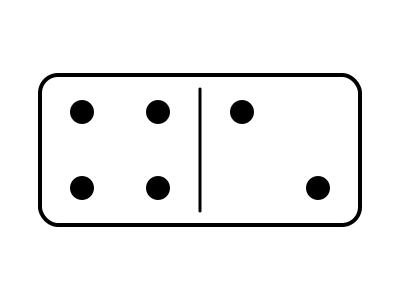
      A domino with 4 dots on one side and 2 dots on the other. Write both facts.

    Use the first fact. Write the sum.

    1. 5.
      7 + 3 = 10, so 3 + 7 = ___
    2. 6.
      5 + 1 = 6, so 1 + 5 = ___
    3. 7.
      8 + 1 = 9, so 1 + 8 = ___

    Challenge (optional)

    Is 6 - 4 the same as 4 - 6? Tell why.

    You need: cubes in 2 colors (optional)

    Reading & Writing · Week 3 Day 4

    I can write an ending that tells how my story finished or how I felt.

    Look: two kinds of endings

    1. Say: "Some endings tell what happened last. Some endings tell how I felt."
    2. Read the last sentence of "The Shed": I had fun! Say: "This ending tells how I felt."
    3. Then check a sentence together: a capital at the start, an end mark at the end.

    The Shed

    Mom and I had a shed. A big box was in the shed. We got rid of the box. I had fun!

    Read each ending. Circle yes if it tells how I felt.

    1. 1.
      I had fun!
      • yes
      • no
    2. 2.
      We got in the van.
      • yes
      • no
    3. 3.
      I was sad.
      • yes
      • no
    4. 4.
      Mom got the cash.
      • yes
      • no

    Write each sentence with a capital letter and an end mark.

    1. 5.
      tom had a fish
    2. 6.
      we had fun
    3. 7.
      Write your own ending:

    Challenge (optional)

    What was in the shed?

    Social Studies · Week 3 check

    Weekly check

    How to give it: Read every question and choice aloud, and point to each picture as you name it. This week the check uses sign pictures. Your child answers by talking, pointing, circling, acting it out or drawing; write their words exactly on the line. It is not timed; stop and finish later if your child is tired. Do not show the page ahead of time. For items 4 to 6, your child "reads" the sign picture, tells the rule and tells who it helps. Make a check mark next to each part your child shows on their own.

    Secure when: 6 of 7 correct, with at least one right on each goal

    • I can tell who is in charge in different places and what their jobs are.
    • I can explain how rules help at the library, the park and the store.
    1. 1.
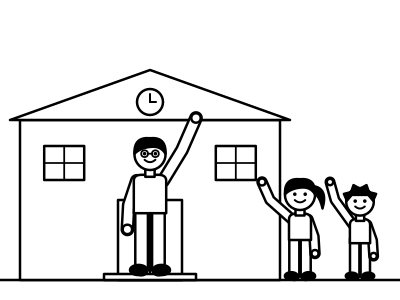
      A principal at the front door of a school, waving to children. Who is in charge here?
    2. 2.
      What is a coach's job?
    3. 3.
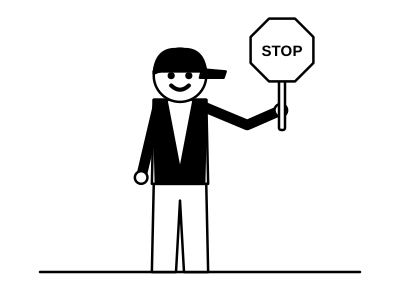
      A crossing guard holding up a stop paddle. Who is this, and what is the job?
    4. 4.
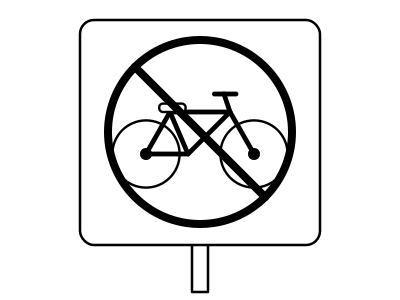
      A sign with a bike and a line across it. What is the rule? Who does it help?
    5. 5.
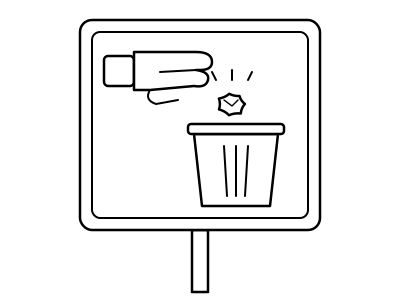
      A sign showing a hand dropping trash into a can. What is the rule? Who does it help?
    6. 6.
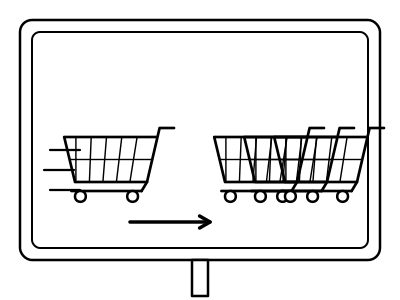
      A store sign showing a shopping cart going back into a row of carts. What is the rule? Who does it help?
    7. 7.
      Can a sign tell a rule even when no person in charge is there?
      • yes
      • no