1First Grade

    Review: length

    Finish our research

    Practice pages

    0 of 180 days complete · Saved on this device

    View all 180 days

    Math

    Review: length

    I can order, compare and measure lengths.

    Standards: 1.MD.A.1, 1.MD.A.2

    Number practice (no timer)
    Mixed facts within 20 (keep-up practice)
    Builds on
    Weeks 25 and 26 (ordering and comparing lengths; measuring with paper clips). One-minute check: "What are the 3 measuring rules?" (Start at the end, no gaps, no overlaps.)

    New words

    • length: how long something is

    You need

    • A piece of string about 4 feet long, and child-safe scissors (an adult helps cut)
    • 20 paper clips, all the same size
    • Objects: a spoon, a crayon, a shoe and a book
    • 3 paper strips cut by an adult so they are 5, 8 and 11 paper clips long (lay clips end to end to cut each strip)
    • Notebook and pencil
    • Paper clips are small parts: keep them away from children under 3.
    1. Warm-Up · 5 min

      Fluency: mixed facts within 20, any strategy. "6 + 8?" (14) "17 - 9?" (8) Spaced review from Week 26: "When you measure with paper clips, where does the first clip go?" (Right at one end of the object)

    2. Mini-Lesson · 10 min

      Say: "This week we review three length skills." 1) Order: hold up the spoon, the crayon and the shoe with their ends lined up on the table. Ask: "Why do we line up the ends?" (So we compare fairly.) 2) Compare with a string: say "The door and the table cannot be moved next to each other. A string can carry the length." 3) Measure: lay paper clips along the book, starting at the end, touching, in a straight line. Count them. Say: "The book is about ___ paper clips long."

    3. Guided Practice · 10 min

      Your child does each task and says a sentence. 1) Order the spoon, the crayon and the shoe from shortest to longest. (Answers vary. Look for: ends lined up and a correct order.) 2) Use the string to compare how wide a door is with how tall a chair seat is: hold the string across the doorway, an adult cuts it to that length, then hold it up next to the chair seat. Which is longer? (Answers vary. Look for: one end of the string at the floor, and a sentence such as "The door is wider than the chair seat is tall.") 3) Measure the book with paper clips. (Answers vary. Look for: start at the end, no gaps, no overlaps.) If stuck, say: "Line up the ends first. Then look at the other end."

    4. Play · 10 min

      Strip Puzzle. Mix up the 3 paper strips. Your child measures each strip with paper clips and writes its length: "This strip is ___ paper clips long." (5, 8 and 11) Then your child puts the strips in order from shortest to longest. Ask: "How many paper clips longer is the longest strip than the shortest strip?" (6) "How many paper clips shorter is the middle strip than the longest strip?" (3)

    5. Exit Ticket · 3-5 min

      Put the objects to one side but leave them on the table. Read each question aloud. Your child answers out loud, with objects or with a quick drawing. Check each answer together right away.

    Exit ticket

    1. A scarf is 9 paper clips long. A ribbon is 6 paper clips long. Which is longer?
    2. Sam laid paper clips along a spoon with spaces between the clips. What should Sam fix?
    3. The bed is longer than the table. The table is longer than the chair. Which is shortest?
    Answers
    1. The scarf
    2. Push the clips together so they touch, with no spaces.
    3. The chair
    Watch for, and help or stretch
    Watch for
    Lining up the objects on the table but not at the same starting end.
    Try
    Put a book on its side as a wall. Your child pushes each object against the wall, then compares the other ends.
    Extra help
    Do task 2 with a shorter string and two things that are near each other, such as two chairs, before trying the door.
    Stretch
    Your child finds something at home that is about as long as the 8-clip strip and checks it with paper clips.

    At home (optional): Your child measures a toy with paper clips or same-size crackers and tells a family member how long it is.
    Reading & Writing

    Finish our research

    I can add a picture and a closing to our research page.

    Standards: W.1.7, W.1.2, SL.1.5

    Phonics
    Inflectional ending -ing (jumping, reading, playing) and Unit 5 ending review
    Sight words
    around, three, small, end, another
    Reading
    Our class research pages; original text "Plants Help Us"
    Writing
    Shared research: publish and present the plant research · Handwriting: neat published page
    Builds on
    Our draft fact page (Week 29). One-minute check: your child reads one fact from the draft.

    New words

    • label: a word that names part of a picture
    • closing: the last sentence that wraps up the writing
    • publish: to make a neat final copy to share

    You need

    • The draft fact page (from Week 29) and the bean plant
    • A clean sheet of paper for the final page, with a box drawn at the top for the picture
    • Crayons and a pencil
    • A word bank card you write: stem, leaf, leaves, root, pot, dirt
    • Sight word cards: around, three, small, end, another (two sets: 10 cards for Memory Match)
    • Printed "Plants Help Us" (from Day 1)
    1. Phonics & Word Work · 15 min

      Endings review: -s, -ed, -ing. I do: write the root grow and add all the endings: grows, growing. Say: "Grow is a special word. We do not say growed; we say grew. So today we use -s and -ing with grow." Then write rest: rests, rested, resting. We do: build the family for plant together (plants, planted, planting). You do: your child reads each word and tells the ending: turned, needs, sprouting, filled, leaning, looks, watered, misting. Then your child writes the missing word: "Our bean is ___ (sprout + ing)." (sprouting) Dictation: needs, turned, growing. If stuck, find the root first, then the ending.

    2. Sight Words · 5 min

      Review: around, three, small, end, another. Memory Match with 10 cards: turn two over and read both. A match is kept.

    3. Read-Aloud & Shared Reading · 15 min

      Say: "Today we add a picture and a closing to our research page." Look closely at the bean plant together. Ask: "What parts can you see?" (Answers vary. Look for: a stem, leaves, and maybe the root if the plant is in the cup.) Ask: "What part can't we see when the plant is in dirt? Why?" (The root: it is under the dirt.) Then your child reads "Plants Help Us" once with expression. Ask: "How does the last part of that text end?" (It tells us to help plants.) Say: "A closing wraps up the writing. Ours will tell the answer to our question again." If stuck, reread the last line of "Plants Help Us" and point to it.

    4. Writing & Handwriting · 15 min

      Your child copies the 3 facts from the draft onto the final page in their neatest writing, fixing the spellings you mark. In the box, your child draws the bean plant and adds labels from the word bank: stem, leaf, pot, dirt (and root, drawn as lines under the dirt). Then your child writes a closing sentence: "So a plant needs ___ to grow." (Answers vary. Look for: the facts listed again, such as water and light.) Handwriting (4 min): labels are small and neat, with a line from each label to its part.

    5. Exit Ticket · 5 min

      Oral answers.

    Exit ticket

    1. Point to a label on your picture and read it.
    2. Read your closing sentence. What does it tell?
    3. Read this word and tell its ending: resting.
    Answers
    1. Answers vary. Look for: a correct read and a line to the right part.
    2. Answers vary. Look for: it tells the answer to our question again.
    3. resting: the ending is -ing.
    Watch for, and help or stretch
    Watch for
    Drawing the plant without the root, or with the root above the dirt.
    Try
    Ask: "Where did the white tip grow on Day 4? Down. So where is the root now?" Draw the dirt line together first.
    Extra help
    Your child copies 2 facts today and finishes on Day 4 before presenting. You can write the labels lightly for your child to trace.
    Stretch
    Your child adds a second small picture: the bean on Day 4 of the journal, with an arrow to today's plant.

    At home (optional): Your child shows the finished page to a family member and reads the closing sentence.

    Social Studies

    Tell about my choice

    I can tell my family my money plan and answer their questions.

    Standards: D4.3.K-2, D4.4.K-2

    Builds on
    Spend, save or share? (Day 1). One-minute check: ask "How many coins did you put in each jar?" (Answers vary.) "Give one reason." (Answers vary.)

    New words

    • present: to show and tell your ideas to others
    • audience: the people who listen to you
    • question: something you ask to learn more

    You need

    • Spend, Save and Share jars from Day 1 with the coins
    • The Money Plan page
    • 1 sheet of drawing paper and crayons
    • Optional: a phone or tablet to record a short video (a grown-up runs it)
    • 1 or 2 family members as the audience
    1. Warm-Up / Wonder · 5 min

      Spaced review: ask: "What is a benefit?" (something good you get from a choice) Wonder question: "How can you help others understand your plan?"

    2. Explore · 10–15 min

      Say: "Today you present your money plan. When you present, you tell your plan and your reasons in a short, clear way." Your child makes a poster: 3 jars drawn with the number of coins in each, and one reason written or drawn under the plan. Practice with you first: your child says the plan in 3 sentences: "My plan is ___. One reason is ___. Another reason is ___." Then present to the audience (or record a short video). Each listener asks one question about the reasons, such as "Why not save more?" or "Who will you share with?" Your child answers. Say: "Good presenters listen to the question and answer with a reason." Then switch: a listener tells their own pretend money plan, and your child asks them one question about a reason. Ask: "Was their reason a good one? Why?" (Answers vary. Look for: a kind answer that talks about the reason.) If stuck answering a question, your child points to the poster and says, "Because ___."

    3. Talk & Record · 5–10 min

      Your child draws the audience on the back of the poster. Sentence frame: "Someone asked ___. I answered ___."

    4. Exit Ticket · 3–5 min

      Ask the three questions aloud. Your child answers by talking or drawing.

    Exit ticket

    1. When you present a plan, what should you tell besides the plan?
    2. Your friend says, "I will save all my money." What question could you ask?
    3. What question did someone ask about your plan?
    Answers
    1. The reasons for it.
    2. Answers vary. Look for: a question about the reason, such as "What are you saving for?"
    3. Answers vary. Look for: a real question from today.
    Watch for, and help or stretch
    Watch for
    Answering a question with "I don't know" or repeating the plan without a reason.
    Try
    Ask: "What is the reason?" and point to the reason written on the poster.
    Extra help
    Present to one person and answer one question.
    Stretch
    Your child records the presentation as a short video (a grown-up runs it) and watches it to find one thing to improve.

    At home (optional): Your child presents the plan to someone who was not there and answers their question.

    Practice

    Read each direction aloud. Your child works on the page; answers are in the grown-up view.

    Warm-up

    Remember?

    Math

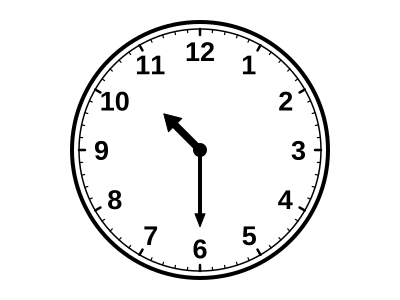
    1. A clock with the long hand on 6 and the short hand halfway between 10 and 11. What time is it?
    2. 70 - 20 = ? Think: 7 tens take away 2 tens.

    Reading & Writing

    1. follow, came, want

    Math · Week 30 Day 3

    I can order, compare and measure lengths.

    Look: a book and paper clips

    1. To compare, line up the ends.
    2. To measure, start the first clip at the end, with no gaps and no overlaps.
    3. Count the clips: the book is 9 paper clips long.

    Circle the answer.

    1. 1.
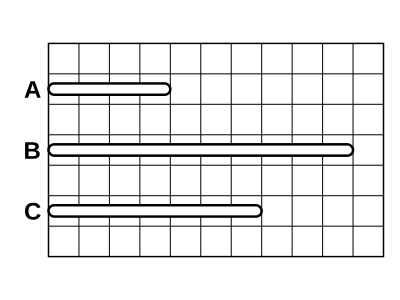
      3 sticks, left ends lined up. A is 4 squares, B is 10 squares, C is 7 squares. Circle the order from shortest to longest.
      • A, C, B
      • B, C, A
      • C, A, B
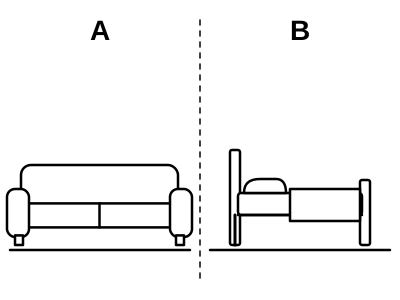
    2. 2.
      A is a couch and B is a bed. The string is as long as the couch. The string is longer than the bed. Circle the longer one.
      • A
      • B
    3. 3.
      Line K is longer than line L. Line L is longer than line M. Circle the shortest line.
      • K
      • L
      • M
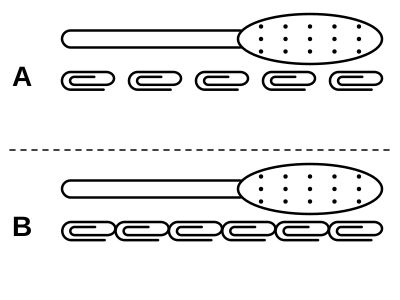
    4. 4.
      Picture A: clips under a brush with gaps between them; picture B: clips under the same brush touching end to end. Circle the right way.
      • A
      • B

    Measure and compare.

    1. 5.
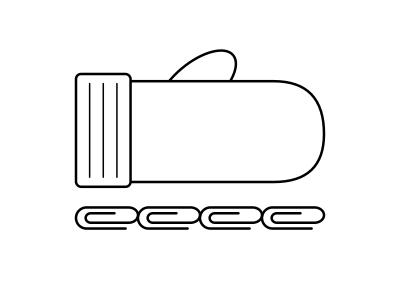
      A mitten with 4 paper clips under it, end to end, from end to end. The mitten is ____ paper clips long.
    2. 6.
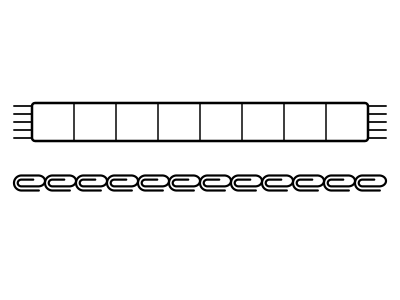
      A scarf with 12 paper clips under it, end to end, from end to end. The scarf is ____ paper clips long.
    3. 7.
      How many paper clips longer is the scarf than the mitten? ____

    Challenge (optional)

    Your arm is about 9 paper clips long. A stick is 3 paper clips longer than your arm. How long is the stick?

    You need: Pencil

    Reading & Writing · Week 30 Day 3

    I can add a picture and a closing to our research page.

    Look: a picture and a closing

    1. A labeled picture shows the parts: stem, leaf, pot.
    2. Draw a line from each label to its part.
    3. A closing tells the answer again: So a plant needs water, light and soil.

    What Does a Plant Need?

    A plant needs water. It needs light and soil. Our bean is growing in a pot. So a plant needs water, light and soil to grow.

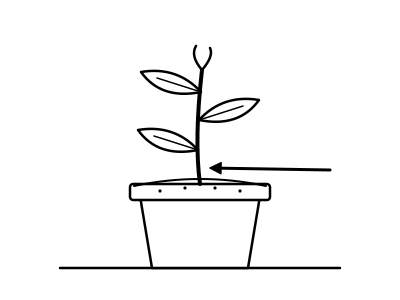
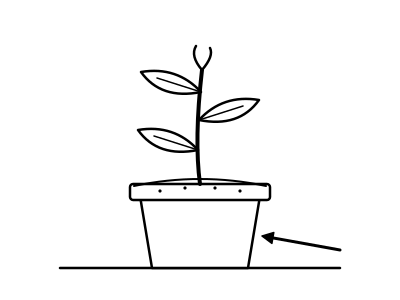
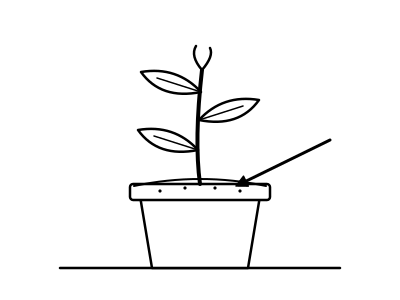
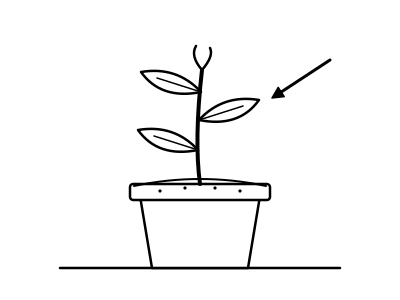
    Look at the picture. Write the label for the part the arrow points to.

    1. 1.
      A bean plant in a pot, arrow to the stem.
    2. 2.
      A bean plant in a pot, arrow to a leaf.
    3. 3.
      A bean plant in a pot, arrow to the pot.
    4. 4.
      A bean plant in a pot, arrow to the soil.

    Circle the best end line. Then write a closing for our plant page.

    1. 5.
      Which line is the best end?
      • So a plant needs water and light.
      • A plant is green.
    2. 6.
      Which line is the best end?
      • Bats hang up.
      • So bats help us in lots of ways.
    3. 7.
      So ____.

    Challenge (optional)

    My bean is ____ now.

    Social Studies · Week 30 Day 3

    I can tell my family my money plan and answer their questions.

    Look: presenting a plan

    1. Say your plan in 3 sentences: "My plan is ___. One reason is ___. Another reason is ___."
    2. Look at your audience and speak clearly.
    3. Listen to each question, then answer with a reason.

    Listen. Circle yes or no.

    1. 1.
      Should you look at your audience when you present?
      • yes
      • no
    2. 2.
      Should you talk over someone who is asking you a question?
      • yes
      • no
    3. 3.
      Is "Why not save more?" a question about a reason?
      • yes
      • no
    4. 4.
      Is it kind to laugh at someone else's plan?
      • yes
      • no

    Practice presenting. Write what your child says.

    1. 5.
      Say your money plan in 3 sentences.
    2. 6.
      Someone asks, "Who will you share with?" How do you answer?
    3. 7.
      Grandpa says he will share half his coins with the food bank. What question could you ask him about his reason?

    Challenge (optional)

    Present your plan to someone new, such as a neighbor or a relative on a video call. What did they ask?

    You need: the Spend, Save and Share jars